Jesus loved to teach through ordinary things. Seeds. Soil. Wheat. Weeds. Everyday images that people could recognise from their own lives. In Matthew 13, He speaks about a field where good seed is planted, yet over time other growth appears among it.
Anyone who has tended a garden knows this experience. You do not always notice unwanted growth at first. It arrives gradually, almost invisibly, and blends into what is healthy and good. Churches, like gardens, are made up of human; sincere, imperfect, hopeful people trying to follow God together. And wherever people gather, there will always be moments requiring wisdom, humility, and gentle correction.
Jesus reminds us that spiritual health is not about pretending problems do not exist. It is about tending carefully to what helps love, truth, and trust grow stronger.
“Whoever has ears, let them hear.” — Matthew 13:9
The Strength in Listening Well
One of the great gifts any church can offer is the feeling of being truly heard. Most people know not to expect perfection from faith communities, but what they long for is honesty, kindness, and compassion when life becomes difficult. In conversations around safeguarding, listening matters deeply. Often the most healing words are simple phrases like: “Thank you for telling me,” or “I’m sorry you carried this alone.”
Jesus Himself spent much of His ministry listening to people others overlooked — the grieving, the isolated, the wounded, the ashamed. He created space for people to speak openly without fear.
“Carry each other’s burdens.” — Galatians 6:2
Healthy churches are not churches without challenges. They are churches willing to meet challenges with grace and courage instead of silence or discomfort.
When Small Things Are Left Untended
Most difficulties in life do not arrive all at once. More often, they begin almost imperceptibly. A misunderstanding that is never quite spoken about. A moment of hurt that is felt, but not fully named. A conversation that feels slightly too difficult to have, so it is gently set aside for another time that never really comes.
Over time, these small moments can begin to shape the emotional climate of a community. Not through intention, but through accumulation. A hesitation to speak openly here, a reluctance to ask a difficult question there. And slowly, without anyone consciously deciding it, trust can feel a little more fragile than it once was.
In the Parable of the Weeds, Jesus offers a simple but deeply human image of a field where different kinds of growth appear together. The point is not alarm, but awareness. Life, even in its best expressions, contains a mixture of what nourishes and what complicates flourishing.
In church life, these “weeds” are rarely obvious. More often, they are subtle patterns that develop over time. A preference for avoiding difficult conversations in order to keep things comfortable. A quiet instinct to soften or postpone uncomfortable truths. Or a sincere desire for harmony that, unintentionally, makes honesty feel slightly more costly than silence.
None of these arise from ill will. In fact, they often come from very understandable motivations, like a desire to protect relationships, preserve unity, or avoid unnecessary pain. Yet even good intentions, when left unexamined, can gradually narrow the space in which honest dialogue takes place.
Scripture, in its wisdom, encourages a different rhythm — one where truth and love are held together, not separated.
“Speak the truth in love.” — Ephesians 4:15
This is not a call to harshness, but to integrity. It suggests that real spiritual maturity is not found in avoiding difficult conversations, but in learning how to have them with patience, humility, and care for one another.
There is, at times, a quiet but important distinction to be made between protecting an institution’s reputation and tending to its deeper health. One is concerned with how things appear outwardly; the other is concerned with what is forming inwardly. The second is less visible, but ultimately more important, because it is what sustains trust over time.
And this is where humility becomes so central to the life of a church. Humility allows a community to say, in effect, “We are still learning.” It creates space not only for speaking, but for listening well. It makes room for reflection without defensiveness, and for growth without fear.
Seen in this light, growth is not a disruption to be managed, but a gift to be received. It is the ongoing work of becoming more truthful, more attentive, and more capable of holding both care and clarity together in the same heart.
Finding Faith Later in Life
One of the most beautiful surprises in modern church life is how many people discover faith later in life. We sometimes imagine spirituality belongs mostly to the young, but the opposite is often true. About 80% of adults over 50 say spiritual belief matters deeply to them. For many, faith arrives slowly and unexpectedly, like a letter appearing years after it was first sent.
Later life has a way of sharpening life’s deeper questions. People begin thinking more about meaning, forgiveness, family, legacy, and peace. Some who once felt distant from faith find themselves drawn toward prayer, Scripture, or the comfort of church community. Others return after many years away.
This is one reason gentle, trustworthy churches matter so much. Older (as well as younger) adults are looking for sincerity. They want communities where people can speak honestly, ask questions freely, and feel welcomed exactly as they are.
“Even to your old age and gray hairs I am he.” — Isaiah 46:4
Faith is not something we outgrow; it becomes more integrated into the texture of a life well lived.
The Enduring Value of the Good Seed
It is important to remember that Jesus’ parable is ultimately hopeful. The story is not about fear of weeds, but about confidence in the good seed. Most churches are filled with acts of kindness that rarely make headlines — volunteers making tea after services, people visiting the lonely, pastors comforting grieving families, congregations praying faithfully for one another. These things matter enormously. The presence of challenges does not erase the goodness that also exists. In fact, moments of honesty and reflection can strengthen communities and deepen trust. A healthy church is not one that claims to have all the answers, but the one willing to grow in wisdom, compassion, and care.
Tending the Garden Together
The parables of Matthew 13 remind us that faith is not static. Like a garden, it requires attention, patience, and care. Some things nourish growth; other things hinder it. Wisdom lies in learning the difference.
Church safeguarding, at its heart, comes down to creating communities where people feel safe, valued, heard, and loved. And perhaps that is the deeper invitation within these parables: to become more attentive to what helps goodness grow. Because wherever truth, kindness, humility, and compassion are nurtured, good seed continues to flourish.
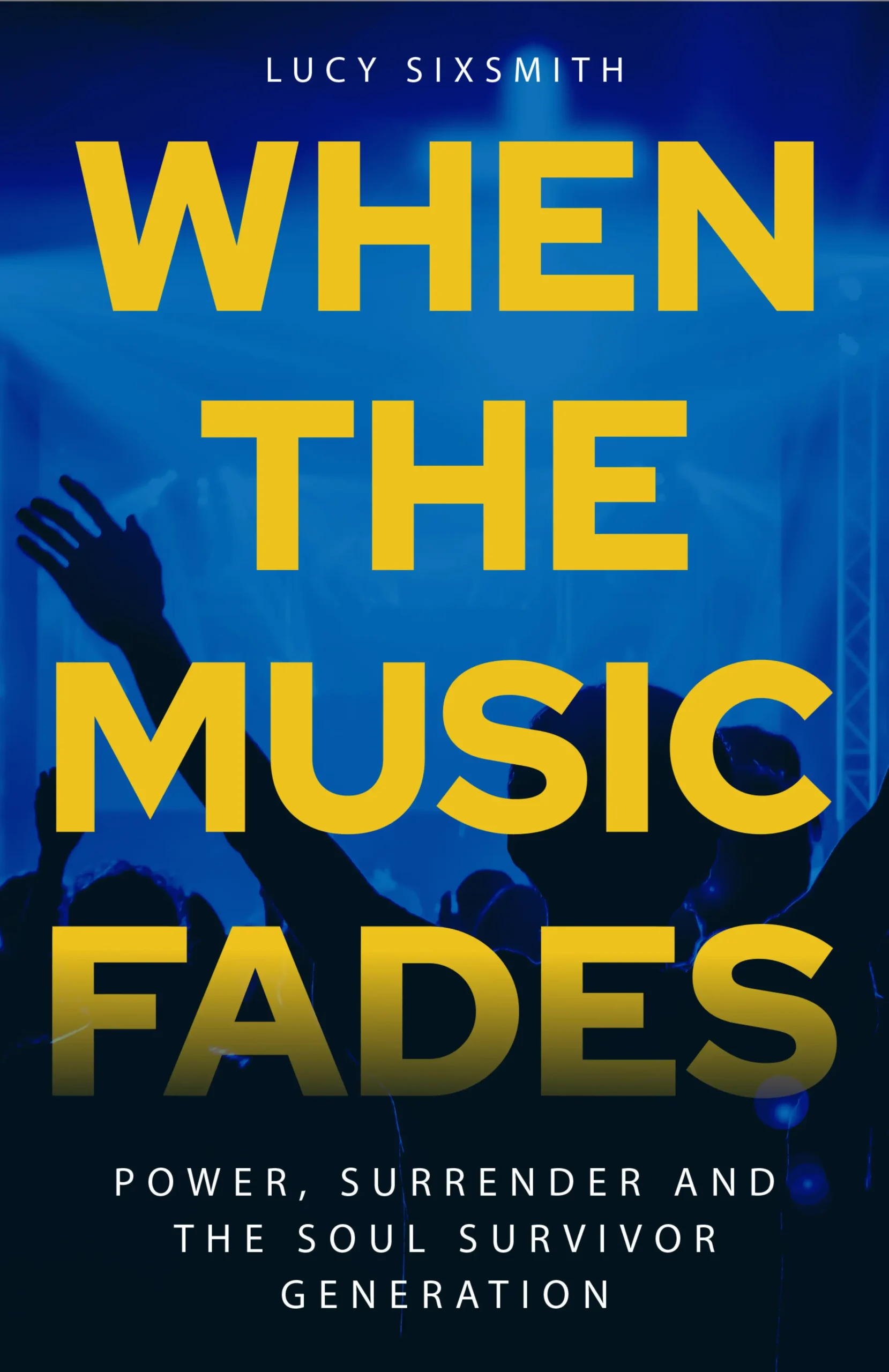
After reading this new book by Lucy Sixsmith on Soul Survivor (SS), the notorious and controversial movement formerly led by Mike Pilavachi, I had to ask myself what genre of writing was being employed. The blurb on the back cover uses the word ‘memoir’ to describe the book. It is, however, much more than a memoir. I find it easier to describe it as a written conversation between various parties of which the reader is one. The central character is, of course, the author Lucy who, in her mid-thirties is trying today to make sense of her past exposure to the enormously influential movement for Christian young people, which flourished in Watford for some thirty years. As part of our initiation into the strange (for some) world of charismatic beliefs and practice, we are introduced to a younger Lucy. The teenage Lucy is also a party to the conversation. As a young impressionable teenager confronting ideas and experiences that she cannot fully process, she initiates us into the religious worldview of a religiously inclined teenager from the noughties. By the end of the book, the reader will have been introduced to a variety of ideas and notions that may be novel to many older Christians, but the effort will have been worth it for two main reasons. In the first place, charismatic Christianity is becoming the dominant expression of the faith in Britain today and Lucy’s description of the ideas and assumptions in the movement, whether as a teenager or as someone speaking from early adulthood, is not a bad place to start. The second set of insights being offered, especially to non-charismatic Church people in leadership, is an understanding of some of the dynamics that are around when churches allow obedience and surrender to a maverick leader. Such practices can easily tip over into manipulation and exploitation of impressionable and vulnerable young lives. SS was allowed to function for thirty plus years without anyone asking the penetrating questions that might have better protected the young people it purported to serve.
I write this short review as a charismatic ‘sympathiser’, having been an observer of the scene for a number of decades. My own ability to identify with the leaders of the movement ceased with the passing of an earlier generation such as John Richards and John Gunstone. For a variety of reasons, the movement turned in a new direction in the 80s. The baton of leadership was passed on to a group with a more sectarian outlook. To use political terminology, the soft left charismatic style of the 70s became the hard left controlling leadership of the later 80s and 90s. Having myself found a small niche in the charismatic world in the early 80s, so that I was even invited to speak at healing conferences about my interest in this ministry, I ceased to be regarded as ‘sound’ by the end of the decade.
The SS generation of the nineties and noughties to which Lucy belonged, alongside many of her Christian contemporaries, brought forth a manifestation of charismatic practice which was strongly identified with the conservative evangelical camp. What Lucy describes of her home church and her experiences of SS camps breathes a Christian culture that I would have found unbelievably stifling and restrictive. For those of us who had been warmed by the early pioneer days of the charismatic movement, it had been a cause of sadness that our ‘liberal’ opinions made us a cause of suspicion and threat to the generation that came after. Lucy’s memories and descriptions of her Christian pilgrimage as a young person growing up in this later culture contains much material for reflection. We have laid out for us the kind of teaching that was shared by Mike Pilavachi with the tens of thousands of young people who imbibed the Christian faith from this somewhat uncompromising conservative narrative. The importance of the book is found in the way we are invited by the author to share in her struggles, her questions and doubts. It is as though we are invited to participate, through the reflections of the book, in a journey of faith from the perspective of a very young, but highly intelligent mind.
When the Music Fades is not in any way meant to be a hatchet job of the damaging ministry of Mike Pilavachi. Lucy clearly understands the implications of all that has been revealed of the harm and trauma that has befallen a group of young men – the massages and the dangers of inappropriate closeness to Mike. This typically involved being at first favoured before being discarded. There was much more going on and, as the title of the book suggests, Lucy recognises fully the part played by music in creating a distinctive style within the culture of SS, one which was highly attractive to young people. The sections of the book discussing music, as far as this commentator is concerned, are the ones that are most difficult to engage with. Perhaps music taste will always be an area of partial incomprehension between the generations. But I still find myself asking the question whether the style and emotion revealed through the music of SS takes us into the presence of God or whether the same music is a tool of manipulation and control. One of Lucy’s chapters is entitled Surrender. Is this word a description of an emotion deliberately cultivated by leaders and musicians to create a power dynamic which was of benefit to the leaders, in terms of gaining kudos from the wider institution? However much ‘surrender’ seemed to describe the spiritual place where the young participants thought they wanted to be, it is a word that has strong undertones of vulnerability and control. Telling a large crowd of potentially vulnerable young people the importance of surrendering to an emotion-laden atmosphere is a situation of great potential danger. Do teenagers have the necessary discernment and capacity for self-protection not to be sucked into something that may harm them at a deep level?
As a university academic Lucy is alert to the need to respond to many of the searching questions that she recognises will be asked by her potential readership. She includes helpful material from a variety of disciplines which help to give the context for the phenomenon we know as SS. Her understanding and presentation of material connected with the history of evangelicalism leading up to SS is instructive and helpful. She tells us about Charles Simeon, Henry Martyn and Moody and Sankey. Little by little we find ourselves absorbing the message and significance of SS from these other perspectives, those of theology, history, psychology and direct experience.
The value of the book is perhaps that it throws down a challenge to church leaders, asking them to state where the boundaries should be drawn between something that is orthodox, wholesome and life-giving and other cultures which may be exploitative and harmful. The perennial issue about the place of music needs fresh scrutiny and attention, since we cannot simply assume that because something is popular it is necessarily spiritual and healthy. Lucy makes a serious attempt as a newly minted adult to communicate the feelings and strong emotions aroused in these young people by the evangelistic youth culture of today. My own level of incomprehension at the genre of musical style within this culture suggests to me that there may still be a considerable problem for the Church to overcome. Mike Pilavachi was allowed to practise a risky, even dangerous style of Christian ministry for so long, partly because church leaders did not understand and therefore could not monitor intelligently and perceptively what he was doing. The author, the grown-up well educated Lucy, offers a bridge enabling other Christians outside charismatic circles to understand what was being attempted in these camps. Many of the themes of an earlier charismatic culture: prophecy, tongues and healing were still present. My own impression from the book’s descriptions is that these gifts were being practiced with a level of wackiness. There is also a sense that gifts are being practised, sometimes without any proper idea of what was going on. There is a vivid description of the author emerging from her tent one morning at camp to discover her friend prophesying to a group of younger boys. These boys were in Lucy’s words ‘sceptical, but magnanimous’. There was some level of acceptance in that they stayed to listen even though they seemed unconvinced. Lucy’s own home independent charismatic church had been deeply impacted by the Toronto Blessing so she was wide open to wacky episodes in church, along with vivid displays of emotion. The adult Lucy is offering us keys to understanding something of this culture. That understanding will allow the rest of us to feed on its energy and vitality, even when we feel a necessary system of checks and balance is absent.
The adult Lucy Sixsmith provides us with something extremely precious: a direct personal penetration and insight into areas of church life that is strange to many of us. We feel privileged to enter such an unfamiliar place, the Soul Survivor camps, but with Lucy as our guide, we are better able to understand and certainly not be harmed by the experience.
Many ordinary citizens in this country probably let out a sigh of relief when the news broke that the leader of Hungary, Victor Orban, had been defeated decisively in his country’s general election some days ago. I cannot claim to be a close follower of the political story of Hungary, but the little I have gathered about the right-wing, even fascist, control of that society by Orban, meant that I was able to see that things could perhaps now change for the better in the whole of Europe. All of us who passionately long for a just and peaceful outcome to the Ukrainian conflict, will pray that the European community will be able to increase their military and economic support for that beleaguered country. This is perhaps easier now that Orban, a steadfast Putin ally, is no longer around to obstruct their efforts.
One of the features of contemporary politics is the way that right-wing, even fascist, regimes often seem to claim adherence to a faux set of Christian beliefs and values. We find a colluding between members of our own home-grown ultra-right party, Reform, and Christian nationalist ideas. Christian nationalism, with its strong attachment to flags and marches has become a significant political force in this country. Most of us, who do not support a version of the Christian faith imbued with such crude nationalism, simplistic versions of history together with a fondness for ideologies of discrimination and hate, find this link deeply disturbing. But such ultra-right ideas resonate with many people, Christian or not, because somehow, they satisfy a basic human instinct to feel powerful and important. Those who join such right-wing groups see the opportunity to become part of something bigger than themselves. Listening to slogans and simplistic notions of good and evil, the right-wing acolyte is attracted to a crowd energy which is new and exciting. By becoming part of it, the follower is buoyed up to be a somebody; they are raised up above the humdrum sensation of being utterly insignificant and ordinary to become part of a new and successful elite.
The insights I may have about the attractiveness of right-wing fascist thinking were first formed by living in Greece for ten months in the Sixties, under the totalitarian rule of the Colonels’ regime. Most people have now forgotten the horrors and cruelties of this group of middle-ranking soldiers who took over the running of their country for a full seven years. The dimension that shocked and fascinated me at the same time, was the appeal to Christianity to boost the ultra-right ideology that these rulers imposed on their country. They found a pliant group within Orthodoxy and persuaded them to support them. Together, the government and this Christian group, known as Zoe, created a pseudo-religious Christian veneer to justify their political activity against the ‘communists’ who opposed them. The word communist could then be stretched to describe anybody who did not follow the regime’s ideas. The British government of the day, a Labour administration under Harold Wilson, was certainly to be characterised in this way, particularly as he was outspoken in the face of the physical torture being used on many political prisoners languishing in camps on islands.
This blog is not intended to be an account of fascist right-wing regimes, but I want to remind my readers of the way that extreme politics, as seen in Hungary, Greece and large sections of the Republican party in the States, wants to use Christianity for their own political purposes. There is a simple three-word slogan which describes both the ultra- right-wing politics and expression of the Christian faith found in these conservative settings. The slogan declares quite simply that Might is Right. This bald statement expresses an ideology, whether in a political or religious setting, that deals with certainties and an authoritative version of truth. It is the task of the leaders, political or faith-based, to enforce that ‘truth’ with whatever means are available. Backed up with the forces of might, the dominant proponents of truth seek to impose their ideology on an entire society, or the parts of it who have surrendered to the leadership of the group with the most power. When only a single version of truth in any area of knowledge, religious, political or scientific, is tolerated, we find ourselves living in a society which is marked by sterility and a failure to thrive. Conformity and passivity are rewarded, and independence of thought and questioning are severely punished. I need not go back very far in history to be able to offer examples of sterility and cruelty contained in what we can describe as fascist thinking. To assume that any individual, any party or ideology can be irrefutably correct all the time is the stuff of fantasy thinking. Those of us who do not live in this ideological fantasy world know that truth is rarely attained in a pure form. The best that can be achieved is a theory that works as long as it does until a better theory comes along and cause us to rethink our assumptions. It is claimed that science works because those at the edge of research are constantly seeking to refine their theories by trying to prove them wrong. Truth in every discipline is attained only by a constant questioning and putting current theories to the test. This is somewhat different to an image of finding truth and then retreating behind castle walls to defend it from questioners and doubters.
There are two things that unite right-wing politics and conservative theologies. One is the assumption that those in charge, and they alone, have the truth. The second thing they share is the belief that their ownership of this truth gives them the right to forcefully act in opposition against those who take a different view. The holders of ‘truth’ always have the duty to persecute the ‘heretic’, the one who does not agree or who thinks independently. Paradoxically, such a claim to own the truth in this way is found to be something attractive and appealing to many. When the Christian leader/pastor makes such claims for his or her preaching the Word, in a way that nothing can be questioned or discussed, we enter an environment which is fascist in style. We come to a question that asks whether we should ever expect our faith to have a resemblance to a totalitarian system that seeks to control and dominate in the pursuit of one version of truth. This dominant truth is one beyond discussion or any kind of questioning. All that I have written so far will indicate which side I take in such a debate. I am a passionate believer in allowing truth to be discovered and explored in an attitude of tentative humility. When someone appears who wants to articulate their truth in a somewhat different way, I would want to listen and understand what they are saying rather than assume that one of us is right and the other wrong. Dialogue and discussion may open new dimensions of truth to both sides, if all are prepared to explore truth in this way. The problem is that the fascist mentality does not allow this kind of approach. It demands acquiescence in the diktat of the leader and so there is never room for exploring an approach to truth which wants to explore a quite different approach.
Authoritative answers, whether in religion or politics, are comforting in their claims. At one sweep we are relieved of the pain of uncertainty and allowed to enjoy the reassurance of being ‘right’ because our side in the argument has the ‘might’. There are churches who possess much in the way of institutional power and wealth and, because of this, they want to dominate and control other churches. Such misuse of power among Christians may resonate with many people. They believe it is somehow ‘biblical’ and it is preserving truth. The reality, as we have tried to suggest in this blog is that the path to real truth is being shut down. Truth is something towards which we travel while never fully possessing it in our human lifetime. Our journeying and our hope that the destination we have glimpsed is the right one is what keeps us on the Christian path and in a state of permanent expectancy. In the words of St Augustine, You have made us for yourself, O Lord, and our heart is restless until it rests in you.
It is hard to keep tabs on episcopal vacancies in the Church of England at present. By my calculation there are nine diocesan episcopal posts that are vacant or to become vacant by the summer. Two further diocesan posts are in temporary abeyance (Lincoln and Salisbury) while the current incumbents await the result of disciplinary enquiries that are being undertaken. That would possibly bring the total number of diocesan vacancies to 11. This total means that around 25% of the senior episcopal posts in England are currently in or about to enter a temporary vacancy. Fortunately, for the smooth running of the Church of England, there are enough suffragan and retired bishops around to provide temporary cover so that episcopal leadership for all 42 dioceses is preserved for the foreseeable future.
The appointment of diocesan bishops in England is, by all accounts, a complex and painstaking operation. There has always to be, before names are considered, a statement of needs prepared by the receiving diocese. A group of carefully chosen and highly qualified individuals are brought together to form a Vacancy in See Committee. This group will meet and share their thoughts on those who are thought to be suitably qualified individuals. Confidential lists of suitable candidates are already in existence and those who become diocesan bishops have probably been on such a list of potential nominees for some time. The political sensitivities within the Church of England require the Committee to understand fully the importance of a cultural and theological fit. A diocese such as Chichester (to be vacant in June ‘26) would expect to receive a leader with Anglo-Catholic leanings while the new Bishop of London will need to have skills able to operate sensitively across a wide range of church traditions. This churchmanship match-up might once have been a major part of what was required for a successful diocesan bishop. Now this aspect of a candidate probably takes its place alongside all the other pressing skills and abilities needed to cope with the chronic complexity of the role. Against the background of a severe decline in finance and members in most dioceses, no candidate will be able to offer everything that might be desired from him or her. These expectations have become so numerous that I suspect every nominee will be seen not to achieve the ideal or even required level of excellence in some areas. The candidate that is eventually chosen will probably have to be a compromise choice. There are simply not enough experienced candidates to match all the expectations laid on them. The Vacancy in See Committee do not have the opportunity to choose the ‘Archangel Gabriel candidate’. Were such a person to exist, the whole process might be considerably less stressful.
I will have more to say about why the pool of candidates for diocesan bishops is not strong currently, but I think it is important to consider from the outside what might be the qualities needed for this post if we were able to design from scratch the ideal candidate. The qualities I want to suggest as essential for a diocesan bishop can be summarised in three words. The bishop needs to operate well as pastor, leader and teacher. This first quality that I mention here is the quality of an individual who knows how to care for others, especially the clergy of the diocese. The clergy are entrusted to be pastors and to care for their parishioners on behalf of the bishop. In my own ministry I can only remember two bishops who seemed to care and be genuinely interested in my own ministry and welfare. This is not the time to go into further reminiscing on this point, but I would like to suggest that a bishop should know far more about the individual clergy under his/her charge than just as names in a file. Fortunately, I have normally been able to find other clergy who would provide oversight and encouragement, but it was not something that came routinely from my bishops. With the declining number of front-line clergy to care for, this role for bishops might reasonably be expected to come into greater focus.
The second role of a bishop in a diocesan role is to provide leadership, especially in the form of inspiration and direction for the institution. The bishop pastor is the one who guides the work and morale of individuals who work for the institution while the bishop leader fulfils a management role in equipping and inspiring the whole. I would want my leader to have gifts of exceptional sensitivity and wisdom. I want them to be the people who can guide and motivate committees so that the right decisions are taken. A good chairperson, as I expect my bishop to be, will read the room with unerring accuracy so that the insights of all present will be heard and taken into account. Above all, and true to the theme of this blog, I want my bishop to be supremely sensitised to the dynamics of power, including his/her own.
The final quality that I have chosen to emphasise (there are many others – no doubt) is that the bishop to be a teacher/theologian. Sadly, this last capacity is becoming a rare quality. Clergy who read books seem to be in minority and those who become bishops may not have this important ability to inspire a passion for godly leaning among clergy and laity. My ideal bishop candidate will have this capacity to get people excited about God in terms of spirituality, study and prayer. Needless to say, I have watched, with regret, the short-cuts in theological training that have been brought about for financial reasons. Perhaps a new generation of bishops can inspire their clergy to give more time to study and the nurture of a mind that is constantly seeking new ways to understand more of the mystery of God.
To return to the appointing of nine (possibly more) men and women over the next 18 months to take episcopal roles of a highly complex and demanding nature, the Church of England authorities know they have a very difficult job. Most, if not all, of the next generation of diocesan bishops will be suffragans already and so the pond from which to fish is finite in size. One unsettling question, for which we have no answer, is whether the job of diocesan bishop has become so demanding, if not impossible, that a new generation of younger clergy will refuse to submit themselves to a post that they suspect will grind them down to the point of exhaustion and burn-out. One ominous piece of information was shared with us about the difficulty of making senior appointments in the Church of England. In the course of last year, the then leading candidate for the Bishop of Durham who had already gone through several stages in the appointment process, withdrew his/her name at quite a late stage. The Church cannot easily survive the departure of such highly qualified candidates. If ever the Church were to find itself in the desperate position of having to appoint candidates who are clearly not up to the job, the seeds of institutional collapse are at hand. It is also a serious blow to clerical self-esteem and institutional morale when office holders at the level of diocesan bishop are required to step back and take paid leave. We still have not as an institution recovered from the appalling reputational hit when a diocesan bishop was tried and sent to prison for his sexual crimes.
One major area of concern which applies to bishops and clergy is whether they are up to coping with stress. Every member of the clergy has some insight into severe stresses of managing personnel, finance and safeguarding that come their way. The same stresses, much magnified, are faced by our bishops. The present cohort of suffragans will know about the impossible demands and conflicts handed to those who preside over complete dioceses. To take but one area of stress: how does a diocesan bishop manage when he/she knows that a parish for which he/she has responsibility has a grossly inadequate incumbent in charge? How does the bishop make a decision and decide whether to allow a toxic clergyperson to take charge of a church, when it is possible/probable that that this charge will be badly mismanaged? Knowing where safeguarding bodies are buried must be a constant source of stress, even anguish. While a suffragan remains a suffragan, there is always the diocesan to refer to and, hopefully, sort out the problem. As a diocesan bishop the buck stops at the study door. The damage caused by making the wrong decision really matters. Peoples’ lives and wellbeing are affected. No one with a conscience wants to be responsible to helping to destroy or damage the life of another or undermine an institution as precious as the Church of Christ.
I end this reflection about bishops in the C/E with questions. The first is to ask whether the episcopal task is too onerous and stressful to be accomplished successfully today? The second question is related to the first. Given the new complexities that surround anyone who operates in a public role, demanding a range of skills probably not possessed by a single individual, is it fair to place anyone in this role without re-writing their terms of contract? I don’t know the answer to these questions, but I believe that they need to be faced by clergy and lay people at every level of the Church.
I was having a conversation recently with a supporter of the blog about the meaning of the word safeguarding. In my response to something she had said, I had simply used the expression ‘power abuse’. As far as I could see, the expression safeguarding almost always involved a situation where an individual or an institution was being held to account for an act potentially involving the harmful exercise of power. Safeguarding is the act of protecting the vulnerable against the malign intentions of the strong. Protecting the vulnerable is a serious business and when we use the term, we should always recognise that something potentially evil is being addressed. Unfortunately, using the word safeguarding often fails to communicate the seriousness the word deserves. Somewhere along the line, its use to describe the numerous courses laid on to train church members from congregants to bishops has removed the urgency from its meaning. It has become an idea that for church people has frequently become rather ‘fluffy’. It has been detached from the horror that is implied when vulnerable people are not protected and kept safe. As part of the conversation I was having, I suggested that we might try and do without the word safeguarding, particularly if, by using it, we sanitise and remove the horror of what may be implied by the word.
Archbishop Sarah, in her presidential address to General Synod in February, lifted my spirits initially when she spoke about power abuse at the start of what she had to say on the theme of safeguarding. Was she going to say more about safeguarding being rooted in the setting of power abuse or were we going to hear the same somewhat tired cliches about putting survivors and victims at the centre of everything that the Church is doing in this area? Sadly, Sarah, writing this part of her address that seemed to promise so much, then reached for the cut and paste button on her computer, and we were offered the same stale food of promises and unfulfilled statements about justice and support for survivors. The promise of a clear-eyed vision and understanding that safeguarding is in the last resort all about the misuse and abuse of power from the top to the bottom of the church structure was not grasped. Safeguarding was once more to become the overworked word to be used by the Church to suggest that we now have the structures and the understanding to put an end to criminal behaviour and sexual exploitation of the vulnerable within the institution. The insight that many observers now have is that abuse of power is a perennial problem for every church. Power is abused not only in acts of sexual deviance but every time a member of the church bullies or obtains gratification from humiliating or dominating someone else. Obviously sexual abuse is at the extreme end of abusive behaviour we are describing, but there are many other examples of abuse in the life of the church that need to be named and outlawed if we are ever to have a church that is truly safe. The problem for the church is that we have tolerated for so long dominating, controlling and coercive behaviour that we have learned to overlook behaviour that is sometimes cruel, life destroying and discriminatory. Safeguarding, in the sense of protecting people from sexual exploitation, is only one small part of the wider reality of power abuse that some church members often face.
In having this conversation, I was realising that my own book, Ungodly Fear, published 25 years ago as a study on the abuse of power in the church, did not use the word safeguarding once. The word was not then in common use as a convenient shorthand for the power and sexual abuse issues that we see in the church. My insight then, when writing the book, was a very simple one. The Church, especially in the conservative evangelical house-church manifestations that I was focusing on, has a problem with power. If an individual or an institution is given power over others, then there is always the possibility, indeed probability, that this power will, at some point, be abused. Independent congregations, led by charismatic narcissistic leaders, are those in the greatest danger of seeing their congregants abused financially or sexually. Church bodies that preserve systems and protocols of oversight and mentoring may have fewer episodes of criminal abuse, but they still face issues of dealing with power. The abuse of power in a church setting may take a number of forms. I described in the book power abuse being manifested in financial exploitation, sexual failings, persecution and the ostracism of disapproved minorities. There was also the appeal to the demon world to justify behaviour which would be unacceptable to most Christians. It is my contention that whenever power is abused, not just criminal sexual abuse, it should be scrutinised and, if necessary, outlawed from the Church. Keeping church members safe does not come merely by protecting the vulnerable from sexual predation. It should include protection from any kind of abusive power being exercised over them. We do not always want to recognise these situations of oppression where the strong exercise their power over the weak. Perhaps the horrors of the past in terms of what has be done to the innocent by godly men (mainly) has desensitised us to this kind of damaging behaviour. I do not believe it to be an exaggeration to suggest that every form of power abuse in the church is toxic and ultimately destructive.
I am putting forward the idea that the recent arrival of the safeguarding industry into the Church as response to the horrors of abuse has not made everyone safe. Officially safeguarding is about protecting everyone. Caring for the young and vulnerable seems to be a worthy activity that can be expected to achieve agreement without argument. But I am contending for the idea that the use of this word has too easily made everyone feel reassured and comfortable. If, however, we were to lose the word safeguarding and replace its use, when appropriate, with the words power abuse, we change the perception of what is involved instantly. Safeguarding/power abuse is a matter that demands our immediate attention because we hear in the words something of great seriousness, something that should be responded to instantly. The task of safeguarding when we take it seriously is not to make us have warm, maybe, patronising feelings for the vulnerable but a deliberate decision to identify vigorously places where power is being corrupted in a way that makes the institution and the people within unsafe.
The exercise of power in the Church is always going to be an activity involving risk. By saying this I do not mean to suggest that there is no place for authority in an institution like the church. We need to have ways of determining what are the best ways forward and the decisions to be taken to enable an organisation like a church to flourish. Gifts of leadership and management are vital for the church. Simultaneously we need to be far more sensitive to the way that power acting out in a negative way is a constant risk factor in any institution. Abuse of power, as we have seen, may involve criminal behaviour such as the sexual abuse of a minor. But any act which has as its aim the gratification of narcissism or self-importance in a leader can easily become abusive. The problem that often arises is a culture of ‘you scratch my back’ is that there is a corporate agreement to protect bad behaviour. In this kind of culture those who are not part of a favoured ‘in-crowd’, can find life extremely tough. Hierarchical churches, whether Anglican, Catholic or independent all have ways of feeding the almost universal desire for power and importance. People use status and position to boost their self-esteem and maybe compensate for neglect from parents when children. Such hankering after power blights the smooth running of any organisation. Sometimes the pursuit of power is not about acquiring importance but rather as a way to avoid the opposite experience, the inherited blight of shame. This may have been planted within the personality at a very early age by parents or contemporaries. Warding off the demons of shame, weakness and humiliation in a lifetime of maladaptive growing up may provide a powerful motivation towards behaviour of this kind.
The word safeguarding is, we would suggest, a word that reveals almost nothing of its inner meaning and content. It sounds neutral and formal while the reality of what it points to is often that of exploitation and abuse of power. It would be so much more salutary as well as honest if the word safeguarding was routinely replaced with a brief two-word alternative, such as power abuse or institutional bullying. The Church of England as an institution has, according to numerous abuse survivors, lamentably failed to meet their needs, in terms of pastoral care, compensation and justice. By refusing to name accurately what has been going on in the abusive episodes it is asked to respond to, the church safeguarding authorities blunt any proper acknowledgement of what has really happened. How much better it would be if Diocesan Safeguarding Officers were called something that reflected the harsh reality of what they sometimes meet? A better descriptor might be abuse supporter or in bullying situations, a conflict mediator. Whatever title is found to be most suitable, it would have to be one that picked up in the title something of the pain, devastation and shame that is so often found in a safeguarding situation.
The word safeguarding is, as far as I can see, at best a problematic word for many people in the Church. On the one hand it blunts the horror of power abuse that is often found in institutions like the Church. On the other hand it casts a miasma of suspicion over everyone in the Church if they have in any way failed to have their training and accreditation brought right up to date. Perhaps the time has come where we try to manage to have safety in the Church without using the over-used word. I for one would prefer to have it that way.
One of the outcomes of the internet revolution is the arrival of virtual meetings. People can gather across national boundaries and time zones and see and speak to others who share their concerns. Information can be shared and matters of common interest discussed in real time. Zoom meetings have come to stay and we are still exploring their full potential in the Church and elsewhere. We are well on our way to creating a radical revolution in international communication which is every bit as earth-shaking and transformatory as the original take-up of email in the 90s. The barriers of distance are now no longer so high as they once were, even if we have some way to go in making this new technology available and useable by all of us.
If Zoom is the new word to describe the ability of people to meet others across the world, YouTube is the name of the technical medium which enables us to have new experiences of Christian worship. My wife and I have been virtual attenders of a variety of acts of worship around Britain. While physical participation in worship inside a building is obviously the best option, there is something to be said for witnessing liturgy and music being conducted to a high standard and listening to a different preaching voice from one’s normal fare. More recently I have started attending acts of worship quite different from what I am used to so that I can learn something more about C/E congregations that sit lightly on the patterns of traditional Anglican worship. I am particularly interested in exploring the worship styles of the so-called Resource Churches and the way that this way of worship is carried over into many church plant congregations. I freely admit that there is a great deal that I have yet to understand about the culture of worship which is charismatic and might be described as post-liturgical. But, being able to experience it via YouTube does allow me as the observer to get a glimpse of what is going on in these congregations. I can thus ask myself whether I could ever identify with a form of worship using such styles. My first impression is to note the enormous gap between the traditional Parish Communion hymn-book styles of liturgy, that prevailed during my entire ministry, with the bands and ‘gospel music’ cultures of today. It is an important task for both these styles to try and understand each other. This is what this blog piece is attempting to do from a liberal catholic perspective.
It is only since Christmas that my visits to important centres of charismatic/evangelical worship in England have taken place with any depth or persistence. The three that have been visited are Holy Trinity Brompton, Gas Street Birmingham and Soul Survivor Watford. The one I have returned to the most is HTB and most of my comments will mainly reflect my experience of its practice and style. The first comment I have to make is the sheer power of the music at all the services I witnessed. The typical music played is at a physical level often overwhelming. It has this ability to enwrap the individual worshiper in what feels like being submerged in warm water. The overwhelming sound created by the professional musicians with singers and instrumentalists is hard to stand apart from, however much one wants to calmly evaluate this music theologically or musically. In my attempt to get a grasp in what was going on, I was quite grateful to have the distance that YouTube was providing to help me hold on to a measure of objectivity. If I had been in the building trying to be a detached observer, I might well have failed. The length of the solid block of music confronting the worshippers at the start of the service (15-20 minutes) felt like being thrust under a waterfall of sound. I would be interested to read a study that explained how such loud emotionally laden music affects the brain’s workings. The waves of sound and repetitive music certainly reached quite deep areas of the mind. In some ways the experience was enjoyable but in other ways I felt as if I was being deliberately taken over to become part of a crowd process. I felt that the music was demanding a complete surrender. If the singing and guitar playing on a computer screen could have this effect on me, what would happen if I was there in the building. Perhaps I am now too antique to be able to cope easily with negotiating compelling music of this kind which was leading along a scale to something resembling trance and hypnosis.
The critical part of my brain was able to function in this experience, especially because YouTube allows one to press pause and listen to songs more than once. I was able, I think, to identify techniques being used by the musicians to increase the compelling nature of their contribution to the worship. I observed the extensive use of repetition in the words of the lyrics as this also applied to the music in general. Particular words like ‘Praise’ or ‘Jesus’ were repeated many times and so such words or phrases came to inhabit the mind in a kind of ‘ear-worm’ experience. Even without constant repetition, phrases of music would remain because of the fact they were ‘catchy’ and designed to linger inside the brain. I am wondering whether the analogy of eating chocolate captures the experience. Something inside the brain is sweet and enjoyable to the tongue but, having eaten it, one is left with the sweet after-taste which is less enjoyable.
In trying to analyse the musical quality of the songs I was hearing, I recognised at least three distinct patterns of musical sound. Each of them is powerful in their own way and no doubt I was experiencing sensations shared by others at the service. Some of the songs seemed to have a bouncy, happy quality. These were the joy, celebration songs and it was evident that many of the worshippers were expressing this feeling by the way they moved their bodies. Typical words in these centred on strength and the victory won for us by Christ. Towards the end of the cycle of songs of this type, the mood changed. Instead of bouncy music, the songs focused on the individual relationship with Jesus and how the worshiper has experienced love, forgiveness and salvation. The music for this was slower and more contemplative. The typical words of these songs spoke of peace, rest and acceptance. The change in style was also visibly expressed in the way that the singers, whether those leading or congregational members, moved their bodies in a quite different way. There was now no bounce in the movement; instead, the movement resembled the way a mother moves when holding an infant in her arms.
A third style of music that I have identified across the worship services that I have attended, is the effective use of a single note used as a background to intercession and prayer. In some ways this use of a background drone note is one of the most powerful moments in the service. What I think I was observing was an unrehearsed prayerful interaction where the power came from a real sensitivity in the leader to both the congregation and what he/she was picking up from the spiritual temperature of the building. . The single drone note was not music as such but an atmospheric sound which I found to be extremely moving, deserving the description of spiritual. In contrast to the rest of the service which felt to be tightly controlled and even somewhat manipulative, I sensed in the drone backed prayer something unrehearsed, spontaneous and open to the Spirit. In short, the point I felt most in tune with the spirituality of the service was in the moment where the leaders seemed to move the mood of the service from control to a time of spontaneity and into what felt like real freedom and tangible spiritual content. The online viewer is of course not allowed to witness the time of ministry and healing that seems to take place at the end of many of these services, but I felt, even as a distant participant, that the atmosphere somehow was consonant with the possibility of inner change and healing.
My ‘visits’ to the headquarters of charismatic styles of worship in England have opened up for me memories of past special services which have participated in a genuine atmosphere of Spirit-filled worship. There have been occasions in my personal worship experiences when I have sensed a pervading mood of spiritual content where anything seems possible. On such occasions, healings, transformations and spiritual growth have taken place. The key point about such precious moments was in their spontaneity. Spontaneity is something very hard to manufacture. My criticism of the worship style of HTB, Soul Survivor and their imitators is a mixed one. A good proportion of what was on offer felt far too formulaic and repetitive to be acceptable or even comprehensible to all. But I also sensed moments of genuine presence of Spirit. HTB and its imitators have, in my opinion, found some genuine kernels of spiritual reality in what they do, but their worship would be still more impressive if they were to discover how to be open to the richness of other strands of Christian worship and tradition. Like other Christians, the leaders of HTB need to recognise that they are on a journey, one which can be more open to the dazzling diversity of what it means to be a Christian in today’s world. Any complacency from a Christian that what they have has put them beyond the place of leaning and discovery, is likely to make them, over the years, become stale and devoid of spiritual power.
I have tried very hard to be positive and fair in describing a little of my experience of on-line worship in a tradition that is not my usual spiritual fare. Perhaps I have opened up in myself a memory and maybe a longing for the possibility of a true spontaneous worship that is not manipulative or controlling. Is there somewhere in Britain that understands what this kind of worship in Spirit and in Truth looks like? I think I might recognise it when I see it.
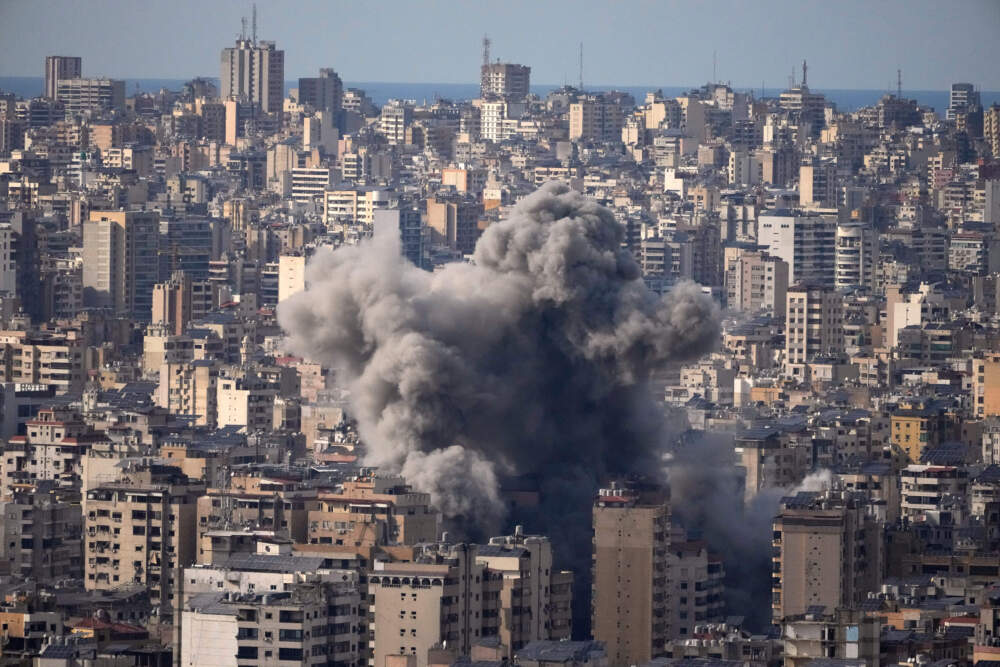
Smoke rises following an Israeli airstrike in Dahiyeh, Beirut’s southern suburbs, Lebanon, Friday, March 6, 2026. (AP Photo/Hussein Malla)
Every so often an event in the news triggers a strong memory which may have retreated from our awareness. The recent reports of thousands of British people stuck in Middle Eastern airports recalled a moment when I found myself in Beirut in 1975 at the very beginning of one terrifying phase of the civil war. It was an extremely unsafe place to be, but I was following up on a very successful journey three years before. I was engaging in what I described to myself as ‘ecumenical fieldwork’, making links with Christian leaders from both the Syrian Orthodox and Orthodox members from the Patriarchate of Antioch. It was an entirely personal journey of discovery. I wanted, in particular, to learn about an Orthodox youth movement that appeared in the war years in this part of the world. Having begun to flourish in around 1942, by the time of my visit it was a fully mature expression of Orthodoxy, affecting people of all ages from student members to the elderly. It was a fascinating story, and I did manage to write up my discoveries for Eastern Churches Review.
The expedition was not without its moments of drama. Within three days of my arrival, I found that there was massive crisis in the supply of petrol for the whole country of Lebanon. There are no railways into Syria out of Lebanon and the only form of overland travel was by shared taxi. My Lebanese friend took me to a central taxi depot which normally would have had a plethora of taxis competing to transport me across the Syrian border to Latakia, where I was to meet one of my Youth Movement contacts. On this particular day all the taxis signalled they were out of petrol, and they certainly did not have enough to take me to Latakia. Eventually we found what was possibly the last taxi out of the capital and we set off, calling at every petrol station along the way. Fortunately, the last petrol station before the Syrian frontier still had some petrol and we soon reached the comparative safety of Latakia. If I had not travelled on that day, I would not have been able to reach Syria. Beirut itself became, in a matter of hours, a place of terrifying danger and mayhem, with uncollected bodies left lying in the street.
The anecdote which I tell is not only explaining how the current Middle Eastern wars have stirred memories of what might have been traumatic experiences for me, but also how the same journey was the setting of a conversation which has resonated in my memory for years afterward. The conversation was about how the Bible is understood, especially among those who teach and preach every Sunday. Should congregations and their leaders ever be faced with the difficult problems that arise when looking at ‘critical’ questions of language and interpretation. My Lebanese host, Nadim, had been my roommate for four months at the Ecumenical Institute at Bossey in Switzerland. He was involved in the college for the Orthodox in a place called Balamand in Lebanon. By 1975, he was a senior member of staff, teaching ordinands the basics of bible study in preparation for ministry. The particular conversation I recall, centred round, not politics, but my discovery in his flat of an OT one volume commentary published by the Intervarsity Press and obviously well used. This was a book which gave the ‘sound’ interpretation of various OT problems that students of theology have everywhere to deal with. This particular volume, true to its conservative evangelical origins , was presenting what I felt to be a thoroughly confusing and misleading view of what the broad consensus view of OT scholarship had to say about critical questions of authorship and historical fact. This commentary, to take three examples, supported the view that the book of Isaiah was the work of a single author, Moses wrote most of the Pentateuch and that Daniel was a product of the exile period. I went through the commentary noting how, what I thought to be the consensus academic positions of Old Testament agreement were all routinely rejected. I observed how the author consistently argued for a conservative and literalistic explanation on every occasion. These explanations were political in the sense that every critical conclusion conformed to what the author had predetermined to preserve the ‘correct’ interpretation every time, one which supported the inerrant point of view. Up to that point I was aware that such conservative ideas were taught in Christian Union circles, but I naively did not believe that ordinands of other denominations such as the Orthodox, were being fed this approach and, consequently, having to argue for the conservative inerrant position in their essays. The conversation went on for over an hour, and I passionately made the case for allowing every student, not only to know the many critical issues thrown up by Old Testament studies, but also to have a choice in whether to identify with this scholarly consensus. These were the interpretations that sided with the main-stream ‘liberal’ ideas taught by the non-fundamentalist critical approach the world over.
To summarise this conversation with Nadim, I was given that day a crash course in the politics of conservative biblical interpretation. There is a lot more I could say about why I believe that there is something profoundly wrong about teaching a single version of truth in biblical studies. The so-called liberal position over the understanding of Scripture is often decried as being unfaithful to God’s truth and God’s word. What in fact is the position of the so-called liberals is their plea to be allowed to argue and debate with the tools of criticism for another position than the one laid down by denominational or institutional authority. The position presented as ‘sound’ or correct can never be the only one allowed in debate.
My own position is to allow myself a freedom to be hesitant or even sceptical when there is a claim to provide certainty. Sometimes the conservative interpretation for a passage raises more problems than it solves. The discrepancy over the numbers of animals going into the Ark has a disarmingly simple explanation when one accepts the thought that Genesis is not the work of a single author but a compilation of sources. To take another claim of ‘liberal’ scholars that there are the hands of three distinct writers in the book known as Isaiah, we have a revealing insight into the work which makes it far more manageable than if we argue for a single author. Giving a late date for Book of Daniel (i.e. 160 BC) also helps to understand the thinking of the Jewish nation in the face of their Greek attackers who sought to destroy the Jewish Maccabean princes. Daniel’s visions may conform to a modern popular understanding of the nature of prophecy – namely it is about what is going to happen in the future. By contrast the classical prophets in the Old Testament, Jeremiah, Amos, Hosea and Isaiah etc are far more interested is declaring God’s will to the present. ‘Thus says the Lord’ normally introduces a passage where the judgement of God is declared over the people for their immorality, their dishonesty or misuse of their power over the stranger or the poor. Prophecy is the insight to understand what God wants, even demands, from his people in their pursuit of the life he wants them to have.
A near disastrous trip to Beirut and a significant discussion/argument about the teaching of Scripture came together in my mind for this week’s reflection. The juxtaposition of these two events may make no sense to the reader but for me, they come together in a strange way. If President Trump had not started a war in the Middle East, perhaps this important discussion about Scripture might never have been evoked and vividly recalled to my memory. In thinking out loud about the events that took place over 50 years ago, perhaps I am able to share something helpful with my readers. There is of course a lot more say of these topics, but at least I have been able to share something of my understanding of Scripture.
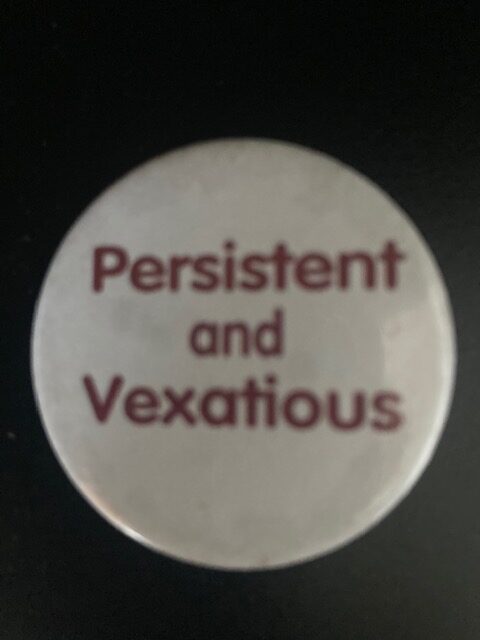
During my time serving on General Synod, having acquired a reputation for raising criticism of Church Safeguarding, a survivor presented me with a lapel badge bearing the words “Persistent and Vexatious”. It was a description which had been bestowed upon him, and I was flattered to be included in the club.
Readers of this blog may call to mind various worthy candidates for such a badge – survivors, journalists, bloggers, and some clergy.
As the story of “Survivor N” emerges into the public domain[1] (rather like the Post Office scandal), some will want to add him to the list, understanding that, as usual, the Church of England will always throw their critic under the bus rather than hold power properly to account.
It will come as no surprise that Survivor N has been engaged in a battle for justice since 2018; it is not quite over yet, though avid readers of this blog will not be overly optimistic about the likely outcome. I shall be appropriately careful not to compromise ongoing process, but already we can draw two very obvious conclusions.
First, Canon Law does not reliably deliver a timely fair trial to anyone who encounters it in a safeguarding context, especially if the complaint touches the handling of a matter by senior people. Second, the way the various dioceses apply the current sub-optimal legal provisions can only be described as a capricious lottery.
Let me illustrate this by sketching out how the Survivor N’s case contrasts with the treatment of the former Dean of Christ Church, Oxford, Dr Martyn Percy. Both cases took an unconscionable time to reach resolution, to the disserve of everyone involved: for that reason alone we should recall that “justice delayed is justice denied”. Nobody should be in limbo and emotional turmoil for the timescales which CDM participants endure. The CofE is a rich institution, with the privilege of administering its own justice system. It should resource properly all who are forced to engage with its Byzantine complexity, both complainants and respondents.
Both the Survivor N and Percy cases have significant backstories, which I shall set aside for the purpose of simplifying this analysis. Essentially, both boiled down to the need to try an issue of whether a single alleged act occurred and, if so, whether it constituted “significant misconduct”.
Arguably, neither case was overly complex. In the Percy case, the disputed allegation was of touching hair for a maximum of ten seconds; in the Survivor N case, the allegation was that of groping a groin without consent—plainly, and unambiguously, an allegation of sexual assault.
In the Percy case, immediate and prolonged suspension followed. In the Survivor N case, the respondent accused cleric did not spend a day under suspension and was never asked to “step back”. This is odd.
What should happen in such cases is that the period of suspension should be minimised by a swift but thorough investigation, surely including the routine commissioning of an assessment under the Safeguarding (Clergy Risk Assessment) Regulations 2016, so that independent expertise can be brought to bear to ascertain what risk (if any) an accused person poses in his/her ministry. That minimises risk and maximises speed, as well as introducing a degree of independent oversight.
For reasons still not explained, normal process was sidestepped. Dr Percy was made subject to an irregular “in-house” process, rather than the Bishop of Oxford requiring an assessment by one of the dozen risk assessors approved by the Diocese.
The metadata of the resulting report was examined, and its provenance questioned, by the professional cyber document examiner and member of General Synod and its Archbishops’ Council Audit & Risk Committee, the late Clive Billeness. He suspected that there were more contributors than disclosed on the face of the documents. At the time of his death a year ago he was urging Archbishops’ Council to have the suspicions raised by his data analysis independently professionally reviewed and verified. The powers that be continue to evade doing so, and one can only conclude that they are terrified of the implications if Clive were to be proved correct in his concerns. The PR interests of this institution always come before justice.
In the Survivor N case, inexplicably no risk assessment at all was required by the safeguarding team in London diocese. Purportedly, this was because the police had determined that they did not have sufficient evidence to charge the accused under the CPS guidelines. Two observations should trouble us.
First; the evidential bar for a criminal prosecution is set at a significantly higher standard to that triggering a clergy risk assessment. Second, Dr Percy had been treated by the police in precisely the same way as the respondent to Survivor N’s complaints, by those same standards, but had been suspended. Consistency there ain’t – and that troubles me.
A further contrast relates to the different ways in which the complaints were facilitated.
The Oxford accuser was immediately “protected” by the adoption of her complaint by a cathedral canon, who was the formal CPS complainant and who brought in significant logistical support from both college and diocese in the form of the diocese’s legal advisors Winkworth Sherwood LLP and PR consultants Luther Pendragon.
Survivor N received no such support whatsoever; quite the reverse—though he is universally acknowledged to be a “vulnerable person”.
The term bears a moment’s consideration. It does not connote intellectual impairment, or complete lack of judgment. Dr Percy’s complainant was competent and assertive; she was accorded protected status, and significant resources went with it. The processes of Canon Law are complex and labyrinthine. The Percy complainant was insulated, guided, and professionally supported throughout. I have no problem with anyone being fairly supported through such processes – but “anyone” isn’t.
In sharp contrast, Survivor N was abandoned to his own devices, notwithstanding his patent disadvantage. The human rights principle of “Equality of Arms” requires both sides of a dispute to have a fair and proportionate opportunity to formulate and advance their case. This did not, and routinely does not, happen in the CofE.
As a safeguarding lawyer, I was a member of the panel authorised by the Official Solicitor. Members assess those with potential litigation disadvantage and act on the vulnerable person’s behalf, informed by their wishes and feelings, while reporting to, and receiving ultimate instructions from, the Official Solicitor. These lawyers are the “eyes and ears” of the OS, who oversees good and fair process. The secular world gets this right; Canon Law makes no such provision.
For years, Survivor N was left without continuity of support and the vital over-view which this brings. The Church made multiple admitted mis-steps along the way, adding to his confusion and frustration. Canon Law presents to lay people as a series of complex, unfamiliar—sometimes hostile—legal procedures; unsurprisingly these complexities can overwhelm the vulnerable. Survivor N ran out of his own initial financial support and thereafter begged such intermittent support and legal advice from friends as he could secure from time to time. He is pitifully grateful for any pastoral support or guidance he was able to source.
Within a history of confusions and alleged errors in this case, do not minimise the importance of continuity and overview which the role of the Official Solicitor offers to the secular vulnerable, helping them to focus their submissions – sifting the wheat from the chaff and advancing the best points coherently. Amateur passionate pleas for justice are no substitute for forensic analysis. Canon Law doesn’t do overall justice; Canon Law does Canon Law.
Survivor N has struggled with two specific problems.
He presents with a disclosed, medically authenticated, Obsessive Compulsive Disorder (‘OCD’). Although highly intelligent and articulate, this presents him with a real and constant difficulty in “seeing the wood for the trees”. This is the major feature of his condition, of which he is conscious.
Advised early on that if he did not present evidence comprehensively, he might have difficulty introducing it later, he sent everything in, often unfiltered and duplicated; then the Dioceselost track of the case for years. Although he couriered his large bundle of papers (500+) to the published diocesan address and office of the bishop, the office had moved. The examining registrar accused him of not presenting the evidence (foolishly quibbling when he produced the courier receipts) and he had to spend hundreds of pounds on duplicate photocopying that should not have been necessary.
Had Survivor N enjoyed the same support as the Percy accuser, the case would not have “sunk without trace”, with evidence bundles seemingly lost. He would not have “banged his head against the diocesan wall”, feeding a sense of injustice, frustration and despair. The issues would have been identified early, and the evidence on his behalf would have been collated properly and professionally, to the benefit of himself, the respondent, the diocese and the CofE. The case would not have stretched over ten years, only to be “fast tracked” in panic once the institution realised the horror of the position into which its structural and pastoral incompetence had delivered itself whilst under the public gaze.
“Somebody” briefed the Bishop of London to tell the media that his abuse allegations against a member of the clergy had been “fully dealt with”, only for her to have to backtrack days later.
The now Archbishop had received “survivor trauma” training along with all members of Archbishops’ Council after the Jay report excoriated the Church. Additionally, she, with Archbishops’ Council, had received the independent psychological report which Dr David Glasgow delivered on behalf of survivors, setting out the harms this kind of institutional cruelty inflicts upon victims. She had every reason and opportunity to appreciate and act upon the kind of harm from which Survivor N was/is suffering.
Throughout this time, this vulnerable person – who was asking nothing of the Church except basic competence and justice- was constantly remembering how he had been dragged into a grotesque game of ecclesiastical whack-a-mole.
They cock up, he complains; they do not resolve it, they cock up again. He keeps pointing it out and, at the end of all this, HE is the one being called vexatious!
However, most serious point is this; farce almost became tragedy.
As Bishop of London, Sarah Mullally held formal responsibility for the “unfortunate’ overall handling of the case by the diocese, like the respondent to the original complaint she has not been suspended for a day.
The bishop’s defence—that she merely followed diocesan advice and had no general safeguarding duty—is irreconcilable with the document – House of Bishops’ Key Roles and Responsibilities of Church Office Holders and Practice Guidance (2017), which states unequivocally that ultimate safeguarding responsibility always rests with the diocesan bishop. Nobody has explained how this core principle was honoured in practice.
I remind readers of the stark contrast with the swift suspensions of Dr Percy and, in 2019, of the former Bishop of Lincoln, Christopher Lowson, who became the first Bishop suspended for not handling a case well[2].
Archbishop Sarah’s record is arguably more serious; she was formally responsible for diocesan failures when the infamous “brain dump” of tittle tattle resulted in the suicide of Fr Alan Griffin and the distress of multiple clergy, who also fell under ill-informed diocesan suspicion. Little says “dysfunctional diocese” more strongly than a highly critical coroner’s reference to the then Archbishop of Canterbury of a regulation 28 ‘prevention of future deaths’ report.
This final part is crucial to taking these matters seriously.
I have Survivor N’s consent to place in the public domain that, during this dreadful saga, he, too, has suffered mental breakdown and has been driven to attempt suicide – twice. The “powers that be” know this. On one occasion, he was saved by a casual passer-by who discovered him in a public place. Archbishop Sarah and the Church are deeply indebted to that anonymous good Samaritan who saved them from a second coroner’s report.
Survivor N is known and respected for his work amongst a wide and diverse community for his commitment to peace and reconciliation; both there and beyond. Every person who has heard his story (except within the Church of England Establishment structures) is appalled by what they have witnessed – every… single… one.
I am ashamed by the new President of Tribunal’s decision to designate this victim’s complaint, in these circumstances, as “vexatious”. Describing a vulnerable person, a known suicide risk, in such a way carries plain and obvious welfare risks bordering on the irresponsible. You might have assumed that in the light of past history, and amidst all the publicity, somebody in the CofE legal team, NST, Diocese of London, or Lambeth Palace, would have thought it prudent to initiate a check on his safety and wellbeing. None has.
Lessons have not been learned.
To have his complaint termed “vexatious” by an institution which persistently behaves in such a manner towards the vulnerable is no disgrace. I hope Survivor N will join me and many within the survivor community in embracing the term as a badge of honour.
These thoughts on mortality were written down in response to an elderly woman of 97 who wanted to know what I thought about death and what comes after. Although brought up as a Christian, this woman regards herself as an agnostic. I have thus tried to present a view of death that is open to the needs of people who have not followed a Christian journey but perhaps can be encouraged to think and meditate about the topic as it grows closer to us.
I decided to write down some reflections on the topic of mortality. At the age of 80, I come firmly into the stage of life where it is natural to reflect and think about it. My reflections and what I think about death may possibly be helpful to anyone who, like me, is getting older.
‘All things come to an end’
My observations about death and mortality come under three headings. The first is a pragmatic one. This observation about death is to note that it applies to everything. ‘All things come to an end’ as the Psalmist says. When we think about this, we see that the limited life cycle of created things is not a statement of futility. The existence of beauty and transcending glory in the created universe suggests something full of hope. The things that come to an end, and these include our human existence, are also things that carry with them, in many cases, an enormous beauty that takes our breath away. This beauty and glory that are found in many earthly things, including ourselves, coexist alongside their finitude. ‘Coming to an end’ and ceasing to exist in a material sense is a necessary part of the pattern of existence. This beauty and glory that is part of our human existence and the created world is something we are invited to celebrate throughout our lives. We are part of a world that reveals so many sources of wonder and glory, but all this comes with the cost of being in a world that is material and finite. We pay this price of being subject to death because we recognise that choosing to avoid it would necessitate avoiding life altogether. Not existing, never being born, is not a choice that most of us would make, even if it were possible. Many lives are lived with terrible obstacles and handicaps, but every individual experiencing some level of conscious awareness can experience wonder and glimpse transcendence. Using these words does not necessarily imply a religious perspective on existence, but everyone, regardless of their belief system or lack of it, can know something of human wonder. Life is a precious gift and, given a choice between existing or not existing, most of us would choose to experience it, while recognising that it comes, for many, linked to a package of painful experiences to endure.
Intimations of eternity.
The next observation I make is that there is, in our human life and experience, intimations of something else. For the non-religious person, I would want to speak about the almost universal experience of love. Love is not just something that belongs to each of us in our individual family or friendship circles. It is a universal, and, for human beings, it is even built into the survival mechanisms we have. Without it we die, especially at the stage of being infants. It is not hard to imagine love as a universal principle pervading the entire universe. Another image is that of love being like engine oil which allows the vast mechanisms of life, in all its forms, to function. We live in a universe which has these two universal principles. One is the constant emergence of life in many forms, animal and vegetable. We can think of love in the same way. It is an energy that, like life, is constantly manifesting itself. Life and love are not material things, but they are transcendent entities or principles in which we as human beings participate, indeed owe our very existence to. Is it going too far to say that life and love are the secular realities that religious people would describe as being like what they describe as God? If life and love exist this side of death (not a religious insight), it is not too hard to imagine that they are universal in some way and survive our individual demise. To die is to enter a dimension where life and love are experienced as all-pervading and all-encompassing.
The part that is played by religious faith.
The religious quest allows us and encourages us to do two things. One is to live life always exploring these universal realities of eternal life and love. The Christian way was to point to the utter supremacy of following in the path of life and love, seeing Jesus as its perfect embodiment. The pagan world before Christ knew only power, cruelty and human exploitation in society. There were those who questioned these dominant ways of living life, but they were few. It took the Christian revolution (not always well understood) to bring this ground of hope into human consciousness. The hope says that human beings have been allowed a glimpse of what is and is to come and we must at a deep level orient ourselves to this reality. Meditation or prayer are different names for the activity of aligning ourselves to what ultimately is.
The experience of death
The moment of death is the moment when we cross over from a world full of incredible richness and beauty to another world possessing these things but in a completely different way. Human existence has been a learning experience, an opportunity to recognise the important transcendent universals which never come to an end (life and love). Somehow, I believe that whatever awaits us in the place beyond, we will be encouraged to continue to orient ourselves to these same realities. For Christians the journey is a continuation of one of identification and participation in a man who is himself a kind of bridge between two realities. The words that resonate from John’s gospel are ‘where I am, there you shall be also.’ They hint that while there may be many ways of arriving and reaching this fuller world, holding on to (faith) Jesus is a reliable route. The important thing for all of us is to have lived this life at depth so that we will recognise the new stage. This will only be obvious to us if our lives have already let in the possibility of wider love. Living our lives now with the fullest openness to this love is what we have been rehearsing for all of our human lives.
Safeguarding scandals, whether they involve bullying or abuse, have hit the Church of England over the past 15 years with sickening regularity. These have cost the institution staggeringly large sums of money as well as reputational damage. I am not privy to most of the financial details, but an event like the ‘retirement’ of the former Bishop of Winchester, a few years ago, was only managed and concluded after a great deal of money was made available to fund the whole process and the settlements that were reached. Bishops and ordinary clergy hold offices which are protected by strong legal rights. You cannot say to a clergyperson with a licence ‘you are fired’, even if there is a scale of offending that is blatant and obvious. The old consistory courts that used to preside in cases of clerical malfeasance have been superseded by new forms of church legislation, but the processes involved in removing a clergyman from office still involve the Church expending a great deal of labour and money.
As part of the financial education of the lay people in the Church, it is regularly being explained that the cost of one stipendiary priest is around £60,000. Readers of this blog will understand something of how this figure is made up. This is not anything like the salary level of an ordinary parish priest, which comes in at around half this figure. Most church-goers have taken this financial figure on board, and the majority realise that giving to the church has become a serious obligation. No longer do ancient endowments provide anything near a sustainable standard of living, as they did until fairly recently. When I was a curate in Croydon in the early 70s, I managed on a salary of around £1500 p.a. I was then unmarried, so it was possible to save quite a proportion of this income. In the local deanery I picked up information about the stipend of incumbents, and there was some variation, thanks to the historic incomes of the individual parishes. One Vicar in the centre of Croydon received the princely sum of £4k from the fact that the parish was well endowed. Most of the other parishes that I knew about provided far less than this but were topped up from central funds to a level of around £1800. On average, the endowments would have typically provided around two thirds of this sum.
I raise this topic of finance because I believe that money, or lack of it, represents a substantial threat to both the morale and survival of the Church of England today. The main fact about the finances of the CofE back in the 70s is that the institution was then to a considerable degree kept afloat on dead men’s money. Endowments meant that ordinary church people could think of the church as the material provider, allowing them to have paid incumbents, living in Vicarages which had been bought by the church in earlier decades. This mentality of the church having all the money to provide for ministry costs is now, of course, hopelessly out of date. Inflation has almost completely destroyed the value of the historic endowments attached to individual parishes. Also, the pattern of church life today has resulted in many, many new ways of churches spending money, especially at the level of the diocese and new national institutions. One expensive add-on for the church is taking financial responsibility for training new clergy. I was trained under a system which saw the local education authority pay for everything from my undergraduate course to my residential theological training. The authority even redirected my college fees over two terms to pay for my course in Switzerland at the Ecumenical Institute. In contrast. every clergyperson today, coming through the system, has had, in most cases, thousands of pounds spent on their training by the Church. If ever a clergyperson ceases to follow the path of ordained ministry, they become, in an accounting perspective, a lost asset. From the point of view of a management perspective, every member of the clergy is a valuable commodity. He/she has cost the institution a substantial amount of money to train and is difficult to replace. Every trained clergyperson is a precious asset, and everything must be done to protect and defend them. They are valuable and allow the church to exist as a functioning organisation.
One of the perennial complaints of those who try to understand the problems around safeguarding is the claim that the victims and survivors of clerical and church abuse are treated less well than the perpetrators. This is one of the claims of Stephen Kuhrt in his recent book, Safeguarding the Institution. Institutional bullying by senior members of the Church is illustrated from his own story. There are many others who have encountered the hard edge of the Church’s self-preservation mode as it acts in harsh ways, trying to preserve its reputation as well as its assets. These assets are found, as we have indicated, not in merely in buildings and endowments, though these are important, but in its trained leaders. The human assets are precious, not only because of the expense of training them to fill the incumbency posts up and down England, but because of the acute difficulty in replacing them when they are no longer available to serve. This shortage is a serious threat to the church’s long-term survival but is not discussed very much. The current shortfall in clergy available to fill posts is not information that is published. My estimate, based partly on a scrutiny of the advertisement pages of the Church Times, is that there are some serious shortages in clergy manpower in some parts of England. I also suspect that some Diocesan bishops have quietly accepted that some of the parishes in their sees will never again be able to maintain anything resembling the structures of the traditional parish system.
I have some sympathy for the C/E bishops who are burdened by the responsibility of overseeing a system which, for financial and manpower reasons, may never again be able to function as intended. In a situation where able clergy are thin on the ground, needing to be encouraged and supported like some rare, almost extinct creatures, it is not surprising that bishops and those in authority will have a distinctive approach to safeguarding. This perspective might seem to be, sometimes, over-generous and forgiving to clerical perpetrators. Such an approach might also appear less than sympathetic to the survivors who challenge the system by demanding prompt action against abuse. When a bishop has finally to exercise his authority by expelling an individual from ministry, he/she must negotiate numerous time-consuming financial and legal obstacles along the way. At the end of this process, she/he will then need to find a replacement. Taking over a parish where there has been a serious safeguarding issue is seldom a straightforward challenge for a newcomer. The outside observer does not see all the hidden processes that have been gone through. The bishop and archdeacon will view the problem from a broader perspective and try to think of the long-term interests of the whole area affected by the abuse. The outside observer is properly focussed on the victims/survivors. The church officials, in contrast, will possibly be taking a view that provides for the possibility that the perpetrator may eventually resume active ministry in due course. The flawed failing clergyman remains a potential asset within the system. If there are possible means to allow him/her to continue at a future date when the offence may have been forgotten by those involved, the bishop may well seek to make it possible.
So, to summarise, we have two understandable ways of reacting in a Church that is plagued by a series of abuse scandals. It is clear that there is first the moral/legal approach. This is the one that most people, especially victims and survivors, feel should routinely be applied. This demands that, in dealing with safeguarding cases, the path of applying strict justice should be followed. The guilty must be held to account, and the wounded bound up with healing balm. For most survivors and those who support them there is no other possible way forward. Yet as we have seen there is another (pragmatic?) perspective to be considered. This is the view of church authorities that is aware of the dire current financial and manpower shortages in the church which makes them unwilling to let them go unless absolutely necessary. They have looked at the future and possibly seen that the whole parochial system is under threat and even unsustainable over a fifty-year period. The financial assets of the C/E are probably robust enough to face this crisis for a reasonably long period, but other assets – money poured into training individuals to serve as clergy – also need protection. Every time a clergy person is lost to the system through premature retirement or misconduct, that is like a dagger wound to the whole church. It also represents a loss to the whole Church in financial terms. One other possible reaction to this crisis of trained manpower is to allow the standards of training to slip so that the whole process becomes cheaper and less thorough. Lowering standards beyond a certain point would, I fear, bring is own set of problems, some touching on the area of safeguarding.
The current decade in the Church of England may well be remembered as the safeguarding period. The question that is being asked is whether these safeguarding issues will ultimately overwhelm the Church financially and morally. Can we find a way of affirming compassion and safety alongside a keen protection of justice and honesty in a way that meets the demand for fair-play among church people and public alike?