There are some words in the English language that are not very useful unless they are placed in a clear context or have an adjective attached to them. One of these words is charisma. This is a word that has currency in a religious setting, but it also belongs in a number of other contexts, including the political and sociological. In any use of the word there has also to be some indication as to whether the word is signifying something good or something toxic. The word used on its own carries no value judgment built into its meaning. We see the negative use of the word as it was applied to the notorious and evil career of Chris Brain. He was brought to account in the course of the past week at a courthouse in London. The ministry he engaged in in Sheffield in the 80s and 90s certainly possessed charisma, but the word here does not denote anything good or wholesome. In fact, the character of the charisma on display was that of ruthless control and exploitation. It is this negative meaning that we project on to the word as we think of the Brain ministry over seven or eight years in Sheffield.
Why am I focussing on this single word charisma? It is because I believe that understanding charisma in its negative manifestation helps us to understand better the horror of the events in Sheffield thirty years ago. It may also help us to build institutional structures that make it difficult or impossible to repeat them. Before we think further about charisma operating in its negative manifestation, we need to think about its meaning with its neutral connotation. The word, when stripped of both its negative and positive connotations, is one that is descriptive of a quality of human personality that is able to attract and impress others. The charismatic personality has considerable relational power. This power can be said to simultaneously charm, dazzle and intrigue those drawn into its orbit. The charismatic personality is also one that creates followers and admirers around him (normally a him) even while keeping the bulk of these followers at a safe distance. Getting close to a charismatic leader is a status achieved only by a few. The cult leader, who is the typical expression of a negative exploitative form of charisma, will somehow know exactly how to share with followers enough attention to keep them loyal but also subservient. In many cases, this subservience makes the follower ripe for exploitation. We can summarise our understanding of the word by noting that charisma implies a form of intense relationship for an acolyte, which is fascinating, mysterious, but also dangerous. The picture of a moth attracted to a flame is a good analogy. Getting too close to the charismatic personality may burn or harm some of those who are drawn to it.
The story of Brain’s tenure of the so called Nine O’Clock Service (NOS) in Sheffield has been told sufficiently often not to need repeating here. Most of what happened in this ministry between 1988 and its collapse in 1995 can be gathered from reading Roland Howard’s book, The Rise and Fall of the Nine O’Clock Service. This book appeared remarkably quickly after the events it records. The fact that it has taken a further three decades for the story to come out fully and for justice to be obtained, has allowed the suffering of the victims to be grievously prolonged. The recent statement from some of Brain’s 19 victims contained these words. “Shame on the Church of England who never came and asked us a single question about what had gone wrong, at the time of disclosure, or for the intervening 30 years. Who sat on the sidelines, smug and self-satisfied while the pews filled? Who ignored the warning signs because it was in their vested interest to do so.? Who failed utterly in their duty of care?”
Two things strike me about these words. It is clear that the powers that be in the Church of England failed to engage with the massive suffering of the victims because first, it was too costly and complex to deal with. Too many important people in the Church had colluded with the ‘success’ of NOS, right up to the level of the Archbishop of Canterbury. The apparent ‘success’ of the experiment was such that no one was prepared later to question a number of anomalies and concerns that were brushed under the diocesan carpet when NOS was given a CofE imprimatur. The words of the victims speak about a hierarchy who were ‘smug and self-satisfied while the pews filled’. This is another way of saying that it is OK to cut corners of training and scrutiny as long as the scheme or experiment makes the Church look good. Filling pews has to take precedence over all else – safety, goodness and truth.
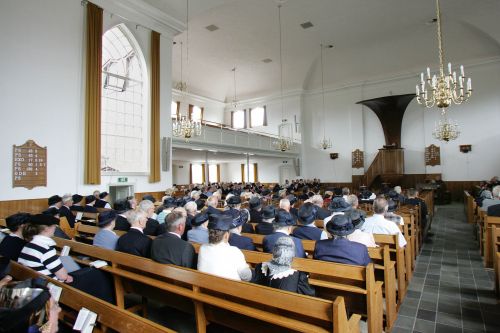
The second thing that should have been clear to Church leaders in the 80s is the risks and dangers of church life when it seems to gather most of its energy from the dynamics of crowd behaviour. Anyone with the slightest understanding of modern history, and that would have included all the bench of bishops in 1995, would have had cause to feel concern over the phenomenon of crowd dynamics and some of the potential dangers that such large gatherings can cause for church congregations. The ability of a crowd, a political rally or a football crowd, to destroy rational thinking and decision making must have occurred to our church leaders as they surveyed the revival activity in Brain’s Sheffield church. Brain’s gatherings would have exhibited many of the danger signals of crowd behaviour that had been exhibited 50+ years before in Rome, Berlin and Nurenberg. Why does it never occur to church people that mobs, rallies and crowds are given to volatile and irrational behaviour? When people come into such environments, they can quickly become vulnerable and suggestible. This suggestibility puts them in a place of danger. Safeguarding training has been alerting us for decades to the idea of grooming by powerful personalities. Does no one see clearly that a charismatic environment is also a place which, in the hands of the unscrupulous, can lead to exploitation of various kinds? Needless to say, there are wholesome charismatic ministries, those which never use the dynamics of the crowd as a tool of exploitation. But every ministry that we describe as charismatic needs to be closely mentored to ensure that the dynamics of the crowd manipulated by a charismatic leader have not introduced a dangerous toxic harm into our church life.
The lesson of Chris Brain is larger than a single serious lapse of professional ministerial conduct by a leader. The lesson that was not learnt in the 90s is that any preacher, whose ministry can be described a ‘charismatic’, will always need careful monitoring to protect them from the vulnerabilities of this role and the dangerous dynamics that seem to emerge in so many settings of this kind. Nobody blew a whistle on Mike Pilavachi even though the Brain episode must have alerted many responsible church leaders to the possibility that the charisma he possessed was being used for his gratification. When abusive behaviour is revealed as having taken place at major hubs of church life in Britain (St Ebbes Oxford) over long periods of time, one sadly contemplates how poison has been absorbed not only by victims, but also by those who stood by and said nothing. Every flawed ministry has allowed poison to flow through the veins of the Church of England. Allowing a few leaders, like Brain, to go to prison will not solve anything until we insist on proper oversight for all who exercise spiritual authority. We desperately need men and women with spotless integrity to lead our church. The recent cases of bishops ‘standing back’ has left us all wondering where the next generation of trustworthy leaders is going to come from.
I have spoken about the different contexts in which charisma is exercised within the church. I should conclude this piece by pointing us to the charismatic power that we ascribe to the ‘Lord the giver of life’. The charismatic gift that is the most needed today by the church is not the gift of tongues or the gift of administration. It is the gift of leadership that should have exercised discernment, wisdom and integrity, one that would have been able to spot the terrible damaging failure in the ministries of Brain, Pilavachi etc. Our bishops who are to be chosen in the next few months need to have the spiritual gift of integrity for themselves and for those they oversee. Perhaps the next ten twenty years will rebuild some of the institutional trust that has been tragically lost recently. A slogan that was around in the 80s needs to be asked again. ‘Is your Church worth joining?’. Much depends on the answer we can honestly give.