Monthly Archives: August 2026

The Odyssey: A ‘Lessons Learned Review’ for the Church of England by ANON

by Anon

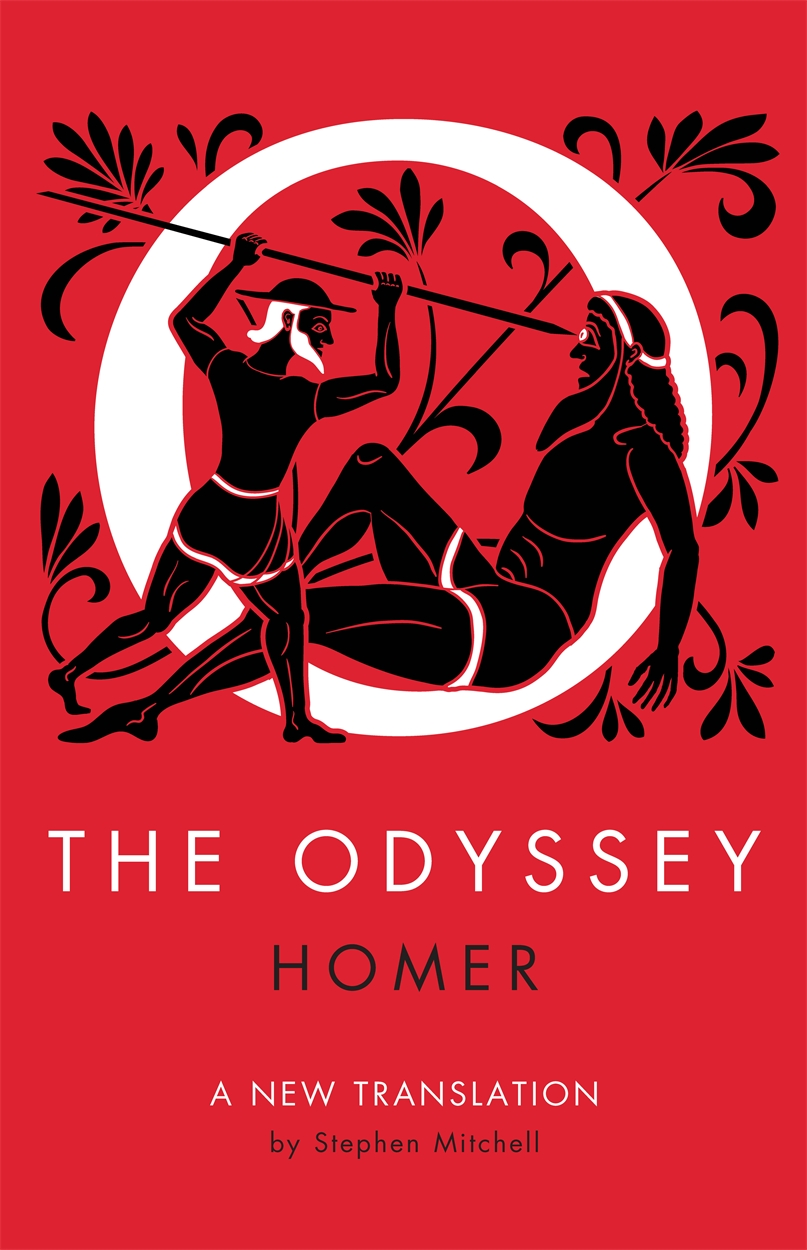
The Odyssey (2026) is an epic action-adventure movie written and directed by Christopher Nolan adapted from Homer’s ancient Greek poem. If you haven’t seen the film, I recommend it. If you haven’t read the book, I also recommend it. The Odyssey consists of 24 books and was written down during in the 7th century BC, so committed to parchment in the same kind of era as much of the Old Testament. Both The Odyssey and the Old Testament existed in oral form for many centuries before this. Both share chequered histories of contested versions, with the same stories adapted for different contexts and cultures. (See Bruce Louden, Greek Myth and the Bible, 2019).

Nolan’s film is widely regarded as an enormous feat as much as it is entertaining. True, purists snipe that the film is not faithful to Homer’s original and takes liberties. That may be so, but it rather misses the point. These stories were epic sagas that were vehicles for moral instruction, cautionary tales, and freighted with warnings about the dangers of hubris, irony biting back, the inevitability of betrayals, and the virtues of faithfulness, patience and perseverance.

But suppose for a moment we see The Odyssey as a vehicle for ecclesial parables? This is neither strange nor original. In Gods of Management (1978), Charles Handy examined managerial and organisational cultures through four ancient deities: Zeus (dominance and monarchy), Apollo (communication and order), Athena (cooperation and practicality), and Dionysus (creativity and individualism). Handy highlighted the tension between organisational imperatives (Zeus and Apollo) and individual imperatives (Athena and Dionysus), which cannot be fully resolved. He argued that treating people as individuals instead of mere resources is crucial.

In typical parish settings, cultures may reflect Athena and Dionysus, but many Protestant ecclesial hierarchies tend to be influenced by Zeus and Apollo. This situation will lead to growing dissonance. When self-identified leaders and their compliant followers stop engaging, what happens? Bishops and senior pastors may hold their titles but lack true power, acting like modern versions of Zeus or Apollo while increasingly being ignored.

Simon Western, in Leadership: A Critical Text (2018), argues that “leaders are authentically transformational… they increase awareness of what is right, good, important, and beautiful.” Western identified three primary forms of leadership discourse in the twentieth century: Controller, Therapist, and Messiah, with a fourth suggested. Controller discourse focuses on efficiency and social management, rooted in early twentieth-century scientific rationalism. In contrast, Therapist discourse emphasises personal growth and well-being.

The latter part of the 20th century saw the rise of the fourth type of leadership, namely Heroic-Messiah discourse, which promotes charismatic leadership in uncertain environments. This discourse promised order amid chaos and encouraged transformative change by highlighting heroic actions and visionary outcomes, suggesting that progress is essential to achieving success. Western’s book is a seminal study in leadership and offers a relevant critique for our times.

Similarly, Mateusz Grzesiak’s Leadership and Narcissism in the Organization (2022) reveals the rise of messianic discourse in an age of anxiety as institutions face existential threats. While true messiahs are rare, faux messiahs—who elevate themselves above others—have become increasingly common.

The myths of Narcissus, particularly as told by Ovid, provide insights into institutional behaviour. Both Narcissus and Echo illustrate how organisations can become fixated on appearance, echoing only what they hear, and are ultimately ensnared by self-love and inflated self-regard.

Narcissus is alive and well in the Church of England. Its leaders hear that working in teams, strategy, vision, corporate branding or comms are the way to go. Or that something must be done about climate change, or inequality. The leaders only repeat what they last heard.

That said, we note Richard Sennett’s careful reframing of the myth. He argues that in narcissistic disorder one sinks into oneself. And that without meaningful references and valuing of others, no stable character or self-image is ever formed. Sennett writes that

‘…as a character disorder, narcissism is the very opposite of strong self-love. Self-absorption does not produce gratification [but rather] produces injury [italics mine] to the self; erasing the line between the self and other means that nothing new, nothing “other”, ever enters the self; it is devoured and transformed until one thinks one can see oneself in the other – and then it becomes meaningless… The narcissist is not hungry for experiences, [s/he] is hungry for Experience. Looking always for an expression or reflection of [oneself]…one drowns in the self.’ (The Fall of Public Man, New York: Norton, 1992, pp. 324-25).

Sennett argues that narcissism often hinders goal achievement. In corporate narcissism, as with individuals, there is a tendency to avoid closure on measurable outcomes to escape external judgment that could weaken self-esteem. This avoidance is unintentional; those affected engage in repetitive self-referential patterns that prevent stable character development and lead to self-absorption. While others may remain captivated by what these individuals or organisations might do next, ultimately, nothing changes. (Yes, Fresh Expressions fits the bill).

Translating this into ecclesiology, it seems to be a particularly compelling preliminary diagnosis of the Church of England’s safeguarding debacles. Everything goes round and round and round in circles in a kind of endless death-loop. Nothing changes.  Narcissism craves your admiration and devotion, and commands your deference and fealty. But it never wants judgment or accountability. QED the CofE? (QED is from the Latin phrase quod erat demonstrandum, which means “that which was to be demonstrated” or “what was to be shown”).

It doesn’t take a genius to see that the endless cycle of ‘lessons learned reviews’ in Church of England safeguarding belongs to this world. Like Groundhog Day (another version of an ancient Greek myth), the Church of England just repeats the past in the hope that it will eventually get it right. The myth of Tantalus is instructive. So Einstein was right. “The definition of insanity is doing the same thing over and over again and expecting a different result.”

There is a heuristic pragmatism at work here, but it could also apply to many contemporary Protestant denominations. The Church of England, to compete with modernity, will adorn itself with trendy, secular rhetoric and processes because it thinks it “must look good”. It rarely thinks past this. Furthermore, it seems destined and bound to deliver precisely nothing.

As Sennett would concur, the narcissism is found in the journey and process that never achieves closure. Diagnosing corporate narcissistic personality disorder in the Church of England in an organisation becomes possible when we understand the origin of Narcissus.

Other myths also illustrate the dangers of hubris. Icarus, who flew too close to the sun against his father’s warnings, fell to his death when his wax wings melted. Similarly, Narcissus, obsessed with his own beauty, rejected those who loved him and ultimately died alone, transforming into a flower. Both stories emphasise how hubris can lead to isolation and ruin. These are ecclesial parables.

James Hopewell, the Anglican contextual theologian (Congregation: Stories and Structures, 1987) writes of the Zeus-myth at work in a specifically church-based context as a case of “an arbitrary and dictatorial rule…punish[ing]those who dared to oppose him…a one-man show who got his way…[by] the acquiescence of corporation-minded members…[and ridiculed opponents]”.

For Hopewell, the myth of Zeus serves that purpose, as it narrates the emergence of a supreme ruler from the Titans (the Elder Gods). Zeus dethrones Chronus (in Roman religion, Saturn), the most important god. Zeus has unequalled powers thereafter, but is not omnipotent, omniscient or omnipresent. He can be opposed, deceived and evaded. Zeus nonetheless functions as an arbitrary and dictatorial ruler, and a cypher for the leadership of congregations.

In ecclesial terms, the minister is a ‘one-man show’ with exceptional managerial gifts and can often be a Zeus-like figure. But such leaders also thrive on manipulation and can ridicule opponents with ‘thunderbolts’. Nonetheless, the minister may present as a fine and hospitable pastor, and provided members stay on the right side of this Zeus-like figure, the congregation is likely to be convivial. Hopewell accepts that his characterisation of a church or denomination where Zeus reigns, as

“…not a pretty story, but its very aptness and ugliness might awake its actors both to their plight and to their Christian promise…” (Hopewell, p. 188).

The stories of the gods evolve. Humans can be elevated to godlike status after their deaths, as with Heracles. But in many cases, there is an obvious sense in which one can read the persona and actions of many of the charismatic church leaders featured in this blogsite as befitting a Zeus-like figure. Pilavachi, Brain, Smyth, the Fletchers and others all come to mind. One can compare the eldership gathered around them to other Titans or lesser gods.

What is clear is that the epic accounts of such churches can be more Greek myth and ancient saga than many might suppose.  Furthermore, such ancient narrative plots are easily detectable in other revivalist ministries, with leaders exercising extraordinary powers and holding unmatched authority and powers over their devotees. Indeed, these stories and plots are alive and well in contemporary culture and appear to resonate with everyday life.

Hopewell’s interpretive analysis, rooted in myths, narratives, ethos, and worldview, explored the collective unconscious. The archetypes in shared memory, often repressed, continue to influence congregational life and macro-denominational polity. For example, we can think of Anglican bishops known for their unpredictable bullying. While some might experience the bishop as pastoral and visionary, others can find them to be a trigger of fear.  The bishop can be armed with thunderbolts, and the laity and clergy are unsure of who could be punished next. Some might view the bishop as a storm bringing misery, while others saw the same leader as essential for growth, as though they were like nourishing rain. Regardless, all may live in apprehension of the bishop’s retribution.

Those familiar with Greek myths will recognise Zeus, the god of weather, thunder, and lightning. Zeus could manifest as a ferocious storm to control others. Or he might transform into a swan to seduce Leda, a mortal queen, leading to the birth of influential mythological subordinates. Bishops can wield significant powers but be utterly unpredictable, punishing those who question their authority and rewarding obedience. Colleagues, congregations, and clergy can live in fear of banishment or punishment, unsure of when wrath or favour might come next, or why.

The Odyssey still has a lot to teach the Church of England. But the lessons lie not in heroism or some longed-for homecoming. Rather, we find the lessons in the lack of accountability, hubris and failure of moral leadership, and the absence of transparent governance. Bishops hide behind their clouds in their heavens, dwelling in Olympus. Nobody trusts these gods and demi-gods who lead the Church of England. They are capricious and unaccountable. They seek only obeisance and control. Like the ancient cults that Homer knew, such deities are just feared – or increasingly ignored. The epic saga that is the Church of England will end when this ancient cult is abandoned, and the people turn once again to a true faith rooted in Christ, and grounded in truth, justice, equality and mutual accountability. 

Speaking Truth to Power in the Church of England

In the past week or so there have been two well-publicised challenges to those who occupy the places of power in the Church of England.  In the first place, the safeguarding organisation INEQE described, with a certain frankness, how their work of review of the Church in its safeguarding work had been impeded and obstructed by individuals at the top level of governance in the Church of England and in certain dioceses.  Those of us with ears to the ground will have some idea as to the identity of these individuals.  There has been a pattern over the past ten years of the Church commissioning reports and recommendations for action in the matter of safeguarding.  A common theme from these reports has been to urge the Church to set up bodies to oversee safeguarding work, which are truly independent of the institutional church structures.  Somehow something happens always to prevent these suggestions ever coming to fruition.  A major initiative, the setting up of the ISB (Independent Safeguarding Board), was closed with a brutal suddenness after operating for just months.  This was a bitter disappointment for the group of survivors who had already started work with this group.  Every time there is a hope for a new initiative to help the cause of survivors and their endless search for healing, something gets in the way.  The reasons given for such obstructions include issues of ecclesiastical law, administrative blockages or theological objections.  For whatever reason, the Church of England at the highest level has appeared to be applying the reverse gear.  Instead of a smooth sense of progress in the carrying out of safeguarding work, there is the loud sound of jarring metal in the workings. 

The protest contained in the INEQE report (well publicised in Thinking Anglicans and elsewhere) is supported by a new open letter to the Archbishops of Canterbury and York from a group of 20 interested individuals.  They wish to see action taken over the INEQE complaint.  What is called for is an “independent urgent review” of safeguarding in the Church.  The main signatory of the letter is well-known to everyone who follows this topic of safeguarding in the Church of England, Martin Sewell.  He is a former member of General Synod.   Also a signatory is Jane Chevous, the survivor who has allowed her story to be told not only on her blog but also to the British public through the medium of Women’s Hour. The thrust of this Open Letter is to reiterate the observation of the INEQE report about the individuals who obstruct ‘justice and reform’.  They are described in the Open Letter as a ‘group of influential senior officers at the diocesan level and certain individuals within the national Church’. 

The letter goes on to note that in our society there is an increasing lack of trust in national institutions, illustrated by the Post Office IT scandal, the Hillsborough cover-up and the Infected Blood scandal.  The letter acknowledges that the role of Archbishops in the Church is not to operate like CEOs, with the ability to hire and fire as they wish.  Power and responsibility within the church system operates according to a different model.  It is the fact that there is enormous complexity in the way that power operates within the Church that has allowed a ‘small group of influential senior officers’ to take charge.  It is inconceivable that INEQE did not know the names of those in this ‘group’, just as it not credible to claim that the Archbishops themselves are unaware of who is in fact pulling the levers of power and influence in the Church.  The letter bluntly calls for those officers to be ‘removed from influence as a matter of high priority and urgency.’  It also demands that those removed must not be ‘replaced by like-minded subordinates.’  The letter reminds the Archbishops that the Charity Commissioners are taking an interest in the situation of ‘drift and delay’.  They will not accept further obstructionism on the part of the Church.  The Church seems to be promoting and preserving its vested interests at a far higher level of importance than transparency and justice for the group of survivors.

It remains to be seen whether this letter will achieve any of its aims, or whether it will sink into the abyss where other initiatives, buried by apathy and the inertia of the status quo, lie forgotten.  But one word in the letter is crucial and sums up what is contained in this appeal to the Archbishops.  That word is independent.  There is a call for a wholly independent reviewer, one who might also represent the interests of the Charity Commissioners who are pressing the CofE to get its act together over institutional and safeguarding reform.    The Sewell letter is one more attempt at prodding the Church to do the right thing and coax the institution to move forward, in spite of the impediments of vested interests and monopolies of power at the heart of the national Church.

When we look back at the past ten years of safeguarding reform and progress, we note that the achievements have been mixed at best.  Substantial progress has been made to promote awareness of safeguarding issues at every level of the Church.  A proper reckoning with past failures is, nevertheless, still woefully incomplete.  When looking at the past performance of the Church, we find stalling, the dragging of feet and the preservation of vested interests at all costs.  The culture of safeguarding is at best defensive in many areas.  Yet there is one important spark of light on the horizon which may prove to be of decisive importance in the way the future unfolds.  In the past week Lambeth Palace has announced the appointment of two senior advisers to the Archbishop of Canterbury.  Both appointees are highly qualified and experienced women who bring real knowledge of the non-church world into church structures.  Neither, apparently, has any specialist knowledge in safeguarding but both will have insights into the importance of institutional reputation.  In other words they will be aware of how any appearance of poor decision making or failures of integrity and honesty does a great deal of damage to the Church.  The first of the two new arrivals is Becky Clark and she is to be Archbishop’s Chief of Staff.  The other appointee is Anna Dulic-Sills and she is to be Chief Operating Officer.  Both these women have impressive CVs which indicate a familiarity with the detailed working of large secular institutions.  In Clark’s case, there is previous exposure to the workings of Church House.  The detail that intrigues me is that Clark has spent the past four years in the Falkland Islands working as a senior civil servant.  Having been so recently completely outside the church system, she will, no doubt, have now a totally fresh perspective on the church’s problems.  There will also be a solid feminine perspective on many of the issues that have appeared to get mired in the somewhat public school and upper-middle class hierarchical male culture found in the elites of the Church of England. 

The Martin Sewell letter may yet turn out to be another failed attempt at appealing on behalf of the wounded victims of church wanting to be heard by those with power in the national church.  It may also be a timely message that coincides with the arrival of what may be a completely new culture about to take over at the heart of the Church establishment.  While we must not allow ourselves to deal in stereotypes, there is a strong chance that the new female triumvirate taking over the reins of power will want to address safeguarding issues in a new way.  Typical female qualities of empathy, compassion and patience are much needed at the centre and especially in dealing with decades of hurt and damaged lives.  Instead of the male values of hierarchy, control and coercive power which were forged on the playing fields of Iwerne Minster, we may find a church leadership that is better attuned to the values of care, encouragement and healing.

The Church of England leadership has recently been given two challenges to do something to recover its reputation and integrity in this crucial area of safeguarding.  Both initiatives, the INEQE challenge and the Sewell letter, are declaring unambiguously that the old centres of power within the church are no longer fit for purpose.  Past leaders need to be let go and new styles of leadership be allowed to flourish within a different culture and under new leaders.  Am I too optimistic in seeing such a new start arriving with the new appointees to work closely with our female Archbishop of Canterbury?  Even if these two experienced women have currently little direct experience of safeguarding, they will quickly learn the importance of getting things right in the area.  The most urgent task for our Church of England is to regain the confidence of its members and promote an images of integrity that will regain the respect of the wider British public.    

How Senior Clergy and the National Safeguarding Team fail Abuse Survivors who seek help.  The Case of Jane Chevous.

https://d3hgrlq6yacptf.cloudfront.net/61f2fd86f0ee5/content/pages/documents/26-07-final-report-for-publication.pdf

It has not been easy writing this blog piece as new information keeps appearing.  Thus, the drafts I put together earlier in the week have had to rewritten more than once to keep the piece more or less up to date.  The main focus for this blog is a document published on the Church of England official website,122 pages long, entitled Independent Review of Case TT commissioned by the Interim Commissioner for Independent Case Reviews.  I hope that this short summary of its contents in this post will encourage many of the Surviving Church followers to read it in full.  In summary it contains a frank and detailed critique of the poor treatment of an abuse survivor by individuals and groups acting for the Church of England over several decades. When the document first appeared on July 15th 2026, the survivor’s name was anonymised but, since publication, other published references to the case have revealed her name.  I understand that this survivor, Jane Chevous, is happy for her name to be used rather than the TT in the Review.  This is in spite of the fact that the Review refers to some quite sensitive information connected with her personal life. 

In urging my readers to persevere with a detailed study of the 31.8. Review of Jane’s struggles to be heard by the Church authorities over several decades, I am hoping that, like me, they will feel themselves also much better informed about the traumatic experience involved in being a survivor.  They will also become more familiar with the protocols and processes employed by members of the National Safeguarding Team and other professionals doing this work. The detail in the Review helps us to understand how complicated is the task that professionals face in delivering safeguarding. From this current Review we gain a level of familiarity with the processes used by these NST officers, caseworkers and core groups. Attempting to deliver safety protocols to the church institution when there are competing interests and priorities in operation at the same time, can result in confusion. Even if the Review does not answer all the safeguarding queries that many of us continue to hold, this is a document full of good sense and clarity. Asking the right questions of safeguarding experts may eventually produce a system which is easy to understand and does not add to the pain of those who are victims/survivors of a dysfunctional institution. The current 31:8 published Review on the story of Jane’s experiences as a victim of both abuse and insensitive management is an important staging post on the way to a renewed system of safeguarding which will promote justice and healing.

In pursuit of a clear understanding of all that has happened to Jane over the last 40+ years, the Reviewer has consulted numerous document and conducted many interviews. From the documents, from emails to SAR requests, we get remarkable insight into the way that safeguarding is done.   No doubt, as the result of this critical glimpse of the operation of core group meetings set up to examine Jane’s story, there will be a call to make changes in safeguarding processes all over the country.  

Jane’s story can be told in a few broad strokes.  Back in 1979 she was working in church youth work and she was involved with two ordained youth leaders who abused her sexually and spiritually over a number of years.  As with many sexual victims, the behaviour of the abusers was not immediately recognised as abusive by the victim.  It was only in 2001 that she made a formal approach to the Diocese of Southwark to report the abuse.  This was resisted and she herself was subject to victim blaming.   She later discovered that her claims of being subject to rape were dismissed in the belief she was a ‘gold-digger’ and also ‘hysterical’.  The two bishops in the diocese and the archdeacon involved with her case seemed to have no interest in establishing the facts, all their sympathy and support being extended to the perpetrators.  Jane, unsurprisingly, was seriously dismayed by this response and she abandoned her membership of the Church and her roles within it.  Her mental health was severely affected, and she made attempts on her life.

The next stage of the narrative begins in 2019 after Jane had heard about the work of IICSA and the setting up of the NST in 2015.  From the beginning, her approach to the NST was affected by a serious misunderstanding about what they were able to provide for her.  In her words, ‘I entered full of hope and optimism in a place of relative healing and left distressed, broken and with no justice, accountability or healing’.  As the 31:8 reviewer has pointed out, the NST had a protocol which was always focussed on the need to manage risk.  If an accusation was made, the priority was not to establish responsibility or accountability, but to take steps to remove the potential risk of future abuses or harm.  The reviewer gives quite a bit of space to this early misunderstanding that arose because of this protocol embedded in the NST that their task was to manage future threats.  It certainty did not meet Jane’s felt need to be believed and to receive some kind of apology for what she had suffered.  For the outside observer trying to understand other cases with similar misunderstandings, it is useful to see this discussed in the Review from both perspectives, that of the survivor and that of the church institution.

The following three years of work by the NST with Jane reveal a number of obstacles identified by the 31:8 reviewer which militated against smooth functioning at the NST.  Jane herself was spending time abroad and the Covid epidemic was raging.  There were also problems and serious mistakes at a practical level with some poor record- keeping.  This was compounded by a number of changes of staff which made continuity hard to maintain.  Long delays in communication with Jane because of these bureaucratic delays made her often feel disconnected from the NST process.        

The misunderstandings that bedevilled the safeguarding process for Jane throughout her interaction with the NST from 2019-2022 should, we might feel, not have been unexpected when they occurred.  The reviewer expresses some surprise that a leaflet to explain the meaning of ‘managing risk’ was not made available.  My own observation is to express surprise that the leaders of the NST had not met a similar situation before like Jane’s.  Her complaint, which any intelligent individual might make, was to question whether it was appropriate to use the word ‘safeguarding’ to describe a process that seemed to have as its main purpose the protection of an institution. This seemed to take precedence over caring for a wronged individual.  If we examine the use of the word ‘risk’ in this NST context, we find that the most important thing being protected is the Church itself.  Legal advice being given to the NST in its early days seemed to have suggested that any admittance of responsibility might involve the Church in huge financial liabilities.  This prevented the NST providing the one thing that might have brought healing and closure for a victim – an apology and some accountability.  That legal advice turned out to be completely wrong and, in an earlier blog, I have quoted the relevant legal evidence to refute the liability argument.  This was provided by a legally trained relative.

The 31:8 Review consists of 122 tightly typed pages and the fact of its appearance at the beginning of the summer holidays and after a meeting of General Synod might seem to be an attempt to condemn it to a quiet burial. Were this very important Review to be forgotten, it would avoid some frankly embarrassing criticism of the Church’s leadership alongside some challenges to the official protocols for safeguarding practice.  I am hoping that many who read this summary will take the trouble to read the full Review.  They will learn a lot about the inner workings of the CofE and the way that it sometimes strays from its claimed high standards.   The Review is extremely critical of the church leaders in the Southwark diocese who, in 2001, received Jane’s complaint and then treated her with such cruelty and disrespect.  The Review records the later efforts by the NST to challenge the earlier behaviour of these church leaders in the 2001/2 period when Jane’s case had been brought to their attention.  The leaders concerned, two bishops and an archdeacon are not named, but are clearly identifiable from the information that is revealed about them.  The negotiations with these leaders were not concluded satisfactorily even though a great deal of effort and time was expended on meetings and contact with them.  Ideally the breakdown in relationships that had occurred in 2001/2002 should have been worked through and somehow resolved.  That never seems to have happened and the 31:8 reviewer accepts that this was the case.  The DSA in Southwark did however accept, after the conclusion of the NFT process and its 8 (!) core group meetings, how deeply traumatising the original abuse had been for Jane and how the processes would have been far less disruptive for Jane if she had been allowed to tell her story on tape to avoid seemingly endless re-questioning and cross-examination.  A further bright spot for Jane came as the result of the current Bishop of Southwark writing to her supportively after the end of the NFT inquiry.  He was able to apologise and express his regret at what she had to endure, both in the early days and after she brought the incidents to the attention of the church authorities.  Above all the Bishop of Southwark expressed his belief in her account.  Seemingly he was unafraid of Jane initiating some massive lawsuit against the Church of England.  The Bishops of Oxford and Dorchester also listened to Jane’s story and apologised for the abuse she had suffered. Both dioceses followed this up by agreeing to make financial provision towards the cost of her counselling.   

There is much else in the Review in terms of good and bad practice to be mulled over, but I have to say that having reached the end with its descriptions of bullying and power abuse throughout the narrative, I am left feeling myself somewhat traumatised.  The assumption that someone making a complaint is automatically a mischief maker and should be frightened off by a solicitor’s letter does not create a trusting mutually supportive Body of Christ in an area.  The lack of any pastoral response or insight among church leaders when Jane’s original complaint was made, meant that the suffering that Jane endured continued for decades.  Jane’s story and the failures in response are important and the Church of England will become a better place if even some of the lessons are learned from her story.