Monthly Archives: November 2026

The Church’s Superior, Successful Part

2/3

Hatty Calbus

                   Simon Hattenstone, in an interview with Rupert Everett, described the boarding school in Julian Mitchell’s Another Country as “dominated by the three Bs: bullying, bigotry and buggery” (sorry). The bigotry is part of an elite tribalism. The 2020 IICSA report identified tribalism as a significant Anglican failing. Nick Duffell observes that those from such schools are likely to “continue to live lives in the shelter of institutions where boarding survivors feel most at home, such as the City, the Bar, the Army, nowadays the media, or even Parliament.” He could have added the ministry. Fiona Gardner cite studies which confirm that “a significant percentage of clergy … and the greater part of the senior leadership of the church were educated privately.” The “embedded cultural ethos of the public school” present in the church hierarchy and historically so riddled with abuse, mostly means boarding school, as day school pupils often have UB parents and teachers.

Abigail Frymann Rouch, assessing the Makin Review, noted that “the long-maintained conspiracy of silence” around Smyth was strongly determined by social class. These were people used, from school, to accepting, not just abusive behaviour, but crimes. Charles Spencer details teachers silently colluding with vicious perverts. UB loyalty to the tribe no matter what is summed up in Yes, Prime Minister: “They seemed like decent chaps. And decent chaps don’t check up on decent chaps to see if they’re behaving like decent chaps.”

Some UBs are nice, even very nice, and more obviously walking wounded. But there is a very common type with supreme confidence hiding, as Duffell says, “emotional and relational dysfunction behind a façade.” Over-entitlement can be smoothed by what Tom Hiddleston called “a toolkit of manners and politeness and charm.” That self-assured toolkit, rarely unaccompanied by career success, is persuasive to the point of staying widely unquestioned. David Cameron famously said he wanted to be Prime Minister because he thought he’d be good at it and made no plans for losing the referendum. Boris Johnson’s initial confidently-casual response to Covid was found by the the official enquiry to have caused twenty-three thousand deaths (and many times that in bereavements).

The toolkit’s persuasiveness is driven by its possessors’ belief in their exceptionalism, a belief learned at school. Ministry to such men has meant running the Church rather than the country, with faith in God – but also their right to power. In Mortal Spoils Anglican novelist DM Greenwood refers to “the impermeable, ignorant smugness of senior clergy,” some of whom could be seen in the House of Lords chortling at Justin Welby’s bitter resignation wisecracks.

The tribe is bonded by damaged psyches – yet better than everyone else. That bond of unprocessed trauma joined to compensatory grandiosity means those outside become a separate, lesser species. A friend who faced his boarding school damage pointed to numerous ways of labelling this species: the masses, the lower orders, the great unwashed, hoi polloi, plebs, proles etc. Christianity often makes minimal difference to UB over-entitlement (see Cameron and Johnson). The priest who groomed and sexually assaulted me when I was a teenager also explained the crucial U and non-U difference between such binaries as perfume/scent, serviette/napkin and dessert/pudding – French being no replacement for breeding.

The most blatant snobbery I’ve ever encountered, was serving food for HTB’s Alpha Courses. At a few drinks parties to thank us, clergy circulated with canapés, but there was a certain de haut en bas attitude to those doing menial tasks, as if we were help from the village. Unlike other organisations, they didn’t seek volunteers’ feedback. Wanting to try helping in a small group, I was told, “We ask people we know.” I was there every week, often till 10.30 at night, yet it was so very clear what he meant. Once Pippa Gumbel put a cup on the tray I was carrying past without even looking. While I should see this as good for the humility, it was hardly Christian.

While most victims of historical clergy child abuse are men, most victims of abuse overall, including adult clergy abuse, are women and, as Duffell says, “The boarding system has an added inbuilt and serious problem with females: they are utterly absent, except in a service role.” While most UB clergy are not predators, patronising and bullying are common. At HTB, middle aged volunteers were addressed as ‘Girls’. Anne Atkins attended Iwerne summer camps: “We were confined to the kitchen bashing spuds. The men, glorious in the sunshine and their cream cricket sweaters, played sports; gave talks in the meetings; swam and batted and even I believe flew aeroplanes.”  https://www.telegraph.co.uk/news/ 2017/02/03/anne-atkins-inside-thesexual-apartheid-john-smyths-summer-camps Spencer notes the lack of respect for female staff at his prep school, who weren’t granted names, with the boys instructed to address them only as “Please.”

And there are other races. After several dozen former pupils and staff at Dulwich College alleged incidences of racism against Nigel Farage, which he both denied and excused, https://www.independent.co.uk/news/uk/politics/nigel-farage-racism-antisemitic-comments-classmates-b2871578.html an anonymous letter in the Guardian said, ““Many others from a similar background – were schooled in an environment that condoned or even encouraged blatant racism, while also equipping the pupils with the swagger, charm and polish to make others feel inferior and admiring of them. To see him in isolation is to miss the nature of the sorts of institutions that educated him, and the damage they do. I’m sure the schools will say they have changed, and I hope they have, but while they continue to educate their pupils to believe they are better than others, there will be plenty more where Farage came from.” https://www.theguardian.com/politics/2025/nov/26/racism-claims-against-nigel-farage-are-no-surprise-to-us?CMP=Share_iOSApp_Other

Inferiors even include clergy. Cris Rogers wrote, “As a working-class clergyman, I have often had to learn to navigate, with much confusion, a middle- and upper-class church.” He carried out a survey of four hundred and thirty-four working-class clergy and reported that “Shockingly, only three respondents felt that they were trusted or understood, and a mere seven believed that they were seen as equal.” https://www.churchtimes.co.uk/articles/2024/5-july/comment/opinion/do-clergy-have-to-stop-being-working-class This is the dominant mindset of the Church’s hierarchy and HTB’s influential Revitalise Trust.

The obstacles between it and Christianity are considerable, but there are workarounds. Charity is common – but bestowing from one’s height. It is only putting it slightly too crudely to say that to a significant part of the Church, those not upper or upper middle class are seen as oiks to be magnanimous to.

In this superiority, Duffell writes that a boarder is expected to become “a doer, leader, professional, achiever, winner, manager, boss” with “a tendency to overvalue work or achievements.” Armando Iannucci and Stewart Lee on the podcast Strong Message Here criticised leadership talk in politics as “self-aggrandising and macho.” In the Church that talk has a veneer that comes from public school superiority, not God. It is not Scripture that explains HTB’s excessive focus on ‘leading’. It has been pointed out that ‘leadership’ has replaced ministry – also that ‘leader’ appears in Scripture seven times, ‘disciple ‘ 260. Richard Moth, on his appointment as Archbishop of Westminster, was asked how he would avoid the vice of clericalism. He replied, “Service.” While the Borgias did, admittedly, miss this one, the Pope is, officially, “servant of the servants of God.” In contrast, the blurb for HTB’s 2025  leadership conference (“LC25”)  was, “The world is changed through leadership” – whose enthusiasts rarely see themselves among the led.

In an interview with Freddie Sayers of UnHerd, Rowan Williams said he was worried about a church “too preoccupied with strategy — with schemes for solving problems — and not preoccupied enough with its own integrity as a community of witness and prayer.” He linked over-bureaucratisation with control and even said it was demonic.

This control is the descendant of the muscular Christianity that ran the Empire. God’s power isn’t falsely strong, however. Angela Tilby writes, “Biblical leaders (think of Abraham, Moses, Miriam, Samuel, David, John the Baptist, Peter, Mary the mother of Jesus, and Mary Magdalene) often seem surprised to be called by God. With the call comes a task, a commission, for which they often feel inadequate.” Yet HTB, via its conferences and Revitalise Trust, is super-confident in its leadership expertise and qualification to pass that on.

It is easy to see why leading and achievement-focused Church managerialism appeal to UBs cut off from so much of themselves. Uninterested in the whole person – themselves or others – which would make them vulnerable, they need the control of leading and measurable achievement. Christianity is not about control and achievement.

In worldly terms Jesus failed.  But Evangelical UBs have a cover for their compulsion to achieve: the importance of evangelising. Of course there are Christian UBs whose superiority includes their spirituality, for example, BCP devotees who look down on Evangelicals, but Evangelicalism, with its focus on looking outwards, is ideal for UBs. That does not mean there is nothing genuine in their spirituality, but it is undermined by buried motives. Jesus said, “Go and make disciples of all nations.” He did not say, “And use that as a way to avoid yourselves.”

In my next article, I shall look at the destructive defences of superior, in-control UBs confronted with the vulnerability of abuse.

https://www.churchtimes.co.uk/articles/2024/5-july/comment/opinion/do-clergy-have-to-stop-being-working-class

What would Repentance look like at General Synod?

by Robert Thompson

“Bear fruits worthy of repentance,” says John the Baptist. The people who have come to hear him ask, “What then should we do?” John’s answer depends on what each person has the power to do. Someone with two coats can give one away. A tax collector can stop taking more than is due. I wonder what John would say to those of us who sit on the General Synod of the Church of England. I believe repentance requires the Church to share its power. That means agreeing new ways of making decisions, so that people who have suffered abuse can find out what the Church has done, challenge what it has withheld and have a vote when Synod decides what happens next.

I have been thinking about that since Russell Brand’s conviction for rape and sexual assault. Four women gave evidence about what he had done to them. Earlier, some of my sibling Christians had publicly welcomed his conversion. As a priest, I understand something of that response. Every time I stand at the font, I mean what I say about the possibility of new life. What troubles me is how readily we recognise grace in the story a famous person tells about himself. I find myself wondering what someone who has suffered abuse would recognise as evidence of repentance in the Church I serve.

In parish ministry I have sat with people who have suffered abuse. I have also heard from survivors who have spent years trying to establish who in the Church knew what, when they knew it and what they did. Think for a moment about what we ask of someone in that position. They have already told the Church what happened. Now they must write to the very people whose conduct they are questioning and ask for an account of what those people did. Even the decision about how much of an answer they get can rest with the institution they have called to account.

That is the experience I have in mind as I prepare three private members’ motions for this five-year term of Synod.

The first would ask the Church to seek the extension of the Freedom of Information Act to its national institutions, diocesan boards of finance, bishops’ offices and cathedral bodies. Suppose a diocese commissions a safeguarding review. Anyone ought to be able to ask what it cost, what the diocese agreed to do and which recommendations it has carried out. Those questions can be answered while protecting the identity of the person who first raised the concern. Indeed, that person may be the one asking.

The second motion concerns the safeguarding and complaints files themselves. A single file can contain intensely personal information about several people. There will be good reasons to withhold some details. But if I am asking how a bishop handled my disclosure, who should decide which parts of the record I may see? I want Synod to commission a costed scheme for an independent body to take responsibility for those records and for decisions about disclosure. For somebody who has already been passed from one Church office to another, the practical test is simple enough. Can I make one request, get a reasoned answer in a stated time, and challenge it? Independent review of disputed refusals could begin while the fuller scheme is developed.

The third motion asks who gets to sit and vote in Synod. There are victims and survivors among our elected members already. They owe the rest of us no disclosure about their lives. I am thinking also of someone who left the Church because of what happened to them. How would we hear from that person through our usual elections? Their reason for leaving may be the very thing Synod most needs to understand.

I would like us to create five additional places with full voting rights for victims and survivors of Church-related abuse, open also to people who have left the Church. In co-opting Global Majority Heritage members, Synod has already acknowledged that its ordinary elections can leave important experience missing from the room. We can draw on that experience here.

Who chooses the five is a fair question. An election would require an electoral roll. I see little justification for asking people to register as survivors so that they may vote. My starting proposal is an open invitation, confidential applications and a selection panel on which survivors hold the majority. Survivors themselves should help decide how that panel is appointed. I would want any scheme we devise to answer one fairly searching question. Would somebody who has publicly criticised the Church stand as good a chance of being chosen as somebody its leaders already know and trust?

Each of the five would exercise their own judgement, as I do as an elected member for London. They might disagree with one another about safeguarding. They might want to speak about clergy pensions. They should be able to sit through a difficult debate, say nothing about their own experience and cast their vote. We would owe them proper expenses, independent support of their choosing and the freedom to turn down every invitation to tell their story. Before the five-year term ends, they should help Synod judge how the arrangement has worked.

At the Eucharist, I say the confession alongside everyone else. By the time I reach the vestry afterwards, there may be a difficult email waiting for me from somebody who wants an answer about a decision I helped make. What I do with that email belongs to the same Christian life as the prayer I have just said.

I would like us to read our Synod papers in that spirit. Imagine being the person who first raised a concern. Could you find out what the Church decided? Could you challenge what it withheld? And when Synod votes on what should happen next, could you be there, with a vote that counts as much as mine?

Purity and Politics. Confronting Trumpism in the Church of England

Most of my readers will, no doubt, have followed the recent American elections with a considerable degree of attention.     People in Britain will have generally applauded the promise of new return towards democratic process within the government. The heavily right-wing bias of the Trump regime has reached into every area of American society, including its religious life.  For at least the past ten years we have been reliably informed that 80% of white evangelical Christians have sided with the Republican party and thus with the reactionary and toxic religious and social attitudes of Donald Trump.  The rise of Christian nationalism within the Republican party is not something I possess the expertise to analyse, but I think that I am not straying from the evidence when I state that racism has infected the religious thinking of many American Christians.  For many American Christians the idea that white Christians (especially the men) are the group destined to be in charge and form the elite who rule the country.  All other groups, especially those of a different skin colour, do not have the same access to privilege or power that rightly belongs to a dominant caste of white males.

If my very approximate characterisation of vast swathes of white Christian opinion in the States has any accuracy at all, we must ask the question as to what this Christian racism is all about.  It represents and portrays, I believe, a deep fear and insecurity that somehow the status and identity of white people is going to disappear because of immigration.  Identity politics is not hard to understand but it quickly morphs into a crude racism when it is mixed up with prejudice and economic resentments.  But there is also an older instinct at work in what we are calling Christian racism.  Purity doctrine, or the notion that certain groups are meant to be physically separated from any form of contamination from the outside, is a powerful idea affecting attitudes.  The Bible contains many examples of the way society was organised through identifying who belonged and who was outside.  The most obvious group in the New Testament to be firmly excluded were those identified as Samaritans.  Also, anyone who was a Jew could not associate or share a meal with the broad category of fellow humans categorised as gentiles.  Life must have been very complicated for the Jews as most of the ‘impure’ or alien groups do not have obvious signs to identify them as belonging to the wrong group.  The Christian faith, following the teaching and story-telling of Jesus himself, threw a spanner into this way of thinking but purity ideas have always appealed to a considerable number of Christians.

Last Wednesday as commentators began to point out the mini revolution that had taken place in American politics, it was observed that the new members of Congress and the Senate came from a rich and varied cross-section of American society.  American electors had voted for, in considerable numbers, members of every American ethnic group to become their representatives in government.  In addition, ‘out’ members of the LGBT community have been welcomed into the legislature.  It seems that the prejudices of Trump and his followers had been ignored in favour of individuals who represented diversity and inclusion.  The purity beliefs and racial prejudices of the ultra-right Christians had become far less powerful on Wednesday, and we rejoice in that fact.

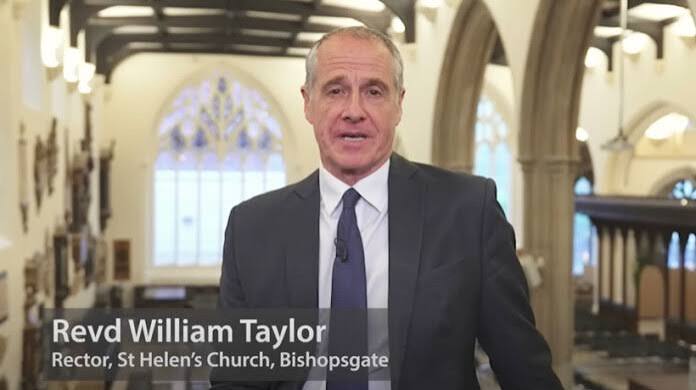
Right-wing purity beliefs are a feature of many Christians in our own country.  A clear example of this way of thinking was to be found in an extract of a recent sermon by William Taylor on Youtube, (Responding to false teachers in the Church of England).  He was attempting to justify why he and his congregation wanted nothing to do with the LLF process in the Church of England.  The Evangelical faction that he represents and leads, and who would describe themselves as conservative, frequently drew on a vocabulary that emphasises on the importance of purity of doctrine.  They thus cannot associate with those who do not follow their version of what they describe as biblical.  The recent commissioning of seven quasi-clergy linked to the Proclamation Trust and St Helen’s Bishopsgate is a challenge to the mainstream Church of England and its episcopal structure.  By training and employing these men outside the legal and canonical structures of the main Church, these congregations are effectively in a state of schism from the main body.  They are saying to non-members that the St Helen’s view is the only correct one and that all other positions are in error. The spiritual health of their congregations depends on maintaining their purity through a complete separation from mainstream Anglicans and their bishops.

The vocabulary of schism and purity also draws in the notion of poison and toxic contamination.  Taylor at St Helen’s, in telling his congregation that they alone have access to the truth and are pure, encourages them to believe that they can turn their backs on Christians who take a different approach.  Taylor focusses his sermon on two verses in Paul’s letter to Titus that bids him to ‘have no more to do with him (who) disputes what you teach.’  Watching him apply these verses of deliberate unapologetic exclusion to the current situation of division in the Anglican Church is to glimpse a version of Christianity that is seemingly devoid of humility, love or any element of uncertainty.  He delivers his words with a polished arrogance, a desire to control within the context of a rigid inflexible claim to the truth. Most members of the Church of England, like the American electors on Tuesday, reject such an unflinching and inflexible approach to truth.  They recognise the existence of valid disagreement.  In the search for truth, there must be also the possibility of discussion and a sharing of insight.  The discovery of truth is always a work in progress, not a possession owned by one small group who is controlled by a leader who finds it impossible to listen to others.

The combination of arrogance and condemnation applied to those who do not agree with you, alongside an absence of love or any kind of generosity towards different insights or experience, is not a pleasant sight.  But that is precisely what I see in that sermon preached at St Helen’s.  These same human characteristics are found in the culture that gave birth to the closed controlling claustrophobic atmosphere of Iwerne and the Bash camps.  It is a version of Christianity that in its certainties made no room for anyone who did not conform – the outsider.  We have not mentioned another major bias of the Iwerne camps, also repeated at St Helen’s – the absence of women playing any significant role.  Jesus spent a lot of time with women and others who were excluded and one feels that he would always have wanted to affirm the outsider.  I am sure he would have listened to the excluded and found a way of loving the one who questions what is preached as incontrovertible at St Helen’s.  Excluding and ostracising those who challenge your understanding of Scripture is a dangerous dark position to take.   One of the benefits of listening to a point of view that is different from yours is that we have the possibility of learning something new.  I personally would find it extraordinarily restricting if I believed that any individual had nothing potentially to teach me or receive from me.   The churches that I have tried to be part of over my lifetime and, indeed, helped to lead, are ones where every person finds that they are honoured and valued for their gifts and abilities whether practical or spiritual.  A church full of cloned individuals who are only honoured when they totally conform to holding an approved set of beliefs and giving sums of money to the institution does not attract.  Sometimes the smiles and sense of conformity hides a situation of real fear.  Members pay lip service to the desired standards and objects of belief as a way of maintaining their belonging.    They have been persuaded that only a church that teaches total conformity and obedience will qualify them for the life beyond.   We are ‘saved’ by these acts of obedience to an authoritative system of teaching.  The life-transforming reality of living and growing within a community of love, joy and peace is thus denied them. 

A further thought came to me as I listened to the words of Willliam Taylor as he sought to explain the importance of disengagement with the rest of the Church of England.  Keeping a congregation away from the possible contamination of heterodox teaching seems a somewhat ironic position when we consider some of the thoroughly dangerous and toxic influences that members of his congregation may have faced.  St Helen’s is right at the heart of a network of congregations adhering to the ReNew constituency in which the now discredited Fletcher brothers operated over many decades.  While the question of who knew what when has not been established, there is no extant evidence that St Helen’s or Taylor himself has publicly apologised for any of the safeguarding issues which have damaged so many within his own constituency.  I am not aware of any writing from Taylor or anyone else which has tried to explain how things went so badly wrong at Iwerne, Emmanuel Wimbeldon and elsewhere over safeguarding.  In fact, the most obvious response seems to have been total silence while simultaneously attacking the parts of the CofE which do not agree with the St Helen’s approach.

The voting in the States has shown us that it was right for us to hope that a new generation of politicians would arrive who do not deal only with totalitarian absolutes and control.  It has been extremely difficult being politically active in the States for many years as the culture of civil discussion and debate seemed to have vanished from the public arena.  The emergence of right-wing intolerance within the churches including our own CofE, has also dogged our church life for some time.  Can we hope that the apparent rejection of totalitarian ideas and intolerance in politics is the prelude for a new era of civility and patient engagement with difference within the Church so that different opinions may come to be a source of mutual enrichment.

See also further comment about WT in a Surviving Church blog from 2021. Reflections on the Bishopsgate Letter – Surviving Church