Most of my readers will, no doubt, have followed the recent American elections with a considerable degree of attention. People in Britain will have generally applauded the promise of new return towards democratic process within the government. The heavily right-wing bias of the Trump regime has reached into every area of American society, including its religious life. For at least the past ten years we have been reliably informed that 80% of white evangelical Christians have sided with the Republican party and thus with the reactionary and toxic religious and social attitudes of Donald Trump. The rise of Christian nationalism within the Republican party is not something I possess the expertise to analyse, but I think that I am not straying from the evidence when I state that racism has infected the religious thinking of many American Christians. For many American Christians the idea that white Christians (especially the men) are the group destined to be in charge and form the elite who rule the country. All other groups, especially those of a different skin colour, do not have the same access to privilege or power that rightly belongs to a dominant caste of white males.
If my very approximate characterisation of vast swathes of white Christian opinion in the States has any accuracy at all, we must ask the question as to what this Christian racism is all about. It represents and portrays, I believe, a deep fear and insecurity that somehow the status and identity of white people is going to disappear because of immigration. Identity politics is not hard to understand but it quickly morphs into a crude racism when it is mixed up with prejudice and economic resentments. But there is also an older instinct at work in what we are calling Christian racism. Purity doctrine, or the notion that certain groups are meant to be physically separated from any form of contamination from the outside, is a powerful idea affecting attitudes. The Bible contains many examples of the way society was organised through identifying who belonged and who was outside. The most obvious group in the New Testament to be firmly excluded were those identified as Samaritans. Also, anyone who was a Jew could not associate or share a meal with the broad category of fellow humans categorised as gentiles. Life must have been very complicated for the Jews as most of the ‘impure’ or alien groups do not have obvious signs to identify them as belonging to the wrong group. The Christian faith, following the teaching and story-telling of Jesus himself, threw a spanner into this way of thinking but purity ideas have always appealed to a considerable number of Christians.
Last Wednesday as commentators began to point out the mini revolution that had taken place in American politics, it was observed that the new members of Congress and the Senate came from a rich and varied cross-section of American society. American electors had voted for, in considerable numbers, members of every American ethnic group to become their representatives in government. In addition, ‘out’ members of the LGBT community have been welcomed into the legislature. It seems that the prejudices of Trump and his followers had been ignored in favour of individuals who represented diversity and inclusion. The purity beliefs and racial prejudices of the ultra-right Christians had become far less powerful on Wednesday, and we rejoice in that fact.
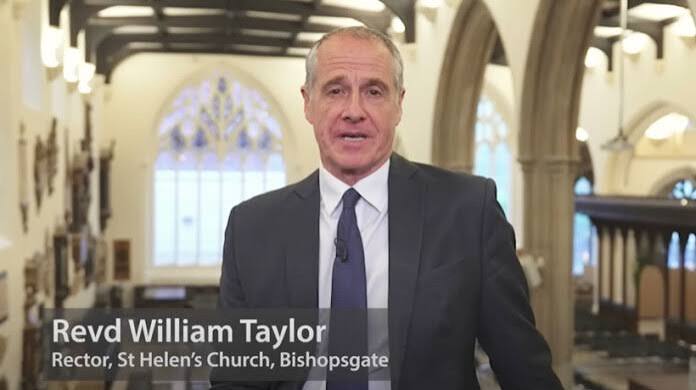
Right-wing purity beliefs are a feature of many Christians in our own country. A clear example of this way of thinking was to be found in an extract of a recent sermon by William Taylor on Youtube, (Responding to false teachers in the Church of England). He was attempting to justify why he and his congregation wanted nothing to do with the LLF process in the Church of England. The Evangelical faction that he represents and leads, and who would describe themselves as conservative, frequently drew on a vocabulary that emphasises on the importance of purity of doctrine. They thus cannot associate with those who do not follow their version of what they describe as biblical. The recent commissioning of seven quasi-clergy linked to the Proclamation Trust and St Helen’s Bishopsgate is a challenge to the mainstream Church of England and its episcopal structure. By training and employing these men outside the legal and canonical structures of the main Church, these congregations are effectively in a state of schism from the main body. They are saying to non-members that the St Helen’s view is the only correct one and that all other positions are in error. The spiritual health of their congregations depends on maintaining their purity through a complete separation from mainstream Anglicans and their bishops.
The vocabulary of schism and purity also draws in the notion of poison and toxic contamination. Taylor at St Helen’s, in telling his congregation that they alone have access to the truth and are pure, encourages them to believe that they can turn their backs on Christians who take a different approach. Taylor focusses his sermon on two verses in Paul’s letter to Titus that bids him to ‘have no more to do with him (who) disputes what you teach.’ Watching him apply these verses of deliberate unapologetic exclusion to the current situation of division in the Anglican Church is to glimpse a version of Christianity that is seemingly devoid of humility, love or any element of uncertainty. He delivers his words with a polished arrogance, a desire to control within the context of a rigid inflexible claim to the truth. Most members of the Church of England, like the American electors on Tuesday, reject such an unflinching and inflexible approach to truth. They recognise the existence of valid disagreement. In the search for truth, there must be also the possibility of discussion and a sharing of insight. The discovery of truth is always a work in progress, not a possession owned by one small group who is controlled by a leader who finds it impossible to listen to others.
The combination of arrogance and condemnation applied to those who do not agree with you, alongside an absence of love or any kind of generosity towards different insights or experience, is not a pleasant sight. But that is precisely what I see in that sermon preached at St Helen’s. These same human characteristics are found in the culture that gave birth to the closed controlling claustrophobic atmosphere of Iwerne and the Bash camps. It is a version of Christianity that in its certainties made no room for anyone who did not conform – the outsider. We have not mentioned another major bias of the Iwerne camps, also repeated at St Helen’s – the absence of women playing any significant role. Jesus spent a lot of time with women and others who were excluded and one feels that he would always have wanted to affirm the outsider. I am sure he would have listened to the excluded and found a way of loving the one who questions what is preached as incontrovertible at St Helen’s. Excluding and ostracising those who challenge your understanding of Scripture is a dangerous dark position to take. One of the benefits of listening to a point of view that is different from yours is that we have the possibility of learning something new. I personally would find it extraordinarily restricting if I believed that any individual had nothing potentially to teach me or receive from me. The churches that I have tried to be part of over my lifetime and, indeed, helped to lead, are ones where every person finds that they are honoured and valued for their gifts and abilities whether practical or spiritual. A church full of cloned individuals who are only honoured when they totally conform to holding an approved set of beliefs and giving sums of money to the institution does not attract. Sometimes the smiles and sense of conformity hides a situation of real fear. Members pay lip service to the desired standards and objects of belief as a way of maintaining their belonging. They have been persuaded that only a church that teaches total conformity and obedience will qualify them for the life beyond. We are ‘saved’ by these acts of obedience to an authoritative system of teaching. The life-transforming reality of living and growing within a community of love, joy and peace is thus denied them.
A further thought came to me as I listened to the words of Willliam Taylor as he sought to explain the importance of disengagement with the rest of the Church of England. Keeping a congregation away from the possible contamination of heterodox teaching seems a somewhat ironic position when we consider some of the thoroughly dangerous and toxic influences that members of his congregation may have faced. St Helen’s is right at the heart of a network of congregations adhering to the REFORM constituency in which the now discredited Fletcher brothers operated over many decades. While the question of who knew what when has not been established, there is no extant evidence that St Helen’s or Taylor himself has publicly apologised for any of the safeguarding issues which have damaged so many within his own constituency. I am not aware of any writing from Taylor or anyone else which has tried to explain how things went so badly wrong at Iwerne, Emmanuel Wimbeldon and elsewhere over safeguarding. In fact, the most obvious response seems to have been total silence while simultaneously attacking the parts of the CofE which do not agree with the St Helen’s approach.
The voting in the States has shown us that it was right for us to hope that a new generation of politicians would arrive who do not deal only with totalitarian absolutes and control. It has been extremely difficult being politically active in the States for many years as the culture of civil discussion and debate seemed to have vanished from the public arena. The emergence of right-wing intolerance within the churches including our own CofE, has also dogged our church life for some time. Can we hope that the apparent rejection of totalitarian ideas and intolerance in politics is the prelude for a new era of civility and patient engagement with difference within the Church so that different opinions may come to be a source of mutual enrichment.