Monthly Archives: June 2026

Clergy and Theological Education: Identifying the Gaps

by Stephen Parsons

Few people acquire all the knowledge or education that they would like.  Many of us who are ordained realise that our theological learning is at best incomplete. In many ways our knowledge resembles a certain brand of Swiss cheese that is full of holes which have never been filled.  In my own case I was privileged to spend much more time being a theological student before and after ordination than most others.  Still, my eight years of full-time study were unable to banish large areas of what I can now only describe as places of complete theological ignorance.  The system that was in operation in the sixties, when I went through the training process for clergy, required every student to pass a series of papers called the General Ordination Exam.  Each student had to pass in papers respectively covering Church History, Doctrine, Ethics, Worship and a number of papers on the Bible.  Those of us who had studied theology at university were deemed to have already qualified in biblical studies, but we still had to acquire a reasonable degree of competence in the other subjects.  Most people managed to pass but I wondered how taxing the standard for a pass was when the score that had to be achieved was only 40%.  My mark for the ethics paper, while a pass, was abysmally low, and I felt my knowledge of Church history was extremely fragmented.  While my university studies gave me reasonable exposure to scripture and the early creeds, my understanding and grasp of contemporary theological debates was thin in the extreme.  My post-graduate research studies filled me with information about Byzantine liturgy and liturgical theology, but this was no substitute for a thorough understanding of the history of the Book of Common Prayer and the debates within Anglican history which created the Thirty-Nine Articles.  Familiarity with the iconoclastic debate of the 8th century also did not really make up for my failing to understand the contribution of Bonhoeffer and Barth to contemporary theology.

My Swiss cheese grasp of many areas of theology is probably not hugely different from many other members of the clergy today.  Ideally, as a solution to this, we needed also to be coaxed into a habit of study and reading over the entirety of our ministerial careers.  My own exposure to theological books of varied kinds did give me a taste for life-long study, though many of the books I have read reflect more my eclectic interests than material strictly relevant to the job of the parish priest.  One positive thing that arises from all this esoteric reading is that my varied interests within theology have kept me from ever attaching myself to a ‘political’ stance within the subject.  I have, in other words, never sought to align with individuals who write or speak as though they embody some position of ‘truth’.   I am not impressed with those who use the Bible to impose their views on, for example, the position of women in the Church or even try to argue that key points of doctrine or practice can be established by quoting a single verse or statement in Scripture.    Any statement which contains the words that ‘the Bible is clear’ is regarded by me with upmost suspicion because I have learnt over the years that the Bible is very often not at all clear.   I am not a ‘party’ man and certainly am never tempted to believe that there is somewhere a body of knowledge, single textbook or authoritative statement which has definitive answers to all matters of religious truth.  Partisanship, whether the evangelical and conservative brand, or that practised by those listen only to papal decrees, has little appeal.  I try to be a bit like Socrates, as recorded by Plato, who recognised that wisdom was to be found in understanding that he did not know things.  In short there is a wisdom in admitting one’s state of ignorance.  Listening to sermons today, often online, I seem often to encounter a belief in truth and certainty that does not know how to interrogate and question the wisdom of ‘orthodoxy’.  I far prefer the approach to truth which likens it to travelling on a journey where the traveller moves forward towards answers without losing a sense of the provisional nature of our understanding of truth.

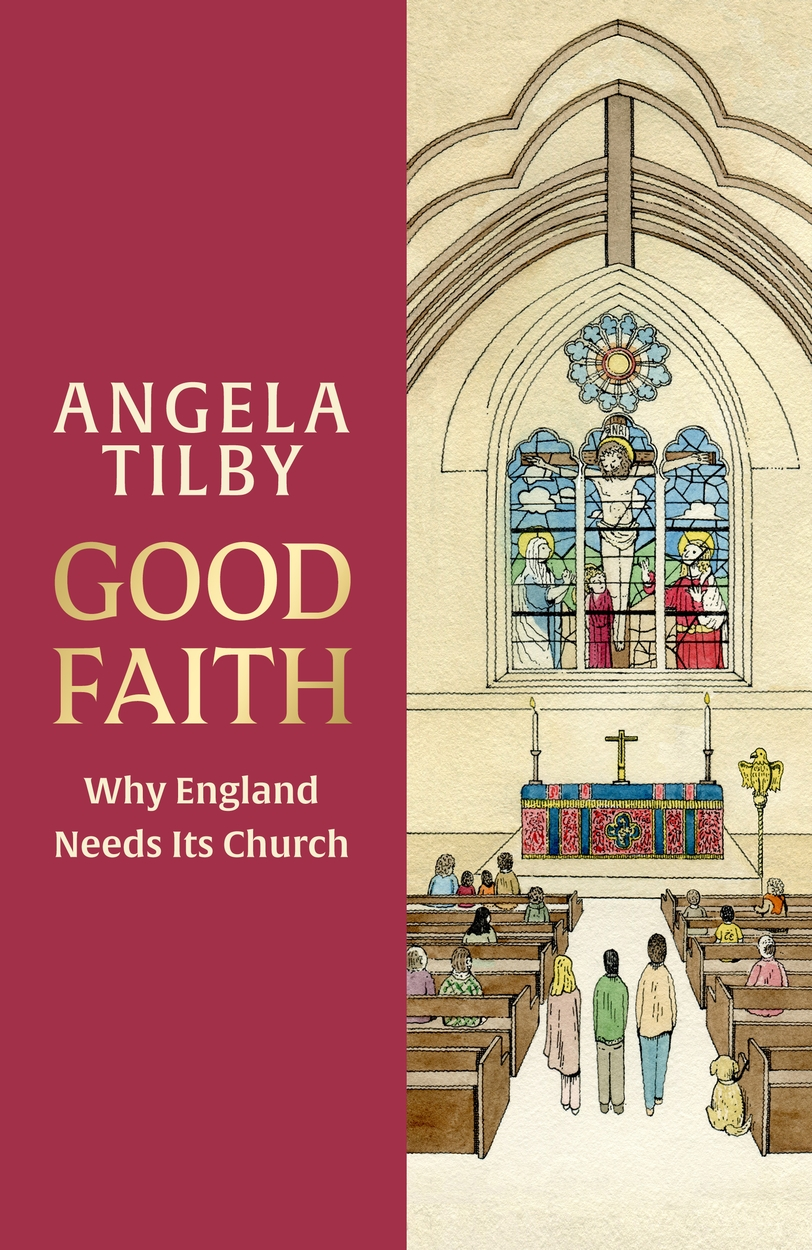
Uncertainty and a questioning faith are two of the lenses that produce, as I see it, good Anglican teaching.  This moderate broad-church way of doing theology refuses to be tied into a single system of explanation and discourse.  Anglicanism, when it adopts this path of moderation and even uncertainty, seems better able to deal with and face paradox and find a way through the contradictory claims of the different schools of theological teaching. It is not fazed by these contradictory statements and still finds itself able to be of benefit to individuals trying to live a Christian life.  Recently I have come across a new book which puts into a single volume a perspective on Anglicanism which is able, in a quiet way, to make sense of many of the apparent untidy aspects of moderate Anglicanism.  The exploration is liberating and helpful and also it fills up many of the numerous holes that may exist in the theological education of many parish priests and bishops. .   The book is Good Faith: Why England Needs its Church by Angela Tilby.  In summary, this book explains to the reader, using especially the tools of history, that Anglicanism is a reasonable as well as a traditional exposition of the Christian faith that is attractive and convincing.  From conversations with my fellow clergy over the decades, I find that there are many who have lost the sense of balance that traditional Anglicanism offers.   In some cases, they have allowed themselves to be trapped by dogmatic systems of theology and a political line which seems to dictate everything they say or preach.  Tilby’s book is one that sets out the balance that belongs to the Anglican way, while simultaneously filling up some of the empty spaces of ignorance that afflict most clergy in the Church.   I know of no other book which, in a single volume and in an accessible way, successfully and succinctly traces the important strands of history, liturgy and theology that together have created the unique institution we call the Church of England.  The sympathy it reveals is a genuinely generous one.  The history of the Church of England is never the tale of a body of Christians taking the high road of correct values and choices on every occasion.  It is a story of flawed human beings trying to find the place of moderation and reason against the background of many Christians seeming to be overcome by fanaticism and intolerance.  I had always supposed that I knew my church history fairly well, but Tilby has uncovered numerous important sub-sections in this story which are simultaneously fascinating and important.

It is impossible to evaluate every section of the book, but I feel there is one section that deserves the special attention of the reader.  This is the section that deftly travels through the history of worship in the Church of England since the Reformation.  This section not only helps us to understand historical meaning of the changes which have appeared with each new version of the BCP but also to have a sense of what the reformers were trying to achieve in these key pillars of traditional styles of worship.  At a time when not only the BCP but also all respect for its use in the contemporary Church of England is on the wane, it is good to have an intelligent and informative appreciation of what worship has traditionally meant to Christians in this country.  I recently met a young clergyman, well into his first incumbency who had never, during his training or subsequently, taken part in a traditional BCP service of Evening Prayer.   One might imagine that the glories of medieval cathedral architecture which Tilby lovingly describes were also another part of the English religious tradition that demands to be understood and appreciated by all.  Instead, there are many who are locked out of any visual sensitivity to this part of the church’s tradition.   The language of beauty has become an unknown language.  English Christianity is in danger of losing its connection with the past.  The richness of the church culture, through music, words and buildings, needs to be rediscovered and understood.  Those who come to our churches should be encouraged to experience themselves as inheritors of an incredibly rich heritage.  Good Faith successfully connects us with the mighty breadth and depth of that tradition which we find in our own Church of England.

Good Faith is a book suitable for two categories of reader.  One group that need the book are traditional Anglicans who have allowed their grasp, knowledge and appreciation of the broad Anglican tradition to become atrophied because the climate of church life they encounter locally shows little of no appreciation for it.  Tilby’s book might well boost their knowledge but also it may help them to discover again a pride, even an enthusiasm, for Anglican order and style.  The notion that the Church of England stands for balance, as a mean between extremes, is an idea that still carries substance even if we may not want to identify completely with this idea,

The other group that may value this book, Good Faith, are those who find themselves in an authoritarian section of the Church, whether evangelical or catholic but suspect that there are other ways of being Anglican beyond what is on offer locally.  Dialogue with other people may be a way of discovering new nuances of truth which can enrich their faith and their appreciation of the culture of Anglicanism over the centuries.  One criticism of conservative, even fundamentalist, versions of Anglican life that I have, says nothing about its intellectual incoherence, though this may be present.  It is rather that there seems to be endless repetition in the diet of songs being sung on the stage up front.  In the effort to become new and ‘post liturgical’, the worship innovators of HTB have created something that will eventually be experienced as something extremely boring.  While I had cause to compliment the leaders at HTB for breaking through briefly to a true spontaneity, that moment passed very quickly and was buried in the cacophony of sound that formed the main ingredient of the worship.

Angela Tilby’s new book needs to be read by all those who welcome reason, reverence, respect for tradition and order in our national Church.  Were I to be a member of staff in an Anglican theological training scheme, I would insist that every student bought and read this book so that, even if the individual student had been formed within a sectarian part of our national Church, at least he/she would know how Anglicans have dealt with many of the issues of church life over the centuries.  Tilby makes it impossible to avoid recognising that the traditional Anglican, past and present, represents a unique yet liberating and tolerant version of the Christian way, which may well be of relevance to the spiritual needs of many in our society.

Charismatic Authority in Sheffield – the Family Business

by Daniel Caerwyn (pseudonym)

Last August, Chris Brain was convicted at Inner London Crown Court of seventeen counts of indecent assault against nine women from his congregation. Readers of this blog know the story: the Nine O’Clock Service, the homebase team, the rota of young women required to put their leader to bed. The trial confirmed in law what Roland Howard documented thirty years ago in The Rise and Fall of the Nine O’Clock Service.

The trial judged a man. I want to write about the building, and the architecture that built it.

Within a single decade, St Thomas’ Church in Sheffield produced both the most notorious scandal in modern Church of England history and, by 2003, the largest congregation in the country. The Guardian covered the second story under the headline “The sleek shall inherit the Church”. We treat these as two stories. They are one.

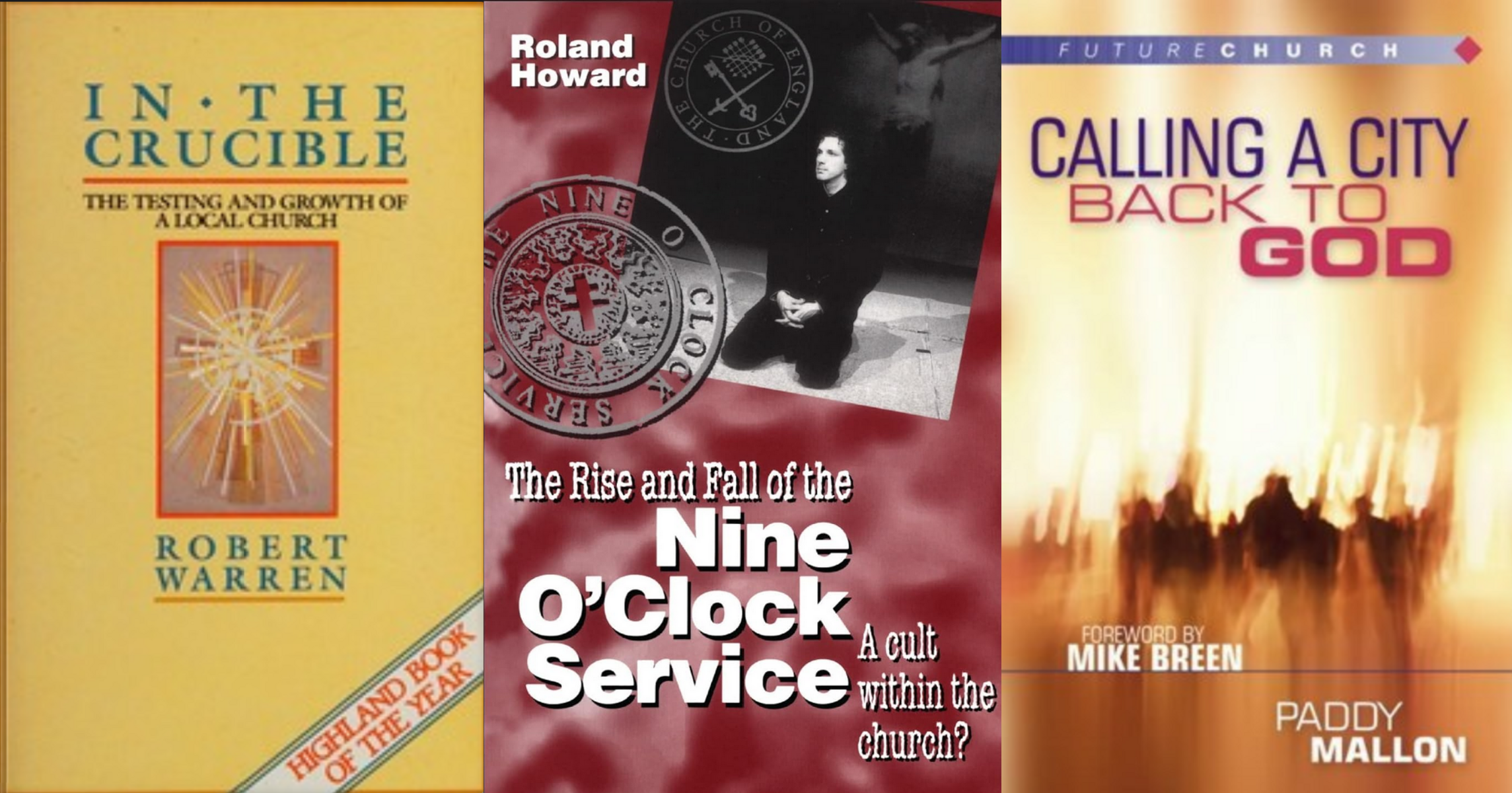
Three books tell it. Robert Warren led St Thomas’ from 1971 to 1993 and wrote a memoir of those years, In the Crucible. He brought John Wimber’s teaching into the church in 1985, embedding prophecy, healing and spiritual warfare in its common life, and in 1986 he commissioned an experimental service for the unchurched young, led by Chris Brain. Howard’s book records what that service became. After Warren left, Mike Breen took over in 1994; Paddy Mallon’s memoir, Calling a City Back to God, narrates the growth that followed. Breen moved to the USA in 2004 to train leaders in his methods, and his organisation, 3DM, carried those methods across the Atlantic and back through books, courses and coaching networks.

Brain and Breen are easy to confuse by surname and impossible to confuse in person. Brain: avant-garde, artistic, an obvious rebel. Breen: a gifted preacher and a builder of institutions. Attend a NOS service and a Breen-era St Thomas’ service and you would find it absurd that they came from the same church. NOS looked like rave culture; Breen’s church looked like a standard charismatic evangelical “worship, word, ministry” service. But these labels tell you what happens in the room, not what happens to a person once they are inside. For that, you have to look at the architecture: how people were let in, how belonging worked, who shaped whom, what obedience came to mean and how authority was exercised. Read Warren, Howard and Mallon side by side and the same structure stands beneath both men’s churches.

Start at the door. NOS posted gatekeepers known as “sweepers”, members whose job was to take a newcomer’s measure and steer them, either toward the inner life of the community or quietly to its edge. St Thomas’ itself ran an eight-point checklist for assessing newcomers. Howard records that the right look, the right connections or money could carry a newcomer straight past conditions others laboured for months to satisfy. Two people could walk through the same door and meet two entirely different churches. Breen kept the gate and changed the label. His huddles, the invitation-only groups at the heart of his system, admit only those the leader selects, on terms the leader sets. His “Person of Peace” teaching directs leaders to invest in the receptive and the influential, and to pass over those who question. Invest is the operative word. His Five Capitals framework teaches leaders to appraise what a person carries in spiritual, relational, physical, intellectual and financial capital. The sweeper’s instinct becomes a balance sheet. Brain extracted usefulness as wealth and clout. Breen reframes the same calculation as stewardship.

Then the family. The trial heard how Brain’s homebase team absorbed members’ lives into his household, and how he cut followers off from family and friends outside the group. Breen needs nothing so crude. His book Family on Mission creates a conditional hierarchy where true “family” are exclusively “those who surrender completely, laying down their agenda fully”. Total surrender to the vision becomes the absolute price of entry for genuine belonging. In a book that commends the dissolving of ordinary pastoral boundaries and describes life lived within them as “utterly exhausting”.

Then the temperature. Howard records NOS members enduring an affection-and-withdrawal cycle they nicknamed “Chrisnapping”: intrusive confrontation framed as “loving aggressively”, followed by sudden warmth, on no schedule a member could predict. Breen codifies the same oscillation as “invitation and challenge” and calls it “constant calibration”: the leader perpetually alternating warmth, access and affirmation with pressure, correction and withdrawal. Strip the arbitrary cruelty from Brain’s version and you have Breen’s. The same cycle, made stable, kind-faced and publishable. Defenders of the system describe challenge as ordinary leadership development, the stretch any good coach provides. I have heard from many people who sat on the receiving end of it. None of them describes goal-setting.

Publishable is one word for it. Scalable is another. Max Weber distinguished authority that rests on law or office from authority that rests on the perceived extraordinary qualities of a person: charismatic authority, power grounded in a leader’s claimed access to God. The gift itself becomes the licence to command. Brain built that kind of power, and when he fell, it fell with him. Breen’s contribution was to make portable the one kind of power that normally evaporates with the man who holds it. He reduced charismatic authority to a method: shapes, stages, huddles, vows. An ordinary leader could install it, and Breen shipped the guidebook. The leaders pouring into Sheffield in 2003 to learn from the country’s largest church took the first deliveries. That same year he founded the Order of Mission, a dispersed order launched from St Thomas’ with episcopal blessing, whose members pledge themselves for life to “accountability, simplicity and purity”: a more palatable rendering of obedience, poverty and celibacy. The Anglican scholar Jack Shepherd traces the “resource church” concept, now central to Church of England strategy, directly to Breen’s 1997 writing about St Thomas’.

Breen liked to tell a story about Monty Roberts, the famous horse whisperer, who won horses over far more gently than his father, a man who broke them by force, and got better results. He offered it as a picture of discipleship. Submission remained the goal. I have often wondered who the father was in that analogy.

I should be clear: I am not saying Brain and Breen are the same. The court record makes plain that they are not. There are more parallels in the record than I have drawn here; with a retrial on the outstanding charges listed for September, prudence says they can wait. What I am saying is that the two men came from a shared ecosystem, with a common understanding of authority, leadership and discipleship, and both placed the leader at the centre of a follower’s life. Breen’s own record is this. In 2014, his methods caused a rift in a US megachurch, an online community formed to document harm in churches that had adopted them, and he stepped down as leader of the Order of Mission. In 2024, he resigned from Apex Church in Ohio after an independent investigation found he had engaged in sexual misconduct with a vulnerable member of the congregation, later confirmed to The Roys Report as Adult Clergy Sexual Abuse, alongside findings of bullying, intimidation and a reluctance to seek reconciliation. He was offered a right of reply to my earlier investigation; he expressed confidence in the integrity of his restoration process and disputed the bullying findings. He has since returned to Yorkshire and relaunched his publishing business. The Order of Mission has expelled him and is conducting a “learning process” into his years as its leader.

And the building? Readers of this blog will remember Richard Scorer’s account of the Matt Drapper settlement. In 2014, nineteen years after NOS was wound up, the church’s own internship and prayer ministry structures delivered a young gay man to an exorcism. The final prayer was pre-written on paper, suggesting prior use.

I have found no evidence of institutional curiosity into the suitability of Breen’s methods, and the risk of harm they might represent. This is what troubles me most. The trial judged one man. Barnardo’s adjudicated one incident, and its terms of reference excluded any investigation of the methodology as a system. The Order of Mission’s learning process is, its Secretary has confirmed to me, not a review of Breen’s published methods. No diocese has examined them. Yet those methods sit, often unattributed, in huddles, discipleship years and leadership networks across the Church of England and well beyond it, run in most cases by sincere leaders who have never heard this history.

So what is the family business? The refinement, packaging and distribution of charismatic authority: made possible by Warren, used to destructive effect by Brain, and exported by Breen. Mike Breen may be the most influential charismatic leader you have never heard of. I have published a longer investigation of his methods, and a toolkit naming the techniques one by one. The Sheffield story did not end in a courtroom last August.

Every Member Ministry and Safeguarding

By ANON (Views from the Pews)

“The House discussed the start of work on a review of the definition of safeguarding, to examine whether the Church’s structures and processes are established in a way that can best ensure everyone it comes into contact with is kept safe from harm.” (Minutes of the House of Bishops Meeting, York, 21 May 2026).

We have recently had another visit from the Archdeacon. Our parish is about to go into vacancy (the Vicar is leaving), so we have had the pep-talk about what an “opportunity” this time will be for our congregation and parish. We have no idea how long the vacancy will be, and the Archdeacon (helpfully?) said that the current gap between a clergyperson leaving and a new one arriving in the Diocese is about 18 months. Some vacancies take longer to fill, we were told.

We should be OK going forward. Our benefice comprises two parishes, with one Victorian church and one much older. Both have church halls. One of the parishes also has a mission church that was built on the new housing estate in the 1960s. So, we have five buildings to care for. The is also one JMI CofE school in the benefice. We do Messy Church too, and have a ministry to the residential and nursing homes in the parishes. Churchgoing numbers have been steadily declining over the past decades, and the pandemic (2020) hardly helped. But we have a nice Vicarage and also a house for the Curate in the other parish (formerly the Rectory), though, of course, no actual Curate these days, because far fewer people are offering for ordained ministry. So, like the rest of the Deanery, we rely on several retired clergy to help out. But they are getting older and not being replenished.

The Archdeacon told us that this “opportunity” we have before us – a long, 18-month vacancy in all probability – is a time when the laity can “discover their own ministry”.  At the PCC meeting, the Archdeacon reminded us that “every Christian has a vocation, and every baptised member of the church has a ministry”. We were told to renew our commitment to the Diocesan vision for “the ministry of the whole baptised people of God”. As we wait, pray and work for a new incumbent, we might be “surprised to discover how rich and fulfilling this ministry of the laity can be”.

Whilst I don’t necessarily baulk at such sentiments, I was left with an uneasy feeling about how things have been left. Sharing a vision for “the ministry of the whole baptised people of God” sounds OK (sort of), but I also know this is not a phrase found in the New Testament. I quietly wondered to myself if the Archdeacon knew that this overused soundbite wasn’t biblical?

Be that as it may, we will roll up our sleeves and get on with keeping the ship afloat, the show on the road, and the shop open for business. That, in essence, is what we are bound to do until sometime in 2028, when, God willing, the long siege of improvisation, burdens and duties is lifted, and we are finally relieved by a new Vicar.

Meanwhile, what most of us dread on the ground is the paperwork, administration, and responsibilities we will collectively be left with. Our benefice has two PCCs, both of which are independent charities. Our crumbling 1960s mission church has no PCC, but it does have several trustees as it is also a charity. We have to pay the quota to the Diocese too (there is no relief during a vacancy), and also handle the insurance, maintenance, and audits for the church hall kitchens, as well as contractors who handle health and safety.

We could probably manage all of this, though we only have one Church Warden for the Victorian church. Our other older church is about to lose one of its Church Wardens too, and we cannot find a replacement despite trying hard. There is one Treasurer for the benefice, but not one for the individual PCCs. We are not sure if this is legal, but the Archdeacon has been “taking advice” on this since last summer. Thus far, silence reigns on this query. So, we are just carrying on.

But it is safeguarding where the wheels look set to come off. Many denominations specify that any person with a recognised ministry should undergo DBS vetting and safeguarding training. On the assumption that anyone who has a role or responsibility that might relate regularly or frequently to a young person (i.e., under 18), vulnerable adult, or person who is ‘temporarily vulnerable’, we are struggling to make sense of how we are supposed to manage the next few years.

Frankly, we don’t know who should be covered by church safeguarding training, vetting, and DBS checks, and who should be included in the statistics and returns for the Diocese. To be honest, this wasn’t really any easier when we had a Vicar.

For example, when it comes to ministry with, to or from vulnerable adults, we accept that anyone involved in bereavement visiting, ministry and support should probably be listed. But quite a few people in our congregation offer this kindness and care just as good Christian neighbours might do, and it’s not clear to us that we can make people register with some Diocesan list and comply with their training just because they also happen to come to church. We think that laypeople who regularly help out at funerals or baptism visits, or anyone involved in supporting families, probably should be vetted.

We also have vulnerable adults (including people who are registered disabled) in our congregation who are actively engaged in various ministries (e.g., leading worship, music, intercessions, reading lessons, etc).  But we don’t know if they need vetting for any risk they might pose to others? Or, for any harm they might come to whilst they are ministering?  According to the Diocese, technically, it is the person who is offering the ministry who has to be risk-assessed.  But the ministers in this case are vulnerable adults, so what do we do?

We have similar quandaries with our young people. Some youngsters help out in Sunday School and support the crèche. Some of our youth group lead services with the worship band and even give short talks at the all-age services. Again, we don’t know if our young people need vetting for any risk they might pose to others? Or, do we vet the people they minister to for any harm the young people might come to whilst they are ministering?

More generally, with worship, we have lesson readers, welcomers, sidespersons, and folk leading intercessions. We assume that as these are all involved in regular ministry, they should all be vetted, trained in safeguarding, and subject to DBS checks. But that is a very large slice of our congregation. We do actually have a lot of lay participation in our worship, and wonder if everyone in the music group needs to go through the safeguarding vetting and training processes too? The guidelines from the Diocese stipulate that “anyone involved in ministry” should be, but that would be dozens and dozens of people. It might include most church members.

We also have some elderly retired clergy and lay readers sitting in the congregation, but they no longer have an official licence to minister, and so they don’t preach or take services. That’s fair enough. But people still look to them for pastoral care and occasional spiritual counsel. After all, they are experienced, kind, gifted and pastorally wise. We don’t know whether we are in breach of diocesan guidelines by allowing this to happen, though we don’t see how it could be prevented.

Finally, the issue that really perturbs us is hospitality. Our last Vicar was lovely, but their spouse was not a Christian and didn’t go to church. Despite that, the Vicarage was endlessly hospitable to the congregation and wider parish. Do we need to put all of the members of a clergy household through safeguarding training and vetting even if they are non-churchgoers? What about retired clergy holding an official licence and entertaining at home, but with lodgers in their house who are not vetted? Or what about vulnerable adults and under-18s who are part of a clergy household and involved in supporting events at official or casual church events, including hospitality in a Vicarage, but have not been safeguarding-trained or vetted? Are they at risk, do they pose a risk, or is it a case-by-case matter of resolving the queries?

We genuinely don’t know, and when we raised this with the Archdeacon, we were told that the Diocese would “take advice” and get back to us. That was last year, and nobody in the Diocesan safeguarding team seems to know the answers. As almost everyone in our churches has some responsibility, and we try to model a holistic vision for and approach to lay ministry, we think that everyone in the congregation should potentially complete safeguarding training and be vetted through DBS. But that would be silly, wouldn’t it? The Archdeacon has promised “to clarify the position of the Diocese”. Meanwhile, we are apparently meant to carry on as before.

These days, the Church of England talks a lot about “every member ministry”, but it doesn’t have any watertight definitions of ‘minister’ or ‘ministry’, or even precise legal demarcations. These terms can mean almost anything, and they vary from parish to parish. In our church, the team that serves the tea and coffee each week after worship and supervises the drinks and snacks for the children has a ministry (according to some definitions of safeguarding). Some say the team should all undergo DBS checks and safeguarding training. But it will be different at other churches in our deanery, where high numbers of laity involved in numerous ‘ministry teams’ won’t be vetted at all, and neither will the leaders of the home groups or Alpha Courses.

Meanwhile, our diocese has been busy collecting enormous amounts of personal data from laity across the parishes so everyone can be ‘processed’ for safeguarding vetting. Unfortunately, the diocesan IT systems were recently hacked, and a lot of personal data was stolen, so some churchgoers have had to apply for new IDs. So, it looks like our data is not safe in the hands of the diocese, which, quite frankly, comes as no great surprise. Yet the diocese still insists on collecting our personal data to allow us to have any kind of role or ministry (even if we are just talking about the team making the tea and the coffee).

I can foresee a day when anyone who does anything in church can expect to be vetted and trained. At that point, the only way to avoid such unwarranted personal intrusions and this overbearing scrutiny will be to promise that you will make no contribution whatsoever to “every member ministry”. Increasingly, that is the vocation beginning to stir in me.  If any readers can offer advice or share experiences on how we can manage this going forward, we’d be grateful.

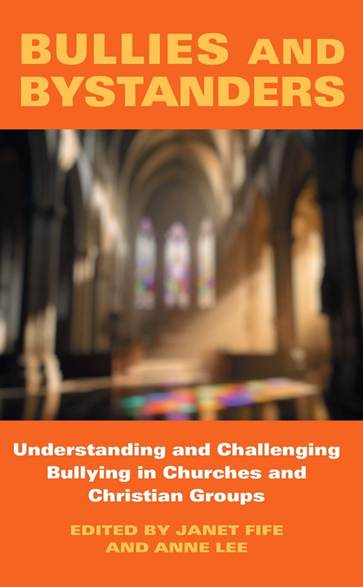
Bullies and Bystanders: (New Book Extract) Silencing and Retraumatising

This blog is a chapter from Bullies and Bystanders, edited by Janet Fife and Anne Lee, which is published this week by DLT. Rebecca Parnaby-Rooke is a trained music therapist who facilitates the online community The Ordinary Office.

Rebecca Parnaby-Rooke

“Silence is Golden”, as the Tremeloes famously sang. Jazz musician Miles Davis spoke of his craft belonging in the music he did not play; and quotes have been attributed to both Debussy and Mozart speaking of the power of silence in music. The notes you don’t play are often as important to a piece as the ones you do.

Think of that moment when a conductor holds the orchestra in position after the final note of a piece. Nobody plays a sound, nobody moves. The music is still being intentionally crafted, as represented by the musicians remaining poised. The art is still in motion. But for that moment, they are allowing the silence to ring out just as powerfully as the notes did moments before. Without that moment, what came before would be diminished.

It is an art, knowing how to craft silence. As music therapists, this forms an essential part of our training. In his excellent blog “What is Music without Silence”, Phil Evans succinctly explains the way we work with silence to support our clients. Specifically he explains. “Silence in music therapy, as in life, can take on many qualities. It can be oppressive or mutual, uncomfortable or soothing.” (Evans, 2013). It is this subversion of silence from the intentional and powerful to the forced and harmful which I seek to explore in this chapter.

Preserving the Positive Silence

In a music therapy session, if I heard a client play a soft instrument, such as an egg shaker, and responded with a hard strike on a bass drum, it would drown out their contribution, send the message my voice was more important, and discourage them from contributing again. I wouldn’t be doing my job. My role within the session is to facilitate the client in communication, musical interaction, and therapeutic development, not to make the musical sounds I like best. So, I may choose to hold my silence and look interested, hold a paused chord to invite more of their sound, or repeat their pattern to show I had heard it. I would acknowledge what they had done musically and give them encouragement to continue sharing what they had to offer.

How often is that the response to a survivor? We hear you, we are interested, please give us more?

Should my response be effective, and the client be in a position where they feel able, we may proceed on a musical journey together, exploring what they have to share. My role now is to facilitate, encourage, and most of all listen. To hold the space for any emotions or challenges we may encounter on the way.

How often is that the experience during a survivor journey? We are here for you, please know you are supported and we will tackle whatever arises together?

Once the moment has run its course, all has been expressed, and we come together in a moment of pause, there will be a silence. An opportune moment. This is the moment in which all that came before can be taken away as constructive, or can be ruined.

How often is it that the meetings survivors have which feel to have been beneficial are ended with platitudes, broken promises, or inaction?

I treasure that moment of silence, however brief. I invest in that moment of shared understanding, of coming together at the end of an intense journey. For it always is profound when someone chooses to share vulnerability with me. I have a responsibility in that moment to honour their choice, and take it forward with grace and respect. For me, that means recording what has happened in my clinical notes, sharing the event with family or staff teams (should that be appropriate) and ending every session with a “Thank you” song for the great privilege it has been to be with the client in music.

How often are survivors’ experiences respected and centred so? How often are records comprehensively kept, and information appropriately shared in line with GDPR and Caldicott principles? How often are survivors thanked for the great efforts they go to every time they relive their experiences, knowing the cost each time?

What is Retraumatising?

The cost of subverting silence is retraumatising survivors. This takes many forms, but first let us be clear with a definition of the term. Retraumatising is defined as “one’s reaction to a traumatic exposure that is colored, intensified, amplified, or shaped by one’s reactions and adaptational style to previous traumatic experiences(2)’. Essentially, an event which takes a person back to the state of trauma experienced at a prior time. This is not to be confused with the term ‘trigger’, which in comparison would be an event which increases a person’s emotional response in relation to a state of trauma experienced at a prior time. Put simply, a trigger reminds and therefore evokes. Retraumatising places the person back in the physical, emotional and spiritual state of trauma as a full-bodied response.

It may feel like a bold claim to suggest silence can impact a person to the extent they have a physical response – until we consider the myriad ways silencing can occur, especially in the context of bullying: repeated microaggressions which make a person afraid to speak out, in case their contribution is commented on, ridiculed, or contradicted. Being spoken over or shouted down. Left out of email chains or meetings. Finding out about key issues concerning their work through unofficial channels, removing any opportunity for discussion or feedback – with the refrain “Oh, I thought you already knew” echoing though the gossip. As if that would make it okay – the blow had already been delivered and further participation in sharing the news was a mere aftershock.

The earthquake analogy is a good one to use when it comes to trauma and retraumatising. When an earthquake hits you get the initial tremor, registered on the Richter scale and causing various levels of damage. It is a most unsettling thing to feel, an earthquake. During the Market Rasen earthquake in Lincolnshire on 27th February 2008, I was woken from my sleep feeling like I was being thrown around in a snow globe – while still laid on my bed.  I have never felt anything like it. But that isn’t necessarily the end of it.

Aftershocks can be just as devastating as the original seismic event. Some even register as high on the Richter scale as their original tremor. The aftershocks can keep on coming for days, even years; one series of aftershocks from New Madrid in North America have been active for 145 years – and counting! Not only do they cause damage in their own right, but they destabilise what has been shored up from the previous events. They make already damaged spaces worse. They trigger near collapses to become full destructive events. Just as retraumatising events do for abuse survivors.

Silence, Retraumatising & Spiritual Abuse

Judith Herman describes silent survivors as “carrying the weight of a burden that does not belong to them(3)”. When the #MeToo movement gained rapid traction on social media in 2017, it was almost as if sexual abuse survivors everywhere were breathing a collective sigh of relief. They could finally lay down the weight of their burdens and relate to people. Use their agency. Share parts of themselves which had never seen the light of day. No longer be silent.

For with silence comes shame.

I cannot talk about this, it must be hidden. I’ll be considered dirty, stupid, I brought it on myself.

With silence comes doubt.

Am I a victim, or actually, did I deserve this, were they right, am I wrong, bad, mad? Evil. Sinful.

With silence comes fear.

What if I accidentally talk about anything close to this, and cause trouble. I’d better not talk at all.

With silence comes introversion.

I can’t talk about this, so I won’t talk about anything. I’m better off on my own.

With silence comes frustration.

Can’t people SEE that something is wrong? That I’m hurting? That I’m not ok?

With silence comes anger.

WHY is nobody LISTENING to me? WHY won’t someone HELP ME?

When we are forced into positions of silence, all of this confusion, pain and negativity has only one place to go: inwards. We become ashamed of ourselves. Doubtful of our own identity. Fearful of our own judgement. Introvert, unless we use crutches to take us out of our misery for just a short while. Frustrated because we know, deep down, we were made for more than this.

And then comes the anger. Anger because all around us we see the pastors who abused us as children continuing to live out their days free from justice. Anger because we pursue our abusers through the courts, through jury trials where we, as witnesses, are the ones tried and found to be “not convincing enough” while our rapists walk free. Anger because we lose our health, honour and livelihoods to relentless bullies who use statutes and diktats to trap us in a world of legalism. While we sit, silent, typing messages and deleting them, because “it won’t help our case”.

I often wonder, actually, if it would help our case. If instead of adhering to the social norms of smiling politely and ignoring growing animosity, waiting two months for the next PCC to raise an issue, or subtweeting our grievances without ever making an actual complaint to the person involved, we would actually do better by grappling with the process outlined in Matthew 18:15-17. Speak up, individually, then with trauma-informed, trusted, and suitable supportive peers. Make it commonplace for siblings in Christ to be people who have difficult conversations. Because the harm which comes from fear of speaking up cannot be overemphasised.

In her courageous book A Spirituality of Survival(4), Methodist leader Barbara Glasson talks about the importance of finding a language of inclusion. We can only do that if we make space to listen and truly hear what each person has to say. What one person may see as liberating, another may see as oppressive. We can only begin to understand those dynamics if we name them first, without seeing them as confrontational or personal attacks, just spoken truths from the hearts of beloved siblings in Christ. When we speak into the silence, name our truths, we give each other the power of information. With that, the weight of the burden of silence is lifted. The shame, pain, and sin is placed back with the one to whom it belongs. Jesus can deal with it there. With us, the process of restoration and reconciliation can begin. Aftershocks can no longer impact the previously damaged infrastructure because instead of being shored up with wood, it is now being rebuilt from the ground up with iron.

We don’t know what burdens are carried by those we meet. Some of us may never be able to speak of them. Others may, in time, but not yet. Through my work I have been privileged to enable the breaking of silences which have been held for decades. As people of faith we are called to nurture spaces where all feel able to speak. Where silence is an invitation for glorious sound, not an oppressive, threatening blanket of pressure. Whether through speech, sign, augmentative communication tools, writing, singing, symbols, advocacy, or any other form of expression. We must be open, listening to and caring for what we receive in the space we hold. For what beauty could we be part of if we are?

(1) Evans, P, “What is Music without Silence.” At https://www.huffingtonpost.co.uk/phil-evans/music-therapy-silence_b_3390764.html  Accessed 14th October 2022.

(2) Danieli, Y,  “Fundamentals of working with (re)traumatized populations” in G. H. Brenner, D. H. Bush, & J. Moses (Eds.), Creating spiritual and psychological resilience: Integrating care in disaster relief work (pp. 195–210) (Abingdon: Routledge/Taylor & Francis Group, 2010).

(3) Herman, J ed., Trauma and Recovery (New York:  Basic Books, 2015), p. 200.

(4) Glasson, B, A Spirituality of Survival (London: Continuum, 2009).

Copies of Bullies and Bystanders are available from Anne Lee or Janet Fife at the discounted price of £10 + 2.50 P&P. Contact Anne Lee at

anne.lee@retired.ox.ac.uk or Janet Fife at jhfife@icloud.com