by Robert Thompson
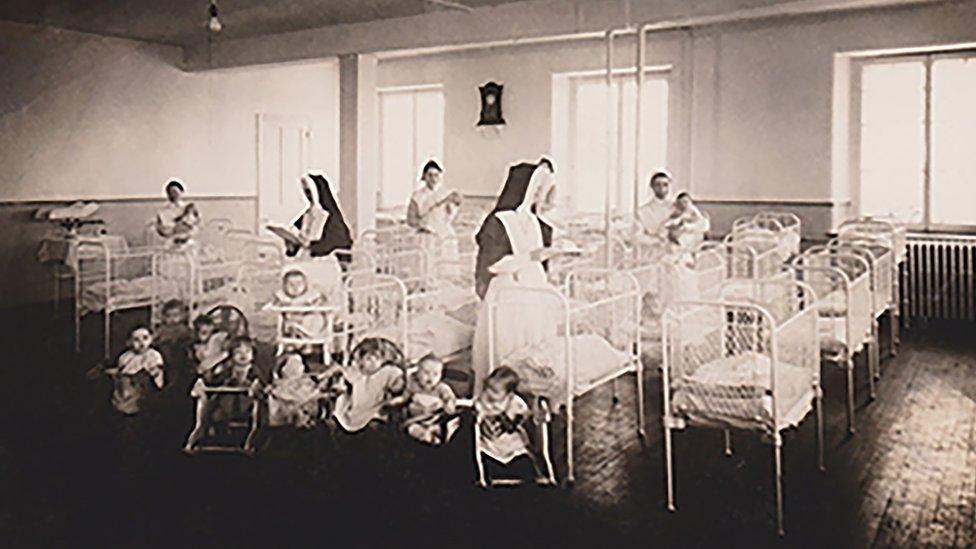
For generations, children born outside marriage were labelled with a single cruel word: bastard. The word appeared in law, in official documents, in school playgrounds, in churches, and in everyday speech. It carried shame. It marked people out as somehow less legitimate, less worthy, less respectable than others. The shame fell upon the child. It fell upon the mother. It almost never fell upon the institutions that created and enforced the stigma.
This week Archbishop Sarah Mullally apologised on behalf of the Church of England for its role in the mother-and-baby homes and adoption practices that caused profound suffering to women and children throughout the twentieth century. The apology was both necessary and welcome. Yet one phrase in particular caught my attention. She spoke of a culture that valued “secrecy and respectability” over compassion and care.
As someone who grew up in Ireland, I immediately recognised those words. Because secrecy and respectability were not accidental features of the system. They were the system. Women who became pregnant outside marriage were treated as problems to be hidden. Families were encouraged to keep silent. Children were separated from mothers. Records disappeared. Lives were permanently altered. All in the name of protecting reputations. Not the reputations of the women. Not the reputations of the children. The reputations of families, churches and institutions.
The children were called bastards. Yet looking back now, we are bound to ask a difficult question. Who was really responsible for the shame? The mothers did not create it. The children certainly did not create it. The shame was manufactured and enforced by institutions that claimed moral authority whilst denying compassion to some of the most vulnerable people in society. If there were moral failures in this story, they belonged not to the babies born outside marriage but to the systems that judged them, stigmatised them and separated them from those who loved them.
That is why Archbishop Mullally’s words carry significance far beyond the events of the past. When she speaks of secrecy and respectability, she is identifying a recurring institutional temptation: the temptation to protect reputation rather than people; to preserve authority rather than listen to those who have been harmed; to manage scandal rather than confront truth.
And that is why many survivors of contemporary safeguarding failures will read her words and experience an uncomfortable sense of recognition. The Church now condemns a culture that prioritised institutional reputation over vulnerable people. But that is precisely the criticism many survivors make of the Church today.
Time and again we hear concerns about delayed investigations, unpublished reports, defensive institutional cultures, failures of accountability and a reluctance to admit mistakes. Survivors speak of not being listened to, not being believed, or being treated as risks to institutional reputation rather than people deserving justice and compassion. Of course, there are many dedicated safeguarding professionals and church leaders working tirelessly to change this culture. Progress has been made and important reforms have taken place. Yet the underlying question remains. If secrecy and respectability were among the sins of the Church’s past, are we entirely certain they are not also among the sins of its present?
The tragedy of institutional failure is that it often becomes obvious only in retrospect. Today we ask how previous generations could have failed to see the suffering caused by mother-and-baby homes. How could they not have known? How could they not have listened? How could they have placed institutional reputation above human dignity? Yet future generations may one day ask exactly the same questions about us. What did the Church know about safeguarding failures? What did it do? Who was listened to? Who was ignored? Who was protected?
The Christian tradition has a word for the response required in such circumstances: repentance. But repentance is more than apology. When Zacchaeus encounters Christ, he does not simply say sorry. He restores what has been lost. Biblical repentance is practical. It seeks repair. It seeks restitution. It seeks justice.
That raises an important question following this week’s apology. What does redress look like?
Recent criticism from the Adult Adoptee Movement suggests that this question is not merely theoretical. Responding to the Archbishop’s apology, adoptee representatives argued that they had been excluded from shaping the process itself. Their criticism was simple but profound: “An apology about us, without us, is not accountability.”
More troubling still, some adoptees have suggested that they felt unable to participate in the Church’s engagement process because it did not feel safe. They point to meetings that included professionals and prospective adopters in circumstances where adoptees themselves felt unable to speak openly about their experiences. Whether or not one accepts every aspect of that critique, it points towards a central principle of genuine repentance. Those who have suffered harm cannot simply be the recipients of an apology. They must be participants in shaping the response. And if people affected by historic harms do not feel safe enough to participate, the Church must ask itself some difficult questions about the culture of its present-day processes as well as the failures of its past.
If the Church accepts responsibility for the harms experienced by women and children caught up in these systems, what practical acts of repair follow? Will there be assistance with tracing records and reconnecting families? Will there be counselling and therapeutic support? Will there be memorialisation and public recognition? Will there be financial compensation where harm can be demonstrated? Will survivors themselves help shape the response?
These are not easy questions. But they are necessary ones. The Church must be careful not to create the impression that apologies are for the institution’s benefit while justice remains the responsibility of survivors to pursue alone. Nor can the Church assume that an apology is survivor-centred simply because survivors are consulted; the deeper question is whether they share in shaping the response and whether they experience the process itself as safe, respectful and trustworthy.
The lesson of the mother-and-baby homes is not simply that terrible things happened in the past. The lesson is that institutions can become so concerned with secrecy and respectability that they lose sight of the people they exist to serve.
Archbishop Mullally’s apology was an important beginning. But the true test of repentance is not whether we can name the sins of yesterday. It is whether we can recognise the same temptations in ourselves today.
The children were never the bastards.
The real scandal was a culture that taught them they were.
This is such an insightful and welcome piece. Thank you.
Does Mullally-a nurse and a mother-support open access to abortion?
I was one of the bastards, I was regularly told so by my adoptive mother. I am so sad to see that you didn’t recognise that most of the apology was geared to the mothers. If you read the press release by The Adult Adoptee Movement you will see that the church failed to connect with them in a safe way and adoptee views were not taken into account. The fact that we are then encouraged to find adoptee support via Adoption UK, a ‘charity’ that promotes adoption and charges £100 per counselling session (when I enquired 2 years ago) just makes the church’s knowledge of adoptee needs, absolutely laughable.
Forgive me, Stephen Parson’s has read the AAM press release and is supportive of adoptees. I’ve clearly read this wrong. Nikki.
The piece was written by Robert Thompson. Stephen Parsons is editor of Surviving Church.
Thank you for acknowledging us offspring, now middle-aged who were severed from our families and forced out to strangers and covered in shame by these values that permeated society. The church has virtually ignored us so far, which, considering we were the entirely innocent ones with no agency whatsoever, is shocking. As a person of faith, it is deeply disappointing. Thank you again for writing so eloquently on this.
I think most of us forget the social stigma of being pregnant and unmarried. I had a sister (adopted) who I reckon was sexually active from the age of about 12. She was 15 when she became pregnant. She would have had a terrible time had she remained at home. Finger pointing, isolation in the community and more. A mother and baby home in another town was by far the best option for her. And she wanted the baby to be adopted. She definitely did not want to look after it herself. There must have been lots more girls like her.
A very fair point! Also, is abortion one of the modern UK’s standard options?
I should have said she became pregnant for the first time when she was 15. She was furious that she had been “caught”. Many years later this daughter contacted her. My sister was very, very upset because a) she had never told her husband about this baby and was terrified that he would find out and b) she was worried that her daughter would discover that she was very rich and demand money. The whole thing was a complete mess. But please, please don’t think that all unmarried girls in mother and baby homes wanted the babies who were removed from them for adoption. Many of them didn’t want them. I think the problem is that now, many years later, the world looks and is a different place. So that looking back they see things differently. 1940’s and 1950’s and 1960’s Britain was a very different place to 2026 Britain. Now it might be possible for some of them to have raised their children themselves, but this would not have been possible when they gave birth.
A child of 12 being “ sexually active ?” The word you can’t seem to say is “ abused . “
I also find it interesting that you feel the need to qualify that your sister was adopted.
Giving birth at 15 , she needed support , not to be “ sent away.” For whom was that the “ best option?”
Thank you, Claire. When I said my sister was adopted I was simply telling the truth.
“Sexually active”. She was not abused. She initiated almost all of the sexual encounters.
She wanted to go to another town to a mother and baby home. She was very angry she had, in her words, ‘been caught’. She had no idea who the father was.
She was definitely NOT sexually abused. She knew exactly what she was doing and enjoyed doing it. She had a lot of support and CHOSE to go away.
This is what I mean when I say that the world of 2026 is not the same world of the 1940s, the 1950s and the 1960s. We should not impute our understandings on the past.
Thank you for capturing so much, so well Robert. I was one of those bastards, born in a London Diocese mother and baby home, &;I remember as a child being told that’s what I was & how I should be grateful to my adoptive parents for rescuing me. Thankfully my parents were clear it was not my shame which mitigated it somewhat, but it still left me feeling tainted and not good enough. Ironically I ended up 20+ years later living in a church flat just around the corner from the home, while working for the church and being abused by an Anglican priest.
The apology is a welcome start, but I’m especially sad to hear from adult adoptee organisations of their poor experience of engaging with the process. Having worked so hard to improve church engagement with survivors of abuse, I’m bitterly disappointed that this wasn’t a good experience. Adoption is a traumatic experience for adoptees and first mothers, and trauma-informed practice should be sensitivity and collaborative. As Nikki points out, Adoption charities have a history of centering the needs of adoptive parents and the views and needs of adoptees get ignored.
If there is to be any further engagement, I hope the church recognise the importance of asking survivors what will make the process safe for them.
It’s not just the church of course that has been slow to tackle this issue. The campaign for an apology from the English parliament has been a hard battle, and there’s no investment in therapeutic support for us. Indeed, until recently I wasn’t allowed to talk to my therapist about my adoption, as they weren’t Ofsted registered, a ridiculous condition as I’m decades beyond childhood!
Whether the church and the government want to put in the hard work of reparation Robert described remains to be seen. In this, as with other injustices and abuse, leaders need to recognise that the apology is just the start, not the end.
Thanks! Inspiring! A bold statement where fear has been cast away.
Thanks you Jane
The accompanying photograph is not captioned: it would be useful to know the date, or approximate date, and the location. Some of the people reading this article will be undocumented victims/survivors of this system, and will still be struggling to process the trauma that occurred half a century ago, which shaped their lives and personalities, and continues to affect them every single day.