A clergyman, whom I much respected but who is now sadly no longer with us, told me that he had a way of demonstrating that the Bible should never be treated as a textbook containing divinely given and inerrant facts all the way through. To show this clearly, he would, with a study group, take the first nine chapters of Genesis and analyse them at depth. A detailed scrutiny of these early Genesis chapters would quickly make any open-minded reader aware of an extensive list of anomalies that appear in the text. These anomalies are there for all to see but are frequently missed by many readers who want to extract carefully selected sections but not attempt to place them in any sort of context. Far too many have also adopted the habit of glossing over difficult sections of Scripture which do not easily support the assumption, widely presented in conservative churches, that we have a Bible totally devoid of error. The questions that arise from taking seriously every verse of Genesis 1-9 are not only the sophisticated ones that can only be answered by a knowledge of Hebrew or years of university study. No, the difficulties in the text which need some sort of explanation are often simple ones, as, for example, why do we have two versions of the story of Noah. Why is there, in the text, an abrupt change of name to describe God? Even in the first few verses of Genesis, there is one major anomaly which gets overlooked by most Christian readers. I was reminded of this clear problem as it was read in church the other Sunday as part of the creation season. Our common sense might well ask the question why the light, that God gives to the universe on the first day of creation, is apparently distinct from the light given by the sun and the moon to give light ‘upon the earth’. These appear only on the fourth day. A further question that arises for the conscientious reader of the first two chapters is the fact that the Bible contains two distinct creation accounts. Human beings are created first in the second account in chapter two, while in the version in chapter one we have the creation of humanity right at the end of the creation process on the sixth day.
It would be easy, but perhaps not very profitable, for me to point out to my readers many other passages, even in these early passages of Genesis, that can present real problems to a reader who wants to study and understand the text as we have it in one or other of the many English translations. Some of the explanations for the anomalies are highly technical while others are very simple. When God is referred to as Yahweh or the Lord God (Genesis 2) this is material taken from a Hebrew source that used this name, Yahweh, to denote their God. The sections of Genesis that speak of ’God’ (Genesis 1) are from another earlier tradition that used the name, Elohim, to refer to the supreme deity. This describing of God using two quite different Hebrew words allows us to conclude that there is more than one source for the Hebrew versions of the creation story. Needless to say, there is a lot more to say about these two traditions and the way they each understand the character of the divine. These discussions are contained within countless studies, books, articles and research written by scholars over many decades of detailed study. Few others will have the time or inclination even to begin to penetrate this material. The theological training that is provided for clergy of the main denominations in the West should at least have given the clergy an awareness of this literature. My experience of lay people in the pews over the years of my ministry has found that many are delighted to learn a little of the methods and findings of biblical scholarship. Many of them are intrigued to learn about Hebrew words that are difficult to translate because their meaning has somehow been lost over the centuries. They also warm to explanations of historical events which are illuminated by up to date archaeological or historical research. Many, if not most, lay people are ready to move from the coercive preaching of the past that says, ‘this is what the Bible says’, and ‘this is how you must understand and follow the meaning that I, the preacher, give to it’. In the Bible there is ambiguity and uncertainty even, but this makes it exciting and intriguing to study and discuss.
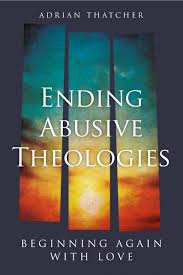
In recent years we have found a further reason to wish to wean individuals off an over-literal understanding of Scripture. Maintaining that there is only one meaning to a verse or chapter means that there will be situations when individual clergy or preachers will claim the authority of the bible to pursue an agenda of their own making. Thus, they will quote passages from Scripture to subordinate women or persecute homosexuals. They will also, by never addressing the issue, give the impression that they do not think that there is anything repulsive about genocide, the mass killing of enemies and the rape of the opponents’ womenfolk. A detailed reading of the Hebrew Bible can also be used to justify a range of other outrageous behaviours with the justification that it is ‘biblical’. A recent book by Adrian Thatcher explores the theme of an abusive theology and how it is to be found in the Hebrew and Christian scriptures. A theological scholar like him cannot simply pretend that such difficult passages do not exist. Thatcher’s book, Ending Abusive Theologies, is an attempt to understand what is being said about a God who appears, on occasion, to behave in a fickle, arbitrary and even immoral way. The task is urgent because, to take but one notorious example, the abusive career of John Smyth was made possible by Smyth’s own distorted understanding of the place of pain and suffering as being part of the Christian route to holiness. His understanding of the atonement as being a literal event involving divine anger against a child, created a toxic, even dangerous, form of teaching. The psychological domination he exerted over his victims was made possible by using the methods of biblical interpretation that he had learnt from those who taught him within the conservative evangelical traditions of the Church of England.
This incontrovertible fact is that Smyth used Scripture, or his fundamentalist version of Scriptural interpretation, to achieve his dominance over his victims and justify his depraved actions. This is a point that has never been fully owned up to by the Church. The question that arises was whether this teaching was ever a legitimate reading of Scripture or whether Smyth was simply misusing the Bible text for his own deviant purposes. Thatcher’s book takes the straightforward meaning of the biblical text and its insights seriously, so that he can see that actions of God directed at humankind and recorded in the Bible are, in fact, sometimes abusive, violent and cruel. If we regard the avoidance of harm to individuals as being a core universal principle of ethical behaviour, it can be shown that this standard is not always maintained in the recorded actions of the God of the Bible. Violence and abusive acts are found throughout Scripture, and some of these are ascribed to God or those claiming to follow him. Also, rape culture or gender-based violence is commonly encountered in the Old Testament. It is not surprising if women may find themselves feeing unsafe in a culture that at times appears to glorify misogyny and male dominance.
It is of course possible to want to read Scripture in a way that ignores the toxic and repudiates the violence conducted in God’s name, but this cannot always happen because, as Thatcher puts it, there is ‘excessive veneration of the biblical text in the churches’. Such veneration makes it difficult for those conservatives wedded to this idea of inerrancy ever to contemplate the notion that some passages, which speak of God commanding abhorrent actions, might in fact be wrong or misguided. The passage in Isaiah which speaks about the thoughts of God being ‘not your thoughts’ is one that sometimes allows or excuses blatantly cruel and malicious actions perpetrated by human beings because they are believed to represent the inscrutable will of God. At this very moment the people of the West Bank are being persecuted, harassed and killed because this territory in Scripture was given by God to the Jewish nation. Morality and the actual welfare of human beings is thus made subservient to the words ascribed to God, a God who appears in some settings and contexts to have abandoned the principles of justice and goodness.
The notion of ‘bad theology’ is one that will be disturbing and shocking to those who follow the principle of sola scriptura. How can we in any way loosen our complete dependency on Scripture? How else would we know what to believe or how to follow God’s will? But, as Thatcher points out, the real core of the Christian biblical revelation is found, not in verbal statements, but in the person of Jesus. He sums up this point when he says: ‘the self-communication of God is personal not propositional, a human being, not a book.’ The meat of his book is to explore afresh the insights of Scripture on this theme, to find a post-abusive theology and a post-abusive reading of Scripture while introducing the reader to some contemporary modern writers. This basic Christian message is that, in Jesus, the creator God has chosen to make himself known and accessible to his creation. Summarising this rich material is impossible without doing it an injustice, but I do commend the book to my readers. They can then follow for themselves Thatcher’s fascinating journey of discovery to find again a God of love. My purpose for writing an appreciation of this book is because it is the best I have encountered for helping us, the readers, to negotiate the conundrum of having a book possessing toxic content, which also points us to a God who invites to know him and be joined with him for all eternity. To be a Christian believer does not make it inevitable that we must become biblical literalists. I hope that some of my readers will buy the book to follow Thatcher’s remarkable exploration to see afresh what Christians understand when they say that ‘God was in Christ reconciling the world to himself’.
Ending Abusive Theologies. Beginning Again with Love, Adrian Thatcher, SCM Press 2026
Thanks! Very interesting. The opening words of Anglican Article Six are helpful here, and also perhaps Article Seven. My local primary school in the 1970’s was visited by a wonderful old vicar, who emphasised the witness of cosmology, and our human ability to study or be overawed by the precision of planetary orbits and our moon’s gravitational attachment to the earth. Science is possibly best understood-in at least one sense- as being an evolving or developing branch of History-Philosophy: rooted in the all too real spheres of ‘numbers’ and ‘words’.
Thank you for drawing our attention to this. The book has been ordered.
Truly ‘the self-communication of God is personal not propositional, a human being, not a book.’ A Christian turns away from the Devil to Christ, for he is the Way; a Christian is baptised into Christ, for he is Truth, Reality as opposed to the Devil’s lies; a Christian receives Christ in the Eucharist, for he is Life. Does this not point to the necessity of the sacramental life of the Church? Scriptura but not sola.
Well put, Stephen!
SUNDAY (BBC Radio 4, 20 Sept 2026) remains available online. The opening feature is a short discussion with Jane Chevous. The crass foolishness, of the Archbishop of Canterbury awarding an interfaith award (or recognition) to Hafiz Ashrafi, is possibly matched by some Church survivors allegedly now being required to have a formal psychiatric assessment (to qualify for financial assistance with therapy). Why would any group wish to inflict this mandatory investigation on abuse survivors, particularly if they already have existing therapies in place? That seems to be a cardinal point flagged up. The Church of England response yet again sounds poor, when listening to the brief commentary from Jane Chevous.
A formal psychiatric assessment is the norm for victims and survivors pursuing a legal claim – i.e. suing for compensation. The purpose is to determine what psychiatric harm was done by the abuse. Of course a lot depends on the choice of psychiatrist. There might be a considerable difference, in theory at least, between an assessment carried out by the complainant’s lawyer and one chosen by the defendant. It’s good practice for both parties to agree on the choice. I can guess what will happen if the psychiatrist is chosen solely by the C of E, and it certainly wouldn’t do anything to restore trust.
The brief Radio 4 discussion on 19.9.26, between Jane Chevous and William Crawley, refers to the experience of victims or survivors, some of whom may be very elderly. Jane Chevous makes no reference to adversarial type legal hearings, where Church liability is being contested.
Her point, about facilitating and funding ongoing therapy, seems very sensible. The Church’s latest idea really sounds a bit odd in the broadcast. But do we expect anything different, after watching the folly of Dame Sarah Mullally’s latest photo foul up, with a contentious muslim leader?
The ‘veneration’ of Scripture is a valuable concept. It contains the seed of a form of idolatry, the elevation of something man has written, over and above the God it describes.
Notable when Christ came into the world, was the difference between what He said and how He lived, from the Scripture-related principles being espoused by the then religious leaders. This difference endures to this day, and probably always will. They wanted unthinking deference. He spoke in parables and I thus suspect He wanted us to think for ourselves.
Interesting, and helpful reflection – I find those OT passages which justify brutality and cruelty as ‘the will of God’ very difficult myself. And, not too surprisingly, so do a great many atheists and agnostics who seem to know them almost as well as Christians do – but interpret them in a very different light.
The more I learn of the Bible and the background to its writing, the harder I find it to justify many of the ideas which I find in ‘conservative’ reformed and renewed circles. Unfortunately its the sort of stuff which turns up in endless quantities on ewetube (where people follow like sheep) and never seems to change from decade to decade. But then the various leaders of the different ‘movements’ or followings don’t encourage us to think for ourselves – it reduces their power over us. Desirable as that is, it also means we need to surrender the security of evangelical certainty, as dangerous as some of that can be.
Seeing it through the lens of The Book of Acts and The Four Gospels, that was a wonderful aspect of being a mainstream Anglican in the past. The ‘words of Christ in red’ was not a bad idea for emphasis in the past. Once we shift to-“All equally inspired and equally important”-there is a risk of JW/Bible cult territory. Just lift one or two verses and emphasise something weird, and hey presto-a new cult! The Anglican Articles, beloved of some evangelicals, are surely helpful on biblical balance.
Part of the problem with the ongoing ‘charismatic / restoration/ new church’ movement throughout its history has been an insistence on reading Acts in particular as a blueprint for church development. That ignores the subsequent two millennia of development and growth, or declares it irrelevant and not what God intended. A great many of us were caught in that mistaken idea, which was very forcefully promoted throughout the movement. And it was, and is very difficult to go against it.
Thankfully the promise is that through the spirit, Christ will lead us into all truth. Hard sometimes as it is to be sure we’re listening to him, its still a sure promise.
BBC have just posted 03-10-26: ‘How rapist priest exploited charisma to abuse his ‘cult-like’ congregation’. Not sure how much Reverend Chris Brain (or the CoE hierarchy-venerating and overseeing him) were influenced by The Book of Acts!?!?!
The end section of Acts 17, and the end of Acts 18, perhaps exemplify two strategies. Presenting the core philosophical truth claims for Apostle’s Creed truth (‘Gospel to the Gentile’), and the scriptural basis for belief in the Messiah (‘Gospel to the Jew’), have had an amazing staying power.
There is surely a wonderful cohesion in ‘The Book of Acts’. But I do take your point, about the dangers of getting fixated on supernatural signs. Noise and emotion can be a feature of the disco………….
I doubt Acts had much influence on Brain, or his nominal supervisors – his rock and roll style (self-) worship came somewhat later than the period I was referring to.
Going back before that, there was a great hope that we were seeing a new revival of the wider church, a ‘new Pentecost’ heralded through books such as ‘As at the Beginning’, ‘Springtime in the Church’ and ‘Nine O’clock in the Morning’ – a wonderful time, it seemed, of renewed creativity through the rediscovery of God’s gifts. Acts was seen as an example of what we should expect God to be about – and, I’d emphasise, it was not about indulging our emotions in noisy worship.
The big thing was commitment, both to God and to one another and an openness to the Spirit. The church would grow through our having something worth having, which we freely shared with those around us. It was expected to draw people in, wanting to know what it was. Somewhere along the way that vision seems to have faded – a possible misunderstanding of the Westminster Catechism’s use of the words ‘enjoy God’, perhaps?
The emphasis on supernatural signs came later, particularly under John Wimber; personally speaking it was misplaced and conjured up some false expectations – it ignored the clear proof within Acts that ‘signs and wonders’ did not necessarily command belief among the onlookers.
Unfortunately some people took Acts as a literal blueprint for how the church should be run, and that led to the divisions which soon scuppered the quest for unity. The width of vision became fragmented with revived arguments about structures and dogmatic principles, which may in turn have led to Mr Brain – there was a very strong submission strand in some of those ideas on which people like him could capitalise.
It isn’t, and should never be, about entertainment and emotional satisfaction – although God may provide that through our experience of him. Certainly, from what I have heard, I’d find it very, very hard to be aware of the Spirit at Brain’s services, or indeed any very loud charismatic ones. (the Disco atmosphere, with its rackety noise and writhing bodies fits more my idea of Hell) But I daren’t presume to say the Spirit isn’t there. It’s horses for courses; the danger is when it becomes a one horse race.