One of the responsibilities that I accepted in my early days as an incumbent in the 80s was the role of a diocesan ecumenical officer. I would not claim that I was overburdened by this task. There were a number of invitations from deanery synods to be responded to. At the time, the person taking the ecumenical role was expected to guide clergy and lay people towards an understanding of ecumenical documents like Baptism Eucharist and Ministry and the ARCIC reports. All these discussions were encouraging us to believe that there was a real possibility of Christian unity in our lifetimes.
At some point after 1990, the impetus towards church unity lost its energy and momentum so that today, any interest in reconciling theological differences between the denominations seems hardly to exist. 2026 sees many of the old divisions as intractable as ever. Alongside the differences noted in the past, there are new divisions which exist. These are in a completely different place from those we struggled with in the 80s. The possibility of bringing unity to the Churches seems as far away as ever. However, there are cracks and fissures that now appear to separate Christian bodies in 2026 that were not typically found in old theological debates or disagreements on how to interpret classical doctrines. The current differences that are found are often those that exist within denominations. These are the contrasting styles of culture or worship style. Two neighbouring CofE churches might each officially claim to belong to the national church, but the differences between them are now so marked that members of the first church find it hard or impossible to worship in the second. One church has opted for what they believe to be a ‘seeker-friendly’ approach to worship with long periods of time given to singing and attractive worship songs. The other church may have clung to a traditional formula of hymns and Anglican liturgy. This way of maintaining the words and familiar music from early childhood is to communicate and maintain a sense of the timelessness and beauty of God. It is difficult to see how these different approaches can ever be reconciled as they are so radically divergent from each other.
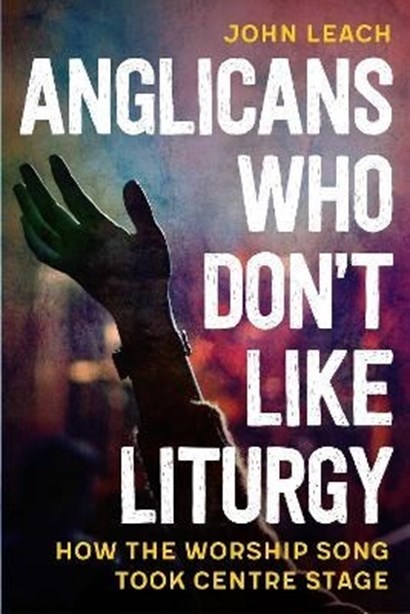
A recent book by John Leach, Anglicans Who Don’t Like Liturgy, gives us an enormously helpful insight into understanding this new pattern of church division. What we find today is that, while many churches have not totally abandoned their search for Christian unity, they have become so far wedded to their particular cultures of worship that they have little incentive to look elsewhere. Leach’s research seems to confirm the existence of real division among Christians in their radically different choices of worship style. Many Anglican Christians, through being attracted to the vigour and exuberance of charismatic networks, have been swept up into this new style of worship. This style originates from the work of John Wimber in the 80s and his workshops in London and Sheffield. Leach’s study focusses on two current strands, that of Holy Trinity Brompton (HTB) and the network known as New Wine. Some have characterised this music style as ‘soft rock’. Culturally, aesthetically and theologically we can say that this style is a long way from traditional Anglican liturgical styles of worship. Not only do we have diverging styles and cultures for worship, we find, according to Leach, a conscious and deliberate intention by some advocates of the new charismatic styles to reject the liturgical traditions of the Anglican past. We can describe many such Anglican congregations today as ‘non-liturgical’ or even ‘ex-liturgical’.
Leach’s study looks at three worship styles within Anglicanism that are current today. Two of them come from the ‘modern’ worship song tradition and are demonstrated within New Wine circles and the HTB network. The third strand is the classical Anglican pattern of worship. Worship in this pattern may involve a highly trained choir, as in our Anglican cathedrals, but the main feature of liturgy is the careful use of liturgical texts which have been composed with enormous care by generations of skilled liturgists. Although Leach himself places himself within the charismatic culture, it is clear that he has enormous sympathy for the tradition within Anglicanism that is responsible for current texts and liturgies. His aim, revealed right at the end of the book, is to see if there is any way that the positive features of the liturgical traditions can be woven into the energy and vibrancy of charismatic worship. For that ever to be a reality, there would have to be a far greater knowledge of the opposite traditions of the Church of England than there is at present. It would not be wrong to suggest that currently little such mutual comprehension exists.
To return to Leach’s detailed study of the worship song style of New Wine churches and the HTB network, I learnt many intriguing details. One difference that he was able to note in listening to hundreds of songs used in these two distinct strands of charismatic-style worship, was that HTB is prone to a constant revising of the musical repertoire. In other words, it appears that the organisers of music at HTB invest a huge amount of time (and money) in listening to and presenting songs that have only just been released. New Wine churches on the other hand tend to use older musical material suitable for the purposes of evangelism. All these churches in the charismatic tradition regarded singing as the most important ingredient of the service. In Leach’s words, ‘Worship, understood as extended periods of singing, has the function of taking worshippers on a journey towards a moment, or a state, intimacy with God through the Holy Spirit.’ It is in reflecting on this sentence that we begin to recognise how charismatic worship is in contrast with more traditional understandings of worship through the use of liturgy.
I want at this point to stand aside from Leach’s discussion about the relative merits and appeal of the non-liturgical charismatic traditions, especially for young people, and attempt in my own words and from my experience to make a case for Anglican liturgy. When I attend a traditional Anglican service, I do not expect necessarily to have an ‘experience’ of God, whether or not it is described as a moment of intimacy. The purpose of liturgy is to allow me to be part of a pattern of prayer that is far larger than my individual prayer. Church worship uses traditional words and phrases which have a force and familiarity given them through their repetition. When I am using ‘common prayer’ I am drawn into a dimension that unites me with my fellow worshippers. I am also united with Christians the world over who are praying at the same moment. My sense of connection also extends across time. Anglican liturgy draws us into an activity that has been going over many centuries, and, in the service, we are also given a sense of connection with a glorious past. Time and space are eclipsed and for a moment we may have a powerful sense of how all things, including ourselves, are connected in God.
Leach’s book is one that is worth studying for its positive appraisal of the meaning of worship, whether in the charismatic or liturgical style. The new ecumenism of worship, if such a thing were to exist, would require us to move forward in seeking to teach Christians to value the worship experiences of others. At present, if we examine the contrasting styles of charismatic worship alongside liturgical, we will probably have no difficulty in understanding the reasons for wanting to reject it – the one we do not use. Of course, liturgical patterns are rejected because they can become dry and over-formal to the point of meaninglessness. Equally, charismatic music can be criticised for descending into a cultivation of feelings which are self-indulgent to the point of selfishness. What Leach has done in his writing is to demonstrate clearly that instead of choosing one approach or the other, we can move towards this new ecumenism of worship. At present in the Church of England, we are divided because of our preferences in the area of music and worship. Perhaps with some proper study and intelligent appreciation of all these traditions we can learn to respect the styles of other people and move towards an ecumenical reconciliation that seemed to become too difficult for the generation that came before us.
Fundamentalism assumes that feeling good in worship equates to being in God’s presence. I would say that is deeply flawed logic that takes no account of the depth of iniquity and capacity for self deception within human nature.
From experience I have watched an entire charismatic senior leadership of a church freeze and ghost me out their church.
Did they lift their hands in worship and feel good whilst they did so.
They had also thrown away the liturgy, notably confession, a beautiful instrument created to stop exactly this kind of delusional leadership.
“We have sinned against God and our others,
through negligence, weakness, and even our own deliberate fault,
in the things we have done and left undone,
the things we have said and left unsaid.
We are truly sorry and repent of all our sins.”
Paraphrased.
The senior leader told the DSA he/they had done nothing wrong towards me.
I have clinically diagnosed PTSD as a result of that experience. My GP put me on anti-depressants to try and stop PTSD destroying my sleep, health, and life.
This is an HTB empire church.
Their worship might be summed up as,
Jesus is my boyfriend.
If it feels good it’s God.
Whatever happened to theological understanding and pastoral integrity?
You clearly have had an awful experience at the hands of insensitive people. I’m so sorry to hear it.
Ah….there you have it….lack of Confession. I’ve noticed this too…a kind of thought pattern that says, “we’ve been saved once for all, so we don’t need to acknowledge that we still fall short!” Followed by actions that make it abundantly clear that they are very far from living Holy lives and following the Suffering Servant.
Very sad to hear of your traumatic experience.
I wouldn’t necessarily say that charismatic worship is fundamentalist, although it can be. What I would suggest is that, in many cases, it is theologically superficial and emotion-heavy. This doesn’t have to be the case: at one time I worshipped in a Baptist church which, although incorporating elements of charismatic worship, was renowned for its thoughtful teaching ministry.
I haven’t read Leach’s book (although I have read his earlier one “Liturgy and Freedom”. He is interesting for having – or having had – a foot in both the Baptist and Anglican “camps”. It does strike me (and he may mention this) that a lot of the division he mentions may have quite a lot to do with personal preference and even social class. Some will reject the classical (in both musical and liturgical senses) Anglican tradition as “snooty” or “inaccessible”; conversely others will reject the charismatic tradition as “musically vapid”, “populist” or “overemotional”. Would others agree?
There is also a question about how much the leaders of worship, in any tradition, are seeking to lead worshippers along a planned path. As a Baptist minister who likes to use elements of liturgical worship, I will carefully choose the hymns, readings (and sometimes poems or video clips) as well as sermon so they link in with each other. Our services are not emotional – but am I being manipulative? I hope not.
The end half of Acts 17, going on into Acts 18, are surely wonderful: the reality of God in Creation, Human Conscience and The Christ of Scripture. A cold intellectualism can be unhelpful, and that possibly characterised one or two aspects of the Anglicanism I remember from childhood. But the gushing emotionalism, or even irrationalism, of certain charismatic groups, carries gigantic dangers. We were blessed in my locality to have skilled teachers across the education system, both primary and secondary, who focussed on the compelling evidences for belief in the Easter creed. I perceive a dreadful shallowness in swathes of modern Anglicanism,
Thank you, Stephen, for another insightful and thought-provoking (or provocative!) post on 2 October. Thanks also to the other commentators.
You’re right – this new ‘ecumenism of worship’ is needed. Perhaps also a return to the original understanding of ‘liturgy’ as a ‘work of the people’ – in whatever style. May a musician try to shed some light on the issue, and on causes of tension?
Since ‘Youth Praise’ (1966), worship songs have been widely promoted. They serve a purpose, expressing emotion – I’m suspicious of ‘leaders’ who look down on emotion, or even try to deny it. That said, I’m a retired lay-clerk, leaning as you’d expect!
While older hymns often have just one published ‘arrangement’ (typically for 4-part choir, with the congregation singing the melody), worship songs can need several different arrangements for different occasions and available resources. Some players ‘busk’ their own arrangement, interpreting the printed score to suit player and instrument. To publish several such arrangements in one book would make it enormous and unviable; but professional musicians (and resources) can – and often will – help.
Sometimes a song’s melody is quite strong and well written, but the printed score may not help. It may be pianistic (and too hard for the average church player). A 4-part choir may dislike being expected just to sing the tune in unison. There may be no scope for melody instruments (e.g. violin, clarinet)… and so on.
There are collections of worship songs – and liturgical music such as Eucharist settings – in professional arrangements appropriate for choirs and instrumental groups. It can be done, if the new ecumenism is allied to craftsmanship. In 1997 I helped plan a ‘civic’ service for a new local Mayor. We used a ‘traditional’ church choir, a pipe organ, and our teenage instrumental group, together in some varied items – not in all, but I was determined that we’d all do the National Anthem together, and we did. It all worked… though later our cathedral D-o-M did suggest that my playing the first movement of the Elgar sonata at the end, on a 1972 ‘classically voiced’ organ, was ‘Sado-masochism’!
The following year saw a big diocesan event in our cathedral. I have reservations about worship songs in a cathedral’s own service, but as the ‘mother’ church of all its parishes – not just the highbrow ones with choirs – it must accommodate them all at big events. That same D-o-M tackled the issue, giving the songs proper 4-part choir harmony, proper organ parts, and even descants for the choristers. Very effective – and only this August, when my vacation choir copped for one of those songs on a Sunday morning in the cathedral, we sang his 1998 harmony again.
I’d welcome any readers who face the challenges of the new ecumenism (and there are challenges) to get in touch – perhaps via the ‘blog’? Every diocese has musicians who are sympathetic, capable, and open to different traditions (I did once work at a Baptist church). Those 1997-8 opportunities (and a few similar) have been precious few!
I heard John Leach speak on liturgy and freedom at a York deanery chapter, when he was coming to the end of his curacy at St Thomas Crookes. Does he say anything about the Nine O’Clock Service in his new book?
I note that Chris Brain was yesterday convicted of further counts of sexual abuse of female members of his congregation, and one charge of rape. The case is no longer sub judice, though the sentencing hearing has yet to be held, and we are free to discuss it again. Brain forced the victims/survivors whose cases were heard in last year’s trial to testify again in this one. I hope he gets a long, long sentence. An evil man.
Going back 50 years, to when I first got involved with the charismatic renewal movement there were great hopes that it would help reunite the churches, being non denominational and spirit led. Sadly it didn’t work out quite that way; in my own experience it worked well when ordinary lay people were left to their own devices, but fell apart once the professional clergy started arguing over doctrines and differences. Then along came the more extreme Nee/Wallace based groups with their much narrower outlook, undoing everything which we’d sought to achieve regarding unity and it all fell down. Now, possibly, the wheel has come full circle?
Actually every form of worship has a liturgy, whether we realise it or not. Its just that some forms are less noticeable than others. And, like much else in church life, it’s ‘horses for courses’; what suites one doesn’t suit another. I prefer quieter, more contemplative worship, while friends prefer the ‘soft rock’ variety. That’s OK, so long as we all have sufficient tolerance to respect one another’s views and agree to a degree of mutual acceptance.
Where it goes sour is when any one group comes to dominate the whole; often because the one overall leader has strong preferences, and forgets other people’s views also matter. The trouble is worship is a very personal thing, an expression of our own individual relationship with God – and we are all very fallible people who find it all too easy to believe our own likes and dislikes have divine sanction over other people’s.
The gift of ‘give and take’ is a very precious and valuable gift of the Holy Spirit.
‘…every form of worship has a liturgy, whether we realise it or not. It’s just that some forms are less noticeable than others’ .
Couldn’t agree more with John’s sentiment here. If you’ve ever had the dubious experience of multiple church-hopping across genres and denominations, it’s remarkable how similar they are, if you look beneath the surface. In particular “spontaneous” worship is rarely so. It’s usually planned.
Even robes and vestments have an undercurrent of ritual, such as the bright multi coloured shirts of an infamous leader and his acolytes (see Sixmith 2026).
I was brought up with wearing “Sunday Best” and suits to church, and it took me years to realise I was the only one not wearing blue jeans, as my church tastes migrated to the more charismatic end of the scale.
That said, we had family in the Pentecostal movement, and it struck me as surprising how all the male leaders were in suits in the front row, considering how informal and apparently free and easy everything else appeared to be.
Similarly ties, with or without suits, in some churches – not all Pentecostal ministers are wedded to suits in my experience. A lot depends on where you are.
On a different but related tack, our speaker this morning was very pleased to hear of Chris Brain’s woes, having missed Friday’s news. He had had personal conversation with Brain in times past, and after ten minutes’ chat he knew the fellow was trouble. A wholly unsavoury and very unhappy business indeed. Say no more.
It’s right, indeed essential, that we now continue to evaluate the infamous Nine o’clock Service and Chris Brain’s activities. This is not to re-open wounds for those he harmed directly and egregiously, but to look at the way the Church of England greedily took him into their fold, how his methodologies have been continued in other places, long after he was removed, and how similar harm is still being perpetrated by others without any material accountability by the Church. As far as I understand it, the matters are no longer sub judice.
When I met Brain I thought he was both creepy and rude, and his acolytes all looked profoundly depressed. I knew there was something badly wrong, but my colleagues were awestruck by him. At least one of them learned nothing from the NOS debacle, because he made the same mistake with Mike Pilavachi.
And the Archdeacon overseeing NOS dismissed four complaints from women about Brain before he eventually took the situation seriously, and he was promoted to bishop. I hope that wouldn’t happen now.
Every church scandal has a similar pattern with recurring features. Many are taken in, but a few, often lone voices have major reservations. These latter are then consistently ignored until it’s far too late. If only we had the sense, as a body, to listen to these concerns early, and have checks and balances in to prevent ourselves becoming so ‘awestruck’.
‘-Naked vicar on roof with kipper, cat, prostitute and crow-‘ makes a cracking tabloid headline when the latest CoE crisis gets exposed. But the extreme cases-which so often see some kind of independent review eventually fixed-ignore something far more important to the average church victim-witness-whistleblower. A major abusive bully like Brain slipped through the Church net for a very long time. This should alert Anglicans to a deep crisis in our Church. The need for fully independent protection systems, covering every child, adult, ministry trainee, vulnerable adult or an assortment of others, is now all too plain.