It has become apparent from a news report in the Church Times that the Diocese of St Albans are in the process of injecting fresh money and support into the Soul Survivor congregation in Watford, formerly under the leadership of Mike Pilavachi. The congregation in Watford are being regarded as part of a ‘missional engine’ for work among young people in the Diocese. What the diocese effectively appears to be saying is this. Although Pilavachi has been identified as running an exploitative and abusive ministry over a period of 30+ years, it is still possible to sponsor future youth work operating within the same cultural and theological setting that he was using. At the time of writing, there is some debate as to the extent of the support being offered, but we still seem to be facing an example of ‘bad apple’ thinking. The diocese and the promoters of this backing appear to believe that, having removed one corrupt individual who has been identified as responsible for exploiting many of the individuals within the institution, what is left in the structure can be assumed to be sound and healthy.
When the scandal of Pilavachi’s behaviour broke in April 2023, there was an ominous silence in terms of reaction from the church authorities. There are two possible reasons for this. The first was a shocked realisation that a large cohort of young Christians had passed through the Soul Survivor camps and thus the malign influence of Pilavachi on the Christian formation of these young people had been substantial. The second devastating realisation was discovering that virtually nobody in the hierarchy responsible for Pilavachi’s oversight, whether CofE or Vineyard, had ever raised questions about his style and idiosyncratic practice. His forceful charismatic personality seemed to have silenced or controlled everyone, both those above him in the hierarchical system of the CofE and the unprotected young people who looked up to him as a model of Christian living. This silence that accompanied the revelation of what had really been happening for so long indicated a failure of understanding of what Soul Survivor stood for. There was also an unhealthy attachment to the idea that if a ministry appears as successful in terms of numbers attending, it must be receiving the approval of God.
When the Pilavachi story broke, I penned a piece for SC which was not popular with some of my readers, especially as I compared aspects of the the story with events at Sheffield in 1995 with the 9 o’clock Service. I also suggested that the charismatic style of worship centred on a powerful celebrity leader was never without risk. Even if God appeared to be present in the captivating music and the charismatic worship, it was still important that there were people with oversight, whether locally or nationally, prepared to ask hard questions about what was going on. This was essential even when things seemed to be going well. Going beyond the character and potential personality flaws of a single individual in charge, other issues needed to be faced. These often involved an understanding of the wider culture as well as the history of what was taking place.
Throughout my ministry I have always been sympathetic to the ideas and practice of charismatic theology and styles of worship. I am old enough to remember the generation of British pioneers like John Richards, Michael Harper and John Gunstone. The charismatic scene is much changed since the 70s and 80s and, to my regret, there are few signs left of the generous, ecumenical and inclusive feel that was often a feature of that early time. It is probably forgotten by the current heirs of this impulse that much energy for the movement internationally came from the writing and teaching of an Episcopalian priest in America, Dennis Bennett. His style was, if anything, middle of the road Anglican, but his experiences and life recounted in the book, Nine O’clock in the Morning (1961), were very influential. The later conservative ‘take-over’ of the charismatic impulse was a disappointment to me. I had written my first book for SPCK, The Challenge of Christian Healing in 1986 and at first, I was invited to speak to conservative leaning groups about healing and how I had discovered healing within a charismatic setting. The 90s seemed to reveal the more hard-edged defensiveness to these groups, and an individual, such as I, who would never sign up to theories of Biblical inerrancy or infallibility, became less acceptable. I was regarded as unsound.
My personal religious journey has combined a liberalism affected by academic study with a sympathy towards the charismatic. This combination has allowed me to believe that I have something of value to say to the Church on the matter of what is, and what is not acceptable in the area of charismatic practice. Of the two approaches above that I reject, one is the distant but uncritical admiration of the phenomenon without any real in-depth understanding or experience of what is going on. Charismatic worship, such as we see in churches following the HTB model, is admired as it successfully draws in the crowds. If ‘bums’ are on seats, then we must welcome and encourage this style even if it is incomprehensible and offends our taste and maybe our theology. The other approach involves the arrogant assumptions made by its enthusiastic devotees. This is to think that there is no other theology or style of worship that is worth considering. We find ourselves in a ‘might is right’ situation of uncritical admiration. Hybrids like me are excluded.
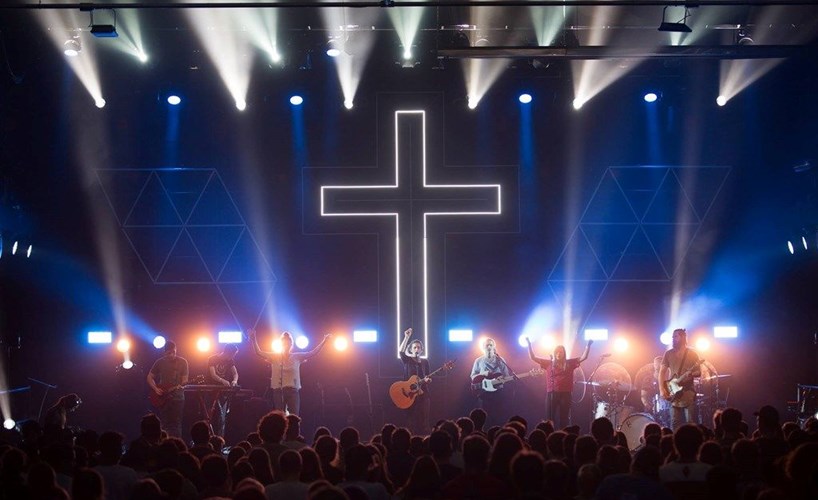
There is a possible third way of approaching this issue. This approach would suggest that the recent decision of the Diocese of St Albans to fund and support a revived Soul Survivor structure in Watford carries with it a number of risks and could turn out badly. This is the middle way approach. It allows an appreciation of charismatic phenomena while recognising the need for caution. This evaluation mixes a sympathy for charismatic worship with generous helpings of realism, honesty and truth. Realism might suggest to such a third way yet dispassionate observer that there are questions still to be asked about Pilavachi’s hold over tens of thousands of young people. This phenomenon needs to be thoroughly understood and studied, certainly before handing out hundreds of thousands of pounds to promote it. What do we know, for example, about the thoughts of a young person who was led to faith by a mentor whose behaviour turns out to be exploitative and abusive? I have not seen any studies of this kind. What are Christian counsellors who have spoken to the cohort of young Christians feeling betrayed by Pilavachi telling us? What is the Church doing proactively to prevent another charismatic leader being appointed and creating the same damage among impressionable young minds. If I were a young Christian whose faith had been formed or created by the style and antics of Mike Pilavachi, I might want to feel that those who had put him in this place of responsibility for my wellbeing, were working hard to explain to me what had gone wrong. The Soul Survivor movement was a movement heavily indebted to one man, but it emerges out of a religious culture which could be, and was, highjacked to serve the narcissistic needs and purposes of its founder. Another way of putting this claim is to say that the conservative charismatic culture of Soul Survivor is very easily corrupted to become the tool of a needy individual leader to gratify psychological needs. The gratification processes that have been identified in Pilavachi’s abusive ministry are not an inevitable part of this culture, but they happen with sufficient regularity for outside overseers to need to be on constant alert for these signs of narcissistic abuse. Surviving Church has written about the potentially unholy alliance of narcissism and charisma many times over the years. It was clearly identified in my discussion of Michael Reid, the former head of the Pentecostal Peniel Church in Brentwood. I have also discussed the academic work of Len Oakes, the Australian writer. He was, to my knowledge, the first author to link the charismatic cultures of evangelical Christianity with narcissistic disturbance and disorder. The main finding of Oakes was to point out how the dynamic of large crowd gatherings is a perfect setting for someone who is emotionally needy and who (like Donald Trump) craves the attention and adulation of the crowd. The enthusiasms exhibited in a large charismatic event may often be the setting for less than healthy emotional dynamics combined with acute psychological neediness. This is not the same as saying that true charismatic worship and healthy transformation cannot exist. It is saying that leaders must be acutely sensitised to discerning when the worship event and the music of worship songs is the setting for something phony and lacking in any spiritual depth.
Those who are providing new support for Soul Survivor in the Anglican diocese of St Albans are, no doubt, anxious not to have a repeat of the Pilavachi affair. To help these authorities who want to help both the reputation of the Church and the spiritual needs of young people in the area,at the same time avoiding a repeat of the events of the past, I would want them to ask the following questions. These questions go beyond the therapeutic needs of those actually identified as victims of abuse at the hands of Pilavachi.
- What evidence is there that the damage caused to many hundreds of young people who looked to Mike Pilvachi as someone to emulate and look up to as a model for the Christian life has been properly understood? Have the thoughts and feelings of those who have left the orbit of Soul Survivor been examined?
- This blog piece has criticised the ‘bad apple’ approach to the Pilavachi issue and has suggested that there are and were serious dangers in the assumption that we might call loosely the HTB model of Christian formation is always healthy for young people. Will the diocese be prepared to consult with sociologists, psychologists and others who possess an approach to the issue of Christian formation of young people outside this HTB/Church plant model?
- I have reread the Scolding report which inevitably is mainly concerned with structural issues like failures of accountability and responsibility. The deeper challenge for the Church of England and the St Albans diocese in particular is also proper assessment of the theological issues involved in the saga. Serious issues of authority and power are to be found in the scandal and are yet to be addressed. Although we live in a Church that has a variety of approaches to formation and discipleship with young and old, it might be claimed that the Soul Survivor/HTB model is too much geared towards an entertainment approach to the faith. Such an approach may have little to commend itself over a period. If the church invests considerable sums of money in an approach to youth work yet to prove itself, then we are risk of tie ourselves to a single model of youth ministry which may prove problematic over the decades.
This short critique of the decision by the Church of England to invest considerable sums of money in a system of youth ministry, yet to face detailed professional and spiritual scrutiny, seems ill-advised. To repeat, this is not a blanket criticism of the theology and worship inspired by the charismatic impulse operating in some the ‘successful ‘churches’ in Britain. Rather it is plea that we should all have a far better understanding of the wider context of this ministry and why it has sometimes gone seriously wrong, damaging unknown numbers of our young people within the Church of England.