by Stephen Parsons
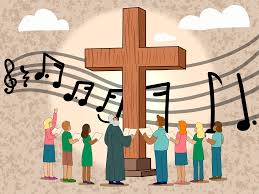
Looking back over my time as an incumbent within the Church of England, I realise that one of the most difficult tasks I faced was promoting a style of music and worship that people coming from a variety of church backgrounds would find acceptable. There appeared to be, in my second parish where I served 16 years, no overarching local parish tradition stretching back decades. Everyone seemed to have arrived at our church from somewhere else. Their worship and music preferences were based on the way things had been done in their old church. These preferences might reflect a memory of a much-loved Father X. He was the main influence who did things properly when they were young adults. Others had memories of lively London churches where the sermons had lasted thirty minutes or more and everyone was expected to follow the preacher as he flipped from one biblical passage to another with great speed. We, like most churches at the time, followed a middle of the road approach, with the hope that every member of the congregation would somehow fit in with what was on offer without too much struggle.
In this difficult process of finding a middle way in worship, I was helped in 1995 by the publication by Kevin Mayhew of Hymns Old and New, Anglican Edition. This hymn book made a genuine and, for a short time, successful attempt to weld together in one book all the different strands of hymnody used then by Anglicans. Thus, we had all the old favourites which older members had been singing for a lifetime, combined with newer gospel songs and Taize chants. For Anglo-Catholics there were some loved hymns like Sweet Sacrament Divine. It was indeed a comprehensive attempt to allow everyone literally to ‘sing from the same hymn-sheet’. The illusion of a successful uniting of everyone in singing from one book did not, sad to say, last very long. New gospel songs were being written and were in demand by evangelical members of the congregation. Because they were too new to be in the hymn book, any use of this kind of music involved printing the words on sheets of paper or having them projected on to screens. We were having, of course, to fill in forms from the copyright organisation, CCLI. This method of keeping bang up to date with some of the music that was appearing all the time was made possible by a small but enthusiastic music group.
My final parish in Scotland did not have any relationship with this contemporary strand of gospel music and so I personally have little understanding of this style of Christian worship. In the 23 years since leaving the earlier parish which had explored this music, at least some of the time, I have been aware of a variety of current styles that have appeared and sometimes disappeared during this period. John Wimber made quite an impression on me in 1992 when I attended a conference using his so-called Vineyard style of music. There have been in later years other genres, among them Hillsong and Bethel, injecting their distinct contributions of musical style into many congregations. My reader might wonder why I have introduced this topic of gospel music, while admitting almost total ignorance of what it is. I do, in fact, from the little I do know, recognise that these types of music may, for some, inject something valuable into a contemporary search for God. Nevertheless, my wider experience of worship and study of the Christian tradition over several decades suggests certain important caveats.
In years gone by there was always an understanding that the ultra-Anglo-Catholic styles of worship involved an audience in some kind of ‘show’, one which is not all that far from the experience provided by a theatrical entertainment A catholic mass, whether or not held in an Anglican setting, has typically sought to engage a range of senses, including sight and smell. Such an engagement with the senses is, of course, quite different from the experience of listening to the melodies of a worship-band, but both involve an aesthetic (enjoyable) engagement of some kind. Art in the broadest sense, whether visual or auditory, has this capacity of pointing an individual to God while transcending the intellect. This non-rational dimension (as opposed to irrational) needs to be valued in our understanding of how we approach the divine. The problem arises when we value one and downgrade another. Many Christians become so accustomed to one form of aesthetic experience that they are dismissive of any other attempt to articulate any other cultural expression of the divine. In short, they want their hymnbook to leave out all the hymns and songs that do not pass their test of being sufficiently on trend or in accordance with contemporary taste, however this is judged.
A second issue I have with gospel music is the way that it is inherently fickle. Today’s trending band which produces an acclaimed Christian song, which is sung in evangelical churches all over the world may be forgotten tomorrow. Fashion seems to be a phenomenon of the Christian music industry, and this might explain why the vast majority of Gospel music songs have only a short shelf life. I understand that much of the substantial output from Hillsong music has already disappeared after the discovery of financial and sexual scandal in the sprawling empire created by its Australian founder, Brian Houston. Having never listened to this genre of music, I cannot comment whether these extinctions are justified from an artistic/theological perspective. But purely from this inability to survive and become part of the classical repertoire of mainstream Christian worship needs, allows one to suspect that much of the so-called modern Christian music scene will never become part of the classical Christian repertoire in the way that much hymnody has, in some cases, survived for centuries.
Contemporary gospel music and bands seem to be an essential part of the activity known as Church planting. Typically, a large successful congregation which models itself on the style and theology of Holy Trinity Brompton, will hive off fifty or so of its members to go off to another geographical area and start a new worshipping congregation. Such church plants are not always successful, but the reasons for their success or failure are not the focus of our concern at this point. What is of interest is that in every example of a church plant I am aware of, a band able to play gospel music is an essential ingredient for the plant. The calculation is that new members, particularly the young, will only be attracted to the new congregation if they can identify with the style of worship music on offer. It is no coincidence that if a church plant is successful, and some are, the culture and atmosphere of the congregation will be markedly different from traditional Anglican worship. The output of gospel songs that is inevitably a feature of these new congregations may indeed attract a new clientele but there is little to hold older members of the Church who have known from childhood a totally different style and culture of Christian worship.
If, as we suggest, the Church of the future is going to be marked by strong cultural and theological divergence, this future is also a place where we may find ourselves in mourning for the days of the single ‘hymn book’. The culture chasm of the present, that is clearly visible in the radically diverse variety of music and song, will eventually become an unbridgeable gulf between two non- comprehending and mutually alien styles of worship. I recently heard of a parish priest not far from here who had never engaged with the 1662 BCP or attended or led a traditional Evensong. This was not just a regrettable absence from the worship pattern of a single modestly sized parish in a rural location, but a lacuna to be found within certain parts of an entire theological training tradition. Liturgy as a distinct discipline within the study of theology for those preparing for ordination seems, in this case, to have been entirely dropped for this group of recently ordained clergy. Another casualty seems to be the study of Church history, particularly the period from AD 100 -1500. When the planting of new congregations is left to individuals who have little or no understanding of the past where the rich springs of Christian worship are to be found, we quickly find we have a denomination that is unable to communicate with itself.
To sum up my reflection on Christian music and the current style of worship songs that are strongly promoted in the congregations representing the ‘church plant generation’, we have a problem. The problem is not whether the music and lyrics of these songs are good or bad; that is an aesthetic and theological question. The problem arises from having two mutually uncomprehending styles of worship in the same Church. I personally value the hymn book tradition and the choral foundations that are maintained in our Anglican cathedrals. I do not expect everyone to share my appreciation of these traditions, but I ask that both sides of our current cultural chasm, especially the leaders, make some real attempt to understand what else is going on in the Church through the medium of music and well-ordered liturgy. That might enrich our understanding of God as we engage with the rich traditions that have sustained Christian worship for two thousand years.
I’d urge caution with the use of terminology here. ‘Gospel Music’ is a tradition that traces its roots back at least to the 17th century and comes out of the fusion of faith and musical tradition of those in transatlantic slavery. Much of it is steeped in a yearning cry for justice – for example, just look up the history and meaning of the deceptively simple words of ‘Wade in the Water’. As in much African communal singing, the songs are simple so they can be memorised and harmonised without the need for literacy or printed materials. The Gospel Music tradition continues to this day, and in my experience forms and nurtures some of the very finest contemporary musicians. It gave birth to and is now hugely influenced by the complexity of jazz harmonisation, improvisation and rhythm. It has a contrasting depth and integrity that in my view is harder to find in much, but not all, contemporary Christian ‘worship’ songs and the cult of the ‘worship leader’, both of which mercifully seem to have passed their peak popularity. There is of course some truly amazing modern hymn and song writing. You only have to look to the places like the Iona community for examples of this.
You are right that the term ‘gospel music’ nowadays refers mostly to the African-American musical tradition. But when Stephen and I were youngsters, ‘gospel music’ was used to refer more widely to the kind of hymns and songs that were sung at evangelistic rallies and ‘revival’ meetings. A gospel singer was one who might sing solos, with a gospel message, at such gatherings. It was part of the evangelical tradition among white as well as black and interracial churches. I take it that this is the sense in which Stephen uses the term above.
“We shall not cease from exploration
And the end of all our exploring
Will be to arrive where we started
And know the place for the first time”
A child can feel the mystery of the KJV or 1662 BCP or long known hymns. But much later an adult begins to understand what is being spoken or sung about. The great Easter and Christmas classics still hold attention on Radio 3 or other classical music channels, even in an age where commitment to the creeds is lessened.
Charles Wesley wrote over 6,500 hymns in his lifetime. If there are just 1% of that output that is currently used, I would be surprised. This sifting of the total output to find the real gems is to be expected in the prodigious output of the modern song writers.
My problem is that where worship bands are used they are often placed ” up front” obscuring the altar, so that there is a feeling that the band has become an object of worship.
I was taught that the Church of England/Anglicanism is based on history, tradition and reason and those were the foundations of ordination training, apparently that is no longer the case.
In my view, worship services should ideally include hymns and songs from different traditions, both old and new. This was the principle the noted evangelist and renewal leader David Watson put into place at St Michael-le-Belfrey in the 1970s, and I think it’s a good one. This is sometimes a bit complicated, since the music chosen also has to lend itself to the theme of the service. Modern worship songs tend not to follow the lectionary and liturgical seasons.
I agree with Barbara about worship bands taking such a prominent place – but then so do pipe organs. We have simply got used to the organ taking up a large part of the chancel, and the organist being in full view. It must have seemed very strange when organs first began to replace west gallery bands. There were certainly qualms about trading worship where local people offered their abilities and instruments, for what some saw as ‘prima donna’ organists.
My main issues with contemporary worship music (judging mainly by what I see of it on Songs of Praise) are
1) it often depends largely on soloists, and lessens the emphasis on congregational participation), and
2) the theological vacuity and self-centredness of some of it. Songs like “Here I am to worship’ are a contradiction in terms – those singing are admiring themselves in the act of worshipping, rather than being lost in wonder, love, and praise of th Almighty.
Then again, I was brought up on ‘I am H A P P Y….’!
But, of course, a traditional Choral Evensong (which I love) hardly encourages congregational participation. Nor does a Festal Service which may include a complete Haydn or Mozart mass setting!
I agree with Janet about trying to mix and match – but it’s not easy, can create musical incongruities, and will almost certainly lead to complaints!
When you even briefly study CSLewis, and/or GKChesterton, then their genius as philosophers-apologists-writers immediately shines through. It has stood the test of time over decades, and both are pretty much universally respected.
Established hymns, accepted over generations, often combine excellent musical elements with sublimely good language. Profound mystery is captured in clear and concise words.
Many modern worship songs have not stood the test of time, and can appear pop music like, or very superficial in content. Also, traditional liturgies from the BCP can appear the polar opposite, excessively word rich-complex-long.
The range of BCP Holy Communion Rite variants available is dizzying. Anglican services, with multiple variants, possibly lack the stability and coherent authority of Roman Catholic liturgies.
I used to adore Morning Prayer. But as I get older the Holy Communion service seems more central and important. Whether via a worship band or choir, it commonly feels as if lots of Anglican services are performances, with limited congregation input.
Music was the final straw for me, in my decision to leave church, as I believe I’ve mentioned before.
I did chuckle at Janet’s comment about vacuous words, and must confess that I’ve enjoyed that particular song! She’s right of course.
One point I’d like to make, is about musical ability. I come from a family of musicians, of which I can say without any false modesty, that I am the weakest. That said I can sing in tune and harmonise to the extent that in the end I was on the stage far too near the front for comfort. But what I have observed is that the greater the musical ability, the more distress is experienced, and the less that person seems to enjoy what he/she hears. This started at school where the choir master was frequently apoplectic. I like to think it was the sopranos who were the principal source of his enragement, but I may have conveniently misremembered this.
If you want high quality music, especially with volunteers, expect trouble.
The other point which I hope doesn’t offend too much, is that above a certain age, our voices aren’t quite what they were. Elderly choirs (I consider myself in this age category) deteriorate unless we are careful to recruit younger members and disciplined about retiring when it starts to sound unpleasant, or at least pipe down a bit. I saw Graham Kendrick in a worship band recently, sort of leading, which he did well of course, but allowing younger musicians to beef up the sound. He’s getting on a bit, but it was evident he’s still using his gifts appropriately.
As an ex musician in churches I believe that there are facts we must accept.
1 church organs are expensive to keep and organists are few.
2 young people will always want to play electric guitars and drums in church.
3. Traditional hymns and liturgy will survive.
I have worshipped in all music genres and have lead choirs throughout this time of jostling old and modern hymns and songs. Of more importance is the role of the priest/leader. A faithful genuine vicar will lead a service well no matter what the music is within reason.
I’d want to add that many churches (mine included) find it difficult to find any musicians, and either have to use backing tracks or sing a capella.
The older generations (of which I am a part) were raised in cultures in which community singing was still a thing, whether in school assemblies, church services, community choirs or other settings. I went to school in the 1960s and 70s and there was all kinds of community singing on a regular basis.
Most young people today rarely encounter community singing. When they do, it happens at a rock concert, where a singer is singing a track everyone has heard multiple times on Spotify and iTunes. They know all the little nuances, because they’ve heard it so often. So they sing along with the lead singer. But they still expect the leader singer to be louder than them. They’re singing along with him/her; they’re not carrying the tune themselves.
This is the cultural background of much contemporary worship music. It’s created by and for people who’ve been formed musically by singing along at rock concerts. Traditional community singing is foreign to them. And they don’t have a problem learning the songs; they’re already on their Spotify playlists, so they have no problem singing along with them when they come to church.
They are the cultural gaps we are attempting to bridge. No wonder it is challenging.
Welcome to Surviving Church, Tim! Unless you’ve been here before and I’ve missed you?
I’ve been a silent reader!
People need peace. Some contemporary stuff is great for children but often there is no separation between what is for children and adults. Of course a lot of parents like it because they think the kids will like it… So, I think the main issue is, families just didn’t do it. (Televisions have had an awful effect on us.) The Puritans made ministers of their children in the past, so I think the recent generations are pretty embarrassing.
In the Highlands when I was young, community singing was pretty much a social norm – in people’s homes, in bothies, in bars. There was something moving and communal, when feeling and emotion resonated in a room. A coming together. An opening of the heart and a sharing. Of course, that can happen in worship in church, especially when people are sensitive to the Holy Spirit. But I think it does help if there is a gifted worship leader, or a minister able to feel the present moment and what God might be saying to those gathered together. I appreciate many different kinds of music, but whatever form it takes, I think it needs quiet spirit and stillness at the heart of it all – not just walls of sound. That’s not to say that all singing has to be hushed. ‘And can it be’ and ‘O for a thousand tongues’ are wonderful. But even those need to be infused with wonder, awe, humility and thanksgiving.
Thank you Siusaidh for your words. A gifted worship leader as you say, working with the Holy Spirit brings all together in music and prayer.
It’s good to hear your opinion Tim.
Yes the cultural gaps are a challenge of course but I went to school in the 60’s and love all genres and am able to ‘worship’ in all the best of the music.
I agree that community singing isn’t on young people’s radar.
Funny, community singing can have a positive spiritual sting. As a relief GP in the Hebrides I had given up on Church for 20 years. But I went to a Christmas dinner in 1999 in a Free Presbyterian run home in W Isles. The hospitality, food and a glass of whisky were welcome. But it was the brief period of unaccompanied Gaelic psalm singing which really stayed in the mind. As a non-Gaelic speaker it was mysterious but edifying, and it helped spark a change of life direction on matters spiritual, which later saw me commissioned as an evangelist by the Anglican Church post-NHS retirement. I later went through a phase of connection to evangelical parishes connected to the charismatic movement. But are some of their catchy choruses rather lightweight or unhelpful compared to the older classic hymns, metrical psalms or plainchant?
‘But are some of their catchy choruses rather lightweight or unhelpful compared to the older classic hymns, metrical psalms or plainchant?’
Undoubtedly they are. But then, I find a lot of modern singer-songwriter music rather lightweight compared to traditional folk music with its tales of murder, battles on sea and land, entitled lords forcing themselves on their serving maids, drownings in rivers and oceans, and dead lovers buried beside each other with a red rose and a briar growing out of their hearts!
Seriously, I’m sure you’re right, but there are always people like Graham Kendrick who include plenty of weighty theology in their songs. And if we want to talk about fluff, I personally cringe at a lot of the nineteenth century revival music. Give me a good John Newton hymn any day!
I’m a great believer in hymns containing good and substantive theology.
But I also think that there are times when folk may not be able to cope with these and need simple songs to help them relax into worship and soothe their spirits.
Yes, time is maybe the best test. The older hymns which have spoken for generations will continue to have a special place.
The “worship” genre is a major industry, dominated by America of course. Its output is to some extent mainstream there. What gets played and thus what people begin to know, is partly therefore influenced by commercial forces across the Pond.
Vicky Beeching, former songwriter and worship leader, describes in depressing detail what this toxic worship culture is like, in her book “Undivided”.
Whereas many of us had our hymn repertoires built by school assemblies and early choir experience, young people today have their festival diets, eg the former Soul Survivor, New Wine, Spring Harvest, Focus HtB etc formed by (or at least heavily influenced by) the worship industry, and what sells.
The church leader is presented with a dichotomy: whether to stick with ancient and stodgy but sound, or to go for bums on seats with a big band and commercial sounding songs. Of course the two can intersect, but the overlap is often narrow.
My experience is that people do like to sing stuff they know. There are limits to what can be mastered congregationally despite my musician’s craving for variety and complexity.
But you never can assume what people know. Just refreshing my anecdote about the funeral I attended of a former major crime detective, the congregation was made up of hard nosed police officers. When the next hymn was announced as “Shine Jesus, Shine” I almost laughed. No one will sing that, I thought. I was completely wrong. They sang with great gusto.
I often feel very sorry for those younger people who get metaphorically burnt, when megachurch ministries implode. Older UK students had a lot of orthodoxy in school assemblies. Younger victims of abuse and exploitation, in megachurch type settings, may have good reason to question what is real about belief. The emotionalism and hyperbole of some ministries is very unhealthy.
‘Younger victims of abuse and exploitation, in megachurch type settings’
There’s been a lot of abuse and exploitation in mainline church settings, too. The Catholic church has been rocked by it, and it’s not an exclusively megachurch phenomenon in the Church of England either. And here in Canada, where I live, all you have to do is google ‘residential schools’…
Yes, indeed, it’s seen across denominations. But it’s great to have a site like this where the topic gets discussed. Irish Catholicism has been shaken, as has UK Anglicanism. Archbishop Welby was forced to resign in 2025, and his replacement is embroiled in trouble now before she is even commissioned. Andrew John (Welsh Anglican Primate) had to resign. The Anglican Church in Scotland is shaken by bullying allegations in Aberdeen Diocese, and a failure to address them. The Irish Primate possibly has troubles unresolved, with a failure to name and shame the late Rev Canon Dr William George Neely. Neely is buried in a marked grave close to the Primate’s Cathedral seat. His grave ends with the words PRIEST SHEPHERD FRIEND.
Reflecting on some of Andrew’s comments and others about pared-back a Capella worship, I recall an important occasion in the church I attended’s life, and how it was disrupted by an alarm going off. The organ had caught fire, and we were all evacuated to a car park, where worship continued basically a Capella.
So we were singing as best we could with no technical assistance whatsoever, and it seemed pretty profound. Not least because as people were walking past it must have appeared rather an unusual gathering, and certainly an inauspicious venue!
It struck me at the time how likely a prophetic moment this could have been. Maybe God was saying: I want you outside? The event asked more questions about what we do when we do church. Is it for us, for our quiet (or loud) enjoyment, or is it meant in some way for the non members too, to be accessible for them?
Just wondering.
Most of the Iona Community songs are designed so an ordinary congregation can sing them without musical accompaniment. That’s why they often set them to folk tunes.
Back in the days of the Jesus Movement, many of the then new worship songs could also be sung without accompaniment, or with a single acoustic guitar. And yes, some of them were silly, but others were both simple and profound. I still find myself moved by ‘The Man of Galilee’, I Want to Walk as a Child of the Light,’ ‘For Those Tears I Died,’ and ‘We Are One In the Spirit.’
Yes! The Church of Scotland may be dying, but one great idea was putting hymn words to well known Scottish folk tunes. I remember seeing this in congregations of half a dozen or so in rural Argyll, where the positive impact was uplifting.
Hmm … My wife, who is Scottish, finds it difficult to sing some Wild Goose stuff because she cannot mentally set aside the original folk words. (I suspect early Lutherans in Germany may have had the same problem!).
Also I find some of the WG stuff excessively worthy-but-wordy. And to what extent has it supplanted metrical psalmody in Scottish churches?
The Free Church in the islands has probably stuck with the centrality of the psalms I think, although hymns are permitted now. The decline of Gaelic, or a transition to where people still speak it, but not so often as a first language, could have some impact. Across the Highlands, what really struck me in the past was the relative emptiness of so many churches. Sad to see! Perhaps the Hebrides begin to also head that direction. Challenging times, but opportunities may emerge.
But isn’t that the same issue we have when the same tune is used for different hymns? Or, in reverse, when the ‘wrong’ tune is used for a much-loved hymn?
I agree that some WGWG stuff is ‘worthy and wordy’, but others really hit the spot. ‘A touching place’ and ‘We cannot measure how you heal’ are great and may well become classics. I like ‘Who would think that what was needed’, ‘The invitation,’ and ‘Inspired by love and anger,’ too.
Do certain tunes and words ‘establish themselves’ during times of revival? The Welsh 1904-1905 revival possibly saw one or two have a marked prominence.
Sometimes. ‘How Great Thou Art’ was made popular, and in the Draper arrangement, by Billy Graham. But when I was growing up in the USA, all or most hymnals were music copies. They were made manageable by printing fewer verses than in UK hymnals, and giving only one tune per hymn. So of course there was a ‘right’ tune.
In the UK, it’s often what a particular congregation is used to. People can get annoyed about an unfamiliar tune, but at least they know there are different options.
Re Welsh Revival, several tunes were used for eg ‘Here is Love’. The tune it’s now usually sung to is American and was attached to it later. It was Paul Cain, of the Kansas City Prophets, who reintroduced it here in c 1990 with the American tune. At least, that was the first time I heard it, and I’d attended a wide variety of English churches and cathedrals by then.
An interesting element, of both The Lewis Revival and The 1904-1905 Welsh Revival, may have been the Celtic language influences, and psalms in Gaelic or hymns in Welsh.
Could I recommend Nick Page’s excellent short book “Let’s now move into a time of nonsense”. His critique of both contemporary worship songs and some more traditional hymnody is both entertaining and provocative, wherever you stand on the liturgical spectrum.
Yes, an excellent book!
Yes, good reminder. It’s a short book published in 2004, so youngsters referred to briefly here won’t have been born when it was written. I think Page is very witty, but some here won’t be comfortable with the extent and type of humour he uses around particularly the lyrics of poorly written songs. Publishers he approached refused him rights to quote some of their artists’ work. He provides an expert analysis of words in songs and how they could be used much more effectively. He criticises the excessive use of scripture to make songs sound more holy, and the unnecessary use of archaic language, and the omission of modern metaphors and themes which would serve today’s people better.
If I were a song writer, his book would be essential reading. Anyone involved in preparing a set list, would profit greatly from reading it. Nick Page recommends brevity, so I’ll finish there.
I have found a copy so you may be hearing more about what appears to be an excellent resource on this topic. I have also been ‘attending’ various services in the HTB stable online. Youtube is wonderful resource for looking into this culture without having to travel.
Taking ‘HC’ via this method? Or perhaps that was just a short-lived C-19 anomaly. An interesting zone……
I’ve taken holy communion while attending a church service on Zoom. It works reasonably well. I hold the bread and wine up to the screen while the priest consecrates the elements, and then partake while the congregation are doing so. It’s a good resource for the housebound who wouldn’t get communion otherwise.
CBIE (Communion by Internet Extension)…….
Joking aside-a fascinating topic……
Does the soundbite age impact worship? A tough one! Should liturgies be lighter on words, and feature more silences? Should music and words be simplified where possible? Is there sometimes a greater chance of clarity and authenticity with fewer words, in an age where so much longer stuff is potentially AI or ChatGPT generated?
Isn’t it ‘horses for courses’? For my doctoral research I engaged with 3 very different congregations. The newest and smallest met in a school and their music came recorded and was very much light and modern. Their favourite song was ‘My lighthouse’ – accessible and singable – and totally new to me!. My other 2 churches were traditional in worship style and the music equally so. In my own church, the music at our parish eucharist is trad NEH but the more informal later service uses much more modern music with keyboard, flutes etc.
‘I surrender by Hillsong in FARSI – Darya Music (official lyric video), farsi worship song’
I am not normally hugely into music. But the debate here has caused me to reflect on the music subject. This song was highlighted on a Blog site yesterday with a request to remember Iran’s present pain and struggles, or perhaps to share the hymn recording around.
Thought it was interesting to hear something so familiar, but in an ancient Eastern language, rather than English.