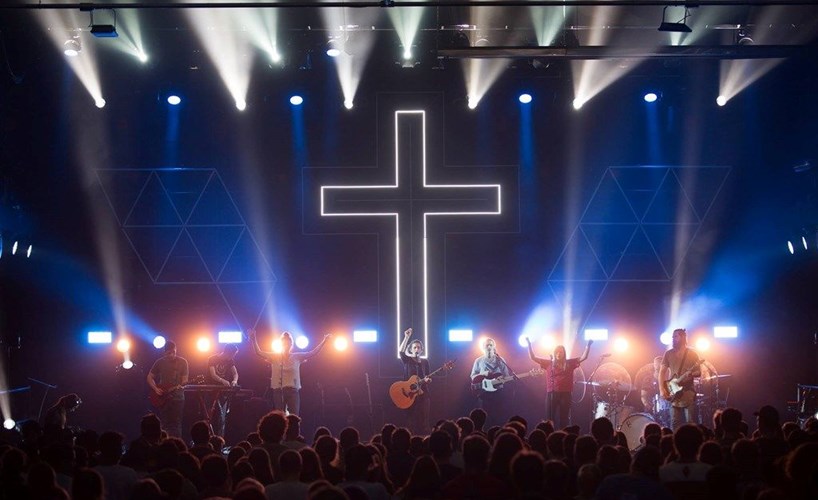
It has become apparent from a news report in the Church Times that the Diocese of St Albans are in the process of injecting fresh money and support into the Soul Survivor congregation in Watford, formerly under the leadership of Mike Pilavachi. The congregation in Watford are being regarded as part of a ‘missional engine’ for work among young people in the Diocese. What the diocese effectively appears to be saying is this. Although Pilavachi has been identified as running an exploitative and abusive ministry over a period of 30+ years, it is still possible to sponsor future youth work operating within the same cultural and theological setting that he was using. At the time of writing, there is some debate as to the extent of the support being offered, but we still seem to be facing an example of ‘bad apple’ thinking. The diocese and the promoters of this backing appear to believe that, having removed one corrupt individual who has been identified as responsible for exploiting many of the individuals within the institution, what is left in the structure can be assumed to be sound and healthy.
When the scandal of Pilavachi’s behaviour broke in April 2023, there was an ominous silence in terms of reaction from the church authorities. There are two possible reasons for this. The first was a shocked realisation that a large cohort of young Christians had passed through the Soul Survivor camps and thus the malign influence of Pilavachi on the Christian formation of these young people had been substantial. The second devastating realisation was discovering that virtually nobody in the hierarchy responsible for Pilavachi’s oversight, whether CofE or Vineyard, had ever raised questions about his style and idiosyncratic practice. His forceful charismatic personality seemed to have silenced or controlled everyone, both those above him in the hierarchical system of the CofE and the unprotected young people who looked up to him as a model of Christian living. This silence that accompanied the revelation of what had really been happening for so long indicated a failure of understanding of what Soul Survivor stood for. There was also an unhealthy attachment to the idea that if a ministry appears as successful in terms of numbers attending, it must be receiving the approval of God.
When the Pilavachi story broke, I penned a piece for SC which was not popular with some of my readers, especially as I compared aspects of the the story with events at Sheffield in 1995 with the 9 o’clock Service. I also suggested that the charismatic style of worship centred on a powerful celebrity leader was never without risk. Even if God appeared to be present in the captivating music and the charismatic worship, it was still important that there were people with oversight, whether locally or nationally, prepared to ask hard questions about what was going on. This was essential even when things seemed to be going well. Going beyond the character and potential personality flaws of a single individual in charge, other issues needed to be faced. These often involved an understanding of the wider culture as well as the history of what was taking place.
Throughout my ministry I have always been sympathetic to the ideas and practice of charismatic theology and styles of worship. I am old enough to remember the generation of British pioneers like John Richards, Michael Harper and John Gunstone. The charismatic scene is much changed since the 70s and 80s and, to my regret, there are few signs left of the generous, ecumenical and inclusive feel that was often a feature of that early time. It is probably forgotten by the current heirs of this impulse that much energy for the movement internationally came from the writing and teaching of an Episcopalian priest in America, Dennis Bennett. His style was, if anything, middle of the road Anglican, but his experiences and life recounted in the book, Nine O’clock in the Morning (1961), were very influential. The later conservative ‘take-over’ of the charismatic impulse was a disappointment to me. I had written my first book for SPCK, The Challenge of Christian Healing in 1986 and at first, I was invited to speak to conservative leaning groups about healing and how I had discovered healing within a charismatic setting. The 90s seemed to reveal the more hard-edged defensiveness to these groups, and an individual, such as I, who would never sign up to theories of Biblical inerrancy or infallibility, became less acceptable. I was regarded as unsound.
My personal religious journey has combined a liberalism affected by academic study with a sympathy towards the charismatic. This combination has allowed me to believe that I have something of value to say to the Church on the matter of what is, and what is not acceptable in the area of charismatic practice. Of the two approaches above that I reject, one is the distant but uncritical admiration of the phenomenon without any real in-depth understanding or experience of what is going on. Charismatic worship, such as we see in churches following the HTB model, is admired as it successfully draws in the crowds. If ‘bums’ are on seats, then we must welcome and encourage this style even if it is incomprehensible and offends our taste and maybe our theology. The other approach involves the arrogant assumptions made by its enthusiastic devotees. This is to think that there is no other theology or style of worship that is worth considering. We find ourselves in a ‘might is right’ situation of uncritical admiration. Hybrids like me are excluded.
There is a possible third way of approaching this issue. This approach would suggest that the recent decision of the Diocese of St Albans to fund and support a revived Soul Survivor structure in Watford carries with it a number of risks and could turn out badly. This is the middle way approach. It allows an appreciation of charismatic phenomena while recognising the need for caution. This evaluation mixes a sympathy for charismatic worship with generous helpings of realism, honesty and truth. Realism might suggest to such a third way yet dispassionate observer that there are questions still to be asked about Pilavachi’s hold over tens of thousands of young people. This phenomenon needs to be thoroughly understood and studied, certainly before handing out hundreds of thousands of pounds to promote it. What do we know, for example, about the thoughts of a young person who was led to faith by a mentor whose behaviour turns out to be exploitative and abusive? I have not seen any studies of this kind. What are Christian counsellors who have spoken to the cohort of young Christians feeling betrayed by Pilavachi telling us? What is the Church doing proactively to prevent another charismatic leader being appointed and creating the same damage among impressionable young minds. If I were a young Christian whose faith had been formed or created by the style and antics of Mike Pilavachi, I might want to feel that those who had put him in this place of responsibility for my wellbeing, were working hard to explain to me what had gone wrong. The Soul Survivor movement was a movement heavily indebted to one man, but it emerges out of a religious culture which could be, and was, highjacked to serve the narcissistic needs and purposes of its founder. Another way of putting this claim is to say that the conservative charismatic culture of Soul Survivor is very easily corrupted to become the tool of a needy individual leader to gratify psychological needs. The gratification processes that have been identified in Pilavachi’s abusive ministry are not an inevitable part of this culture, but they happen with sufficient regularity for outside overseers to need to be on constant alert for these signs of narcissistic abuse. Surviving Church has written about the potentially unholy alliance of narcissism and charisma many times over the years. It was clearly identified in my discussion of Michael Reid, the former head of the Pentecostal Peniel Church in Brentwood. I have also discussed the academic work of Len Oakes, the Australian writer. He was, to my knowledge, the first author to link the charismatic cultures of evangelical Christianity with narcissistic disturbance and disorder. The main finding of Oakes was to point out how the dynamic of large crowd gatherings is a perfect setting for someone who is emotionally needy and who (like Donald Trump) craves the attention and adulation of the crowd. The enthusiasms exhibited in a large charismatic event may often be the setting for less than healthy emotional dynamics combined with acute psychological neediness. This is not the same as saying that true charismatic worship and healthy transformation cannot exist. It is saying that leaders must be acutely sensitised to discerning when the worship event and the music of worship songs is the setting for something phony and lacking in any spiritual depth.
Those who are providing new support for Soul Survivor in the Anglican diocese of St Albans are, no doubt, anxious not to have a repeat of the Pilavachi affair. To help these authorities who want to help both the reputation of the Church and the spiritual needs of young people in the area,at the same time avoiding a repeat of the events of the past, I would want them to ask the following questions. These questions go beyond the therapeutic needs of those actually identified as victims of abuse at the hands of Pilavachi.
- What evidence is there that the damage caused to many hundreds of young people who looked to Mike Pilvachi as someone to emulate and look up to as a model for the Christian life has been properly understood? Have the thoughts and feelings of those who have left the orbit of Soul Survivor been examined?
- This blog piece has criticised the ‘bad apple’ approach to the Pilavachi issue and has suggested that there are and were serious dangers in the assumption that we might call loosely the HTB model of Christian formation is always healthy for young people. Will the diocese be prepared to consult with sociologists, psychologists and others who possess an approach to the issue of Christian formation of young people outside this HTB/Church plant model?
- I have reread the Scolding report which inevitably is mainly concerned with structural issues like failures of accountability and responsibility. The deeper challenge for the Church of England and the St Albans diocese in particular is also proper assessment of the theological issues involved in the saga. Serious issues of authority and power are to be found in the scandal and are yet to be addressed. Although we live in a Church that has a variety of approaches to formation and discipleship with young and old, it might be claimed that the Soul Survivor/HTB model is too much geared towards an entertainment approach to the faith. Such an approach may have little to commend itself over a period. If the church invests considerable sums of money in an approach to youth work yet to prove itself, then we are risk of tie ourselves to a single model of youth ministry which may prove problematic over the decades.
This short critique of the decision by the Church of England to invest considerable sums of money in a system of youth ministry, yet to face detailed professional and spiritual scrutiny, seems ill-advised. To repeat, this is not a blanket criticism of the theology and worship inspired by the charismatic impulse operating in some the ‘successful ‘churches’ in Britain. Rather it is plea that we should all have a far better understanding of the wider context of this ministry and why it has sometimes gone seriously wrong, damaging unknown numbers of our young people within the Church of England.
Just a quick comment. You rightly mention that one of the early “movers” of charismatic Christianity was the Episcopalian Dennis Bennett. (Here in Britain other folk were involved in those early days, such as the Baptist Douglas McBain and the Presbyterian Tom Smail). It’s worth remembering that, half a century earlier, the Anglican Alexander Boddy was one of the prime movers of British Pentecostalism. There’s a case to be made for saying that he was “frozen out” by more working-class(if one may use the phrase) leaders such as Smith Wigglesworth and the Jeffreys brothers.
None of this really has any relevance to the current issues in St Albans Diocese!
ASDA have great current deals on Budvar and Urquell Czech pilsner in tins!
Who would ever be encouraged to support the Anglican Church at the minute after reading this? Young people are incredibly vulnerable to manipulation, harm and abuse.
It is wiser to pick up some pilsner, relax, light the fire and wait for us to finally get sensible anglican bishops installed, hopefully at some point in the not too distant future.
I saw assorted mature adult witnesses-whistleblowers-victims run a mile from an Anglican Diocese where New Wine had savaged innocent people or their reputations.
Needless to say there was no formal inquiry ever fixed up, in spite of a formal letter to an Archbishop: “That’s just how it is…”
Does the shameless stupidity of some Anglican leadership cliques know any bounds?
Is there zero sense of empathy how an award involving Soul Survivor (SOLE SURVIVOR) looks to victims or bystanders?
Over 20 years ago at New wine, they were still rolling out techniques from Sheffield’s NOS. It was mesmerising, and included trance/dance music overwritten with Christian lyrics, flashing images and video sequences.
I had no idea at the time that this was transplanted straight from that cult-like and abusive environment.
And now, as suspected, the money making genre has proved to tasty for the diocese of St Albans to drop, and they were presumably hoping it would be business as usual. The style of worship is Charismatic, but the danger is in the slightly different usage of the word charismatic, as applied to particularly narcissistic individuals, as Stephen reminds us. New “Pilavachis” will soon step forward to fill the vacuum. Churches everywhere seem addicted to these characters.
Once you have experienced Charismatic phenomena, as many of us have regularly, the temptation is to push for more and more. But of course God can’t seriously be commoditised like this if we stand back with mature reflection. It’s mainly not God, although some might be.
Listening to the survivors of the Soul Survivor scandal, of which there were many direct victims and a huge number indirectly connected, you begin to appreciate how much harm was done. We must not allow this to happen again.
‘Toxic masculinity’ in a church context possibly deserves far more attention. The ‘booze-drugs-sex-greed-ego’ bits of it, which grab your attention (or induce guilt!) as a student or younger person are possibly only the tip of a far greater iceberg. What happens when a group of domineering middle-aged or older men (hungry for absolute power and control) hijack a church or para-church group can be far uglier than individual adolescent or student acts of impulsive wrongdoing. What stunned me, as a middle-aged New Wine student, was the open contempt on show for education or learning and apologetics. Asserting ‘spiritual authority’ sometimes felt like shorthand for ignoring commonsense, UK law, Anglican Church rules or biblical principles of natural justice. This grant, and empowerment of Soul Survivor, really looks like a huge slight to Pilavachi victms.
Hi Steve – I have mixed feelings on your comment. Thank you for sharing it, I had no idea and I had assumed a reasonable distance between the discipleship models from Sheffield and St Albans until recently. That being said, my main concern from Sheffield is the approach to discipleship rather than the worship style. Obviously music is open to manipulation – I dont know that trance is worse than other genres. Interestingly though, much of the discipleship from St Toms developed in the 1990s is now mainstream New Wine leadership stuff. Information/immersion/imitation, support and challenge, disciples that make disciples.
Thank you Simon for your approach and critique of this unfortunate and seemingly misunderstood rekindling of a model of ministry that has not yet been fully explained or repented of.
This conversation is worth listening to (again for some) in order to remind us of the reality of the Pilavachi season of physical and spiritual abuse.
https://youtu.be/8x7nO4sza8g?si=c3kLBQ49YdHQk99i
You may be familiar with the book ‘When Narcissism Comes to Church’ by Chuck DeGroat. A review of this book by Robin Ham says that, “It is the church’s ‘dirty little secret’; ‘ministry is a magnet for a narcissistic personality’.” My copy of this book arrives soon.
Some forms of narcissism are healthy, some as revealed by toxic, exhausting and forceful personalities are very unhealthy. It would seem bishops and archdeacons need to discern between the two before releasing the unhealthy type into our midst!
James Allison has quite a bit to say about “Worship in a violent world”, the power of crowds coming together within a context of strong music, rhythmic and loud and how it can be used/misused by those who know how to deploy. A comparison with the Nuremberg rallies is a chilling example. As a worship leading musician I found this salutary whilst recognising I have can do this too! Soul Survivor/HTB need to come come clean about their understanding or ignorance of the manipulation that went on under Pilavachi in a worship context and what they’re going to do to prevent repeats.
How the Church deals with ‘toxic masculinity’ is important. A lot of my older rural Irish relatives dismissed the folly of young men (or women) drinking, dancing, romancing and partying.
As I get older I can start to more deeply understand their wisdom. A trivial sin, like the habitual local drunks urinating up alleyways, and getting yet more court cautions, used to fill up space in smaller local papers.
As a child relatives drew my attention to how serious embezzlement and more ugly crime often gets covered up, while addicted and vulnerable people frequently receive a metaphorical boot.
An Irish story has received national prominence in UK papers and on TV latterly. ITV 27.1.26 had a 9PM to 10PM program on a dual murder involving families connected with a baptist church.
The tragedy happened in a region I am very familiar with, so I emphatically decided not to watch any TV coverage of it. But yesterday’s storm grounded me, and I watched the testimonies from the children of Colin Howell (now imprisoned for a dual murder).
It was uplifting to see what the victims had overcome, and how they now sought to honour their late mother, who was so brutally murdered by their father. TV sometimes has a unique power to present things which cry out for attention.
Andrew Graystone did a sterling job on the John Smyth QC case. But Channel 4’s Cathy Newman really grasped public attention on Smyth by the power of her TV team’s reporting. The Colin Howell ITV program from 27.1.26 was also incredibly powerful.
The broadcast raised a vast number of topical and important questions. How churches deal with allegations (or cases) of adultery is possibly one topic of interest.
KILLER IN THE HOUSE documentary on ITV yesterday 9-10PM is utterly fascinating. Are there some gigantic lessons to be learnt from the Howell case?
Extreme situations, on careful analysis, can guide or educate groups and individuals to a better future…..
It seems that charismatic leaders find the soul survivor type worship an open book. There are too many opportunities to take the stage and make it a one man show. Not a one God show.
Have any SC contributors seen academic or parish practical advice on how local ministers should respond to first or ongoing reports of sexual misconduct or BAH (bullying-abuse-harassment)?
I had never really reflected hugely on this until watching KILLERS IN THE HOUSE 27.1.26 on ITV. When does a reasonable vicar start to diary, or share, or fix up an electronic or written trail, of steps taken on receiving allegations.
The ITV programme has interesting commentary from family members of a murder victim. Questions perhaps arise about a Baptist pastor (or elders) fixing up an apology between an adultery perpetrator male and a husband impacted by the adultery.
Are we facing a situation where more written material is going to be required in future? But do some diocesan website flow charts fail on transparency, or let Archdeacons and Bishops wash their hands of responsibility.
Is there a risk that safeguarding staff may not be independent enough to challenge senior clergy or even our Archbishops? It is surely interesting to consider UK death reporting reforms in the wake of Harold Shipman debacle and murder spree.
Distance was generated, and as I understand it lead figures for much larger geographical areas were fixed, with someone possibly holding dual healthcare (or medical) experience combined with law credentials, holding responsibility.
The old system used to get jokes from past UK GP’s-‘Bronchopneumonia never bounces’
-when the local death reporting services were too close to(geographically and/or socially) to medics reporting deaths.
Time, distance, independence, objectivity and professional credentials do matter. Are our newer systems in Anglicanism, for BAH (bullying-abuse-harassment) prevention, really all that effective or a great advance on what existed before?
The Shipman reforms of death reporting perhaps present the real direction which is needed, and which bishops or archbishops will resist.
I see that St. Andrews Chorleywood is now coming under scrutiny, not before time, anyone wanting to share any negative experiences they have had with this church in the 80s, 90s and 00s can go on the diocese of St. Albans website and find a link to how to do this. I am very grateful for this opportunity as the landscape is very much dominated by Soul Survivor but equal atrocities lie elsewhere.
James, you frequently share the abuse you suffered at New Wine, a group that very much sprung out of Chorleywood, HTB etc annd I do wonder if you might find a way of feeding your negative experiences into this.
Patricia,
It’s always good to see even small signs of progress!
But it might be helpful, for those submitting material to the Saint Albans Diocese listed contact address you refer to, to consider a couple of basic steps. To submit a complaint via someone with knowledge of the law and statement drafting is always wise.
A concise statement, with a focus on essentials of critical importance, is really valuable and helpful. There can be a curious effect present at times, where how the statement content and wording is fixed sends an immediate warning signal to church officials.
It may also be useful to consider who exactly should receive the statement (such as Archbishops, Bishops, media or others) in addition to a specific point of inquiry material collection, as referred to above by Saint Albans.
It is possibly useful to confirm who is formally receiving statements about maltreatment of people, whether they are fully independent, and if the person or group’s professional credentials are listed. It would also be good to see what their plan of action looks like on receipt of data.
What I saw with New Wine people was utterly awful. I would have zero confidence in the capacity of that group to address violent psychological abuse or maltreatment of people.
A senior New Wine leader failed to follow trails which were so obvious that a dead bloodhound would have caught the scent. That person is now an Anglican bishop.
Another New Wine person, intimately connected to maltreatment of innocent students (and harm to other people), has also received career promotion.
Multiple local Church members have red-flagged further concern to me, which they are all too afraid to share in detail, about how it suits our local diocese (and perhaps New Wine as well) to hide some further kind of newer catastrophe, where they think there may have been serious harm and/or loss of life.
Apologies, if the basic advice above is mundanely obvious to you. Contact with barristers, judges and medico-legal people has made me think very concise, plus well organised victim statements, are an ace tool in our hands.
It’s important you brought this one up Patricia. My heart always sinks when yet another church based scandal raises its head. The way this one was “launched” with the diocese magnanimously providing the single pooling point for invited complaints, is understandable from their point of you, but hardly secure from a victim/ survivor viewpoint.
When I contributed to the Independent Inquiry into Child Sexual Abuse they were thoroughly professional. They even supplied a support person to assist me before and after I gave my testimony. The interviews were sensitive and thorough. They listened, believed me, and reported the matter to the appropriate authorities, who contacted me, and progressed matters as far as they could before terminating action. The inquiry was closed and my data was deleted. I had to decided to contribute, and am glad I did insofar as it went, but then nothing. As we know, none of iicsa’s recommendations were implemented by this or the previous government.
The Church is worse than the government. They will hoover up any data and smother it. Reports will be commissioned, delayed and eventually released causing a stir for a day or two. Nothing will be done.
The other line they take is to identify a patsy, and then weaponise allegations against them. They are becoming adept at this, with a faux righteousness angle of sticking up for safeguarding, just to eliminate a faithful. Allegations are notoriously difficult to defend against, even if they have no basis in fact whatsoever. Behind false or misleading allegations is any number of self serving motivations. People are destroyed. It serves as a useful distraction from their dishonesty.
With Soul Survivor, their aim was to hang it all round Pilavachi’s neck and move on, retaining all the ministry methodologies. He comes out of the findings as bit of a piece of work, but that’s typical for senior leadership. Many many others facilitated his actions and overlooked his wrongdoing for decades. These people are all still leading.
If you’re reading this as a victim from St Andrews, get a support network, and keep careful notes of calls, correspondence and meetings. Don’t hold expectations of justice and you won’t be disappointed. I hesitate to recommend going to journalists, but these, such as Gabriella Stirling of the Telegraph, and Cathy Newman, of C4 (shortly moving to Sky News) have been more effective in making them change than anything else. If you’re wrongly accused, crowd fund your legal fees.
You will find people, good people who will support you. Some of them are here. Be careful and God bless
I am not a lawyer or a safeguarding expert. But is this new Saint Albans inquiry independent? Is there any clear plan of focused action defined? Are loads of-‘in house’-Church groups, or senior leadership players, or Church safeguarding people involved? Might a very concise and focussed statement have merit if submitting to that inquiry? The new Archbishop and Primate says: “I want us to be a Church that always listens to the voices of those who have been ignored or overlooked, among them victims and survivors of church abuse who have often been let down.” The way to achieve this would be independent inquiries. But Sarah Mullally does not seem to be pressing for fully independent safeguarding. Talk is cheap etc…..
The charismatic renewal of the 60s and 70s was remarkable not only for its emphasis on Christian unity and ecumenism. There was no single powerful leader, and it seems to have sprung up almost simultaneously in a number of places. At least, that happened in the USA. Besides Dennis Bennett’s church in Washington State, another church which pioneered it was my uncle and aunt’s Pentecostal church in Philadelphia, under pastor John Poole, and an Episcopal church in rural Pennsylvania, plus others elsewhere.
It was probably inevitable that the movement would become corrupted and fossilised over time, as all movements and churches seem to do. That’s why the Church is in constant need of repentance and renewal.
“If I were a young Christian whose faith had been formed or created by the style and antics of Mike PilavachiI might want to feel that those who had put him in this place of responsibility for my wellbeing, were working hard to explain to me what had gone wrong.”
I’m glad you think this.
I suspect the brush off the affected people get to these questions are:
1. It was too long ago, I can’t remember any conversations about it, I didn’t keep notes of meetings, I don’t remember it happening how you say it did.
2. It’s someone else’s responsibility – I don’t work there any more/I didn’t work there at the time. The diocese/church where it happened/bishop/archdeacon/current incumbent should deal with it.
3. We are all sinners but God is Sovereign so you have to trust him and move on and forgive.
4. Go and talk to your local pastor and church family about it instead. I don’t have enough regular involvement in your life to be a help to you.
5. Go and talk to your therapist about it (and no we won’t contribute to the cost of therapy because no one has been able to prove it was our fault you need it)
6. I will have a strictly boundaried meeting with you to listen to the impact on you of your experiences but I can’t revisit or enter into analysis of what happened because I don’t want to inadvertently admit liability, ahem, I mean I wouldn’t want to say anything that could cause you distress in your traumatised state.
Gill, that’s spot on. Thank you.
Yes! Convinced Christians are driven away by Anglican BAH/KCJ/DARVO [bullying abuse harassment/kangaroo court justice/deny-attack-reverse-victim&offender].
How does it ever look to agnostics or atheists? Older people see how providence stitches up lots of bullies and abusers over the longer term. The younger and more immediate victims of Pilavachi will see their vindication in God’s time…..
In 2016-2017 a disclosure was made to me (in confidence) on a Church of Ireland cover up of savage child abuse in Belfast during the 1970’s. I disbelieved how the 1970’s saw a vicar secretively shifted to Co Tipperary. The old song runs “It’s a long way to Tipperary”. But it was-“not far enough”-for a Belfast vicar given a lifetime ban by the Scouts in the 1970’s.
The Irish media have uncovered the plot, and at least one (now deceased) child victim received compensation. But the vicar now lies buried by an entrance of our national Primate’s Cathedral in Armagh. Their tombstone has block capitals and ends: PRIEST SHEPHERD FRIEND.
The Irish Anglican Primate has questions to answer-but he stays silent!
Providence can deliver some amazing surprises!
Thank you James and Steve for your wise words it has given me a lot to consider. It is odd that some abused people like me are often quick to trust at face value. What is that about I wonder!
Hi Patricia
A legal friend-or someone with past experience of doing statements-can be a huge help.
Keeping a statement factual and brief is good. Nobody can really contest your own ‘lived experience’ or response to trauma.
I think it’s often good to write something, then let it sit for a few days, and ideally let somebody with legal or inquiry experience take a look at it (e.g. an experienced union representative or a trusted cleric with experience of Church inquiries).
A shortened report, such as an experienced writer presents, can look or feel a little bland at first glance. But people familiar with inquiries may well have a learnt (or innate) sense of what is really important in a written testimony.
A short and factual statement can protect the person presenting it from excessive vulnerability. It can also be a highly effective short summary to share with selected senior people, outside of the immediate person or persons receiving the submission.
My trust of Anglican Dioceses is very low. So I might be inclined to share a statement with an Archbishop, request their confirmation of receipt, and perhaps even send it by recorded delivery ‘Private and confidential exclusively FAO Archbishop X’.
Patience and care pay a dividend in these matters. That’s my experience!
James
I heard once that narcissists use your strengths against you rather than your weaknesses. Your openness to trust and have faith in God (I’m guessing that was what used to manipulate you) is a strength.
I still want to believe that using that against you is a monstrous wrong before God.
Though God seems to tolerate a huge amount of that particular wrong which makes it impossible for me to trust God from here.
Patricia, this is in reply to your comment.
Thank you Gill, I empathise with how hard you find it to trust God, every time one of his/her/their clergy proves themselves to be not all they seem to be I have a wobble yet every time I am faced with hardship I return to prayer for guidance.
Having been with many people at their death (I am a nurse not a serial killer) there is something very primal and fundamental about trusting in something greater than ourselves at the end of our lives. Having gone through serious spiritual abuse courtesy of the teachings of Chorleywood I feel that comfort, assurance and trust that my journey past death is safe and peaceful has been ripped from me. A life changing and deeply traumatic abuse that the Anglican church hasn’t even begun to acknowledge.
May I ask Patricia, and thank you for your heartfelt and valuable contributions, have you been able to find a fellowship where you feel safer at all? I haven’t managed to so far, apart from a few online gatherings, such as this.
No Steve I haven’t, I very much stay away from anything organised. Sometimes I long to be part of something but fear and what I know now about the church and how it operates keeps me away. It is a loss. I don’t even trust individual clergy which is sad as I am certain there are many good people out there. I am grateful for online blogs and understanding people who comment. I am sorry you find yourself unable to find somewhere if that is what you would like, the abuse of the church runs deep.
A quiet early morning BCP spoken service with few communicants can be positive. The calm and quiet contrasts with Pilavachi type meetings. An informal non-denominational and midweek payer fellowship can be positive.
It’s really bad isn’t it.
To harm someone’s relationship with God.
I don’t think any Church is safe this side of the new creation.
ANGLICAN INK 30.1.26 has this post: ‘The Impact and Implication of Suicide, Incompetence and Wokery, on the Appointment of an Archbishop of Canterbury’.
I am grateful to SC blog for highlighting the Fr Alan Griffin case. How Mullally ever got elevated to Primate-even after this tragic and shameful episode-is very telling.
“Power rarely says no to women (but this could also read survivors in the Church) directly.
It delays, redirects and exhausts them instead.”
Arundhati Roy is describing a mechanism, not a mood.
Direct refusal creates evidence. It can be named, challenged, documented. Delay leaves no
single decision to confront. Redirect turns resistance into procedure. Exhaustion reframes
exclusion as personal burnout rather than structural design.
This is how power protects itself while appearing reasonable.
Women are invited to apply again, revise proposals, wait for review, join advisory roles, accept
interim positions, or prove readiness one more time. Each step sounds neutral. Collectively, they
function as containment. Momentum is slowed. Energy is drained. Authority remains untouched.
The system benefits twice. It avoids confrontation while extracting labor. Women continue
contributing ideas, coordination, and credibility during the waiting period. When they step back,
the withdrawal is framed as lack of stamina rather than engineered fatigue.
Roy’s line explains why so many women feel blocked without ever being told no. The door is not
slammed. It is held just out of reach.
This pattern is especially effective because it resists accusation. There is always a process to
point to, a future opportunity to promise, a reason to defer. Time becomes the enforcer.
Recognition begins when delay is no longer mistaken for neutrality and exhaustion is no longer
personalized. Power that never says no still denies. It simply does so quietly, efficiently, and
without leaving fingerprints.
Roy’s insight names what is usually invisible. Exclusion does not always announce itself.
Sometimes it just waits you out.
That is so true. I took to always asking for feedback after being turned down for C of E jobs, just to see what creative excuses they could come up with after appointing some man much less qualified than me. On one occasion the interview panel even admitted the job they’d just interviewed me for no longer existed because the archbishop had changed his mind – but they still gave feedback putting the blame on me. And recommended a course on how to present myself better at interview, when clearly no amount of presentation would have made any difference. I could have done with some training on how to deal with senior clergy lacking integrity, though. Strangely, that wasn’t on offer.
Empty pews, closed churches and a shortfall of trainees tells a sad story. BAH (bullying-abuse-harassment) and their cover up come at a huge cost. Do lots of ministry trainees just give up on the Anglican Church?
Who you know, at times appears to matter far more than your skills or qualifications. An inverse process to the real world can be at work, where the least qualified or experienced person is chosen for opportunities.
There cannot be anything much more soul destroying, than committing time and money to training, but finding opportunities barred and blocked in a spitefully wicked fashion. Our bishops reap what they sew, and the results are to be seen across the UK.
Not just who you know, but your sex, social class, sexual orientation, and training college – all seem to matter, sometimes, more than your qualifications and abilities. MIsogyny and classism, in particular, are rife.
Recruitment isn’t always about getting the best person for the job, but about finding someone who will toe the line. It’s one of the many things I’m learning that weren’t taught at school or on professional training courses/university.
One man I saw promoted to partner, had made serious mistakes, as I was discussing with the senior partner who told me about them (with unrepeatable language) not long before he promoted him. Other staff were flabbergasted, but we were told he had a ‘suite of skills’. True he was good with clients, but knowing what they knew about him, he would be loyal for life.
An insight I gained from Paul Gallico (writing about the army) is that if an underling is committed to doing the best they can in their area of responsibility, they’re difficult to corrupt or manipulate. Which will only suit superiors who are also committed to doing their best for their area of responsibility, and those they are responsible for. It won’t suit venal or slacking bosses at all.
See also the Yes, Minister series.
Relevant to both this post and also the previous courageous one about Purity Culture is this conversation about Soul Survivor.
https://www.youtube.com/watch?v=_OdaFwfI3Xs&t=1620s
Dr Lucy Sixsmith’s new book goes on sale shortly.
Fascinating. Thanks! I am reading ‘Orthodoxy’ by G K Chesterton. It’s an antidote to New Wine speak.
The supernatural order, as displayed within Space-Time, and equally the human Mind-Brain, are not topics I have any recollection of hearing much about during a 2 year New Wine run course. This extended debate on the new book explores a lot of the sicknesses and sadnesses which Pilavachi/New Wine types generated.
The ‘old time’ (New Testament) religion has central sacraments with bread-wine-water. An elderly vicar, now deceased, taught my primary class about Creation-Conscience-Christ. He possibly said more in his brief tutorials than Pilavachi said in decades of ‘charismatic ministry’. Odd why the C of E would now wish to dump so much membership money into Soul (Sole) Survivor.
Julie Roys, a distinguished Christian journalist in the States, has composed a thoughtful film with guests, where they critique Bethel Church’s actions in platforming Shawn Bolz, and far too late addressing his abuse, long after they knew. The story has exact parallels with the U.K. Soul Survivors platforming and eventual dismissal of Mike Pilavachi, and then failing to recognise and address a cultural crevasse left behind.
Bolz systematically faked prophecies, and victimised many with S abuse.
https://youtu.be/OAS9oo2mOPw?si=DlY479ZmiFSOVQF8
It’s a long but well edited video. If you listen to nothing else, at 1h.45 a key point is made. They speed up some quoted excerpts, which can be a bit disconcerting, but does save time.
Bethel is a huge Church with significant influence on the U.K. its lead Pastor Bill Johnson, spoke frequently at New Wine when I attended. The filmed discussion shows Bill’s sort of apology and critiques it fairly in my opinion. Ditto K Vallotton.
Someone close to Bethel who described it as the “mother ship”, gave me a copy of their book “Culture of Honor [sic]” many years ago. It struck me then as deeply flawed, but the lowlight for me was their self referential culture. Basically they only looked to themselves and quoted their own words, without much regard to a plethora of distinguished outside Christian writers, with which to at least corroborate or adjust their own teachings. No wonder they’ve come a cropper.
I recommend Julie’s work.
Thanks. A long clip but some penetrating insights. They do not mince their words.
‘Pastor overseeing pastor’ rings alarm bells in this USA film clip.
Vestments-hats-sticks cathedrals give bishops gravitas. But with a BAH (bullying-abuse-harassment) inquiry, a bishop investigating a priest is also….’pastor on pastor’……
Anglican families, perhaps with generations of connection to the denomination, possibly have subconscious biases which tragically blur the waters on this point, and possibly leave our natural defence against bullying weakened.
Our anglican bishops and archbishops sometimes show scant empathy-or a lack of awareness-on how something like a large grant to Soul Survivor (for further ministry training) will be perceived after the Pilavachi scandal. This post, above, illustrates and highlights a much wider problem.
An Irish Sunday paper carried the picture of a paedophile vicar’s grave. An internet link [https://share.google/yYRbZN3xCtqJMo51m] shows a gravestone ending-PRIEST SHEPHERD FRIEND. It allegedly rests by an entrance to the Irish Primate’s cathedral seat.
Have anglican bishops and archbishops in Ireland outsmarted themselves, here, through the use of an NDA? They cannot now formally name the deceased vicar as a paedophile, but the gravestone image appears to celebrate him or to sing his praises.
Should Archbishop John McDowell be exploring the possibility of revoking the NDA-if this is ever feasible or can be negotiated-and cleaning up an almighty mess created by leadership immorality and incompetence in the Down and Dromore Diocese?
The tombstone referred to-resting by his own cathedral seat-should sear the conscience
of Archbishop John McDowell. He must surely know how silence can be deafening.
Odd how the Down and Dromore Diocese has had two successive ‘GAFCON’ bishops.
GAFCON bishops, moral ‘purity’ guardians, might wish to cede from the Church of Ireland. But the present GAFCON bishop of Down and Dromore cannot formally name a child abuser vicar, as a result of an NDA being fixed. Yet the abuser gets a nice tombstone inscription.
Jesus talked, metaphorically, about a ‘millstone’ around the neck for those who harm children. But did a paedophile Irish vicar get a complimentary ‘tombstone’ instead?
An interesting question arises here, around how paedophile clergy get remembered in inscriptions or writings.
An excellent article.