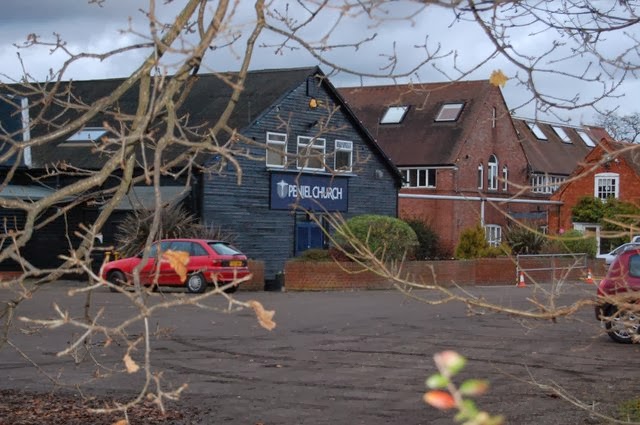
I have decided to leave my previous blog post, even though almost the whole thing is now so out of date that it probably should be deleted. On this post, I shall try to keep to the facts that are known about the Commission on Trinity Church Brentwood and its dissolution. These are the known facts as of Tuesday 18th August.
On Friday 14th the Trustees wrote to John Langlois, the chair of the Commission telling him that the body was being dissolved. The reasons that were given involved an alleged lack of partiality on his part, and the chairman suggested that the Commission could no longer command the confidence of the church and others.
John wrote two replies. One was to the Trustees of the church, asking for clarification of this ‘partiality’ that was being complained about. He suggested to the Chairman of the Trustees that he had complete confidence in three of the four fellow commissioners and that he suspected that the fourth, the Rev Terry Mortimer, had been leaking information about the commission and also making complaints about the work of the group to outsiders. John also revealed that Terry had written to him in July, suggesting that the Commission should be dissolved and that he (Terry) was going to seek to have it stopped.
The second longer missive was sent to all the individuals who had approached the Commission to give evidence and make statements of ill-treatment at the hands of the Peniel/Trinity. This contained further information. The most striking piece of information was that John wished to continue the work of the Commission and that he proposed to continue with the three remaining members of the Commission. He paid special tribute to Julia McGahon, the Trinity member who was on the Commission and expressed his firm conviction that she and the other two members had not let anything leak out of their proceedings. He made it very clear that the end of interference by Trinity would greatly assist his work for the future. They would now be truly independent.
The long account put by Trinity itself suggested that they were ready to continue with the work of the Commission with two new people, appointed by themselves, Phil Hills and David Shearman, in charge. These two are firmly within the charismatic network, and are no doubt acceptable to the Trustees of Trinity. Whether they have the forensic abilities of a lawyer, like John Langlois, is highly questionable. Some victims have already expressed their dismay at the way these two were parachuted into the scene without any consultation. It is also not clear whether the Evangelical Alliance has had any say in this drastic change of plan.
The plot becomes muddied by suggestions that John Langlois has failed in his professional impartiality in some way. The first suggestion is that he has, in an email, been less than complimentary about Julia McGahon, a Commission member and that also he was critical of the work of Nigel Davies, the author of the other blog. As of this evening Tuesday 18th, no statement has been made by him over this or the other suggestions of bias. On the face of it, these allegations of unprofessional behaviour are implausible, and I, for one, want to stick by the belief that John Langlois is a man of professional and personal integrity. It would still help if he were to make a statement answering these and the other suggestions of slippage from professional standards.
On Tuesday afternoon in an email to Nigel Davies, it was revealed that Julia McGahon had resigned from the Commission. This will create problems for the viability of the Commission in the future as there are now only three members out of the original five left. We await to see what John will do in reaction to this piece of news. It is not hard to see that Mrs McGahon must have felt incredibly pressured by her position as a member of a church which is the subject of so much airing of ‘dirty-washing’ from the past. She will have been under considerable pressure to speak of what she has heard by other members of the congregation.
The next part of the saga will take place when we hear, as we surely will, of the reaction of the Evangelical Alliance. To remind readers, they were brought in when the allegations of rape were first make back in April 2015. John Langlois is one of their top heavy-weights in terms of legal experience and the ability to understand the issues around evangelical institutions. He himself is a third-generation member of a Pentecostal congregation. He will expect, with good cause, to have his reputation defended by the organisation that recommended him to the Trustees of Trinity Brentwood in the first place. There is still much more to happen in this saga. I regale my readers with all the detail because the potential for this Commission is of great importance for the cause that this blog holds dear – the issue of justice and fairness for any who have been harmed by the activity of churches and their leaders towards their vulnerable membership. Broken families, traumatic stress and deep depression are the legacy of this destructive ministry in an Essex town. The dynamics of this church, as I do not tire of saying, are visited on some congregations up and down the land. This blog continues to name this kind of abuse and by seeking to interpret what is happening, make it harder for perpetrators to operate.