Category Archives: Stephen’s Blog

Bullying and Abuse

anti_bullying_by_spiritofnature-d5koat8In the hospital last week, while doing ‘cover’ for the full-time chaplain, I met a man in his 40s who was one of the patients. It was not a particularly religious conversation but it was significant in that he opened up about issues that were on his mind. He told me about his daughter of 21 who had, in the past twelve months, dropped out of studying because of bullying by a member of the college staff. The case was complicated because the staff member was himself off work for ‘stress’ and so nothing could be resolved through tribunals or enquiries. The daughter was having to carry this unresolved episode around with her. She had done a number of temporary jobs but re-entering college was still on hold. On the surface she was claiming that the incident was not affecting her, but it seemed clear that there was still things to be worked through. I suggested that a counsellor might be able to help her see the extent she was perhaps suffering from some form of post-traumatic stress from the incident. In short, a proper owning up to what she was really feeling (and suffering) might assist the moving on process.

I mention this incident because it reminded me of the way that bullying is everywhere. Few people escape it at some point in the lives. Although, in this blog, we are focussing on the abuse that happens in the context of the church and religious organisations, we must not forget that almost every firm or organisation suffers from bullying somewhere. I decided to look at some of the literature about bullying to try and understand it better in whatever context it takes place. Two facets of bullying need to be thought about. One is the part of the bully – why they do it. The second part is what happens to the victim as the result of this psychological, physical or cultural violence.

Let us first address the first part of the equation. One thing to be noted about the bully, is that they do not normally fit the caricature of bullies that we carry in our heads. They are not necessarily brutish or crudely threatening, the picture that we carry forward from playground experiences. The sheer variety of abuses of power that we can describe as bullying is endless. It can occur using obvious coercive methods or it can be manifested quietly and barely noticed by the outsider. Another word which is almost a synonym for bullying is ‘manipulation’. Manipulation also occurs through both violence and flattery. In both words power is being used and abused so that one person can achieve ignoble ends, such as emotional or financial gain.

The great Burmese female politician, Aung San Suu Kyi, said some words which get to the heart of bullying and why individuals practise it. Her words were uttered in the context of the long political struggle with military dictatorship (or bullying) in Burma but they still illuminate our quest to understand. She said: ‘It is not power that corrupts but fear. Fear of losing power corrupts those who wield it’. It is a commonplace to say that bullying is practised by individuals who feel inadequate or isolated in themselves. A psychologist, Melanie Klein, spoke about the inner rage that the bully feels over their own inadequacy. They thus seek to relieve this feeling by projecting their weakness on to someone else. That ‘bad object’ that really belongs to them can then be harassed in the other person rather than in themselves. The more that other person is humiliated, the more relief the bully feels by not having to face up to their own emptiness and low esteem. A summary way of putting all this is to say that the bully is the little person, tormented by low self-esteem, fear or inadequacy, who has to bluster and manipulate others in order to relieve the inner emptiness.

Other psychological insights come from those who describe narcissistic behaviour. To summarise these ideas, it can said that bullies are self-obsessed, self-important individuals who have a powerful inner motivation to create a world around them that serves their emotional needs. They will bully and cajole others to serve these needs and they are often good at doing this. The malign charismatic personalities have, as we have described in another blog post, a particular gift in this distinctive type of manipulation. Further remarks could be made about the way that bullying and sadism are connected, but space does not permit.

Moving from an account of the profile of bullies to the description of those who receive such treatment, we can see that the targets of this treatment can suffer profoundly. Outwardly the victims may have to take drastic action to escape a bully, like move house or change jobs. Others collapse inwardly and may commit suicide. The reason that the bullying is so powerful is that the vulnerability of the bullied individual has been exposed and their self-esteem has been undermined. In the process they have felt themselves marginalised and of no possible value to anyone. Few people are so strong that their sense of who they are cannot be attacked and undermined by a determined bully. Within an organisation an individual cannot just walk away without severe consequences. As long there are bullies in any organisation for the reasons we outlined above, there are always going to be power games which are going to be won by the person who is further up the hierarchy. A common consequence is the one that I mentioned at the beginning of this piece, the experience of severe stress. Whether it results in the acute form, this stress can interrupt the normal processes of life. Damaged self-esteem takes a lot of rebuilding.

I am conscious of there being many more things I would like to say on this topic, but I always fear my reader will lose patience if I write too much. I will just end with a reflection from St Matthew’s gospel. In chapter 25, Jesus speaks of the people that his followers are to serve as a sign of being his disciples. They are to serve the hungry, the stranger, the naked, the ill and those in prison. In doing this they are serving him. ‘Anything you did not do for one of these, however humble, you did not do for me.’ What greater proclamation that followers of Christ are never to be complicit in any culture of bullying but rather be among those who always seek to build up the weak? The church should be a place where bullying cannot happen. May we all work to play our part in ‘naming and shaming’ it wherever it occurs.

Looking for Easter

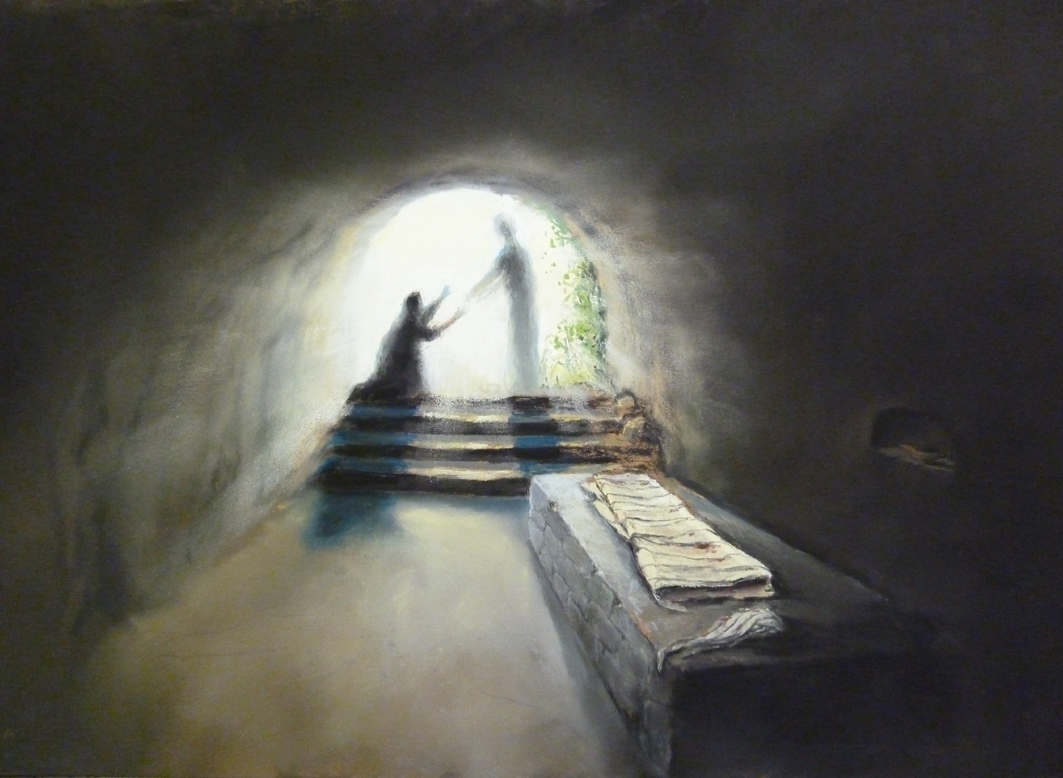
resurrection-morning-iisIn a blog that looks to understand the nature and extent of abuse among Christians, it is not always easy to find happy endings. Many of the stories that I have encountered do not have such endings. People remain in the middle of their pain, without obvious solutions or justice. One would love to be able to say that every account had a long-lasting solution. When Jesus said ‘you now have sorrow…. I will come to you and your sorrow will be turned to joy’, we want that to be true for every suffering person. But so often that does not seem to be the reality.

It is sometimes said of Christians that they are ‘Easter people’. I am sure that there are many ways of understanding what this might mean, but I want to suggest a way that we can be Easter people in the context of the concerns of this blog. One of the things that we learn, as we go through the sombre events of Holy Week and contemplate the awful suffering that Jesus endured, is to see all this suffering in the context of the coming events of Easter. In other words, our imaginative immersion in Jesus’ suffering is made possible because of what we know is to come afterwards in the narrative. Without Easter, Jesus’ suffering and death would have no point or purpose and it would be utterly demoralising even for us to read about it. We would have to conclude that power always wins over goodness, strength defeats weakness – the bullies always triumph. But, as we all know, the story does not end on Good Friday. The gospel accounts tells us that the story has an unexpected twist. Christ rises from the dead and somehow the terrible suffering is able to be seen as a victory. The power exercised over Jesus during his Passion is seen to have no lasting hold. Death itself can be said to be defeated in some way by an act of God.

The central theme or message of Easter seems to have these two facets. The first is that Christ is the victim but at the same time we find him to be the one who, in and through his faith in God, is also victorious. He endures more in the way of abuse and torture that we can ever imagine. But he enters the place of abuse and torture willingly, confident that God was with him and would accomplish his purposes through him. We could go on to suggest various Old Testament passages that encouraged him in this hope in God, even though his humanity recoiled at the prospect of death. The final words on the Cross – ‘Into thy hands I commend my spirit’ are a summing up not just of this life-long sense of trust in God, but also of his confidence that God would receive him at the moment of death.

The event we call the Resurrection is not easy to understand in all its aspects. Many Christians stumble over the details as to whether or not Jesus returned with the same physical body. Some Easter accounts in the gospels suggest this is what was believed while other passages can be read as suggesting something quite different. The important thing in all the accounts is that Jesus was in some essential way alive. He had passed through to a dimension that is beyond the grave but in a new way he was and is alive and among us. His death and resurrection is also in some way a prelude to our own death and life within eternity. ‘I go before you to prepare a place for you so that where I am, you may be also.’

The first message of Easter is then, in summary, that Jesus is the victorious victim. The second message, of particular relevance to victims and all who suffer in the world, is that we can come very close to him as our risen Lord even now. In his earthly life, it is testified that Jesus sought the company of the poor, the sick and the outcasts. Today we would add the victimised, those who receive humiliation, violence as well as the victims of prejudice. It is not so strange that we should look for the same reality to be at work in his risen life. There is an old tradition of Christian prayer popularised by St Ignatius of Loyola in the 16th century which put a great emphasis on our imaginative participation in Gospel events. The individual follower of this tradition would use the mind and imagination to reconstruct the events recorded in the Gospels. In short we are enabled to meet the risen Jesus by being imaginary participants in particular episodes within his earthly life. Ignatian prayer encourages the practitioner to see the sounds, smells and textures of the Gospel event as a prelude to a personal encounter with Jesus. The point at which such an inward meeting ceases to be product of our imagination and becomes a real encounter with Jesus is not for me to define. It should be noted however that the Ignatian tradition has been followed for hundreds of years and has been a source of blessing and comfort for many. Whether we seek to meet Jesus through this actual method or through another way, the Christian tradition of prayer has always invited the faithful follower to meet the risen Jesus. The record of his earthly life shows him as the particular friend, comforter and encourager of all who have passed through pain or abuse. Of course everyone is invited to be in this place, whether or not victims, but the Gospel testimony suggests that the risen Christ has a particular longing to place his hands on those in pain and who are the victims of bullying and abuse of any kind.

Easter, the story of victimhood followed by ultimate victory, is one that should especially resonate with the abused everywhere. The Christian tradition has always allowed us to know within our hearts, not only something of the transcendent God but also the human face of God in Jesus. As I write these words, I am reminded of the prayer of Richard of Chichester which speaks of Jesus as Redeemer and Friend and Brother. May the risen Jesus be such a redeemer, friend and brother to all, but especially those who need comfort and healing in the darkness of their abuse.

Reformation insights on power

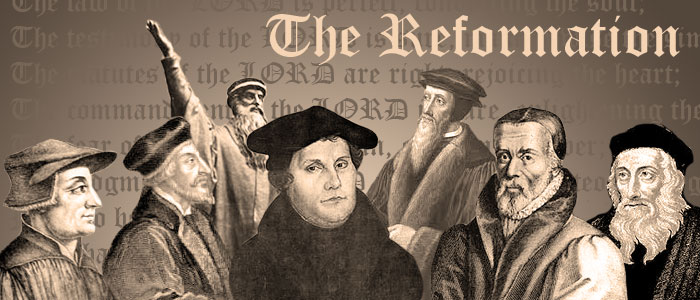
reformation-imageIn reading around the subject of the Reformation, I came across a summary of the issues that I would like to share with my readers. It has a simplicity about it which helps to make it useful to our thinking about the Reformation, as well to our interest concerning power and its abuse.

The classic principles of the Protestant Reformation (Anglicans like me have a somewhat ambivalent relationship with them) are threefold. First there is the principle of ‘justification by faith alone’. This is in particular read out of the Epistle to the Romans. In the second place there is the teaching that Christ on the on the cross died a substitutionary death in an act of atonement for the sins of mankind. Thirdly there is the doctrine of the indwelling of the Holy Spirit. These principles of theology were read out of Scripture and proclaimed by all of the Reformers with different emphases throughout the 16th century and later. Even though my reducing so much theological writing into a small compass will probably meet with scepticism, I ask that the reader bears with me sufficiently as I observe that each of these principles has to do with power, particularly reclaiming power from the religious monolith that was the mediaeval Catholic church.

It is a commonplace to note that the Reformation was a movement of protest. This word ‘protest’ has a double meaning in modern usage. It contains the idea of objecting to and targeting an idea or principle, but also simply making an opinion known. The early Protestants were in fact doing both these things. They were attacking the power of Catholic authority and at the same time they were articulating (protesting) a new way of being Christian. This new vision of how to be a Christian stood on its own but it had, at the same time, the effect of attacking the monopoly of the powerful institutions of the Catholic church. How were the three planks of Reformation teaching undermining the power of the mediaeval church?

The first principle that I mentioned as a key to understanding the Reformation ‘protest’, was the rediscovery that faith, as understood by Paul, was a matter for the individual and his relationship with God. This possibility of a relationship of faith with God, without the mediation of sacraments and the entire paraphernalia of clerical structures, was deeply subversive to the old order. A second principle to challenge what had gone before was the new understanding of how Christ’s death had been an atoning sacrifice. This sacrifice did not need repetition and Protestants, by making their claim that Christ’s death was a once-for-all event, were effectively undermining the Catholic claims for its theology of the Mass. Why was it necessary to re-enact the death of Christ over and over again in the Mass, when the original event was decisive? If the Lord’s Supper was to be remembered, it was a mere remembrance of an event in the past. It did not involve some magical process as suggested by the teaching on transubstantiation. The third point was the inner relationship with the Holy Spirit as taught by Scripture. This did not need anything beyond the believer and his life of personal inner growth to make it happen.

In this way Luther and the other Reformers of the 16th century challenged the institutional power of the Roman church with their ‘plain’ reading of Scripture. Whether they were in fact handling Scripture correctly through these attacks is arguable, but I have to leave that point to one side for the moment. What is important to realise is that, at an important level, the Reformation and the Counter-Reformation after it were struggles for power. Theological ideas read out of Scripture had massive implications not just for the Christian faith but also for the world of politics, society and the whole course of history. John Calvin took political authority in Geneva in the name of the principles set out in his Christian Institutes. In every society in Western Europe since that day, power, political and sometimes military power, has often been exercised in the name of Christian truth. Arguably when Christian truth believes that it has the right to dictate to others, believers or not, how to live and behave, it then has the potential to become an abusive system. This is true whether it takes place at a national level or at the level of an individual congregation, or even at a family level. We can always imagine the authority figure being able to say: ‘God has given me the power to tell you how to live your life’.

The argument of this blog piece is simply to point out the way that power and thus power-games have infiltrated into Christian institutions at every level, sometimes to their enormous detriment. Obviously institutions have to have rules and order, but these rules and the order they promote, have often become instruments of control. Protestant and Catholic institutions have both failed in this area in many places. We need to remind ourselves, once more, that the Christian way, as proposed by Jesus, was a way that completely turned upside down the rules of power. Jesus stated quite clearly that while the kings and governors made people feel the weight of their authority, ‘it shall not be so among you’. The crucifixion, which is very much in our minds and imaginations at this time, was a powerful living out of a protest against conventional power and the way it is used. The way of God was to be the path of powerlessness and humility. Somehow we keep losing the plot over this call to learn the meaning of humility and love. Christian institutions should not be places where people are bullied sometimes and humiliated. I find it hard to understand why there is not within the churches a massive amount of knowledge and experience with which to put into practice the way of powerlessness as taught and practised by Jesus. We have had 2000 years to get it right. There are of course some places which seem to understand gentleness, true altruism and the way of service, but they are not as common as one would like them to be. Above all the Church should be far better at spotting very quickly when things are going wrong in terms of the failure to use power appropriately. Sadly the Church is better at leaving things to fester. Sometimes dysfunctional structures continue for decades before they are challenged, having left pain and abuse in their wake.

Theological training in crisis

In the Church Times this week and elsewhere online, a row has blown up about the future of theological education for would-be clergy in the Church of England. The cost of training men and women to become clergy is not inconsiderable and it is normally borne by the central church funds. Back in the 60s when I received my training, the cost of vocational training was met by central government through the grants system. People like me could cheerfully clock up five years residential training as a full-time student at university and theological college paid for by the long-suffering tax-payer. I even succeeded in persuading my local educational authority, through whom the funds were mediated, to let me have four months absent from theological college, at a course in the World Council of Churches Institute in Switzerland. Such largesse and generosity to students, theological or not, has gone, never to return.

This basic pattern of training at residential colleges has continued for would-be clergy, while many others have done training at local centres in a kind of night-school structure. The latter scheme has proved popular with individuals who, for financial reasons, have to keep working while they train. The cost to married students, where two parents may have to give up jobs to migrate to a residential theological college for up to two years, is just too high. Although there are increasing numbers of unmarried candidates in their twenties coming through the system, there has been in the past an assumption that most clergy candidates will start training after some years in another profession. These older married candidates are expensive to train when they opt for residential training, particularly if they opt to study for a university degree at the same time. This latter option, as we all know, has become horrifically expensive in the past few years.

At the beginning of this year, the Church of England, responding to a simultaneous increase in the number of clergy in training and a massive rise in costs, produced a report. This report proposed devolving all decisions about clerical training to the individual dioceses. The dioceses would make a decision as to whether the candidates would be allowed to receive residential training or be trained ‘in-house’ with the resources that the dioceses can muster. On Friday last a letter was published in the Church Times questioning the wisdom of this policy. Various points were raised by the 17 signatories, all of whom are involved in theological study and research at the highest level. The complaint was that the dioceses would find it expedient, for reasons of expense, to opt for the cheapest option in most instances. This would have a knock-on effect on the centres of theological excellence as fewer and fewer students entered them. The norm of five years training in the 60s would become the preserve of the few and immensely privileged.

The debate, no doubt, will carry on for months to come and a debate is to take place in the Church of England General Synod in February 2016. Having set out in summary this report about clergy training, I want to express my own concerns within this debate that relate to the themes of this blog. The first issue to note is that the depth of theological education offered to many ministers in the independent part of the church is often very superficial. When I was talking to people in the 90s about the qualifications required of ministers in one branch of a Pentecostal group of churches, I was told that a man could be appointed as a Pastor in charge of a congregation after six months non- residential training. In that period of time, I reckoned, one could be taught a rote system of doctrine, buffered by a number of ‘proof texts’. This would enable the candidate to produce sermons which would cover a number of well worn themes such as conversion, receiving the Holy Spirit and the task of ‘witnessing’ to Christ on the part of church members. While the Church of England will never allow individuals to be ordained after such a cursory training, the fact remains that it is easier and quicker to train someone where the theological system being taught is fixed and unchangeable. The broader Anglican tradition, embracing as it does both protestant and catholic teaching, is more nuanced and complex. It will, for example, want to present a variety of approaches to single passage of Scripture, probably involving some knowledge of the original languages. Such learning does, however, require a higher level of educational sophistication. This educational sophistication, without beating about the bush, takes time and is expensive to acquire. How much easier, particularly if the demand is there, to educate the clergy to teach according to rote? It is said that many of the people in the congregations want to deal in certainties as far as the Christian faith is concerned. Why not provide them with a clergy (cheaply trained!) who will oblige them with these answers? Wrestling with questions about faith and doubt is too expensive for the church of the future. Learning to understand the point of view held by someone else is also too expensive for future educators to pass on to their pupils. The binary world, the world of facts can be efficiently and cheaply handed on.

The second problem that I foresee in delegating theological training to the dioceses is that the Dioceses themselves may well, if they so choose, become monochrome in what they offer their ordinands. One diocese, which has to be nameless, has already decided that it is ‘evangelical’ and want all its future clergy to be entirely focussed on mission at the expense, one suspects, of theology. The care of the sick and the dying will thus take second place to a constant drive to make new disciples. The churchmanship that is implied in this approach will be clear to my readers. Of course this approach has its place within the total range of church practice, but it becomes dangerous if it is the sole model available in an entire geographical area. It is instructive to see what happens when a single theological vision takes over a diocese in the Anglican church. This is what has happened in Sydney Australia. Over several decades the Anglican Church has been taken over by a single theological vision, an extreme Calvinist perspective. This ‘take-over’ was achieved by insisting that no priest could work in the Diocese unless they had attended the diocesan theological college, Moore Theological College. Thus the liberal parishes have gradually lost their distinctive ministries by no longer being allowed to appoint clergy who follow their vision. The whole diocese is almost totally monochrome and, as I have said in previous blog posts, it sees itself as the model for Anglicanism world-wide.

The unnamed Anglican diocese I mentioned above, could also eventually become a monochrome Calvinist church within a church having prevented any of its ordinands from going to an academic institution for training. It will perhaps take some forty years for this process to be completed. At the end of this time, with no academically trained clergy in post, the whole diocese will no longer be recognisable as part of the wider Anglican set-up, with its tolerance towards many shades of theological opinion. Prompted by the ‘success’ of this single vision, it might then seek to impose this view on the entire church, as Sydney is trying to in Australia.

I have managed to write an entire post without so far mentioning the word ‘abuse’, but perhaps my long-term readers will realise that I see a church in one flavour of churchmanship, where debate and disagreement are not tolerated, as being an abusive scenario. Where there is no possibility of disagreement or debate in religious affairs, there we find intolerance, authoritarianism and eventually abuse.

Recovering from Christian Abuse

religious abuseIt was recently suggested that this blog does not address the issue of how to help people move on from the experience of being abused in a Christian setting. I want, in this post, to address this problem and suggest that every post which analyses and discusses this topic is, in fact, a potential tool for healing. I feel that Chris will agree with the statement that it is of vital importance to have a traumatic experience interpreted and understood as the first stage on its way to being healed.

My role as an Anglican clergyman over forty years has left me with competent pastoral skills but I am, of course, aware of the specialist training that is needed by therapists to help the thousands of people who want to recover from cults and cultic experiences. Such training is more likely to be offered in the States than in the UK. Of the people that I spoke to at the Washington cultic conference last July, almost all of them appeared to be therapists who had themselves been former members of abusive groups. Being able to offer therapy to other sufferers appeared, for this group, to be a help in dealing with the trauma of their own cultic involvement. I am probably over-estimating this preponderance of therapists, but there seemed very few who, like myself, were concerned simply to understand more about these issues without a background of former cult membership. Whatever my reason for being involved in this whole area, I have been made me realise that my own role is different from the therapist role. My path, and I believe the task of this blog is, first of all, to try to make people in the wider church aware that this is an important issue. It has to be addressed theologically, pastorally and politically (in a church context). This can be done in a very small way by feeding relevant information and opinion into this blog. I also have a role, in a very small way, to help sufferers that I encounter to know that their pain is understood and normally falls into a recognisable pattern. This is the stage in the healing process that this blog addresses. The various therapists that I have met at my conferences would be, I believe, grateful for any help they can receive in offering their clients fresh levels of interpretation and understanding. What I offer and have offered, is not therapeutic in the ordinary psychological sense, but it is therapeutic in that it offers, hopefully, fresh understanding and insight – the first stage in the healing process..

In writing this, I am reminded of a phone call that came to me in a roundabout way from someone who wanted to come to terms with a bad experience in a cultic church in Sussex. At the time I was in the process of writing an article about the way that the charismatic culture is often infected by leaders who have what is known as a narcissistic personality disorder. As my caller began to describe the antics of the minister of his church, I interrupted in a way that would be totally inappropriate for a professional therapist. I said to him, ‘let me try and complete this description’. I then reflected back to him the classic description of a narcissist in charge of a congregation that I was putting on to the page. You could hear the excitement and pleasure in his voice as I, without being told, seemed to know exactly what was going on in his church. The further comments that I went to make were practical ones and the whole conversation probably had little formal therapeutic content. My caller was, however, enormously empowered by realising two things. First I understood what he was describing about his experiences in his church. Secondly the dynamics of the church he was describing fitted into a predictable pattern. I remember him describing the way the minister of his church had an inner circle of ‘groupies’ who surrounded the minister and had special access to him. These inner circle members then became distant to the ordinary members of the congregation. I was able to indicate that this was merely a method of enhancing control by the leader. The inner circle group were given privileges and in return they protected the leader from having to engage with the mundane day to day matters of the congregation. His messianic status needed by his narcissistic personality could thus remain undisturbed.

Empowerment through understanding is, I believe, one – indeed the first – part of healing. What comes after that will depend very much on the situation that the abused sufferer finds himself in. Some will need intensive therapy, others will gradually recover through being part of a middle of the road congregation where one or other of the abusive practices that we have identified in previous posts do not occur. While being part of ‘ordinary’ non abusive churches, one hope is that the abused individual may meet a pastorally competent minister who will be able to teach once again the basic attitudes required of a Christian. These would include the ability to love, the capacity to forgive and the readiness to grow in prayer and to learn. The most important thing is that none of the experiences of abuse are repeated in this place of safety. English Athena referred to parishes for abused clergy where they were safe. Finding a safe place ranks alongside the acquiring of new insight and relevant information as the vital prerequisite to real healing.

I would like to think that this blog is one place of safety for those who have been through bad experiences of Christian abuse somewhere in the past. It cannot by definition provide a personal place of safely as my readers do not necessarily make themselves known. The most vulnerable and battered are probably the least likely to comment publically. But it is my hope that the task of healing can begin through reading material that shows understanding of the issues. If the intellect can make sense of events that have taken place in the past, then the emotions have a better chance to recover. In the past, my small part in the process of healing for abused individuals has been to say to them after a conversation. ‘This event that has left you demoralised and damaged, does fit into a predictable pattern. It makes a lot of sense. Now that you have some handle on what has happened to you, you can draw on this new insight. When you go to a pastorally competent person or a professional therapist, you can explain to them coherently what has happened to you. They will understand and they should be able to take you on to the next stage in your healing.’

The healing needed after an encounter with Christian abuse can never happen through a web-site or a blog. What a blog can do is to suggest patterns of understanding and interpretative tools to make sense of things that used to make no sense. That is what this blog tries to do. In these posts, based on my reading and my experience, some clarity may possibly be found which may be of use not only to the abused but to those who want to help them. That is my earnest hope.

Nine faces of abuse – further thoughts

After writing my nine faces of Christian abuse and reading the comments, I began to see further configurations on the way I could set out my material. Before exploring these ideas, I want to share again the thought that Christian abuse is an aspect of church life that many Christians have never encountered. There are also some who would deny that such abuse exists. The argument might go along these lines. ‘Christians are people who believe in God’s love, so they cannot possibly be among those who cause harm to others, least of all their fellow Christians.’ Given the fact that not a few Christians would prefer that Christian abuse, even as a theoretical possibility, remained suppressed and denied, it is, I would claim, not helpful to talk about forgiving such abuse when it is not yet owned up to and acknowledged. For a genuine process of forgiveness and healing to begin, there has to be a realistic facing up to the evil that has been perpetrated. That is the process that we hope is going to happen at Trinity Brentwood. Acknowledgement of past hurt has to take place before forgiveness can be shared and the process of reconciliation and healing begun. I shall more to say on this in the next post.

My new configuration of an understanding of Christian abuse is to suggest that it operates at one of three levels. The first is at the institutional level. Some Christians, who believe that they have the monopoly of truth, will sometimes agitate to show how this truth functions at every level, including the political. They thus believe themselves required to be activists at a political level. The classic examples of this kind of thinking are, as we have seen, in the ideas of Rounas Rushdoony, the Calvinist thinker, whose ideas set out a way of claiming the whole of society for Christ, a method of rule we would describe as theocracy. Thankfully, his ideas have not succeeded, but they form an inspiration for the Christian Right in America. Other expressions of the way that institutional power is claimed, have been seen in the process that saw the entire Southern Baptist Convention taken over by a fundamentalist clique in the 80s. A similar movement exists today within Anglicanism, attempting to control the whole institution, but so far it has not met with success.

As far as individuals are concerned, little personal damage is caused by an institutional takeover like that of the SBC in the States. They will of course be grieved to see their beloved denomination change direction away from its historical roots, but individually the members will not be damaged psychologically. They will have the freedom, if they so wish, to move to find more congenial surroundings that suit them.

A second level of Christian abuse is through the fact that, when churches begin to teach with particular emphases, individuals can get hurt. The particular damage caused to these individuals is not the aim or intention of these styles of preaching and teaching, but people are sometimes harmed in a kind of ‘collateral damage’. There has always existed in Christian theology a tension between a teaching about a loving generous God who receives all to himself, and another version which puts a greater emphasis on sin and the possibility of eternal punishment. In addition there is a version of the Christian faith that seems to humiliate women, alongside certain minorities who cannot aspire to the standards of the preacher. People who hear messages which evoke fear and contain aspects of threat, may find themselves deeply affected as they absorb over a period the negative elements in a so-called ‘good news’. Not a few people will become completely demoralised and depressed by the constant teaching of certain strands of Calvinist rhetoric, for example. One writer described the psychological state of constantly agonising about one’s eternal soul as like suffering an ‘evangelical anorexia nervosa’. Also the group of churches, which teach a form of Christianity with a strong patriarchal emphasis, can lead women feeling devalued and sometimes accepting ill-treatment from their husbands. To repeat, these types of churches do not set out to abuse individuals, but they can create collateral victims through what we would describe as an, arguably, abusive teaching style. Further expressions of potentially harmful churches are those that teach Health and Wealth ideas, Shepherding or present everything in terms of a binary universe. This will populate the world with demons and devils who are constantly around, trying to defeat and destroy the unwary Christian. These kinds of teachings create many victims through control, fear or terror.

The third level where a church can cause harm, is where individuals are targeted in a deliberate and calculated way by another Christian, often the minister or leader. A member of a church becomes a target for exploitation, whether financially, sexually or simply as a pawn in a complicated power game played by powerful dominating personalities. There are two broad settings for this kind of individual exploitation. One is the ordinary parish or congregational set-up where leadership or power has been surrendered to a personality (not necessarily the official leader) who may have an undiagnosed personality disorder. Such a person has successfully convinced the congregation that their position of influence is appropriate and necessary. They will use charm and skilful manoeuvring to retain their position. Only an outsider would be in a position to spot the dynamics of such a church and how charisma, charm and occasionally outright threats of anger are used to keep everyone in their place. The extreme form of this kind of exploitative church process is the cultic variety. Here the malignant charisma of the leader is fairly clear. In such a cultic church there will likely be an attachment on the part of the leader, not only to power for its own sake but also possibly to sex and to money. Money will have the habit of disappearing into ‘projects’ under the leader’s control. Sexual exploitation of the women in the congregation will also be common in the cultic church, alongside a unnatural devotion and loyalty to the leader on the part of all the members. There will often also be a deliberate use of rumour and innuendo as a means of keeping control. A lot more could be said about the dynamics of such a cultic church, but suffice to say it is a dangerous place to be for the members, in terms of their financial, spiritual and psychological health.

In this summary, we have set out our nine categories in a somewhat different way. The main issue to address in this categorisation is to ask whether the Christian abuse is being aimed at institutions or individuals. In the case of the latter, we ask whether they are deliberately targeted or just ‘collateral damage’ in a broadly abusive situation. Our first category, the abuse attempted by large bodies to take over or control other institutions, while of historical moment, will affect the individual least. The third category, the targeted individual in the dysfunctional or cultic parish run by, or giving freedom to a narcissistic personality, is in most danger for their personal safety and well-being.

Developments at Trinity Brentwood

trinity brentwood15I last posted on the events at Trinity Brentwood on the 29th January. A further seven weeks have now passed and one would have hoped that there were significant developments to report in terms of new progress accomplished. The lack of progress continues in most areas but this is partly compensated for by one dramatic new event in the ongoing story.

Before we look at and comment on the one new game-changer in the continuing saga, we need to review where we were seven weeks ago. In summary, the church had announced the formation of a Commission in December to examine the way the church had created a ‘toxic culture’ in the past. The Evangelical Alliance, which had been drawn into this process of addressing ‘past wrongs’, had agreed to help by recommending an external chairman for this group. The weeks sailed by and nothing seemed to happen. I made the irreverent suggestion on the postings of the other blog that the task of being chairman of a group to examine Trinity Brentwood would be a challenge that few would want to take on. One can suspect that, having made the promise to suggest a chairman, the Evangelical Alliance was finding it indeed tough to fill the post. That was where we left the situation in the last days of January. February went from beginning to end with no formal announcements about the Commission or its chairman. At last, on the 1st March, the Trustees announced the name of a chairman, recommended by the EA, and the names of four other members of the Commission. Four out of the five members of the Commission had a claim to be independent of Trinity Church. The Chairman was to be an experienced Baptist minister with good national connections, one Rob James, who lives in west Wales. A web-search suggested that he was a worthy man who would probably have done a thorough job, even though his home was very far away. No one on Nigel’s blog had any queries about his potential impartiality, though questions have been raised as to the independence of the other members of the Commission. My own feeling was that if the chairman was sound then it would be up to him to keep a tight ship, both in terms of confidentiality, fairness and thoroughness.

Now that the names of the members of the Commission had been released at the beginning of this month, everyone was expecting to read of the terms of reference for its work. This was promised for the week-end of the 12th. The day came and went and comments were made on Nigel’s blog, wondering what was going on. Eventually some four or five days ago, it was announced that Rob James had resigned from the Commission for ‘personal reasons’ and that his place would be taken by one John Langlois. Before we leave Rob, it was revealed that he had sent an e-mail to Nigel stating that he felt the task of chairman had been beyond him and that it required someone with legal expertise. We may imagine that he had at some point met the fellow members of the Commission and seen what an impossible task he faced.

The arrival of John Langlois on the scene is a matter of great moment. He is a retired barrister living in Guernsey who has worked with the Evangelical Alliance on various projects, including the investigation of AVANTI in the summer of 2014. I cannot repeat the details of that particular saga but it can be found as one of my old blog posts as I wrote up the story of Tony Anthony and AVANTI in August last year. John Langlois is obviously a man of great experience and his appearance on the scene will, hopefully, expedite progress in the whole work of the Commission. As I commented in a blog comment on Nigel’s blog, it is the job of a lawyer to get to the heart of the facts and see through any propaganda and wooliness coming out of Trinity in its reluctance to come to terms with its past.

There is a further aspect to John Langlois and his arrival to take on the task of chairman. It concerns the role of the Evangelical Alliance itself. The reluctance of this body over the years to engage with the long litany of complaints about Trinity Brentwood and Peniel before it, has been a ground for disquiet. Enough had been alleged about Peniel/Trinity over the years (hundreds of letters written) for it to be a church that is, at best, notorious and at worst a source of outright scandal. That such a church should remain ‘in good standing’ with the EA, with no questions being asked, throws a bad light on the organisation itself. The Evangelical Alliance, in the person of their Director Steve Clifford, has also, arguably, not handled the recent events at Trinity well. The Director apparently attended a meeting with the Trustees at Trinity about the response of the church to the rape allegation and the setting up of the Commission. He then refused to meet Nigel Davies, the individual through whom the rape allegation had been brought to light and who has carried on a blog campaign for four years. This series of events and non-events has no doubt impacted on the whole organisation and the appointment of a top lawyer by the EA shows that they want a resolution as soon as possible.

We wait to see what comes next in this saga. My guess is that the appointment of John Langlois marks a turning point. For Trinity church there is the possibility that this appointment marks an end to the ‘protection’ that appears to have been offered by the EA in the past. From all appearances Trinity has been cut loose to face an incisive critique of its past. According to all accounts there have been, for a long time, financial shenanigans, a culture of control and cruelty to families and children. The critique will, hopefully, name names, apportion blame and will recommend resignations from many of the current leadership in post at present. It will be a time when justice, truth and real reconciliation is allowed to come to this church. The surgery will be painful but the church might just have a future if the past is properly dealt with and understood.

The nine faces of Christian Abuse

After writing some 175 blog posts, I find it necessary from time to time to refine and clarify my categories of description and definitions. It is very easy, by using a particular word or words, to describe several areas of behaviour and lump them all together in one’s mind, even though they should be distinguished clearly from one another. The words ‘Christian abuse’ gather together a number of quite distinct areas of behaviour and activity and it is important to separate these out for the sake of clarity. It is this task of separating out the strands of Christian abuse that is the aim of this particular blog post. This will help me to think more precisely about what I am describing and also help my readers to see what is the range of abuse when practised in a Christian context. I need of course to repeat the point that I am, in particular, focusing on abuse that takes place within an evangelical context, not because that is the only place where it happens, but because this is the area in which I have done most study and reading

The task defining the different strands of Christian abuse has become more urgent for me since two distinct categories were recently introduced into our blog discussion, neither of which had I discussed or really thought about before. The first was the mention of a South African justifying apartheid from particular texts in the Bible. The second category of Christian abuse was that which occurs in an employment context affecting a Christian organisation. Once again this is an area of abuse which had not really crossed my radar, but equally it deserves the description of Christian abuse.

In setting out various strands of abuse that occur in a Christian context, I am not claiming to have the last word on the subject, but merely to set out nine distinct contexts for abuse which occur to me. The hope is that a generally accepted categorisation may eventually emerge which has a degree of acceptance among those who think about these issues.

• The use of a Christian ideology to further distinctly political ends. I am particularly thinking about Dominionism and the ideas of Rushdoony in the States. These seek to set up a political system which has at its heart the application of Biblical/Old Testament laws to civil society. From this Christianised version of ISIS, the so-called Christian Right draws much of its inspiration and ideas. Their ideas can be summarised as promoting low taxes, minimal governmental interference and allowing the poor to fend for themselves. There is a kind of social ‘natural selection’. These laissez-faire ideas are combined with cruel treatment for those who transgress morality, particularly in areas of sexual sin. The Christian Right finds support for its political ideas in selected passages from Scripture in the same way the the Christian supporters of Apartheid were able (selectively) to quote Scripture. Within this system, there is abuse aimed not only at their political opponents but also all who are poor, disadvantaged and in need of support from Government funds. Such people, in the thought patterns of the Christian Right, have in some way deserved their poverty through some moral failure.
• Similar to these political ideas are the teachings of a group known as the Health and Wealth Gospel, often mediated through media/TV preaching. This is a kind of political message preached to large groups, but many individuals become casualties, even when they have clung on to the hopes aroused by the Television preachers for a considerable length of time. The HW teaching says that God can be relied upon to give success, wealth and long life to those who trust him sufficiently. The teaching of this group naturally ends up with disappointment and despair for many because there is no way than more than a few can achieve the riches and success promised. The rest are left to feel failures both to God and to society, having also spent large sums of money along the way.
• A third category are those who become involved in a Christian group which is effectively a cult. This will be led by a strong leader, a guru, who will entwine the life of the follower with that of the group so that independent thinking and judgement is undermined and eventually destroyed. All through this cultic process, the follower will have thought that they were following God. Once a disillusionment sets it, for whatever reason, not only has the follower lost a lot of self-esteem but the possibility of trusting God has been severely undermined. The cultic dynamic is effectively a scam which is destructive of many things. In some cases, the individual is exploited sexually. This can wreck the ability to form healthy relationships in the future. The post-cult individual is left quite seriously damaged and in need of long-term support.
• There are also many people who are exposed to particular strands of Christian teaching and church life that, over a period, affect their well-being and mental health. These are not cult victims in the sense that they have not been individually groomed for abusive treatment. What they are, are people who come to the church with normal types of neediness, perhaps parental neglect or depression. Sometimes the exposure of this mental fragility and vulnerability to endless sermons about the depravity of human-kind and the likelihood of hell for those who fail, has a catastrophic effect. Chris knows several people who fall into this category.
• Another group of people who are abused through Christian teaching, are members of male-led churches which have a strong patriarchal flavour. This puts all the women in an inferior place. The married women in such churches are told to submit to their men, and these marriages often escalate into a pattern that involves cruelty and even violence. We might call this misogynist abuse.
• The sixth section refers to any workplace bullying in a Christian organisation. This has to be dealt with particular care because Christians are reluctant to complain about other Christians, for fear that they will be responsible for bringing their organisation and the church into the public square. In most cases there will not be any theological aspect to such problems, though Paul’s injunction about not taking your fellow Christian to court may inhibit decisive action in the first instance.
• A seventh category of Christian abuse concerns the activity of some Christians who wish to take over their denomination in the name of a purer expression of the faith than the one they find in the group at present. I have written about this kind of abusive activity in the last post. The pursuit of pure ‘truth’ often seems to run with deceit and underhand methods and it can be categorised as political Calvinism.
• Members of the LGBT tribe receive the message that they are in many places unwelcome in the church. Still worse is it for those who are effectively expelled for ‘coming out’ by Christians who feel that the gay life-style and a Christian path are never compatible.
• Last but not least we must mention the use of demons and devils and the creation of an entire mythology through which leaders sustain a culture of control. Those in authority ‘discern’ the demonic forces and maintain control by naming themselves as the solution to the problem. They are also the exorcists.

I am sure that these categories can be further refined and extended but I wanted to offer them to my readers as an attempt to clarify the distinct ways in which Christian power is from time to time abused. I have named nine distinct areas in which power is sometimes abused in a Christian context. Each of them is different. Sometimes we are talking about the abuse of sectors of the population and other times the abuse is about individuals who find themselves victims of a power-seeking leader. Although I shall refine my terminology over the months that are ahead, I shall refer back to these descriptions to help the reader know what I am talking about.

Understanding the Anglican UK evangelical tribes

anglican-communion-logo-1In my last blog post, I discovered myself describing two levels of power abuse among evangelicals. There is the abuse suffered by individuals. (I will have much more to say about this in the next post.) This can happen in almost any church and will depend on a number of variables, including the personality of the leader and the theological system that he or she preaches. Then there is the abuse of power that occurs at an institutional level, the attempt by a group within an institution to take over the whole thing. It happen within politics, as when the Militant tendency tried to take over the Labour Party in the late 70s. It also happens within churches. This is in fact what took place in the States within the Southern Baptism Convention from around 1979. Previous to this date the denomination had not been particularly liberal or progressive, but from that point on an influential fundamentalist clique set out to oust those who did not adhere to an extreme conservative point of view. The particular sources of opposition to this ‘takeover’ were the teachers in the SBC seminaries. One by one these professors were forced to resign and replaced by individuals who followed the hard Calvinist line taken by the plotters. Strict inerrancy of Scripture has become a line which no minister or officer in the church was allowed to cross. Stories of the heartbreak that this shift in the official SBC line caused are awash on the Internet and it is clear that there is still a great deal of unhappiness within that denomination.

I do not believe that I am being a conspiracy theorist when I see a desire on the part of some Anglicans to do something similar within the Anglican Communion. The group of Primates who met under the banner of GAFCON in 2008 and 2013 would like to think of themselves as standing for a mainline historically faithful form of Anglicanism. This seems to be the position of a number of African bishops who, because of the large numbers of Anglicans in their countries, now constitute the majority of Anglicans throughout the world. The number of Anglicans in Nigeria, 18 million, for example, vastly exceeds the active numbers in Britain, America and Canada. The Western advisers to GAFCON, many of whom are Australian from the Diocese of Sydney and the Oxford Centre for Mission Studies, but funded from the States, are apparently committed to pursuing this path of global dominance for Calvinist Anglicans. GAFCON arguably has a strong Australian flavour and much of its energy and finance can be traced back to Sydney. The task of these ‘political’ advisers is to influence a majority of Anglican African bishops that this ultra-conservative path is the true one for all Anglicans. The Lambeth Conference in 1998, when the notorious resolution on homosexuality was passed, was the object of intense lobbying from these groups. African bishops, in particular, were persuaded, some would say bribed, to speak and vote the ‘correct’ way over this vote. The expense of bringing young men all the way from Australia to help in this task of ‘persuasion’ was met by the Diocese of Sydney. All of them were staying at the Franciscan centre in Canterbury and the campaign was run, according to some reports, like a well organised presidential campaign. No expense was spared. It is interesting that this Lambeth resolution, in spite of all the ‘dirty tricks’ through which it was conceived remains part of the weaponry of conservatives whenever Anglican authority is to be challenged as with Southwark Declaration.

The interesting issue about these attacks by conservative Christians in Britain on the liberal establishment is that it is not a universal evangelical position. The numbers of people nationally who take what I call the political Calvinist line are fairly few. The vast majority of evangelicals are easy going on the women’s ministry issue and, while they do not in any way condone same-sex marriage, they are not prepared to be heavily political about the issue. The three groups that are ‘political’ in the UK are those associated with REFORM, the Church Society and Anglican Mainstream. I have not done a recent internet survey of these groups, but the grass-roots support for them is fairly thin in England. They do however have a number of spokesmen who can speak eloquently to the press whenever their voice is required. Theologically this group of conservatives are not in the place where most evangelicals are found. Most evangelicals within or outside the Anglican fold owe much to various manifestations of the charismatic movement.

A recent story in the church press concerns the desire of the Bishop of London to appoint a bishop of Islington to oversee church plants, mainly those set up by Holy Trinity Brompton. While I have many theological and practical reservations about what goes on in this church, I can say that, so far, this group has shown little appetite for political in-fighting and power games. There were no clergy or theological students from HTB at the Franciscan Centre during Lambeth 1998 and while there are not yet any women clergy at the church, no one seems to have an issue about it. Richard Chartres, the Bishop of London, has so far kept the energy and influence of HTB firmly on-side and though there are conservative hot-spots in the London diocese in the Sydney Calvinist mode (St Helen’s Bishopsgate and Oakhill Theological College), they do not seem to be such a threat as that faced by Bishop Chessun in Southwark, the other side of the river. Political power games will go on being fought in this country, but the Anglican establishment in Britain will remain for some time to come, even if the Anglican Communion world-wide falls apart into a North-South axis. There will be colonies of Anglicans from the ‘South’ in this country but not many.

Dramatic changes to the Anglican Communion will occur across the world in the next ten to twenty years, including the probable crystallisation of a North-South split. If this happens it will probably rightly be laid at the door of those in the evangelical world who see the advancement of a dominant Calvinist conservative agenda as the way forward for the Communion. But in spite of the rhetoric of Sydney Anglicans, the Anglican Communion is rooted historically in a Christianity broader and deeper than the insights of one manifestation of the Reformation, John Calvin’s Geneva. Anglicans know that no one church, certainly no one man, can possibly encompass the richness and depth of the mystery of God. The Anglican Church has always, and will continue to look beyond itself for a sense of the sheer variety of insight and experience required for those who wish to have a rounded picture of God and his self-revelation. Anglicans in the future may not be world-wide, but they may still witness to a Christianity notable for its sheer variety and richness of insight.

Power and religion

From time to time when I am writing this blog on the topic of power abuse in a religious setting I find that I connect with quite powerful feelings of internal rage. Although outwardly I may be writing about what might seem to be two differing opinions about the bible or religious politics, what I am often describing are, in fact, examples of the attempt by an individual or a group to gain power over another. Over the centuries we see how power has been used by (typically) men in positions of religious influence, often inappropriately or wrongfully. Sometimes power abuse has been accomplished by the use of armies, such as the Crusades and other wars of religion. In 1099, during the First Crusade, tens of thousands of Jews and Muslims were slaughtered in the streets of Jerusalem by the conquering Western armies. In a period of around 2-300 years, tens of thousands of women were tortured and burnt in Europe by the legal and religious authorities for being witches. During our present time hundreds of individuals are being killed and enslaved by members of ISIS for belonging to a group different from those in charge. Religion sometimes has this ability to make an individual feel that his actions involving coercive power can be justified by an appeal to a holy book.

The origins of this blog go back to the meeting (by telephone) between myself and Chris over the suffering he had endured at the hands of sincere Christians. Over the 170 blog posts, I have wrestled with the paradox of the fact that followers of the man Jesus, who never himself advocated violence or used coercion against people (apart from the incident with the money tables), should feel it possible to use coercive power in his name. The actual power employed is today, in the case of Christians, seldom physical but it is just as effective all the same. Individuals who encounter this use of religious power find themselves having to negotiate arrayed against them the weapons of fear, humiliation, verbal violence and the threat of everlasting torture in a world to come. As Chris would put it, such weapons of power ‘mess your head up’, and those who try to try to stand alongside the victims of religious violence, like myself, can be excused for feeling impotent rage as they hear these stories. As readers of this blog will know I spent two or three years in the 90s interviewing and reading for my book, Ungodly Fear. The effect of hearing all the stories left me with a sense of weariness with the topic of extreme religious groups and that I had said all I could say on the topic. Indeed, after the book came out in 2000, I got rid of most of my collection of books concerned with extreme conservative Christianity. The reason for my returning to this world of religious abuse is partly to do with meeting Chris but also my discovery that while the States have numbers of researchers into these issues, there are comparatively few in the UK who take an interest in this area of study. I now network with the American based organisation, the International Cultic Studies Association and through them I am in touch with the handful of academics and psychotherapists in the UK who are interested in these issues. Of the ones I know, none is an Anglican or holds a position in any religious organisation. So there falls on to my shoulders a certain responsibility for keeping up a concern for these issues around religious abuse, particularly that which occurs in a Christian context.

I need to repeat what are my true concerns for this blog. My concerns are primarily for the victims of abusive Christian teaching and behaviour which leaves these individuals demoralised and sometimes badly damaged. The Christian teaching that creates these victims is not in itself obviously bad and it normally follows laws and principles that are, on the face of it, good and necessary. This teaching is based on a book, the Bible, which for most people is a source of inspiration and encouragement. But this same Bible is able to become a tool of coercion in the hands of certain individuals who want, for their own reasons, to use it this way. My task, as I see it, is first to challenge a use of the Bible that shifts its nature from being a text of joy to being one of oppression and fear. The very act of challenging this kind of oppression in the name of a loving God does evoke in me quite a lot of passion because it takes me back to times I have sat with and tried to support victims of this kind of bullying. Writing about such people reminds me once again of their pain. My piece on the Southwark Diocese also brought out of me a level of passion when I thought of so many people being caught up in what I see as a dishonest political action. Good faithful church people, with whom I have no quarrel, are being persuaded to sign a document that appears to be a sign of their good faith and loyalty to the church. From my perspective this Southwark Declaration works at two levels. At one level it is an innocuous statement of belief. At another level it seeks to attack the Bishop and his senior staff, making it a political grab for power. Anyone who signs it, unwittingly and unknowingly, becomes an instrument of the political power games being played by the leaders of these wealthy minority of parishes in the Southwark diocese.

At the beginning of my time of writing this blog I tended to see the problem of power abuse in a church context as something that concerned just individuals. My book had followed the stories of actual people and the way that each fell foul of the church in different ways. Since starting this blog I have come to see that it is not just individuals that are affected by the misuse of power but whole groups of people, even institutions. As I have studied and read about the appalling treatment endured by Archbishop Rowan at the hands of his critics, I began to see that the story of power abuse is not just about individuals but it is also about a battle that is sometimes going on within entire denominations. I am particularly aware, of course, of the battles within my own Anglican setting. This deliberate use and abuse of power within the church, directed against both individuals and institutions, will continue to be my preoccupation. The reader will have to forgive me if a degree of passion comes into my writing, but it is a reflection of the pain that has been endured by others, from Archbishop Rowan down to the humblest parishioner who is tragically abused through membership of a church.