One of the outcomes of the internet revolution is the arrival of virtual meetings. People can gather across national boundaries and time zones and see and speak to others who share their concerns. Information can be shared and matters of common interest discussed in real time. Zoom meetings have come to stay and we are still exploring their full potential in the Church and elsewhere. We are well on our way to creating a radical revolution in international communication which is every bit as earth-shaking and transformatory as the original take-up of email in the 90s. The barriers of distance are now no longer so high as they once were, even if we have some way to go in making this new technology available and useable by all of us.
If Zoom is the new word to describe the ability of people to meet others across the world, YouTube is the name of the technical medium which enables us to have new experiences of Christian worship. My wife and I have been virtual attenders of a variety of acts of worship around Britain. While physical participation in worship inside a building is obviously the best option, there is something to be said for witnessing liturgy and music being conducted to a high standard and listening to a different preaching voice from one’s normal fare. More recently I have started attending acts of worship quite different from what I am used to so that I can learn something more about C/E congregations that sit lightly on the patterns of traditional Anglican worship. I am particularly interested in exploring the worship styles of the so-called Resource Churches and the way that this way of worship is carried over into many church plant congregations. I freely admit that there is a great deal that I have yet to understand about the culture of worship which is charismatic and might be described as post-liturgical. But, being able to experience it via YouTube does allow me as the observer to get a glimpse of what is going on in these congregations. I can thus ask myself whether I could ever identify with a form of worship using such styles. My first impression is to note the enormous gap between the traditional Parish Communion hymn-book styles of liturgy, that prevailed during my entire ministry, with the bands and ‘gospel music’ cultures of today. It is an important task for both these styles to try and understand each other. This is what this blog piece is attempting to do from a liberal catholic perspective.
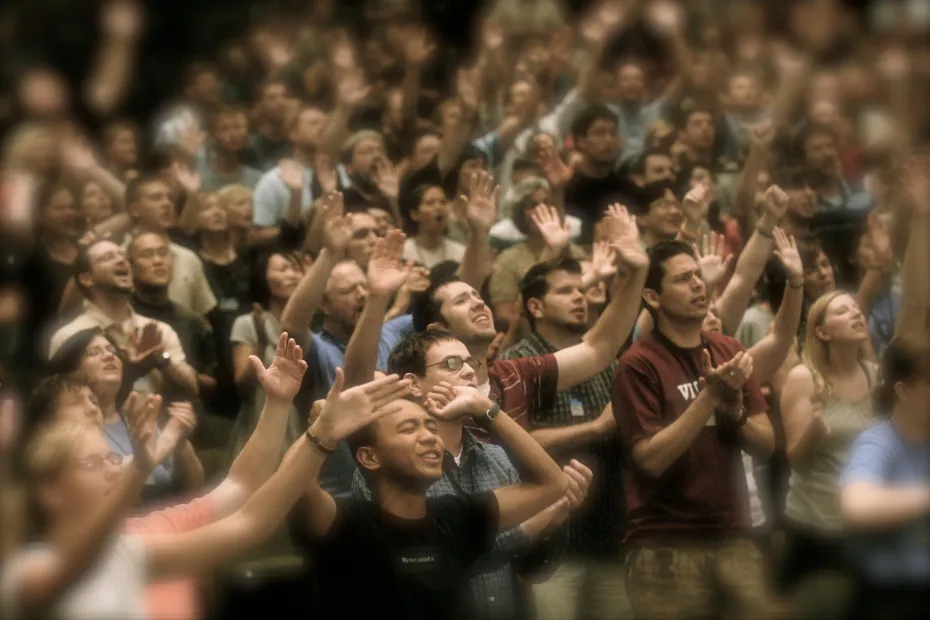
It is only since Christmas that my visits to important centres of charismatic/evangelical worship in England have taken place with any depth or persistence. The three that have been visited are Holy Trinity Brompton, Gas Street Birmingham and Soul Survivor Watford. The one I have returned to the most is HTB and most of my comments will mainly reflect my experience of its practice and style. The first comment I have to make is the sheer power of the music at all the services I witnessed. The typical music played is at a physical level often overwhelming. It has this ability to enwrap the individual worshiper in what feels like being submerged in warm water. The overwhelming sound created by the professional musicians with singers and instrumentalists is hard to stand apart from, however much one wants to calmly evaluate this music theologically or musically. In my attempt to get a grasp in what was going on, I was quite grateful to have the distance that YouTube was providing to help me hold on to a measure of objectivity. If I had been in the building trying to be a detached observer, I might well have failed. The length of the solid block of music confronting the worshippers at the start of the service (15-20 minutes) felt like being thrust under a waterfall of sound. I would be interested to read a study that explained how such loud emotionally laden music affects the brain’s workings. The waves of sound and repetitive music certainly reached quite deep areas of the mind. In some ways the experience was enjoyable but in other ways I felt as if I was being deliberately taken over to become part of a crowd process. I felt that the music was demanding a complete surrender. If the singing and guitar playing on a computer screen could have this effect on me, what would happen if I was there in the building. Perhaps I am now too antique to be able to cope easily with negotiating compelling music of this kind which was leading along a scale to something resembling trance and hypnosis.
The critical part of my brain was able to function in this experience, especially because YouTube allows one to press pause and listen to songs more than once. I was able, I think, to identify techniques being used by the musicians to increase the compelling nature of their contribution to the worship. I observed the extensive use of repetition in the words of the lyrics as this also applied to the music in general. Particular words like ‘Praise’ or ‘Jesus’ were repeated many times and so such words or phrases came to inhabit the mind in a kind of ‘ear-worm’ experience. Even without constant repetition, phrases of music would remain because of the fact they were ‘catchy’ and designed to linger inside the brain. I am wondering whether the analogy of eating chocolate captures the experience. Something inside the brain is sweet and enjoyable to the tongue but, having eaten it, one is left with the sweet after-taste which is less enjoyable.
In trying to analyse the musical quality of the songs I was hearing, I recognised at least three distinct patterns of musical sound. Each of them is powerful in their own way and no doubt I was experiencing sensations shared by others at the service. Some of the songs seemed to have a bouncy, happy quality. These were the joy, celebration songs and it was evident that many of the worshippers were expressing this feeling by the way they moved their bodies. Typical words in these centred on strength and the victory won for us by Christ. Towards the end of the cycle of songs of this type, the mood changed. Instead of bouncy music, the songs focused on the individual relationship with Jesus and how the worshiper has experienced love, forgiveness and salvation. The music for this was slower and more contemplative. The typical words of these songs spoke of peace, rest and acceptance. The change in style was also visibly expressed in the way that the singers, whether those leading or congregational members, moved their bodies in a quite different way. There was now no bounce in the movement; instead, the movement resembled the way a mother moves when holding an infant in her arms.
A third style of music that I have identified across the worship services that I have attended, is the effective use of a single note used as a background to intercession and prayer. In some ways this use of a background drone note is one of the most powerful moments in the service. What I think I was observing was an unrehearsed prayerful interaction where the power came from a real sensitivity in the leader to both the congregation and what he/she was picking up from the spiritual temperature of the building. . The single drone note was not music as such but an atmospheric sound which I found to be extremely moving, deserving the description of spiritual. In contrast to the rest of the service which felt to be tightly controlled and even somewhat manipulative, I sensed in the drone backed prayer something unrehearsed, spontaneous and open to the Spirit. In short, the point I felt most in tune with the spirituality of the service was in the moment where the leaders seemed to move the mood of the service from control to a time of spontaneity and into what felt like real freedom and tangible spiritual content. The online viewer is of course not allowed to witness the time of ministry and healing that seems to take place at the end of many of these services, but I felt, even as a distant participant, that the atmosphere somehow was consonant with the possibility of inner change and healing.
My ‘visits’ to the headquarters of charismatic styles of worship in England have opened up for me memories of past special services which have participated in a genuine atmosphere of Spirit-filled worship. There have been occasions in my personal worship experiences when I have sensed a pervading mood of spiritual content where anything seems possible. On such occasions, healings, transformations and spiritual growth have taken place. The key point about such precious moments was in their spontaneity. Spontaneity is something very hard to manufacture. My criticism of the worship style of HTB, Soul Survivor and their imitators is a mixed one. A good proportion of what was on offer felt far too formulaic and repetitive to be acceptable or even comprehensible to all. But I also sensed moments of genuine presence of Spirit. HTB and its imitators have, in my opinion, found some genuine kernels of spiritual reality in what they do, but their worship would be still more impressive if they were to discover how to be open to the richness of other strands of Christian worship and tradition. Like other Christians, the leaders of HTB need to recognise that they are on a journey, one which can be more open to the dazzling diversity of what it means to be a Christian in today’s world. Any complacency from a Christian that what they have has put them beyond the place of leaning and discovery, is likely to make them, over the years, become stale and devoid of spiritual power.
I have tried very hard to be positive and fair in describing a little of my experience of on-line worship in a tradition that is not my usual spiritual fare. Perhaps I have opened up in myself a memory and maybe a longing for the possibility of a true spontaneous worship that is not manipulative or controlling. Is there somewhere in Britain that understands what this kind of worship in Spirit and in Truth looks like? I think I might recognise it when I see it.