by Stephen Parsons
Few people acquire all the knowledge or education that they would like. Many of us who are ordained realise that our theological learning is at best incomplete. In many ways our knowledge resembles a certain brand of Swiss cheese that is full of holes which have never been filled. In my own case I was privileged to spend much more time being a theological student before and after ordination than most others. Still, my eight years of full-time study were unable to banish large areas of what I can now only describe as places of complete theological ignorance. The system that was in operation in the sixties, when I went through the training process for clergy, required every student to pass a series of papers called the General Ordination Exam. Each student had to pass in papers respectively covering Church History, Doctrine, Ethics, Worship and a number of papers on the Bible. Those of us who had studied theology at university were deemed to have already qualified in biblical studies, but we still had to acquire a reasonable degree of competence in the other subjects. Most people managed to pass but I wondered how taxing the standard for a pass was when the score that had to be achieved was only 40%. My mark for the ethics paper, while a pass, was abysmally low, and I felt my knowledge of Church history was extremely fragmented. While my university studies gave me reasonable exposure to scripture and the early creeds, my understanding and grasp of contemporary theological debates was thin in the extreme. My post-graduate research studies filled me with information about Byzantine liturgy and liturgical theology, but this was no substitute for a thorough understanding of the history of the Book of Common Prayer and the debates within Anglican history which created the Thirty-Nine Articles. Familiarity with the iconoclastic debate of the 8th century also did not really make up for my failing to understand the contribution of Bonhoeffer and Barth to contemporary theology.
My Swiss cheese grasp of many areas of theology is probably not hugely different from many other members of the clergy today. Ideally, as a solution to this, we needed also to be coaxed into a habit of study and reading over the entirety of our ministerial careers. My own exposure to theological books of varied kinds did give me a taste for life-long study, though many of the books I have read reflect more my eclectic interests than material strictly relevant to the job of the parish priest. One positive thing that arises from all this esoteric reading is that my varied interests within theology have kept me from ever attaching myself to a ‘political’ stance within the subject. I have, in other words, never sought to align with individuals who write or speak as though they embody some position of ‘truth’. I am not impressed with those who use the Bible to impose their views on, for example, the position of women in the Church or even try to argue that key points of doctrine or practice can be established by quoting a single verse or statement in Scripture. Any statement which contains the words that ‘the Bible is clear’ is regarded by me with upmost suspicion because I have learnt over the years that the Bible is very often not at all clear. I am not a ‘party’ man and certainly am never tempted to believe that there is somewhere a body of knowledge, single textbook or authoritative statement which has definitive answers to all matters of religious truth. Partisanship, whether the evangelical and conservative brand, or that practised by those listen only to papal decrees, has little appeal. I try to be a bit like Socrates, as recorded by Plato, who recognised that wisdom was to be found in understanding that he did not know things. In short there is a wisdom in admitting one’s state of ignorance. Listening to sermons today, often online, I seem often to encounter a belief in truth and certainty that does not know how to interrogate and question the wisdom of ‘orthodoxy’. I far prefer the approach to truth which likens it to travelling on a journey where the traveller moves forward towards answers without losing a sense of the provisional nature of our understanding of truth.
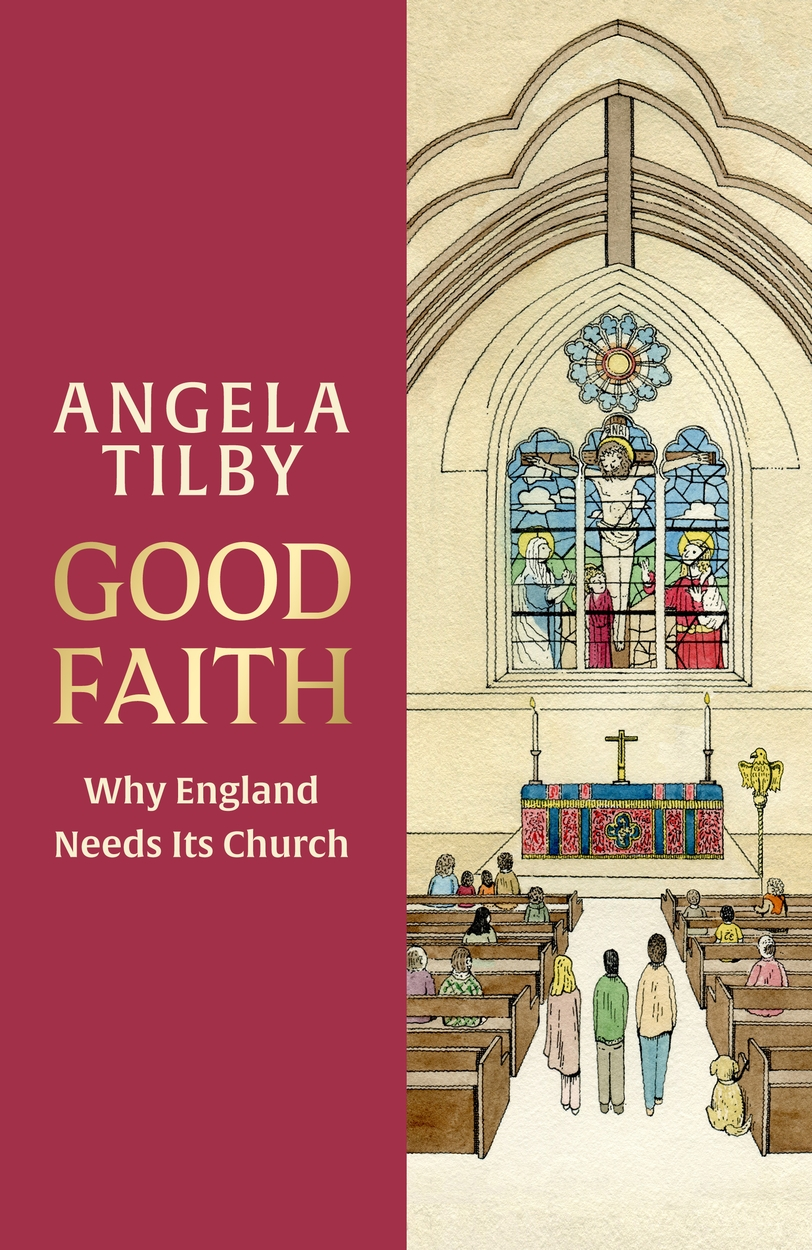
Uncertainty and a questioning faith are two of the lenses that produce, as I see it, good Anglican teaching. This moderate broad-church way of doing theology refuses to be tied into a single system of explanation and discourse. Anglicanism, when it adopts this path of moderation and even uncertainty, seems better able to deal with and face paradox and find a way through the contradictory claims of the different schools of theological teaching. It is not fazed by these contradictory statements and still finds itself able to be of benefit to individuals trying to live a Christian life. Recently I have come across a new book which puts into a single volume a perspective on Anglicanism which is able, in a quiet way, to make sense of many of the apparent untidy aspects of moderate Anglicanism. The exploration is liberating and helpful and also it fills up many of the numerous holes that may exist in the theological education of many parish priests and bishops. . The book is Good Faith: Why England Needs its Church by Angela Tilby. In summary, this book explains to the reader, using especially the tools of history, that Anglicanism is a reasonable as well as a traditional exposition of the Christian faith that is attractive and convincing. From conversations with my fellow clergy over the decades, I find that there are many who have lost the sense of balance that traditional Anglicanism offers. In some cases, they have allowed themselves to be trapped by dogmatic systems of theology and a political line which seems to dictate everything they say or preach. Tilby’s book is one that sets out the balance that belongs to the Anglican way, while simultaneously filling up some of the empty spaces of ignorance that afflict most clergy in the Church. I know of no other book which, in a single volume and in an accessible way, successfully and succinctly traces the important strands of history, liturgy and theology that together have created the unique institution we call the Church of England. The sympathy it reveals is a genuinely generous one. The history of the Church of England is never the tale of a body of Christians taking the high road of correct values and choices on every occasion. It is a story of flawed human beings trying to find the place of moderation and reason against the background of many Christians seeming to be overcome by fanaticism and intolerance. I had always supposed that I knew my church history fairly well, but Tilby has uncovered numerous important sub-sections in this story which are simultaneously fascinating and important.
It is impossible to evaluate every section of the book, but I feel there is one section that deserves the special attention of the reader. This is the section that deftly travels through the history of worship in the Church of England since the Reformation. This section not only helps us to understand historical meaning of the changes which have appeared with each new version of the BCP but also to have a sense of what the reformers were trying to achieve in these key pillars of traditional styles of worship. At a time when not only the BCP but also all respect for its use in the contemporary Church of England is on the wane, it is good to have an intelligent and informative appreciation of what worship has traditionally meant to Christians in this country. I recently met a young clergyman, well into his first incumbency who had never, during his training or subsequently, taken part in a traditional BCP service of Evening Prayer. One might imagine that the glories of medieval cathedral architecture which Tilby lovingly describes were also another part of the English religious tradition that demands to be understood and appreciated by all. Instead, there are many who are locked out of any visual sensitivity to this part of the church’s tradition. The language of beauty has become an unknown language. English Christianity is in danger of losing its connection with the past. The richness of the church culture, through music, words and buildings, needs to be rediscovered and understood. Those who come to our churches should be encouraged to experience themselves as inheritors of an incredibly rich heritage. Good Faith successfully connects us with the mighty breadth and depth of that tradition which we find in our own Church of England.
Good Faith is a book suitable for two categories of reader. One group that need the book are traditional Anglicans who have allowed their grasp, knowledge and appreciation of the broad Anglican tradition to become atrophied because the climate of church life they encounter locally shows little of no appreciation for it. Tilby’s book might well boost their knowledge but also it may help them to discover again a pride, even an enthusiasm, for Anglican order and style. The notion that the Church of England stands for balance, as a mean between extremes, is an idea that still carries substance even if we may not want to identify completely with this idea,
The other group that may value this book, Good Faith, are those who find themselves in an authoritarian section of the Church, whether evangelical or catholic but suspect that there are other ways of being Anglican beyond what is on offer locally. Dialogue with other people may be a way of discovering new nuances of truth which can enrich their faith and their appreciation of the culture of Anglicanism over the centuries. One criticism of conservative, even fundamentalist, versions of Anglican life that I have, says nothing about its intellectual incoherence, though this may be present. It is rather that there seems to be endless repetition in the diet of songs being sung on the stage up front. In the effort to become new and ‘post liturgical’, the worship innovators of HTB have created something that will eventually be experienced as something extremely boring. While I had cause to compliment the leaders at HTB for breaking through briefly to a true spontaneity, that moment passed very quickly and was buried in the cacophony of sound that formed the main ingredient of the worship.
Angela Tilby’s new book needs to be read by all those who welcome reason, reverence, respect for tradition and order in our national Church. Were I to be a member of staff in an Anglican theological training scheme, I would insist that every student bought and read this book so that, even if the individual student had been formed within a sectarian part of our national Church, at least he/she would know how Anglicans have dealt with many of the issues of church life over the centuries. Tilby makes it impossible to avoid recognising that the traditional Anglican, past and present, represents a unique yet liberating and tolerant version of the Christian way, which may well be of relevance to the spiritual needs of many in our society.
Thank you so much, Stephen, for this very positive review. It is much appreciated.
I do worry about wnat seems to be an anti-intellectualism in many church people. I have number of theological degrees including a doctorate. I believe that we should mediate theology and practice for our people. I was horrified when one of my friends with a science PhD was dismissive of my academic theology and could not see how it related to our daily Christian lives. Without theology we become captive to a naive fundamementalism.Sadly that is where many people are happy to be which is often at varience with their daily work!
The BBC(NI) ‘FAITH AND FAILINGS’ 9.6.26 broadcast possibly exhibits what you say. A children’s trip (with an Anglican lay minister) to a Creationist Museum type place in Kentucky, and a DBS check producing a huge shock. Olive Tree Media posted this YouTube film posted 30.1.22: ‘Karl Faase interviews Joe Turner for Jesus the Game Changer Season’. GAFCON’s Bishop David McClay appears to have very little to say about the BBC(NI) programme. Has he any defence to present? Or should he resign?
Thanks. Fascinating! Rowan Williams 2025 book-Discovering Christianity-covers ‘seeking the incomprehensible’-in Chapter 1 (the Isaiah 55-‘invitation and mystery’-territory). It’s a superb read of close to 100 pages. Is philosophy reading relevant, or even an antidote, to our age of intense scepticism?
It’s a joy to be learning daily as a more senior citizen or a student as I see myself. The foreclosure on thinking seems to be prevalent, and as I look back on my childhood and youth, growing up in a dogmatic environment, a curious dichotomy was present.
We were variously bright, young, and searching. Intellectualism was prided, yet the permitted views were laid out and conformity was expected. In terms of intelligence, some of the bible study group were well ahead of me. Not long ago I spotted one working now in public office of the very highest rank, having achieved distinguished service in the Security Service. He was barely recognisable physically, having expanded in size considerably (as have I!) but it was no surprise to discover the result of his brilliance. Whether he kept the faith or not, I don’t know, but mine has completely changed, and I hope developed over the decades since.
Theology was never really approved of as a subject. We assumed the clergy were properly educated in it, and at the time accepted what they said without (permitted) question. But no one was encouraged to study theology. Indeed we were warned that it could undermine our faiths. This was done , to some extent, tongue-in-cheek, but taken seriously. Nobody I knew studied it. Instead Answers were favoured, distributed, and learnt.
But having stuck to my habit of reading the bible every day, I’ve realised a few things over the years. I respect those who have lengthy learning and expertise in it. Few people actually seem to have read it very much. It’s almost never “clear” about anything, particularly if you have read the vast bulk that makes no reference to your pet proof, or indeed contradicts it.
The trouble with being an expert in one subject, and this is characteristic of other professions I have either worked or qualified in, is the tendency to think “this qualification” does everything. It doesn’t. You need to look to other areas for the expertise and wisdom you might lack. We all do.
Those employed in churches and Christian organisations, will know of the poverty of management abilities in those who “train” or otherwise supervise them.
This cannot be simply taught at university or college, although a theoretical approach is at least a starting point. I learned to manage by making mistakes and being corrected, or reflecting, learning from them.
Leadership ability is not a given. With today’s news of yet another departing Prime Minister, the shortage of these skills and giftings is again apparent in society.
Clergy should know if they get anywhere, this will be challenged in them repeatedly and painfully at times. And yet I suspect this dearth of ability is neither tackled at selection nor substantively in ordination training. Instead there seems a tendency to isolate, for example archbishops, from the impact of their implicit responsibilities and cosset them in the proverbial ivory towers until it is too late.
With the speed of information flow, and a growing lack of automatic respect for high Orders, the turnover of senior Church officers is only likely to increase, as it is doing for Senior Ministers in politics.
As we have seen, dysfunction is habitually promoted rather than trained or weeded out. Studying theology may help if it involves observing how our Lord apprenticed as a carpenter and taught in parables. The latter, perhaps a model for teaching, and the former would have involved working with others, negotiating with customers and facing their foibles, and an exposure to budgeting and finance, for example.
The vicar of Burnley with his training at retailer Argos, and his embracing of Anglican worship and tradition, seems a good example to me. Like his Saviour, he also challenged the bureaucracy and corruption of Organised Religion.
‘there seems to be endless repetition in the diet of songs being sung on the stage up front. In the effort to become new and ‘post liturgical’, the worship innovators of HTB have created something that will eventually be experienced as something extremely boring.’
It is my understanding that this pattern of worship was not an innovation by HTB, but was introduced by John Wimber. It was adopted for the evening service at St Michael-le-Belfrey, where I was curate from 1989-92. The rationale was that we draw close to God as we sing his (always his!) praise. 45 minutes of chorus-type songs, mostly concentrating on the worshipper’s own self and emotions, was the norm. In actual fact I think the intention was to build up an atmosphere in which people could be more easily manipulated into displaying the ‘signs and wonders’ so prized by Wimber and his followers. In evangelical and/or charismatic churches this pattern seems now to be as much the norm as the ‘hymn sandwich’ was in my growing-up years.
I think there are several difficulties with it. It can get boring, as Stephen says – particularly for those who don’t like singing, or who benefit from more intellectual food. Traditional hymns often (not always, of course) teach a lot of theology in a way easy to remember. Compare Kendrick’s ‘We believe in God the Father’, a substantial declaration of faith, with Wimber’s ‘I believe in Jesus, I believe he is the Son of God, I believe he died and rose again, I believe he paid for us all. And I believe he’s here now, standing in our midst, here with the power to heal now, and the grace to forgive.’ It’s theologically thin and, crucially, once again focused on ‘me, and what I might get out of this’.
It also reflects and fosters the belief that worship is ‘the songs led by the music group’ rather than the entire service, including the Bible readings, sermon, liturgy, and intercession. I think it’s a very unhealthy development – though I admit that having a good long sing can be a great pleasure.
There are believed to be 86 billion neurons in the human brain, and two trillion estimated galaxies in the observable universe. Yet we see this paradox described: “The Andromeda galaxy is bigger than I am, but I know it exists and it doesn’t know I do.”
I think G K Chesterton inferred, rightly in my opinion, how dividing the natural from the supernatural is fraught with problems. People having special experiences or authority underlies lots of heresies, and has done over a very long time.
It never ceased to amaze me, while doing a New Wine course, how little attention was paid to creeds or sacraments. It was also amazing to note how everyday credentials, like quality degrees or vocational qualifications or extended work experience, seemed valueless.
It looks less of a surprise now, how Mike Pilavachi influenced and maltreated so many people in a charismatic-evangelical setting. The Bible directs us to the reality of the supernatural. But we also read: ‘One witness is not enough to convict anyone accused of any crime or offense they may have committed. A matter must be established by the testimony of two or three witnesses’.
Rationality and revelation should function together. Otherwise we just risk getting ‘whimsical’ dictatorships.
There is an enormous amount of information about two thousand years of Christianity and within this there are many seeds to assimilate. The seeds will take time to grow as in the parable. I would say that church leaders should have an extensive knowledge of theology to lead people in the way of forgiveness, love and peace.
Theological education. With the vast majority of parishes in England being part of a multi-parish benefice, one of the most important skills which needs to be learned by students on a theological pathway to ordination is leadership and in particular collaborative leadership. I hear too often of the incumbent with the mantra “I’m the Vicar, I make the decisions, you do what I tell you to do.” This is absolutely no way to treat their fellow clergy or their lay leaders or the ‘ordinary’ Christian in the pew. We need to understand how to work together, building on each other’s strengths and mitigating each other’s weaknesses. Collaborative ministry is really exciting. A one man band – or even a one woman band – can never be adequate in any church setting. We are created relational beings. We need each other. We need each other when things are going well and we need each other when things are going badly. We need always to work together. The mantra, above, only serves to indicate that the person using it is aware of, or perhaps afraid of, their own insecurity and inadequacy. The priest needs to work together with any team they have. We each have different qualities, so please let us use them for the good of the Kingdom.
We were blessed-in my 1970’s primary school years-to have a gentle and kindly old vicar who visited our classes. He majored on the reality of human dignity and choice, plus the miracle of the cosmos.
Should a person who lacks a basic grasp of apologetics, around creation evidences and the reality of human choices (to Christ and to moral matters), ever be ministering in an Anglican Church?
BBC Spotlight did a 37 mins 9.6.26 documentary-FAITH AND FAILINGS-which exposes crises in the Belfast centred Down and Dromore Diocese. I have watched it online a few times.
The thought of a local Anglican Church leader taking children to a creation museum type place in Kentucky is not edifying. Would Bishop David McClay of GACON, who leads Down and Dromore Diocese, like to reveal if this allegation is true, and how much church member money was spent on this trip?
The programme has a range of grim revelations. Should Bishop McClay resign?