Stephen is a retired Anglican priest living at present in Cumbria. He has taken a special interest in the issues around health and healing in the Church but also when the Church is a place of harm and abuse. He has published books on both these issues and is at present particularly interested in understanding how power works at every level in the Church. He is always interested in making contact with others who are concerned with these issues.
View all posts by Stephen Parsons →
‘One day the whole creation will know the glorious liberty of the children of God.’
The liberty is like a person who gets up in the morning, with the sleep still in their eyes and in their mind, and drinks their first cup of coffee; it wakes up their whole body and makes it ready for the day.
The liberty is like a girl who passes her driving test, and finds a whole new world lies before her.
The liberty is like a boy who comes of age and votes for the first time, and shares responsibility for his government.
The liberty is like when a child grows up, leaves home, and finds their own home and career.
The liberty is like when a woman’s children leave home, and she has time to nurture herself and look for her own growth.
The liberty is like the factory worker who is made redundant, and invests all his redundancy money in a new business of his own.
The liberty is like the woman who has always listened to the opinions of others and tried to please them. She finds some friends who like her for herself, and gradually she begins to find her own voice.
The liberty is like the gay man who finds that God loves him just as he is.
The liberty is like the church that keeps an open table for refugees and same sex couples.
The liberty is like a man who puts on a suit and tie and makes a long journey in to work in a large company where he does as he is told. But in the evening he comes home, puts on comfortable clothes and is his own man.
The liberty is like the newspapers, which reveal corruption and dishonesty.
The liberty is like the person who could make a lot of money by selling their story to the press, but chooses not to because it would hurt the innocent.
The liberty is like the person who thinks they have no talents, and then finds something they are good at.
The liberty is like the GP who could set up her practice in a posh suburb, but decides instead to work in the inner city.
The liberty is like the survivor who feels able to tell her story and find support and acceptance.
The liberty is like the archbishop who puts justice before the church’s reputation.
The liberty is like the bishop who has the courage of her convictions and breaks ranks.
The liberty is like the vicar who tells the truth, knowing it will cost him promotion.
The liberty is like the MP who resists party pressure and votes according to her conscience.
The liberty is like the person who retires and could spend all his time pleasing himself, but decides to do voluntary work for a charity.
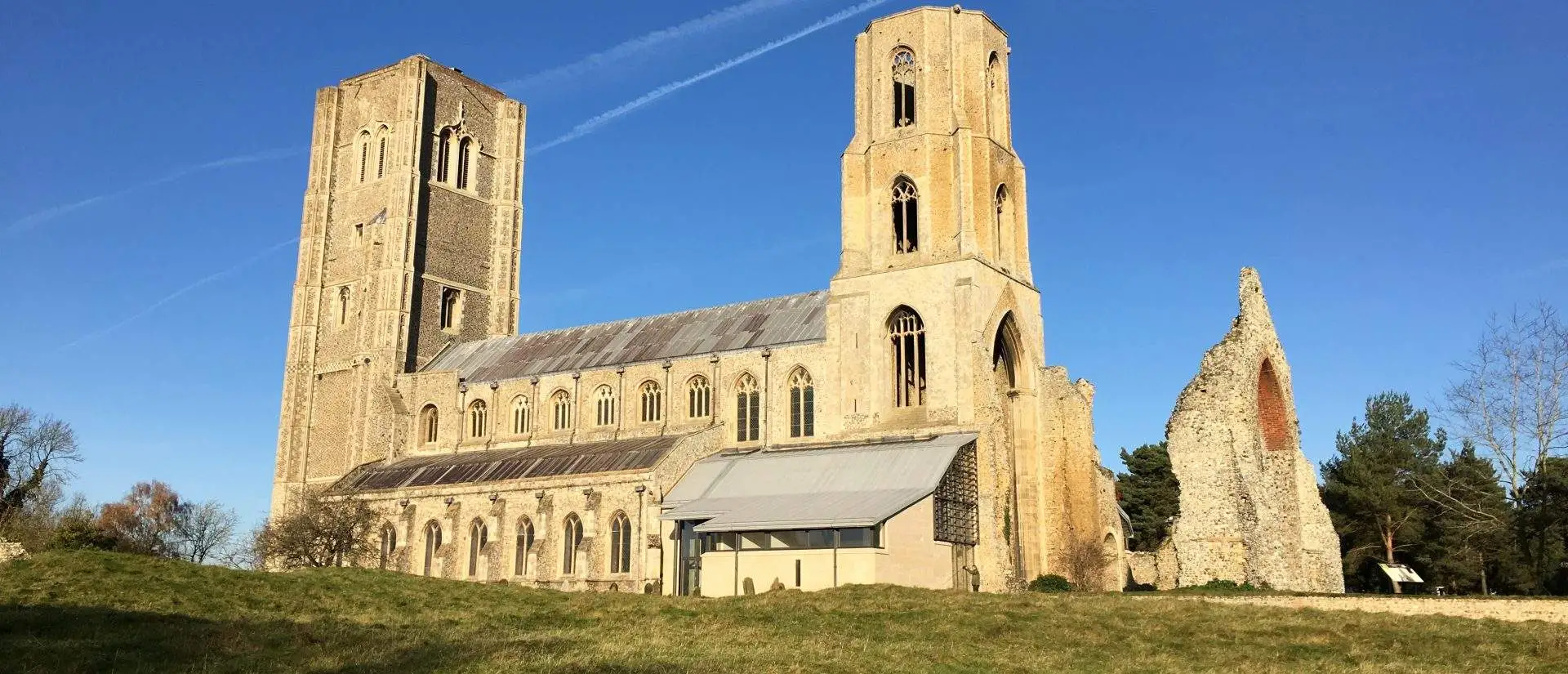
Back in November, Surviving Church carried a piece I wrote about the travails of Wymondham Abbey in the Norwich Diocese. Although I tried as hard as I could to see the dispute from the perspective of the Vicar of Wymondham, my sympathies in the end went to the Bishop of Norwich, Graham Usher. He had inherited an impossible situation and he simply wanted the parish to function normally without further conflict.
To remind my readers of the story in outline. A new Vicar, Catherine Relf-Pennington, was appointed to the living of Wymondham in 2017. The candidate was, unusually, the existing curate who had worked in the parish since 2014. Soon after her appointment, problems and complaints started to emerge. Some were to do with pastoral issues and others to do with the alleged mismanagement of property and finance. Clearly, whether or not the complaints were justified, there were issues to be resolved with the support of outside guidance. The Bishop appointed two Visitors to carry out a formal visitation to the parish. On the basis of their report, he issued a Direction. Some of the sections in this Direction spoke to property issues and finance. However, the most interesting part of the Direction was the Bishop’s requirement that the Vicar offer a public apology to those individuals that she had upset. If this was done, then the Bishop assured the parish that all existing complaints and disciplinary processes would be immediately dropped and the parish would be helped to get back on to an even keel.
The intention that a public apology would resolve all the issues and tensions in the parish always seemed a long shot as a way of successfully resolving the problems in the parish. So it has proved to be. The Vicar and churchwardens have now issued a formal Response to the Bishop’s Directions, on January 17th, and this indicates how great the chasm still is between Bishop and the parish at Wymondham. It is twelve pages long and it is hard to anticipate how the dispute will go on from here. Speaking as a total outsider and forming judgements on the basis of what is in the press and in these formal documents, I have to say that my original preference for the Bishop’s position has now become a total backing. This fact that I believe him to be in the right in what he has said and done does not mean that I am clear what should happen next. There does not appear to be a plan B.
Why do I, as an outsider, now regard the position of the Vicar and churchwardens as not being one worth supporting. In the first place, there are on the church website a number of copies of letters of support for Mother Catherine, as she is called, to the Bishop. I find it uncomfortable that two of these letters are from children of primary age. The fact that a child relates well to an adult is a good thing, but not of great moment when you are trying to establish the nature of the overall pastoral care in a church community. Clearly an adult had to persuade the child to put pen to paper, so the existence of such letters feels contrived and inauthentic.
A second point that comes out of the Response, is that the tone of the whole document is off-putting. It also lacks anything by way of contrition. From beginning to end there is a kind of peevish sense of entitlement and not one concession to the fact that the Bishop, to whom you have sworn canonical obedience, might in any way be justified in his approach. This blog not infrequently suggests that bishops get things wrong, but there is normally an identifiable reason for such failures. Here it is hard to see anything to be gained for Bishop Usher other than the welfare of the people of Wymondham. The issue of the appropriation of the former Vicarage for the use of the suffragan bishop of Thetford has been made to be a cause celebre by those who wish to perpetuate a sense of division between parish and diocese. The affair sounds like a hijack, but I understand that the former Vicar had not lived in the building for some years, and it was in a state of disrepair. It needed considerable financial input from the Diocese to bring it back up to standard. Whatever the precise details of the ‘takeover’, they appear to be far more nuanced and complicated than the simple claim that the Diocese ‘stole’ our property.
To read in the Response that the parish believes that ‘Bishop Alan Winton’s and Bishop Graham’s behaviour in relation to Wymondham is unethical, immoral and self-serving’ comes as a jarring note. It would seem that the Bishop and Diocese had every reason, in the first place, to be alarmed about the finances in the church. It appears that, even according to the Vicar’s admission, there had been an ineffective treasurer presiding over a plethora of accounts and cheerfully running down reserves to pay diocesan quota. This financial disaster zone has to be recognised as the responsibility of every PCC member who, over a number of years, had failed to ask questions or seek clarity over the financial accounts. What was in the Annual Parish Report? It is the job of the Treasurer to make accounts understandable and the PCC members need to expect to be able to understand them. The same applies to every trustee in any charity. I would expect to see somewhere a contrite recognition of a massive failing of all PCC members over the past decade. Instead, we have the rather limp claim that the parish cannot now pay quota because the ex-treasurer, in plain sight, had used up all the reserves.
I have read the rest of the Response and much of it is to do with local issues which the Visitation Report had picked up and which formed part of the Bishop’s Direction. The main thing that the Response does not address in any way is the fact that there are and were unhappy people in the church and town who found the personality of the Vicar difficult and abrasive. Nowhere in the Response is there a hint of contrition or any plan to reach out to those who had complained to the Diocese. Obviously we are not privy to the detail of these complaints, but it is quite clear they have caused massive upset and division within the congregation. The other explanation for the failure to pay quota to the Diocese may simply be that the planned giving totals have dropped, with people voting with their feet.
There are various things that are not possible to discern from reading reports from two sides in an acrimonious dispute, so I returned to the parish website to try and get a feel for the priorities of the parish and its Vicar. While this is only impressionistic, I sense that the Vicar is far more comfortable with contemplative styles of prayer and worship than with other forms. I have no criticism of this kind of Christian practice, but it may clash with the expressed need of many Christians to experience the support of community with all its untidiness. There is evidently, even from the superficial evidence of the website and the documents, a lot to suggest that the Bishop’s evident desire for radical change in the parish is not unjustified. The Response, at the end of the document, finishes with these words ‘Something needs to be done’. Perhaps the Vicar and churchwardens can help work out a constructive way to do things at their end to make the ‘something’ happen.
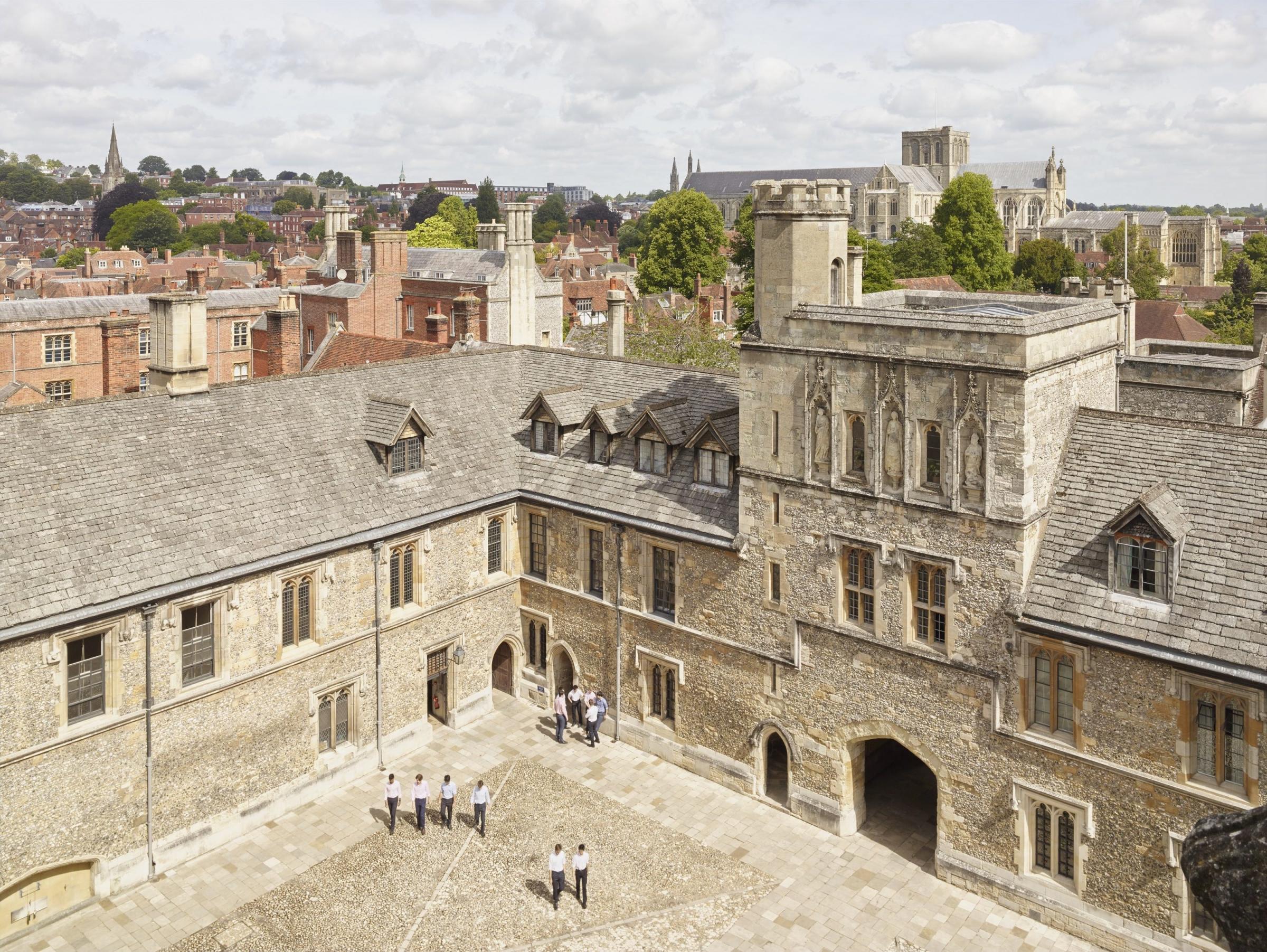
The ugly and criminal behaviour of John Smyth QC towards young men and boys at his home in Winchester and elsewhere, has become a well-attested episode amid similar abuse stories in the Church. Surviving Church has looked at the succession of accounts and reports about how things went terribly wrong in the failures to expose Smyth, both at the time of his nefarious activity and subsequently. We have looked at various reports published about the affair, including the Titus Trust report of 2021 and the recent Scripture Union report. The most recent exploration is, of course, Andrew Graystone’s book, Bleeding for Jesus, which appeared in the autumn. This latest report from Winchester College released on Tuesday 18th January is one that concerns itself with the activity of Smyth in and around the College. How was an individual with no official role within the College, able to get access to so many boys to groom and abuse a significant number of them?
The 197-page Review by Jan Pickles and Genevieve Woods, by careful interviewing of many of the witnesses of the event of the 70s and 80s, adds considerably to our understanding of what went on at the time. It is interesting to read some very vivid testimony. This gives us insight, not only in the personality of Smyth, but also into the religious atmosphere of the College at the time. To summarise the situation in a few words, Winchester College, in the 1970s, was host to a narrow strand of evangelicalism among many of the boys. This was linked directly to the Iwerne type of conservative Anglicanism which we have many times discussed. In a school of 600, some 100 identified as having had an evangelical conversion experience as the result of a decision made at the school. In one of the ten Houses into which the College is divided, there was one which claimed 75% as members of the Christian Forum. This was the organisation within the school which acted in a similar way to a university Christian Union. Only 15 boys in that House were not identified with this group.
Depending on one’s perspective, Winchester College was going through a religious revival or a troubling example of an infectious mass psychosis. Christian Forum had been founded by a maths teacher, John Woolmer. It began its life as a bible study group consisting of a handful of boys. Things changed after 1974 when Keith de Berry, a visiting preacher, held two meetings in the College. Some 30 boys then experienced a conversion to Christ. The Christian Forum then became the dominant expression of Christianity in the College. It was this rapid expansion of the Christian Forum and its need for ‘sound’ teaching and pastoral input that gave Smyth his opportunity. What could be more appropriate than to invite a local prominent Iwerne leader to speak at Christian Forum meetings? The invitation to speak gradually, as the Review makes clear, turned into a regular attendance and Smyth used his presence at the meetings to befriend particular boys and invite them to come to his house. There were plenty of takers, it appears, for the chance to be part of an ordinary family for Sunday lunch.
Winchester College is a foundation with considerable resources for articulating a thoughtful expression of Christianity. The school was able to fund no fewer than four chaplains in the period studied by the Review. Such chaplains would be among the most qualified and well-educated clergy in the Church of England. They were thus potentially able to present issues of faith in a thoughtful and challenging way. Nothing of this legacy of an intellectually stimulating presentation of the Christian faith seems to be remembered or found its way into the Review. The expression of Christianity that was prominent at the College seems to have been almost entirely of the Iwerne Camps/Bash variety.
An insight into the divided nature of Christian observance in the late 70s in the College can be discovered from some extracts of a school magazine written by the boys in June 1979. The contrast made seems to be between Christian Forum observance and no faith at all. In speaking about the Christian Forum, the anonymous editorial author in the Dossier’s Organ stated that the ‘School is very much divided into Christian and non-Christian houses. Or should I say Christian Forum and non-Christian Forum houses?’ The writer goes on: ‘The reasons for this are difficult to pin down, but the main one is that the leaders of the Forum are totally disconnected from the official school chaplains’ The Editorial recommended that the chaplains be put in charge of the Christian Forum so ‘that it would cease to be a breakaway group with a tarnished reputation’. The clear sensible understanding of the situation of division and polarisation was heard by the school and a mainstream evangelical, Mark Ashton, was soon appointed to be one of the chaplains in an attempt to weld this cultic section of the College back into the religious mainstream.
In the autumn of 1980, a new senior chaplain appeared in the College, David Conner, later to become Dean of Windsor after serving as Bishop of Lynn. I take an interest in his Review evidence because we knew each other slightly in Oxford in the mid-70s when we both helped out at the same church in Summertown. He was then a school chaplain in Oxford, and I was a research student. Although I am two years his senior, we were both familiar with the polarised situation in many Oxford college chapels when we were undergraduates in the previous decade. Members of the Christian Union routinely refused to have anything to do with either the chapels or the chaplains that cared for them. This situation was very similar to the one that David seems to have found in Winchester in 1980. From an Anglican point of view, the situation would have presented a clear challenge to his professional skills. The Forum was the dominant expression of Christianity, and he would have the clear task to present the breadth of the Christian tradition and suggest that living with questions was still part of Christian faith. Was he, in summary, going to help Winchester College become a place where Christianity was presented and lived out in a nuanced and rounded way?
The evidence of Conner’s testimony to the Reviewers states that he can remember little or nothing of his relationship with the Christian Forum and Smyth. The same failure of memory was apparent when approached by Channel 4 in 2016. Although Conner’s name appeared as a speaker at the Forum from time to time, his memory of any significant engagement with the organisation and their leaders is almost nil. This is indeed extraordinary. When Smyth became non-grata in the course of 1982, would he not as Senior Chaplain have been brought into the picture very early on? The obvious thing for him to have done is to think back over the previous two years and try to remember as much as he could about the Forum meetings he had attended. Is it not strange that the Forum, the most prominent expression of Christianity in the College at the time, should have not engaged his attention even if another chaplain, Mark Ashton, had been given the task of monitoring the Forum? Conner claims that he never met Smyth, even though Smyth was a regular attender at Forum meetings in the College. The presence of such an evangelical celebrity, as Smyth, would surely have piqued Conner’s interest. Quite apart from the reports of abuse, which only came out in 1982, Smyth, according to the boys’ testimony had a considerable effect on the boys he took under his wing. It is frankly strange if none of this got back to Conner.
We are in this situation, once again, where Smyth succeeded in flying under the radar and avoiding the attention of those who might have protected his future victims. In a previous blog article, we noticed how a considerable number of prominent Iwerne network leaders, some of whom were Smyth victims, failed to do anything about Smyth or communicate any of their concern to others. Smyth was thus able to continue his abusive rampage for another 30 years in Africa. Conner was never part of the Iwerne network but has subsequently become an establishment figure in the Church. Does his failure of memory about the events of 80-82 have some connection with that privileged position he now occupies? A variety of other senior churchmen, including ++Welby, have found it expedient to play down their association with Smyth. Does the fear of association, and thus imputed shame, play a part in Conner’s protestations about the Christian Forum? ‘Clearly I have not remembered things accurately’ was his response when presented with evidence by the Reviewers that he had attended Forum meetings. It should be mentioned that if Conner had played a somewhat more vigorous part in the Smyth episode, the subsequent narrative of Smyth’s story might well have been considerably different. A little bit more curiosity on the part of Conner about this important personality who was invading the spiritual space of Winchester College, might have helped to bring Smyth to book much earlier. The absence of any definite answers in the Review, and failures to interview another surviving chaplain from the period leaves this reader with a strong sense of an incomplete story. A key figure who refused to be interviewed was Peter Krackenberger, an alumnus of Iwerne and member of the Winchester staff. He was a leading figure in the work of the Christian Forum throughout the relevant period. The lack of his testimony and the ‘loss of memory’ by Conner weaken the overall value of the Review.
The report contains a great deal of detailed material about Winchester College and to a considerable extent answers the question of how John Smyth, with his cultic ideas and psychologically disturbed personality, gained access to the College and the hearts and minds of some of those who attended the school. It is likely that Smyth bludgeoned his way into the sacred space of boys’ vulnerability by the sheer force of a charismatic personality. But, as we have indicated, the failures of memory and the passage of time have left important parts of the story untold. The Review is not, nor can it be, a full account of what happened in Winchester 40 years ago. We can still wish that there was evidence of a greater robustness and strength to defend the vulnerability, even fragility of the pupils of Winchester College by those professionally employed to protect them from a notorious predator, John Smyth.
Archbishop Rowan Williams has called for the Church to be an “argumentative democracy”. He sees the need for “an investment in articulate, competent religious communities” (my italics). My experience suggests that the Church of England shows little taste for such thinking, from parish to diocese. My wife, an ex-churchwarden, had been invited by the previous incumbent to be the editor of our church magazine, a role she had fulfilled for over five years. With no prior warning or opportunity to challenge the decision, she was sacked under a confidential item at a PCC meeting. One reason given was that the magazine was being used as a platform for articles by me. These had started with the previous incumbent with no adverse comment that came to the attention of either my wife or myself. When I asked which articles these were, I received no reply. So much for disagreeing well and free speech. I referred the matter to the archdeacon, who declined to be involved, saying the magazine was no concern of his. The incumbent then styled himself “editor-in-chief”. The process of (constructive) dismissal showed scant regard for common decency, and little acknowledgement of my wife’s contribution over many years to the life of the church community.
In the absence of a physical gulag, we were, in essence, sent to Coventry, leaving pastoral care with its ideas of engagement, concern and interest in others somewhat absent. Following centuries of tradition, some incumbents, mirroring their diocesan bishops, still treat their parishes and benefices as a personal bailiwick and members of the congregation passively collude in being infantilised. Half the choir in our local church are refugees from another parish, victims, one might say, of clerical autocracy. It is of note that the Independent Inquiry in Child Sexual Abuse, which focused on our diocese, identified as a contributory factor in the poor handling of allegations of sexual abuse a “culture of clericalism”. When I asked our diocesan bishop whether there would be an opportunity to explore this, I received no reply. When, more recently, I approached our rural dean to have some local discussion on this, I was told, with no reference to the lay chair or any apparent sense of irony, that she could not authorise this without the permission of the bishop. Culture works in both obvious and insidious ways. During my tenure of a voluntary deanery role of ‘ecumenical champion’, I was very aware of the lack of discussion or debate on any subject at our deanery meetings. The format appeared to be one of receiving reports with no opportunity for formulating policy, proposing action or reflecting on how anything implemented had fared.
Failing to stimulate discussion from within on this “culture of clericalism”, I attempted to do so from without. In September 2018, the Chichester Observer published the following letter from myself, which I present in full:
May I through your columns encourage open discussion in the Chichester diocese not least on the subject of justice? After all, as we heard at the royal wedding – “let judgment run down as waters, and righteousness as a mighty stream”. Discussion on this and other topics is lacking. What a breath of fresh air has been the Independent Inquiry into Child Sexual Abuse, with churchmen publicly held to account. Let there be more of it! Accountability and openness are accepted means in challenging corruption and incompetence, so why not in the Church? Disquiet has already been expressed in the national press concerning the handling of Bishop Bell’s case, begging the question whether priests have the appropriate skills, knowledge and attitudes to administer justice. My experience of the diocese’s administration of its Complaints Policy and Procedure begs the same question. Although this states many worthy intentions, viz. “to ensure that all complaints are investigated fairly…to resolve complaints and repair relationships wherever possible…to gather information to help us improve what we do and how we do it”, there was little evidence of them in practice when addressing my complaints. These involved the failure to engage in correspondence. Silence is a tool of the totalitarian state. In its avoidance of the truth, it is dishonest. It corrodes trust. It is rude. I discern a sense of entitlement informing such behaviour, echoing the title of Bishop Jones’ Hillsborough report , “The patronising predisposition of unaccountable power“. Unless challenged, such behaviour is perpetuated. Perhaps the recently reported decline in church congregations can be attributed to this mindset rather than any anti-religion attitudes. I trust you will allow Bishop Martin and his colleagues space to reply, setting in train genuine open discussion and a proper sense of engagement with our national church.
When I took advantage a Subject Access Request, I discovered how this had been received within the diocese. In a communication between a media advisor, (described on his website as having “used his skills in many critical and damage limitations areas”), and the diocesan secretary, the former opined “I’m not sure he could be more opinionated and misguided but a shirt (sic) reply correcting him factually from [ ] might be better which, in itself, proves these decisions are not taken by clergy!”. The reply that was prepared read as follows: “Dear Sir, I refer to Paul Devonshire’s letter complaining of a lack of discussion and failure to reply to correspondence on the part of the diocese of Chichester. The diocese would be very happy to permit any of your readers who wish to review the lever arch file full of correspondence and meeting notes with Mr. Devonshire, if he also gives his consent”.
It is difficult to discern in this interchange any attempt to engage with what I had written, perpetuating the very pattern of behaviour to which I was drawing attention. Instead, I am described as “opinionated and misguided”, employing vilification, demonisation or derogation of the individual – discredit the person and so discredit their ideas. Also employed is impression management by referring to “a lever arch file full of correspondence and meeting notes”, meant no doubt to portray me as a time-wasting troublemaker. I was seeking public debate as part of an “argumentative democracy”, not private conversations.
The role of media advisors and their ilk Is to gain the best outcome for their clients, in their case, the most favourable interpretation of the information in the public domain, whether to enhance reputation or to limit any potential damage. A 17th century diplomat described an ambassador as “an honest man sent to lie abroad for the good of his country”, an example of the means justifying the ends. Public relations is a kind of competitive sport – the name of the game is to win, with the all-too-human temptation to cheat. The relationship between the two parties is predicated on the dominance of one party over the other. The goal is not to gain any additional insights by a dialogue between the parties that might reach mutual consensus. There is no sense of exploration into the whys and wherefores, hence the use of avoidance and denial. It is the “culture of clericalism” in which the clergy tell the laity what they should think. There is no two-way street. It is anti-intellectual.
Any moral slippery slope can begin insidiously, starting with pejorative adjectives and adverbs leading to that well-known phrase ‘being economical with the truth’ and on to misinformation and finally outright lying. Advice, from any source including PR specialists, needs moral scrutiny. There is the danger that reputation is placed higher than truth, with the additional risk of the loss of trust. Once compromised, trust is difficult to recover.
If anyone had read that arch file, they would have read that my many proposals were all ignored. These would have included job descriptions for priests, accountability, transparency in decision making, due process and, obviously, debate. When my complaint concerning non-replies to correspondence failed, I was afforded two ‘conversation partners’, the proviso being no discussion of my complaint. Mediation was rejected. The actions of the diocese makes me suspicious that something is being hidden. Surely engaging with people honestly and openly from the start saves time and maintains reputation. The Church of England at all levels could see itself as a space for developing the civic skill of public debating, encouraging those “articulate, competent religious communities” suggested by Rowan Williams? Parishioners could then feel safe to participate more actively rather than voting with their feet.
Paul Devonshire is a layman in the Diocese of Chichester.
Gilo takes a hard critical look at the Safeguarding Culture and the Administration of the Church of England
When will sufficient numbers of bishops wake up to aspects of the inherent corruption and dysfunctionality at the centre of their structure and challenge it fearlessly? Scared of straying away from their herd, they are marshaled into the enclosure and together protect a rickety status quo. Some of them, perhaps even most of them, are awake to the broken culture of which they are a part. But very few have the courage to defy the machinery of central comms or the House of Bishops’ whips and raise their head above the parapet. Current leadership is very low grade but, or rather perhaps because of this, it commands deference and adherence to the hive mind.
Episcopal retirements are celebrated whilst those retiring have been quietly able to bypass any accountability for safeguarding failure. Others are able to maintain silence in the face of repeated questions. And it seems that little has been learnt across the last decade. Bullying, silencing and a special brand of Anglican gangsterism is rife across many dioceses.
The redoubtable ‘Elbows’ Alan as he’s known by some following Welby’s description at IICSA of the Bishop of Buckingham as having uncomfortable elbows – is a kind of wild saint and I imagine bears the marks of much reprimand for having spoken up in alliance with survivors. I spent a day in London with Rosie Harper and Alan Wilson towards the end of last year. We went to the Hogarth exhibition at the Tate to see one of the great satirists and social commentators of English society. Alan is rare amongst the bishops in being unafraid to see as Hogarth did the contradictions of society and its less than noble institutions.
Sadly, the reality is that bishops mostly drink the Kool-Aid and prop up a broken and decaying edifice. So let’s take a closer look at some of them. Jonathan Gibbs, a decent man, will probably be gone sometime this year. Who will follow him? Another who will start with the best of intentions and be quickly ground down and find the structure offers no tangible support. Gibbs will likely end up broken on the wheel of his own ineffectiveness. How can one person hope to change a culture which has little intention of changing more than it has to? One lone figure with nothing more than a secretary up against an army strong in Church House (akas CofE Centre for Cognitive Dissonance) and up against diocesan bishops who can politely ignore him and who know that he will have little awareness of what is going on in their diocese.
I like Jonathan. I think he’s a decent bloke who chose this role with a heart to bring major change, and at first it seemed he might be able to bring seismic change. I suspect he’ll be haunted by the failure of the structure to follow his call. And haunted by the strength of his Church’s ability to row back on changes that have been promised. His predecessor (Peter Hancock) was continually thwarted and misinformed by powerful figures within the structure and relied far too heavily on an NST led by gormlessness, dishonesty and cruelty.
Church House will continue to run rings round Gibbs, just as it has previous Lead bishops. Nye ran EIG rings round Paul Butler, Bishop of Durham. What can Gibbs do? Little. He has no real power to change much. He hasn’t got a loud enough purple shirt and stronger purple shirts can pull rank. He also has to contend with Nye and the creatures of the crypt who run the Church’s dysfunctional safeguarding empire at the centre. They know their status is one of total and protected unaccountability.
What of other safeguarding lead bishops? There’s a team, but one could be forgiven for having forgotten. Debbie Sellin is currently ensconced in an aircraft hangar somewhere in Hampshire, reassembling bits of Winchester and hoping for something vaguely resembling a workable diocese by the end of it. Winchester is likely to take at decade at least to recover from the Dear Leader who wreaked emotional and psychological havoc upon a diocese across a decade.
Viv Faull, Deputy lead bishop, has been completely invisible. It seems the Bishop of Bristol was muzzled by minders following an interesting moment in 2020 when hers was briefly a stand-out voice of courage. I remember various journalists were keen to speak with her following her ‘moment’ but were carefully batted away by the Church House comms walla who largely controls the NST. The team of Bishops has been unable to address the gangsterism of Church House, as we saw in a recent data-breach scandal when the NST and Church House comms threw everyone under the bus in order to protect itself from scrutiny.
Meanwhile elsewhere an Orton-esque farce, Malice in Blunderland, combining cruelty and delinquency in gowns and cassocks continues its long run in Oxford. I gather a sidesman in the Cathedral was recently sacked. His misdemeanor seemed to consist of stating that he missed the Dean. Last year Private Eye reported that dozens of Gideon bibles had been dumped in a skip. They’d been given to the Cathedral Friends who then found themselves and their funds appropriated by current powers at the Cathedral. The Friends didn’t dump the bibles. They were appalled. One imagines the Church’s top hierarchy must be in despair at the Bishop of Oxford’s failure to grasp the nettle of his senior clergy. The Church cannot deal with the rotten borough that is Christ Church College – that is the task of the Regulator and she seems to be biting down hard. But the diocesan must surely have responsibility to bring diocesan gangsterism to book.
What can we expect from Synod this year. There’ll be a continuing procession of soundbites, maybe even further promises. The Bishop of London will doubtless be wheeled out to deliver yet another deeply hypocritical soundbite. The Bishop’s record is questionable. And the culture which surrounded the appalling treatment of Fr Alan Griffin has passed without accountability. The Bishop’s response was more concerned with the coroner’s statement which highlighted the gangsterism in the diocese. And it seemed she wished there had been far less transparency in the coroner’s report.
Promises will continue to be broken. The news cycle is rapid and embarrassment fades fast. There are many good Synod members – but there’s only so much they can do to maintain pressure on this noxious theatre. Nye will go at some stage, and will no doubt leave benighted to be replaced by another Nye. The ringmaster of the quiet gangsterism at the Church’s core regenerates like a Time Lord and is usually drawn from the world of the senior civil service courtier.
The Church’s response to survivors might change in another decade or more. This is a very long arc. Survivors have probably done as well as we can to drive change as hard as we can. All of it has been driven at the expense of survivors. But many of the things survivors were up against five years ago, ten years ago, are still routine. Silencing is still the primary defense of choice deployed by bishops and their protective structures. At least current child protection will change with the introduction of Mandatory Reporting. The big ticket item which will close IICSA we all assume. But once recommended, it’ll take up to five years to grind through the wheels of parliament. Let’s hope various Whitehall departments and their ‘expert’ advisers don’t try to whistle up a counterfeit.
The forces ranged against survivors in the CofE will continue to be monolithic. They always have been. Archbishops Council is divided between the handwringing of its clerics and the shadowy politic of its unaccountable Secretariat. In Church House which many of us believe is twinned with Mordor, the Nye-ocracy is buttressed by an acquiescent and unquestioning NST who cannot dare challenge its paymaster general. I’ve been told of some of the corruption that has taken place within the NST, and have evidence of some myself – but the structure is efficient at air-brushing from history anything it wants to ignore. Nye and his minions operate silencing and a culture of cognitive dissonance to cover their tracks. Bishops like the Bishop of London who have been hoovered up into duplicity follow suit and operate the same silencing. But she is not alone. This is a culture in which silencing is rife.
Those in the machine who know where compromising bodies are buried will be unlikely to talk. They are either too compromised, too fearful to speak out, or their mouths have been stuffed with sterling on leaving. The kingdom of the Secretariat maintains enough semblance of order to appease the anxious clerics. And its unaccountability remains protected by the arch/bishops’ abdication of responsibility to its all encompassing power.
Maggie Atkinson, recently appointed Chair of the Independent Safeguarding Board, will start with the best of independent intentions but is likely to find herself managed into the margins by the machinery of this polite Mordor. Atkinson will doubtless be presented with carefully selected paper clips and reports. Invites will be sent to meet with a wan Archbishop who will be managed by his shadowy consigliere. And so the teetering circus will continue. Atkinson may be the one who can cut through the gangsterism of the senior layer, cut through all the denial and dishonesty, cut through all the failure to repent and to apologise – especially if she arranges to meet with survivors and hears what has been going on across many bad diocesan cultures. But she will need eyes wide open and all her wits about her lest she become another Meg Munn.
Will the cultures of the Church change? Realistically not for another decade at least. Probably two. This arc is long. When did the scandal of corruption and cover-up begin? There was awakening awareness to abuse as far back as the 70s and earlier. This got going in the 80s and 90s. The 1940s are probably the earliest of any recorded material any of us have seen in dioceses. We’re talking a seriously long arc. And the Past Case Review 2 shows little sign of being willing to be more transparent than transparent. It will feature a different brand of whitewash from that deployed in the original PCR. Its whitewash will be applied much more carefully of course. But we’ll see deployment of restriction in the remit to protect failure, protect hierarchy, protect retiring bishops. Why should anyone expect the culture to change overnight? PCR2 is likely to attract critical and damaging headlines all over again. The Church has not learnt that anything less than a total opening up of the books will further add to the damage already sustained.
Will the NST improve? It’s regressed significantly in recent years in my view. I remember when I first met Melissa Caslake in York – and said her secret weapon would be ‘resigning power’. She left a little over a year later unable to effect change, but with a clear look of reproach cast behind her through the exit. My understanding is that she told the bishops what was what in no uncertain terms! It was possibly the only dynamic thing she was able to do in the end. Zena Marshall is likely to leave with barely a whimper. She has achieved little in terms of change of culture in those above her head.
The mix of sclerosis and apathy in many dioceses, dysfunctionality in the NST, and toxic strategy at the core all run deep. There is no mechanism for repentance, no route by which bishops can take ownership of failure or dishonesty and say the simple word sorry. There is zero mechanism for holding accountable those who have been complicit with corruption. Those who have tried to hold bishops or Church House accountable meet the power of stealth and silencing. Everyone takes cover in the hills whilst an engine of quiet corruption powerfully embedded at the center purrs as it cradles an institution. And the formulaic “no blame will be apportioned” is a systemic insurance policy which lets everyone off the hook.
Any notion that the Church has moral consideration at its heart really has to be abandoned. At its heart is the twin engine of damage limitation and reputation management. This engine motors Lambeth Palace, Church House, and many of the diocesan offices of the broken world of Bishops who cannot face or address their own and their agents’ gangsterism.
As in political worlds, so it will remain a bewildering and necessarily painful time dealing with the institution of the Church.
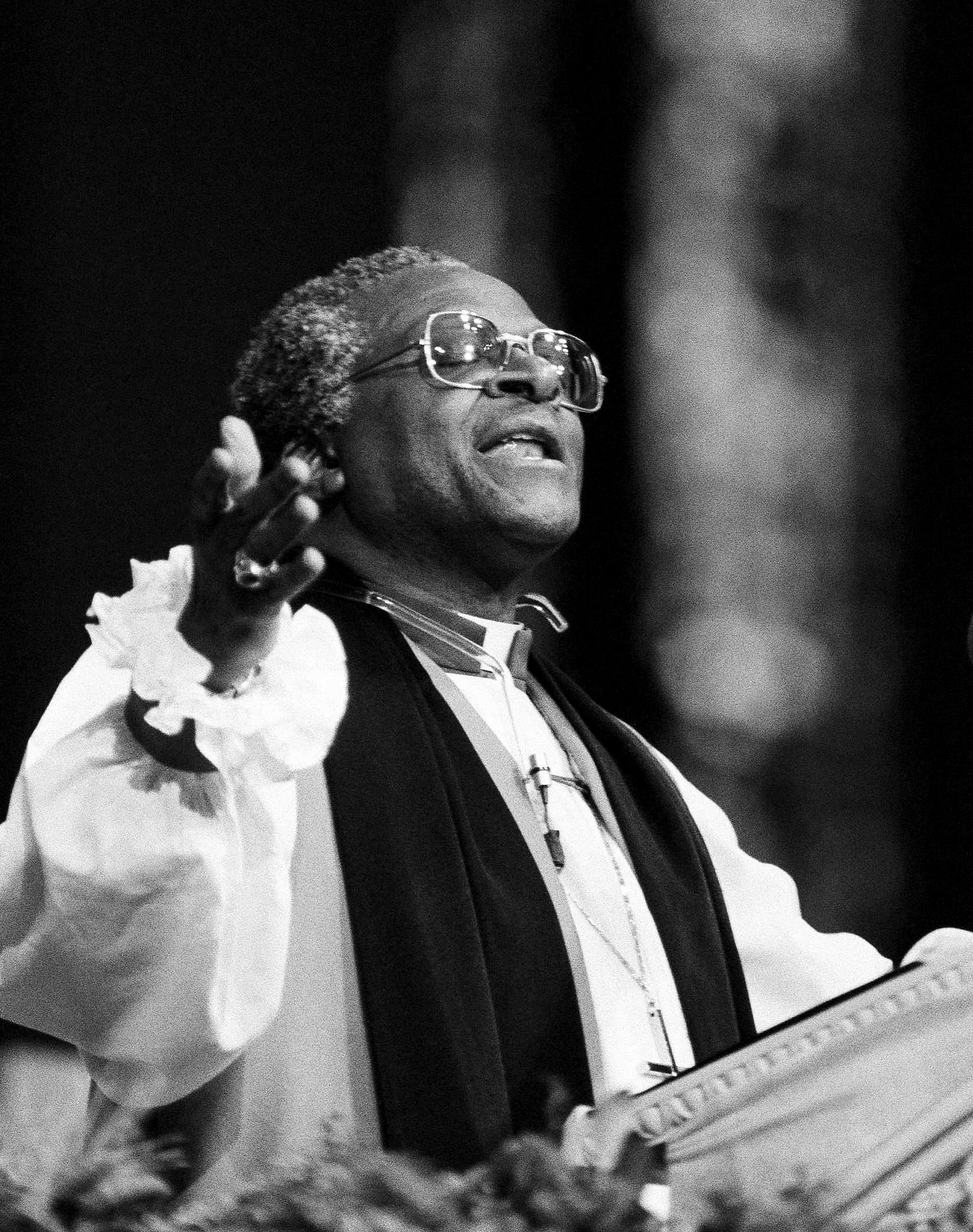
I had thought of dedicating an entire blog to the topic of the life of Archbishop Tutu. The reason for not doing this was because so much has been said by others and I knew I would have difficulty in saying anything fresh. The other reason is that ++Tutu’s political and religious struggles took place in a setting that I have no experience or knowledge of. That was my decision until Saturday 1st January. On that day a letter was published in TheTimes on the topic of Church leadership from Canon Mark Oakley. He came up with the magnificent word, Tutufication, to describe the potential influence of Archbishop Tutu on the leadership culture of the wider Anglican church. Oakley was attempting to point out to Times readers that there is a different style of episcopal leadership potentially available to the Church of England. This is not at present being offered to us by our current Church leaders. In particular, he contrasted the culture of managerialism and a suffocating need for unity/conformity with the individual fearless prophetic witness offered by Tutu. Put simply, there are no current examples of leadership in the Church of England which inspire or capture the imagination and attention of the British public as Tutu did.
The words of Canon Oakley which have led to much discussion on the social media, included these: “We need a brave Tutufication of the Church, allowing bishops more creativity, freedom of speech and honesty about what they believe, with a commitment to never let religion compromise justice.”
Those of us who have been inspired by the life of Desmond Tutu have not been calling for him to be instantly placed in the Anglican liturgical calendar for an annual commemoration. This may of course happen. The most impressive thing about Tutu’s life for many of us was the way that he was allowed to speak openly and freely about a number of topics that really matter to people – racism, homophobia, justice, forgiveness and reconciliation. There was a glorious spontaneity about his utterances. Nevertheless, he attracted plenty of criticism during his lifetime and indeed was sometimes in physical danger because of his views. Some of his attitudes may indeed have been wrong. I in no way want to suggest that he qualifies to be a Christian saint. But the thing that is remarkable and assures us of his permanent place in the roll of great Anglicans, was the fearless way he fought evil and injustices. These were especially manifested in the unjust structures of his native land, South Africa. He occupied a difficult place in the political spectrum, neither accepting apartheid nor seeking its overthrow through violence. His position as an Anglican bishop (later Archbishop) gave him a public platform so that he could be heard. His position was not popular, and, though applauded by many, he faced opposition and conflict for much of his life.
The new word ‘Tutufication’ helps us to see a distinct way of exercising episcopal power which is quite different from the one we have in the Church of England. As my readers who follow this blog regularly know, I have a personal interest in the way that our episcopal leaders have seemed so incapable of getting things right in the safeguarding crisis of the past ten years. In summary, the failures of Church leaders have frequently failed survivors of abuse. The leaders have also failed to protect the wider cause of justice and truth within the institution. Canon Oakley in his list of critiques of the current functioning of the episcopate, hints at a stuffy, highly centralised way of exercising authority. This fails to engage either with the ordinary membership in the pews or the demands of those who have suffered from abuse within the system.
Let us take two qualities for which ++Tutu was known, but which seem to be so little in evidence today in England. The first is the quality we describe as prophetic. Prophecy is one of those words that is constantly misunderstood by many people. In Scripture, the book of Daniel with its detailed foretelling of future events, is thought by many to be what prophecy is all about. In fact, the Jewish compilers of the Hebrew Bible never regarded this work as following in the great classical Hebrew traditions of prophecy. The book was relegated to sit among the miscellaneous ‘writings’. What we have is a work, written in the intertestamental period, around 165 BC, containing a genre of writing that today we describe as apocalyptic. Classical Hebrew prophecy, exemplified by Amos and Jeremiah, was the kind that has inspired many modern Christian heroes like Martin Luther King, Romero and Huddleston. It was about proclaiming the realities of the present time from a divine perspective. The Christian prophet is one who proclaims, not the future, but the meaning of the present, interpreted from the perspective of God’s will. The Hebrew prophets, sometimes at great physical risk to themselves, said unpopular and unpalatable things, revealing what they saw to be the will of God for Israel and Judah. What the people wanted to hear was that God was giving them endless peace and prosperity. What they heard instead was far less welcome. It was a message about repentance and the announcement of imminent disasters. I am no expert in Tutu’s political/prophetic message, but it can safely be summarised that his message was often, like that of the OT prophets, unacceptable, particularly to the holders of political power in the South Africa of the 70s, 80s and 90s.
The vocation of the Church to be a beacon of prophecy in the classic Old Testament sense, is not one that would be widely welcomed in Britain in our own century. Much prophecy, in its habit of challenging existing power structures, would probably be called far too left wing for our current establishments to cope with. This post is not meant to be in any way pressing a political view. Nevertheless, a healthy exploration of political opinions and ideas is not something that we or our episcopal leaders should shy away from. What we find in practice is, not an attempt to hold a healthy debate representing the complete spectrum of political opinions, but what appears to be an effort to muzzle every expression of political opinions. The fear of being thought ‘political’ has shut down much expression of opinion among our episcopal leaders. The Church has to a considerable extent become voiceless. As far as the political issues of today are concerned, as well as the issue of safeguarding, church leaders be seen to be acting neither with courage nor clarity. The spirit of Tutu in the Church of England is hard to discern.
Tutufication would be one way of releasing the Church from its political straitjacket. From the perspective of this blog, one urgent need is for the bishops is to be allowed the freedom to prophesy in the safeguarding arena. Many bishops know incidents of abuse from long ago but, in their current position of influence in the Church, they are forbidden from saying anything potentially critical. Dirty secrets from the past might be revealed and the reputations of current leaders might be damaged. Bishops are required by their position and status in the organisation to observe silence and do absolutely nothing to speak about all that has gone wrong. The consecration to the episcopate seems to involve receiving a large zip-fastener over one’s mouth. Nothing, no opinion or statement that might be helpful to survivors, can ever be released on this topic or anything else, unless sanctioned at the centre.
Many of us have been admirers of Bishop Vivienne Faull of Bristol. Her safeguarding record at York as Dean was exemplary, if controversial. She also made some bold statements about the safeguarding failures she observed at Gloucester when Peter Ball was Bishop, and she was a junior member of the cathedral staff. Her remarks were challenging to the system and she spoke of the forces trying to silence her. She recounted at the time of the IICSA report: ‘The tribalism and clericalism identified by IICSA silenced and marginalised me (and others). It still does.’ The announcement that Vivienne was to be a Diocesan bishop encouraged many of us to believe that her bold, even prophetic, stand on safeguarding matters would be represented in the House of Bishops. Then we also learned that she was to be assisting +Jonathan Gibbs in his safeguarding role. Since that date, it has been as though the volume dial has been turned right down. I may have missed some statement, but the survivors that I am in touch with have not heard one word which might encourage them to believe that she was still interested and working on their behalf. If we can suggest another word to describe a process at work in the Church of England, what we are witnessing seems to be that ‘detutufication’ is alive and well.
The second quality we saw in ++Tutu was his careful and laborious search for reconciliation and peace. Most of us have heard of reconciliation process which Tutu oversaw in South Africa through the Peace and Reconciliation Commission. This took the former participants of the political conflict and provided the space and the time for them to listen to the pain that the other side had suffered. It was an incredibly costly affair, and it took the patient dedication of an exceptional Christian leader like Tutu to try and make it work. From the Christian point of view it was a clear demonstration that Christian values and beliefs can make a difference in situations of conflict and point to a better future for everyone, whether or not Christian. The success or failure of the Commission is not what I am arguing for at this point. I am merely pointing out that Tutu has shown how the influence of the episcopate can be put to work. Tutufication of the Church and especially its leaders, can make a powerful difference in a society and point all to the possibility of transformation. South Africa is far from a healed society, but some of the bitterness has been neutralised to make that society somewhat less divided than if he had never lived.
The brief letter by Mark Oakley has begun a discussion in the Church of England about the kind of leadership we would like to see from our bishops and archbishops. Tutufication represents, in summary, the fearlessness, the striving for justice, the courage and fierce conviction that marked the life and work of ++Desmond Tutu. Even a little of his outstanding passion would go an enormous way in helping our church regain the respect of society. Tutufication is also especially needed in the world of safeguarding. His costly struggle to bring about peace and reconciliation also points us in a fresh direction. Instead of of the fear-dominated and defensive legal responses of the Church authorities towards victims and survivors, we long to see the compassion and outworking of Christian love. Tutufication points us in a new direction and towards a new church culture. Above all his message and example is to our Church leaders. There is another way of exercising Christian leadership. Instead of fear, truth avoidance and the concern merely to protect the institution, we long to see openness, integrity, justice and love. With them in evidence, the Church of England might have a better chance of regaining the respect and admiration of society at large.
Back in December I (SP) outlined the story of ‘Kenneth’ who was facing a CDM process for an alleged offence against a child. The following piece is a follow-up by a friend supporter of Kenneth to that story and it vividly explores the Kafkaesque world that anyone accused of anything in the Safeguarding arena may have to endure. The chief sticking point, as far as I can see, is that there is no mechanism for establishing the veracity or otherwise of an accusation. An accusation of misconduct remains and no one is allowed to question what has been alleged. From the last account we learned at least two facts that called for further investigation. First the account given by the ‘victim’ has changed more than once. Secondly no attempt has been to question the child alone, using a skilled interviewer like a specially trained social worker. He is now 16 years old. There are in fact a number of queries in the story that require skilled expertise not present in the existing core group. Justice needs to be seen to pursued with professionalism and exemplary care, if Kenneth is to receive a proper opportunity to defend his claim that this incident never happened.
This is the continuing true story of my dear friend Kenneth of some fifty-six years mentioned in a previous blog of December 13th 2020 by Stephen Parsons. I am merely continuing the saga, updating on more recent events. We have all been advised to keep his identity confidential, which in Diocesan Safeguarding Core Group terms means ‘secret’. It is ironic that a blog which intends to expose untruths should begin with one. Neither must we write anything which might identify any other person. So, with these restrictions I shall endeavour to expose a continuing cruel and merciless system which is destroying the life of this Kenneth.
You will have read the basics of the case in the previous blog http://survivingchurch.org/2021/12/13/cdm-a-case-study/ and might find it difficult to believe it could get worse. To remind you, Kenneth has been a member of the congregation of his church for sixty years and has had clean DBS checks throughout that time and yet in one short telephone conversation his whole life and raison d’etre were destroyed with no explanation. An allegation was made against him by a chorister of sexual touching, which he denied. There was no evidence and, over a twenty month period, only continuing contradictory stories from the boy.
In this report the years have been highlighted to avoid confusion.
High Risk
On October 4th 2021 on the grounds that the boy had not withdrawn his allegation Kenneth was declared to be ‘High Risk’. No explanation was given as to how this decision was reached between the Detective Constable saying in March 2020, “As the matter was quite low level I submitted it for no further action’, to the Core Group saying in October 2021, he is ‘high risk’, that decision having been reached without any investigation or evidence. Eventually, after a ten week wait the consequences of the October 4th 2021 meeting were not discussed until December 14th 2021.
Subsequent Risk Assessment
The same Risk Assessment made December 16th 2020 was used as the conclusion to the process on December 14th 2021 with no cognisance being taken of events throughout 2021 which were of further and different accusations by the boy, denials and evidence against these by Kenneth nor the findings of the Independent Review.
So, loyal as ever to the boy, at a meeting on October 4th 2021, Kenneth was told that since the boy refused to withdraw the allegation, he was now described as ‘high risk’. There had been no investigation or scrutiny of evidence and no explanation of this decision beyond its being the accusation by the boy.
Stephen Parsons spoke in his blog of the Core Group’s insistence that their role is not to seek the truth but to believe the child. Yes indeed because Kenneth was told on July 2020 by the Diocesan Safeguarding Adviser, ‘Our focus is in responding to allegations not to focus upon finding out the truth” because,‘We have to follow theHouse of Bishops ruling on safeguarding’.
On June 15th 2021, almost a year later, we asked all members of the Safeguarding Group: ‘Does the House of Bishops really say the truth must be avoided even if it means supporting lies in order to pretend to believe the complainant? There was no response.
Although we have many times asked for the document, section and paragraph to substantiate the actions and decisions by the Core Group there has never been an answer.
The Core Group have always claimed it was not their role to investigate but despite nine formal requests as to whose role it was, they never answered that question either. Instead they constantly refer to their following the ‘House of Bishops ruling’. It is not clear (although they have been asked), whether they are referring to ‘The House of Bishops Procedures’ (which is for ordained clergy and Kenneth is a lay person, although initially the DSA did not know this), or The Parish Safeguarding Manual’, but in either case we challenge that any rules at all have been followed. In other words they seem to have ‘made it up as they went along’.
House of Bishops Procedures (Published by the House of Bishops October 2017)
If the document ‘House of Bishops Procedures for Safeguarding 2017‘has been used then there are altogether fifteen procedures relating to respondents and five general procedures which were not followed in this case. Throughout October and November 2021 this information was given to the Core Group by myself, but again, it was never responded to.
Truth/ Untruth
In the previous blog from Stephen Parsons you will have read that there were discrepancies over dates and details; indeed there were only three dates in the time span given by the boy when he and Kenneth might have been in the vestry at the same time. The choral registers could have shown this and might have exonerated Kenneth. This information was refused by a senior safeguarding office and an official complaint was made about her at the time. Subsequent complaints were made about this to individual members of the Core Group and officials in the parish, naming the officer concerned in connection with her refusal to give information from the registers.
At the meeting on October 4th 2021 almost exactly a year after the official complaint about the secrecy of the registers, the Assistant Diocesan Safeguarding Officer said the decision to withhold substantial evidence of the registers in this way was a Core Group decision and not that of the individual officer. This is not the case because Kenneth and myself have an email from the safeguarding officer on this issue which shows clearly that it was she personally who had refused to give the information from the registers.
Indeed throughout all our complaints about this no mention was ever made about its being a Core Group decision.
January 2022
It is interesting to note that from March 2020 when the allegation was first made until present six people directly involved with the case have left the church concerned, including within the last few months, the boy and his mother.
As I am writing this, January 2022, the Diocesan Safeguarding Core Group is, I believe, drafting a Safeguarding Agreement trying not imply any culpability or guilt as otherwise Kenneth will not sign it because he says he is not guilty. The discussion about this so called agreement is to take place on January 12th 2022 and I shall keep you updated. In the meantime we leave the safeguarding officer wondering who else to blame for her refusal to divulge the information in the registers.
We heartily endorse Stephen Parsons plea that, ‘Assuming the CDM revision is going to apply to cases involving laity, the reforms cannot come soon enough’.
I have to go back almost 50 years to remember the experience of attending a professional football match. The setting was Selhurst Park, and the team that I was nominally supporting was Crystal Palace. At the time, I followed the fortunes of this team in a half-hearted way since it was my local team. Several members of my youth club were always talking about it. I have no memory of who won the match I attended, or even who the opposing team was. The memory I have is of the extraordinary roar of the crowd as it followed the action. This might be thought to give fans an experience of something like a ‘one hundred and forty-four thousand’ event as in Revelation 7.
My brief exposure to the world of football was sufficient to allow me some small understanding of the intense tribal loyalties that coalesce around all the different clubs in this country. The important thing for me to understand then was that there was truly nothing more important in the world than for the favoured side to win. It was Bill Shankly who said “Some people believe football is a matter of life and death, I am very disappointed with that attitude. I can assure you it is much, much more important than that.” I wonder how many other groups in society command that kind of devotion and loyalty. If we were to suggest that a Christian feels even a small amount of this devotion, then the Church would be a considerably livelier institution. The non-members of the Church might see the devotion of the members, if there were even a little of the dedication shown by an ardent football fan. Such ‘evangelism’ would not necessarily be attractive to the outsider but at least they would know that the fans of the Church were serious in their commitment. However, sadly, evangelism does not seem to work like this. Few Christians seem able to feel, let alone communicate, the radiant exuberance of the devoted football fan.
The identification of the football fan with his/her team is rewarded by the occasional intense moment of experiencing the triumph of victory. Equally, there are the other times of disappointment and pain. As a student I once worked as a barman for a single day at Twickenham when a big rugby match was under way. It became apparent to me, as I collected up countless beer glasses, that intense joy or sorrow could both be marked by the consumption of copious amounts of alcohol.
Being a football fan allows the individual to experience the highs and lows of an identification with a large institution. All human beings need to belong, and the identification with a team gives the individual fan a strong sense of being part of a ‘we’. There are two aspects of this belonging. First, the fan feels part of the playing team, the managers, the players and the coaches. All fans will have strong opinions as to why things are going wrong, if they do. The language used to criticise managers seems to be colourful and explicit. Alongside this sense of bonding with the team etc., there is also the experience of mutuality and solidarity with fellow fans. They are met on the terraces and on the trains going to and from away matches. Although racism and homophobic attitudes have sadly crept into the world of football, most fans would prefer their team and its supporters to be more moral and upright than others. Fans are quick to condemn such things as fixed matches and bribery allegations. Bad behaviour by players, on or off the pitch, is taken personally and the shame of such episodes is felt keenly by fans as though committed by the fan individually. Conversely when a player is revealed as upright and moral, the fans feel the pride of achievement as though it is their own. Marcus Rashford, whose actions on behalf of poor families earned him an MBE, was applauded by Manchester United fans because ‘their’ player was seen to achieve in a new sphere of excellence.
Passionate identification with an institution is something that Christians should be able to recognise readily. For a Christian, the identification is a double reality. We identify with Christ himself and our belief is that we approach God ‘as found in him’. The act of Communion is a moment where we symbolically become part of him. Our identification is also one we make with an institution, the Church. In being Christians, we have chosen to identify with Christ as well as the mixed bag of fellow travellers who call themselves Christian pilgrims.
Identifying with a group of other people over whom we have no influence or control is, however, a risky business. If they are good people and respected by others, then our identification with them is a positive thing for us. If, on the other hand these people are evil and bent only on their selfish needs, then our act of solidarity with them can diminish us and be personally damaging. If there is a risk involved in being identified with the institutional Church, this is especially true especially of a Christian leader. Such leaders benefit if the Church has a good reputation and is thought by ordinary people to be doing a good job. They can more easily enjoy the esteem of their position. If on the other hand the reputation of the Church is poor, the esteem given to leaders can shrink to point of vanishing. Their job will become increasingly hard to do and any gratification afforded to them by having status in society will be under threat.
In a situation where there is periodic negative publicity against the Church, such as we have at present, Christian leaders have a dilemma. One way of dealing with the situation is to defend the institution by maintaining that any wrongdoing is not typical of the whole. This may be true but that is not how the watching public sees it. ‘They are all tarred with same brush’ might be the unfair but typical response after yet another scandal in the Church. The onlooker has grasped a part of the truth. The shame of an abusive action by a leader or a member does implicate many innocent others in some way. The honest approach in the face of any scandal in the Church is for the leaders to acknowledge the fact that the shame of abusive actions spreads outwards. When wrongdoing occurs, there is a need for healing and reparation to take place within the wider institution. Any attempt to deny the awfulness of what has happened, or worse still, attempts to bury the truth, will be seen as examples of appalling hypocrisy. Guilt may not belong to every single member but leaders’ attempts at cover-up or burying the truth with silence and denial, will severely damage the whole Church institution. This damaged reputation will be severely corrosive on the ability of the Church to get alongside people in the future and to be trusted by the general population.
The football fan is passionately identified with his/her football team. The pain of defeat or the shame of bad behaviour by a team member is accepted as part of the course. If a fan were only to celebrate the victories and ignore the negatives and defeats, we would question their status as a proper supporter. If a member or leader in the Church refuses to own any sense of imputed shame when things go wrong and people are harmed in some way, then we seem to be witnessing a betrayal. It might also be described as a failure of nerve and commitment. In practical terms, a passionate identification with team Church has been exchanged for their cowardly silence and neutrality. At this moment we are very much aware, because of the death of ++Tutu, of the true nature of such neutrality. Neutrality too easily leads to a denial of justice and a failure to love and respect others. Silence and neutrality were inappropriate in the South Africa of the 80s when the struggles for justice were at their height. They are also incongruous today, especially in the Church where we look for passionate leadership and action instead of the weak indecisive leadership we so often encounter. The new word invented in the past few days, ‘Tutufication’, is a summary of what we look for from our Church leaders inspired by the example of ++Tutu. In the place of the culture of silence, neutrality and managerialism, we look for integrity, confident truth telling and freedom from fear among our church leaders. We also look for passionate concern and support for the victims and survivors of power abuse. Those who live under the stress of a malicious CDM are also sufferers every bit as much as the victims of apartheid. Neutrality, silence and failures of integrity are all profoundly damaging to the Church. Sadly, there are many who have opted for detached indecisive behaviour. This is far from the passionate identification with an institution that we find among football fans. We might have hoped to find a measure of such passion among the leaders of the Church of Christ.
At the beginning of 2022 we find the Church of England in a state of considerable crisis. It has been implicated in a number of abusive events and at the same time it has been singularly unsuccessful in convincing the victims of these horrors (or the watching world) that it knows what to do to put things right. In summary, the Church leadership does not seem to understand how to deal with the shame that inevitably attaches itself to an institution when things go wrong. Our Scriptures, nevertheless, do fully understand the meaning of sorrow, contrition, sin and failure and how we can proceed from here. We need to see evidence of all these to convince a watching public, that there is still a measure of passionate commitment to truth and justice in the Church and especially among its leaders.
The arrival of 2022 makes us very conscious of the future and what it will bring. There is one part of the Church of England facing definite changes with the imminent retirement of its Bishop: the Diocese of Winchester. I was considering what these changes might involve when I spotted an item on the American website, Anglican Ink. It was about a senior appointment being made in the Diocese. Dr Amy Roche, who already works in ministerial training in the Diocese, has been appointed Dean of Licensed Ministry training across the Diocese of Winchester. The announcement of this appointment tells us that Dr Roche will be responsible for ‘the delivery of mission focused training … through the School of Mission’. Further, ‘she will develop the ministry training programme that helps grow the number of lay and ordained ministers in the Diocese.’
The announcement was delivered to the public and the American website through the agency of Luther Pendragon (LP), the reputation management company. Given the fact that this firm has achieved a certain notoriety in the Church of England for assisting the malcontent dons in their vicious persecution of the Dean of Christ Church Oxford, I sensed that something was not straightforward. I some time ago discovered that this communications firm, which is expert in crisis management, seems to be the go-to firm for the Church of England at a national level and the Diocese of London. A close relationship with the Diocese of Winchester was also apparently developed when the Diocese was having to deal with a deteriorating relationship with the Channel Islands parishes, which were then part of the Diocese. Without attempting to describe the details of that affair, professional communications advice would have been required to deal with the unwelcome press publicity at the time. Since that point, the services of LP seem to have been found useful and the firm is now a permanent feature of the diocesan structure. The name of Ben Frankel, a senior LP partner, appears as the diocesan Director of Communications and all press enquiries are directed through him. The need to employ such a pricey London professional for the mundane tasks of writing uncontroversial press releases is suggestive of one of two things. The first is that the Winchester diocese has found the services of LP so excellent that the senior staff prefer, unlike most other dioceses, to outsource this aspect of diocesan administration. The second possibility is less flattering. This is to suggest that senior staff in the Winchester diocese have found all their dealings with the press in the past so fraught and stressful that they prefer to have permanent access to one of the most prestigious damage limitation firms in the country. The diocese certainly appears to be tied to LP through some sort of contract agreement. Why else would LP’s name appear in something as innocuous at +Debbie’s recent Christmas message? In all fairness, the crises in the diocese that have come into the public domain, particularly over the past six months, perhaps justify this expensive recourse to the skills of LP.
We return to the appointment of Dr Amy Roche as Dean of Licensed Ministry Training (LMT). I have had a look at some of the records of the Winchester School of Mission since it was founded at the instigation of +Dakin early in his episcopal ministry. LMT is one part of the work of the school and it is very close to the heart of the Bishop’s vision for the diocese. The Church of England Ministry Council produced an External Review Report in May 2019, and it is clear that this local home-grown scheme for training ministers, lay and ordained, is working well. The inspectors had a few minor recommendations to make, but they seemed to approve of the standards of training being offered. From the Council report, I was unable to discern how many are enrolled for ordination courses and how many are seeking to enter a licensed lay ministry. The figure of seventy was mentioned in the course of the report and that presumably covers the total number of the students then under training.
There are two points of caution to be noted at this point. The first is that the Council inspectors observed in 2019 that the emphasis on mission was an episcopally-led impulse. In other words, the ‘culture’ of the whole School of Mission was strongly tuned into the Bishop’s own priority for mission/evangelism. This in turn would be linked back to his own early Christian ministry of teaching and evangelism which took place in the missionary setting of Kenya. The imminent retirement of the Bishop in February next will leave a gap, and the impetus set by him for prioritising mission and evangelism will no doubt be affected. The second point to be drawn is the mention of numbers in the recent LP press release. It mentions that there are currently 42 students in training. This is 28 fewer than in 2019 when the Ministry Council report was written.
The numbers of individuals enrolled on a training scheme would not normally matter. Cohorts of students coming forward for training will vary in size and one year’s shrinkage is made up in another year when there is an expansion. But the situation at the moment is critical. With the current bishop about to retire and the prospect of another bishop being swiftly appointed somewhat remote, the state of health of all +Dakin’s initiatives is a matter of concern. Although the Winchester School of Mission’s schemes have achieved success in several areas, this initiative for mission is bound to lose momentum now that the Bishop can no longer offer his leadership and vision to energise the programmes and initiatives. The main issue is money. There are at least ten individuals named on the diocesan website as having responsibilities within the School of Mission. This represents a huge human/financial investment which a future bishop may wish to modify. In short, the question is this: Can the Winchester diocese really afford all the institutions and initiatives of the soon to be former bishop? As a further exercise I counted the people directly employed by the Diocese. These amount to 72. Not all will be full-time, but this number still represents a massive deployment of finite resources. Will all these posts survive the arrival of a new broom?
Dr Roche seems a thoroughly decent and honourable person but even she must feel the icy winds that swirl round the future activities of the Winchester diocese. Looking at the appointment from afar, the question arises, who was responsible for promoting her within the School of Mission structure? She was already working as an assistant in the department, and many of the tasks she will be taking on could have been undertaken by her within her existing job description. Meanwhile the final departure of +Dakin hangs over the whole diocese like a very dark cloud. Questions like the availability of a decent episcopal candidate for the post in the future remain. In the context of the acute financial woes apparently being experienced by the Diocese, does it make any sense at all to announce a senior appointment of this kind? Surely everyone can see that a pruning knife is hanging over so many of what could be regarded as bloated structures within the diocese.
Two final thoughts. Is the timing of the appointment announcement so near Christmas aimed at attracting the least possible notice? There must be many among the parochial clergy in the diocese who know someone who has lost paid employment and are acutely aware of what appear to be over-staffed structures at the centre. Also, has anyone else noticed the irony of paying top rates to a London based communications director to announce the appointment of someone to head up a part of the School for Ministry? It is likely that the Diocese of Winchester will have to retrench in a variety of ways in order to break even in the future. One more senior appointment made now will make that process just a little more difficult for a future bishop. I am reminded of a story when a Labour minister left a note for his Tory successor after a general election. The note said something to the effect, there is no money left, we have spent it all! Is such a message being sent by one bishop of Winchester to another? In spite of the cessation of +Dakin from all duties in the diocese, are we witnessing his hand in a final exercise of episcopal patronage? After all the sums expended on the Channel Islands shenanigans, the rumoured redundancies and accompanying NDAs, together with the hugely expensive setting up of all the mission initiatives, what is one small appointment in the scheme of things?
As a layman who served on a Bishop’s Staff team for some 12 years, I am now privileged to hear testimonies of a number of priests, in some cases relating how they have been subjected to discipline by irregular process. Such testimonies shed much light on the ‘underbelly’ of episcopal activity, showing how some bishops are destroying a vital leadership role within the nation. This leads me to trumpet the need for an independent review of our Church’s episcopal culture and practice.
Here are three unnoticed—or ignored—signs of ongoing catastrophic leadership:
Oversight. A manifest impoverishment of oversight (over-seeing) allows serious episcopal frailties to develop. There seems to be an inclination to believe any persuasive voice, lay or ordained, on the basis of hunch or an opinion of a criticised priest. The situation appears to be worse in cases where the accusations reflect the bishop’s personal opinion of a priest ‘under assault’, irrespective of whether or not those accusations can be substantiated with actual evidence. Thus, in a worrying number of cases, bishops have not upheld the oaths they swore at their consecration, “to know their people and be known by them…. to use their authority to heal, not to hurt; to build up, not to destroy”’. Committee work receives a greater priority over the essential task of listening to, understanding and enabling parish clergy to flourish in their ministries, some seriously overloaded and in tough and large benefices. Some command a low priority on bishops’ time; ‘shepherds’ preferring to focus on their own priorities, in incessant higher profile committee work and centralised initiatives.
Professional disciplinary errors. These generally come to the surface, not because of any oversight, but because a harmed priest has the energy, the advice, and probably the funds, to mount a legal challenge. This has ‘worked’ with some of my clergy friends, one achieving a six-figure financial settlement, tied to Non-Disclosure or Confidentiality Agreements that even the Archbishops of Canterbury and York seem incapable of weaning their Bishops away from. Such sums are squandered from diocesan funds, largely drawn from the free-will offerings of un-involved laity; sometimes supplemented by assets drawn from central funds supplied by the Church Commissioners. These donors do not realise that their gifts are being used, not to spread the Good News of Christ, but to conceal the errors, incompetence and wilful misconduct of those to whom they have entrusted their donations. Should bishops come to fund such compensation personally in whole or part, many might judge this reasonable. The impact could be immense. Furthermore, in Charity law, trustees of the diocese could have some liability. The diocesan boards of finance (DBF) may be registered Charities and arguably vulnerable should the Charity Commission become aware of charitable fund misappropriation. A structural difficulty arises when a diocesan bishop is the DBF chair. Some DBFs are instead companies limited by guarantee, in which case members have a moral duty to call out fund misappropriation.
There thus seems an urgent need for an independent review of episcopal culture and practice; arguably so urgent and important that the 2022 Lambeth Conference should be postponed until it is carried out. Meanwhile, without fair and Christian governance, the Church is unlikely to achieve its vision of being “simpler, humbler and bolder”. Where parish clergy cannot trust their bishops, they will be reluctant to step out in faith, becoming necessarily concerned at having to look back over their shoulders. Meanwhile, the current (widely discredited) procedures continue to be applied and create new ‘casualties’ amongst parish priests.