One of the features of an interregnum in a parish is that those left in charge are often reluctant to make decisions pending the arrival of a new vicar. ‘Wait until the new vicar arrives’ is the cry of many hard-pressed churchwardens over some intractable problem. When I became an incumbent, back in 1979, of a group of parishes in Herefordshire, I was fortunate that the in-tray only consisted of one query about a memorial stone which had been left till my arrival by the churchwardens. It turned out to be a matter of spending time with a widow explaining why a particular choice of words would look strange after a period of time. I don’t recall the details, but at least it could be sorted within 24 hours of my induction. The in-trays for most arriving clergy are usually far fuller than that. Some decisions are the difficult problems that have been left unresolved from the time of their predecessors. The failure to make a decision is, in many cases, a fear of having to favour one of two or more parish factions. From the very beginning a new vicar is closely watched to see which group he/she is likely to support. Decision making becomes a political matter of trying to balance the interests of competing groups. Whatever choice is made is going to be wrong for someone.
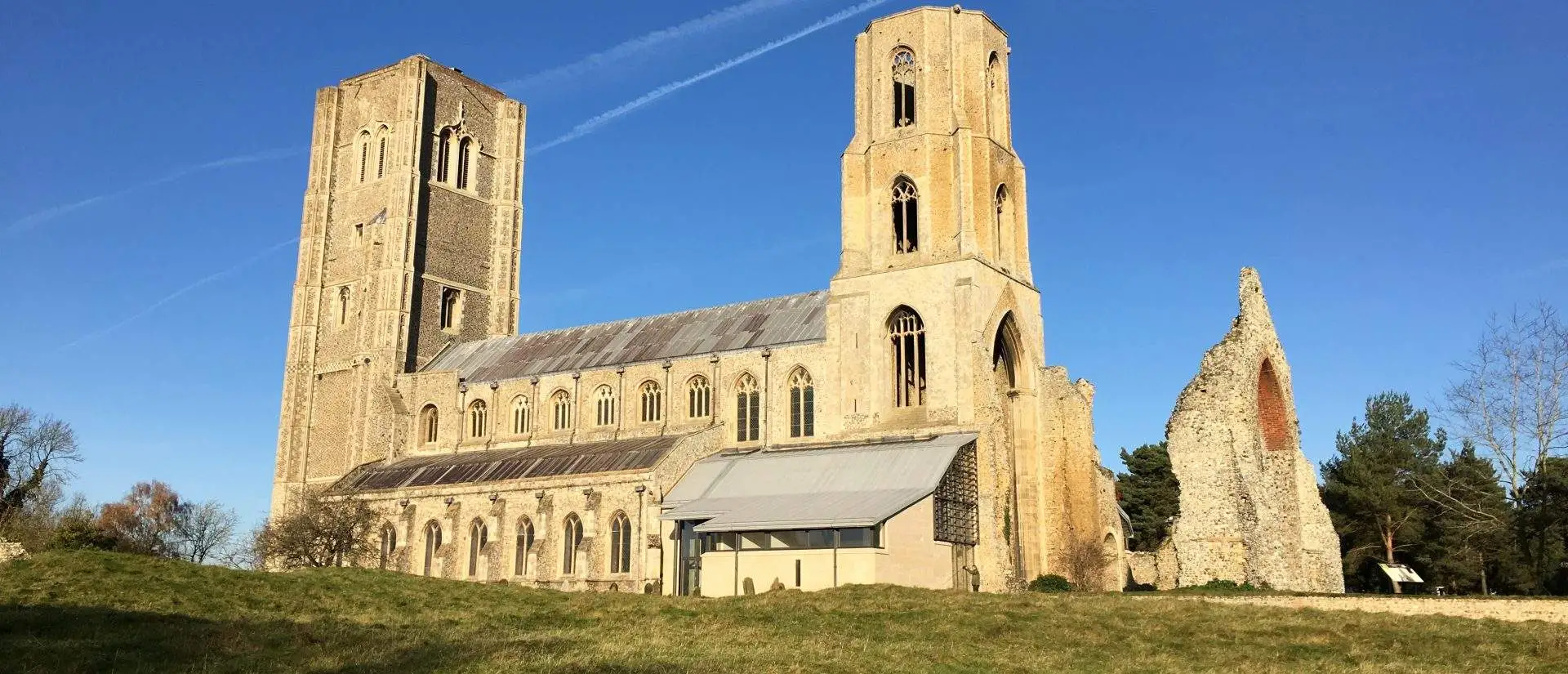
If the in-trays of parish clergy are often full on day one of an incumbency, the same is also true for bishops. The newly arrived Bishop of Norwich, Graham Usher, inherited a particularly intractable problem when he took up office in 2019 – the problem of Wymondham Abbey. This parish has been plagued with unhappiness and conflict for some time and no doubt the filing cabinet of the previous Bishop of Norwich contained letters and the minutes of meetings on the topic. In his own words, when speaking about this correspondence generated by the problem, Bishop Graham stated that ‘these matters have monopolised a huge amount of my time since becoming Bishop of Norwich.’ What the Bishop is stating is that this one parish has given him a great deal of stress and aggravation. This, no doubt, has affected the time and attention available to him for the care of the rest of the Diocese. In an attempt to deal with the issue rather than let it continue to fester, the Bishop set up a Bishop’s Visitation to the parish. The seven-page document that has been recently released is a summary of the report made by three commissioners appointed to conduct the Visitation on the Bishop’s behalf. The document also sets out the Bishop’s Directions as to the way that each of the identified problems in the parish should be dealt with. It is essentially a public rebuke of what the Bishop has determined to be the damaging behaviour on the part the Vicar and some of the parish officials This published document is dated All Saints Day 2021 and it has been picked up by several newspapers, including The Times. https://www.dioceseofnorwich.org/app/uploads/2021/11/Wymondham-Directions-Final-All-Saints-Day-2021.pdf
A word about the Vicar of Wymondham, Catherine Relf-Pennington . Her professional record does not appear in my online Crockford directory of the clergy, but she has been Vicar there since 2017. The Crockford details the recent staffing of the parish, and this tells us that Catherine came to the parish as a curate in 2014. It is highly unusual for a curate to be ‘promoted’ to Vicar. Such a move can possibly suggest that the post was hard to fill, but that part of the story is not in the public domain. Wymondham was not Catherine’s training parish as, according to an earlier printed Crockford, she had already served as an incumbent for five years. Before that, her career was fragmentary. She served two curacies of a year each and was briefly an assistant at the American Episcopal church in Paris. Her training and ordination were all in Australia.
The headline of the public document about Wymondham is that the Vicar has been ‘directed’ by her bishop to apologise to her congregation for aspects of her ministry. A public rebuke of this kind is unusual, and the question immediately arises: is she being treated fairly? My normal inclination when hearing about clerical misdemeanours is to start with an assumption every priest has a combination of strengths and weaknesses. Some may be excellent preachers but very poor at administration. Others may be excellent pastors but find delegating an impossible task. Every clergyperson I have ever known is good at some parts of the total package and less competent or even weak in other aspects. My first inclination is to look for the strengths in ministry and then see if the weaknesses come anywhere near cancelling out these strengths. The report, unfortunately, does nothing to help us see the Vicar in a positive light. After reading the document about the ministry at Wymondham, one is not given enough information to make a informed judgement about whether there are positive aspects in her ministry. Although it is said that there were some ‘who are appreciative of the Vicar’s ministry and the work she has done’ we are not told in which sphere this appreciated work is found. We find ourselves making our assessments of the situation without having all the facts we would like.
The document containing Bishop Graham’s Directions does not pull it punches in listing the issues connected with relationships, property, finance and administration that are being raised against the Vicar and a significant cohort of PCC members. The list reads like a parish horror movie. Most of us know parishes where aspects of church life have broken down but, in the case of Wymondham, it seems that almost every aspect of the parish life has fallen apart. Without going into too much detail, the Churchwardens and PCC are in a bitter dispute with the Diocese over the maintenance and siting of the Vicarage. No parish share has been paid for several years, thus depriving the Diocese of a significant slice of its expected income. This failure seems to be part of a PCC resentment over the Vicarage disputes. The finances of the Church are in a state of disorder generally, with money being spent outside proper supervision. Auditing has become problematic, and it is evident that it has become difficult to know what is going on in this area. Issues over the place of music in the church remain to be resolved as the Vicar appears not to have an appreciation for the musical heritage in Wymondham. Pastoral care of the elderly and the young has also suffered.
The reader might wonder why the many problems raised had not be brought up in a complaint against the Vicar under CDM rules. Apparently two CDM complaints from 2019 and 2020 are still ongoing. Bishop Graham, no doubt under legal and pastoral advice, is making his main Direction as a way of clearing these out of the way in one dramatic gesture. He states: ‘the incumbent is directed to meet with all the complainants in person .. and to apologise to them without reservation for the behaviour which gave rise to the allegations which they raised.’ This is the language of a bold leader, but it will require considerable gifts of humility on the part of the Vicar to comply. It is this exercise of a bishop’s authority that has attracted attention in the press and no doubt throughout the Church. It also indicates that Bishop Graham has taken onboard the fact that the legal processes involved in CDMs do not often achieve good outcomes. In this blog we are constantly reminded of the fact that legal processes involved in safeguarding cases often leave behind lasting bitterness and enormous expense. The simple letter or word of apology may be the soft word that turns away wrath. This is what is needed in so many places in the Church at present. We desperately need other such apologies ‘without reservation’. We need the powerful in the Church from Archbishops downwards to be able to make this kind of gesture ‘without reservation’ to the wronged and abused. Here we are not talking about the original abuse (that may require legal remedies) but for all the ways that the Church has compounded the abuse by defensive unloving tactics – playing the legal games which inevitably batter down the weak.
A number of final questions arise which I am sure are being addressed in the Diocese of Norwich at present. How was the original appointment made when clearly the Vicar does not show evident aptitude for many of the routine tasks of parish life? Did not the somewhat eccentric CV raise questions? Is it ever a good thing to appoint a curate to become the incumbent of the parish, unless there are extraordinary circumstances?
The Wymondham case may prove to be a decisive moment in the history of the way that power is administered in parishes and dioceses. Bishop Graham has staked the moral power and authority given to him as a bishop to ‘direct’ an erring person to retract what is clearly poor behaviour. We hope it will work and, as a sweetener, the Bishop is offering to expunge all the legal CDM processes in the pipeline at a stroke. If his directions are not followed, then the price to be paid by the parish will be extremely high. The disputes will remain, and the diocesan and episcopal support structures will be unavailable to help the parish move into the future. The proud traditions of a church community based at one of the finest church buildings in the East of England will be dimmed, if not extinguished altogether. If the apology is indeed offered and accepted that will, importantly, also set a magnificent precedent for the wider church. We will all be richer if such an act of public restoration is achieved. The Church will be seen to be fulfilling its vocation to be a place where broken relationships are restored, and justice is achieved without a single lawyer or reputation manger anywhere in sight. Then it might be properly said: See how these Christians love one another.