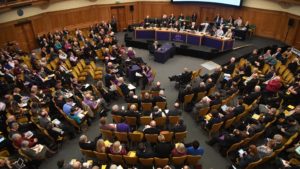
 I have given more time than perhaps is healthy to listen to the hearings of the Independent Inquiry this week. It will all be over by the end of next week, but the Church of England will be mulling over its implications for a long time to come. Some of the witnesses have been helpful in showing how much there is in the way of dysfunction and extraordinary dynamics within our Church structures. It is hard to see, after these hearings, how the pattern of Church life, especially around bishops and senior clergy, will ever be the same again. Some of the inner workings of decision-making at the highest levels of the church have been laid bare. Child protection policies over the past decades have been seen to be inadequate.
The current Safeguarding Officer from the Diocese of Chichester, Colin Perkins, has been eloquent today in support of current practice within his diocese. Other witnesses have tried to indicate that lessons ‘have been learnt’ and we can expect enormous improvements in the Church’s safeguarding in the future. The repeated promise to help survivors and victims has also included the expression ‘change the culture’. This was first mentioned by Archbishop Welby in 2013. I want to reflect what this, perhaps now rather tired, cliché might mean in practice. As my readers know I have often tried to emphasise that child sexual abuse is one among various problems of power abuse in our national Church. A dysfunctional exercise of power in the Church is, of course, found in other denominations as well. I want in this post to think further about what this expression ‘a change of culture’ might involve. At the very least it requires a new understanding of the way power operates within churches. At present we have in common with most other churches a hierarchical church which is modelled on a pyramid structure. The Church of Rome exemplifies this pyramid model more obviously than the Church of England. At the apex of the church pyramids are Popes, Archbishops and bishops. These dignitaries delegate their authority to those below them. These might be archdeacons, Area Deans or parish priests. Each parish also organises itself in a similar way. The minister in charge is at the top of his own small pyramid, able to set the tone of the parish and exercise some power over his congregation.
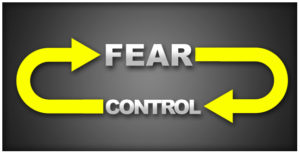
The problem for the church is that when power is exercised within these structures, quite often it is an invisible or unacknowledged power. When such power is in fact recognised and identified, it is probably less dangerous. The institution can operate for much of the time in a reasonably healthy way. The problem arises when, for reasons of psychology or institutional dysfunction, the one at the top of the pyramid has no insight about the power at their disposal. He/she may be feeding an inner narcissistic need to be important while at the same time behaving in an arbitrary way. Because feeling good comes to be for some the most important reason for exercising power, the person at the top will have no insight as to how those at the bottom feel. Leader and led often may become locked in an unhealthy dynamic. This, at worst, quickly descends into a culture of a coercive controlling tyranny.
The exercise of power within the Church thus often involves delusional thinking. Nobody within the pyramid is prepared to tell those at the top how they impact negatively on the marginalised and weak at the bottom. In the present hearings of the Inquiry we sense a crippling inability by many of those at the top to hear the needs of survivors. This is probably not deliberate on the part of bishops and archbishops. Somehow the structure and the culture of the pyramid have made it almost impossible for the lines of communication to work properly. Something is wrong, but no one knows how to turn the pyramid upside down to create the necessary ‘change of culture’.
It would be easy to say that the solution to our problem is to turn the pyramid upside down. The practical implications of doing this would be fairly drastic whether within a parish or at national level. But we can at least try to imagine how relationships within a structure would change if the person in charge started genuinely to think about the experience of the people with the least power. On this blog Chris has often reminded us of the needs of the poor and the disenfranchised. The ministry of the churches to such people has often been condescending and ineffective. I have mentioned that the experience of the very poor in their relationship to the Church is sometimes like the experience of being offered candy floss rather than proper food. The Church is good at providing entertainment rather than true welcome and integration into a life-giving community.
What do we find in Scripture? We do find the upended pyramid model when we note that Jesus who is Lord and Master wants to be the one who washes feet. In practical terms that means the ability of leaders to be alongside someone and listen. The greatest challenge for those who have been defending the institution from survivors of historic abuse is to start to listen to them. If the Church is ever to get right the enormous wrong that has been perpetrated against these survivors, it has to put in hand a long process of reconciliation. This would involve financial and pastoral recompense together with other forms of support, spiritual and practical. Somewhere towards the end of this lengthy process (say after five years) there might be room for a massive service of contrition at St Paul’s Cathedral. Bishops and archbishops would be asked to wash the feet of representative survivors. Such a massive symbolic act would demonstrate beyond all doubt that the Church is genuinely moving into the stage of wanting to serve those who have been wounded and damaged by its some of its leaders.
The change of culture that we are looking for would be a radical change from defensiveness to openness. We need to embark on a process which will show that the Church is really listening to victims and survivors. The alternative to a radical new beginning for the Church is a slow decline in influence and power. The Church by its failures stands to lose the status and power which has been used for centuries to serve the people of this country. The IICSA hearings may galvanise it to put it house in order. But to do that, the Church will need to do the difficult task of sorting out the structures of power within its life. The pyramid needs somehow to be turned upside down. That will be costly in terms of money and status. Somehow, I sense that this is the path closest to what Jesus would suggest.