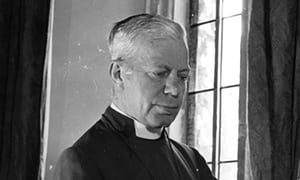
Over the past three months there have been significant events in the Church that suggests that many more people are waking up to the reality of power abuse. Two Commissions are in the news. One, the Royal Commission on Child Abuse, has reported its findings in Australia. The other, the Independent Inquiry into Child Sexual Abuse has begun to hold open hearings in the UK. Further, we have seen the publication of the Carlile Report over the events around Bishop George Bell. This has naturally reminded us of another Report produced by Dame Moira Gibb back in June. This had been commissioned by Archbishop Welby to investigate the events around the Caution and later imprisonment of Bishop Peter Ball. Back then we were able to read an account which showed a level of poor decision making at the highest levels of the Anglican Church.
Three further episodes remain to be mentioned. First we have seen the publication of Gilo’s correspondence with Archbishop Welby on the treatment of survivors like himself. Equally impressive and encouraging is the way that Gilo has obtained the support of all the important names professionally involved with safeguarding issues. Gilo’s campaign has become a significant part of a move towards real change in the mentality of the church towards the interests of the abused within the Church.
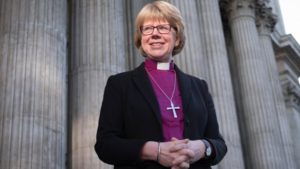
The second event, the topic of the last blog, is the appointment of Sarah Mullally to be Bishop of London. While she will be fully occupied with many cares in this challenging post, her responsibilities for the sexually and spiritually abused will not be allowed to disappear from the agenda of the House of Bishops.
Finally, (news only arrived of this today) there is the setting up of the Ozanne Foundation. Although Jane Ozanne is at the forefront of moves to bring justice for the LGTB community in the church, she is also personally aware of many of the issues to do with safeguarding. She herself is a survivor of sexual abuse in the church. She is also a prominent member of General Synod and on the Archbishop’s Council. The Bishop of Liverpool, in his address at the Foundation opening, appears to understand the way that conservative theological ideas can oppress vulnerable people. This has always been a key motif of this blog.
This blog has never meant to focus on sexual abuse, but all these episodes I have mentioned are of direct relevance to our concern for the general problem of power abuse in the church. Cover ups, secrecy pledges and non-disclosure agreements only happen in the context of the powerful protecting their interests against the victims and survivors. In other words, in all the child abuse cases we always find the strong using their power against the weak in the church.
These last three months have then witnessed some significant shifts in the old pattern favouring strong male leadership over the interests of women and children. Society and the church has started to become more aware of the way that male power has been used against the weak. It is no longer acceptable for vested interests and institutions to protect abusers. Traditional authorities, such as bishops and other powerful people, are being challenged effectively and devastatingly by victims.
What do I hope for in 2018? In summary I would hope that all the episodes mentioned above will gain traction. The Independent Inquiry in the UK will do its work and concentrate the minds of church leaders on the failings of the past. The Australian Royal Commission has been recommending mandatory disclosure for all who learn of abuse. This of course is being resisted by the Roman Catholic authorities. They fear that the sanctity of Confession may in some way be undermined. I am puzzled by this fear. I had understood that forgiveness was always withheld in the face of serious criminal activity. Surely both in Australia and in Britain the Sacrament of Confession would not preclude an insistence that the offender go to the authorities when serious crimes are confessed. The closed world of the Benedictine Brothers at Ampleforth, Downside and elsewhere has been shown to be hiding behind this excuse for a long time. Over half the Brothers at these institutions have been implicated in serious abuse allegations. The structures of authority made no move to discipline them or bring their crimes to light.
The Independent Inquiry which is soon to focus on the Anglican Diocese of Chichester will open-up many old wounds. Some of the crimes committed by clergy in the diocese go back decades. Once again, we are likely to see evidence of a floundering and failing regime of oversight. In the case of the Chichester Diocese we may see something worse than that, collusion and cover-up.
Although both Inquiries are focused on the sexual abuse of children, we can hope that in Australia and Britain there will be increased professional competence in general safeguarding. One thing that will be extremely important is that all the earlier reports that have appeared in the past few years will be read and studied carefully. I was somewhat alarmed to discover from a comment by Janet Fife that a safeguarding officer at Lambeth was simply unaware of some of these reports. Reports reveal two things. They expose the failings of management structures in the past. They also remind us of the ongoing suffering of people in the present. History does not go away once the events are over. It lives on in the painful memories of those who were part of that history. As I study the history of Peniel Church in Brentwood, I realise that many of the recorded memories of survivors of that church are still alive. It will never be good enough simply to say forget and move on. The past lives on in the present and must be faced by all concerned.
My hope for 2018 is that there will be better attempts to understand all that has happened in the past. At the same time my hope is that the structures of power may shift in such a way that the interests of the weak and the least powerful may be elevated and placed at the centre of concern. The safeguarding failures of the past have been failures of oversight leading to an incompetent and often abusive use of power. We must understand it and learn from it. Perhaps if we do then the structure, the institution we call the Church may be a healthier place for all its members. The grace of God will then be able to flow through it better to reach and transform all its members.