 From time to time I hear individual stories of people who have been treated badly by religious groups. When faced with a situation of mental distress the churches seem to have responded in these accounts with an unholy combination of zeal, ignorance and an unbelievably incompetent exercise of common sense. There is one story of a young man who died recently in my part of the North of England after being rejected by his church even though he was overwhelmed with mental distress. He then took his own life. It would be wrong to give further details of this story because I have received what I know second hand and so I do not have all the facts of the case. So I will tell the story of another young man who was also, in the course of inept pastoral care, treated appallingly by a church in the States. I hope those who knew Richard and may be reading this blog will recognise that Ken’s story is being told in memory of Richard.
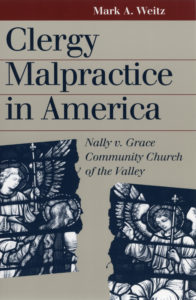
Ken Nally was a member of a Los Angeles megachurch called the Grace Community. The story goes back to 1973 when Ken, then in his late teens, first went to the head of the counselling arm of the church, one Lynn Cory. The minister overseeing the entire church was John McArthur, a prolific author and a well-known opponent of the Pentecostal influences which were becoming more significant in the evangelical churches of the 1980s. Ken was directed to another member of the biblical counselling centre called Duane Rea. Like Cory and the other members of the counselling team at Grace church, Rea had no qualifications in mental health problems or professional counselling training. In spite of this the team as a whole claimed competence to treat disorders ranging from depression to schizophrenia and bipolar disorders. When Ken went to Rea to consult him about his problems with women, the answer given was simple and unambiguous. In common with many biblical counsellors of that period, Rea told him that sin was at the root of his problems, particularly in his desire for intimacy outside of matrimony.
The depression and sense of failure felt by Ken drove him to speak to yet another counsellor as feelings of suicide came to oppress him. He asked this third counsellor whether a person who committed suicide would forfeit eternal salvation. The answer that he then received was theologically correct, but the way it was told him hardly enhanced Ken and his sense of well-being. He was told of course no one could lose their salvation through suicide. In March 1979 Ken attempted suicide. His parents became involved and he was sent to a psychiatric hospital. While there he told Pastor Rea that he would try to commit suicide again. This information was not shared with his parents or the doctors. These latter who were involved with caring for Ken saw only improvement. A Dr Hall, a psychiatrist, tried but failed to establish what kind of counselling he had received at Grace Church. He was in particular concerned at Ken’s statement that ‘my counsellors have advised me not to go to a psychiatrist’. In Ken’s mind there seems to have been a direct conflict between the sin based diagnosis of mental illness preached by his church, and the no blame understanding of illness which undergirded the approach of the hospital. After he finally left the hospital Ken spent most of the time reading the Bible and listening to recordings of John McArthur’s sermons.
Ken saw his father for the last time and in that conversation Ken said ‘they told me it was God’s punishment’. Ken’s father, Walter Nally, could not believe his ears. ‘Tell me which one of the bastards said that?’ he exclaimed, but it was too late for Ken. He committed suicide a few days later. The story does not end there. The church was allowed to organise the funeral and Pastor Rea announced to the congregation that Ken had disobeyed God in the final act of his life. ‘He took what did not belong to him.’ Adding to this appalling insensitivity Walter was shown a testimonial from Ken which stated that he had tried to kill himself prior to 1979. Rea maintained throughout that Ken’s death was not the result of poor counselling but of unresolved sin.
John McArthur, the leading minister of Grace Community Church also piled on the pastoral insensitivity by declaring to Walter that the suicide was in no way the fault of Walter but that Ken alone was responsible. He repeated the idea that the whole situation was brought about by ‘unresolved sin’ and had nothing to do with poor counselling. Walter’s reaction was then to take out a legal challenge and he proceeded to sue Grace for clerical malpractice. After the case went through several stages, it was in the end refused by the California Supreme Court who found in favour of the church. This unfavourable judgement has had the bitter result that US courts since that time been unwilling ever to find clergy guilty of professional malpractice or incompetence. The same protection has been extended to ministers of other groups, such as the Scientologists. No minister is ever held responsible for their actions in counselling, even if their lack of competence and ignorance can result in such tragic outcomes.
We have not in this post unpacked the cluster of ideas connected with ‘Christian counselling’ that helped to cause the tragedy at Grace church. Suffice to say they belong to the principles thought up by Jay Adams and his ideas about ‘nouthetic counselling’. Without being able here to unpack Adams’ noxious ideas, it can be said that this strand of teaching rejects modern psychiatry in favour of ‘Biblical’ teaching. Once again we see the dangerous idea that the world we live in is a threatening place. The Bible and what it teaches is juxtaposed with the demonic which is believed to lurk around in much of secular ideas and knowledge. This paranoid universe which is inhabited by large numbers of so-called Christians is an uncomfortable and fear-ridden place.