After writing some 175 blog posts, I find it necessary from time to time to refine and clarify my categories of description and definitions. It is very easy, by using a particular word or words, to describe several areas of behaviour and lump them all together in one’s mind, even though they should be distinguished clearly from one another. The words ‘Christian abuse’ gather together a number of quite distinct areas of behaviour and activity and it is important to separate these out for the sake of clarity. It is this task of separating out the strands of Christian abuse that is the aim of this particular blog post. This will help me to think more precisely about what I am describing and also help my readers to see what is the range of abuse when practised in a Christian context. I need of course to repeat the point that I am, in particular, focusing on abuse that takes place within an evangelical context, not because that is the only place where it happens, but because this is the area in which I have done most study and reading
The task defining the different strands of Christian abuse has become more urgent for me since two distinct categories were recently introduced into our blog discussion, neither of which had I discussed or really thought about before. The first was the mention of a South African justifying apartheid from particular texts in the Bible. The second category of Christian abuse was that which occurs in an employment context affecting a Christian organisation. Once again this is an area of abuse which had not really crossed my radar, but equally it deserves the description of Christian abuse.
In setting out various strands of abuse that occur in a Christian context, I am not claiming to have the last word on the subject, but merely to set out nine distinct contexts for abuse which occur to me. The hope is that a generally accepted categorisation may eventually emerge which has a degree of acceptance among those who think about these issues.
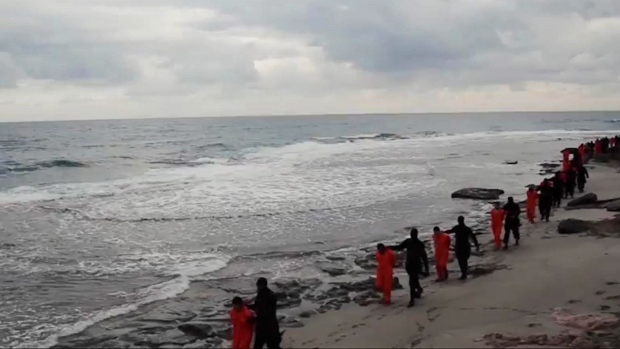
• The use of a Christian ideology to further distinctly political ends. I am particularly thinking about Dominionism and the ideas of Rushdoony in the States. These seek to set up a political system which has at its heart the application of Biblical/Old Testament laws to civil society. From this Christianised version of ISIS, the so-called Christian Right draws much of its inspiration and ideas. Their ideas can be summarised as promoting low taxes, minimal governmental interference and allowing the poor to fend for themselves. There is a kind of social ‘natural selection’. These laissez-faire ideas are combined with cruel treatment for those who transgress morality, particularly in areas of sexual sin. The Christian Right finds support for its political ideas in selected passages from Scripture in the same way the the Christian supporters of Apartheid were able (selectively) to quote Scripture. Within this system, there is abuse aimed not only at their political opponents but also all who are poor, disadvantaged and in need of support from Government funds. Such people, in the thought patterns of the Christian Right, have in some way deserved their poverty through some moral failure.
• Similar to these political ideas are the teachings of a group known as the Health and Wealth Gospel, often mediated through media/TV preaching. This is a kind of political message preached to large groups, but many individuals become casualties, even when they have clung on to the hopes aroused by the Television preachers for a considerable length of time. The HW teaching says that God can be relied upon to give success, wealth and long life to those who trust him sufficiently. The teaching of this group naturally ends up with disappointment and despair for many because there is no way than more than a few can achieve the riches and success promised. The rest are left to feel failures both to God and to society, having also spent large sums of money along the way.
• A third category are those who become involved in a Christian group which is effectively a cult. This will be led by a strong leader, a guru, who will entwine the life of the follower with that of the group so that independent thinking and judgement is undermined and eventually destroyed. All through this cultic process, the follower will have thought that they were following God. Once a disillusionment sets it, for whatever reason, not only has the follower lost a lot of self-esteem but the possibility of trusting God has been severely undermined. The cultic dynamic is effectively a scam which is destructive of many things. In some cases, the individual is exploited sexually. This can wreck the ability to form healthy relationships in the future. The post-cult individual is left quite seriously damaged and in need of long-term support.
• There are also many people who are exposed to particular strands of Christian teaching and church life that, over a period, affect their well-being and mental health. These are not cult victims in the sense that they have not been individually groomed for abusive treatment. What they are, are people who come to the church with normal types of neediness, perhaps parental neglect or depression. Sometimes the exposure of this mental fragility and vulnerability to endless sermons about the depravity of human-kind and the likelihood of hell for those who fail, has a catastrophic effect. Chris knows several people who fall into this category.
• Another group of people who are abused through Christian teaching, are members of male-led churches which have a strong patriarchal flavour. This puts all the women in an inferior place. The married women in such churches are told to submit to their men, and these marriages often escalate into a pattern that involves cruelty and even violence. We might call this misogynist abuse.
• The sixth section refers to any workplace bullying in a Christian organisation. This has to be dealt with particular care because Christians are reluctant to complain about other Christians, for fear that they will be responsible for bringing their organisation and the church into the public square. In most cases there will not be any theological aspect to such problems, though Paul’s injunction about not taking your fellow Christian to court may inhibit decisive action in the first instance.
• A seventh category of Christian abuse concerns the activity of some Christians who wish to take over their denomination in the name of a purer expression of the faith than the one they find in the group at present. I have written about this kind of abusive activity in the last post. The pursuit of pure ‘truth’ often seems to run with deceit and underhand methods and it can be categorised as political Calvinism.
• Members of the LGBT tribe receive the message that they are in many places unwelcome in the church. Still worse is it for those who are effectively expelled for ‘coming out’ by Christians who feel that the gay life-style and a Christian path are never compatible.
• Last but not least we must mention the use of demons and devils and the creation of an entire mythology through which leaders sustain a culture of control. Those in authority ‘discern’ the demonic forces and maintain control by naming themselves as the solution to the problem. They are also the exorcists.
I am sure that these categories can be further refined and extended but I wanted to offer them to my readers as an attempt to clarify the distinct ways in which Christian power is from time to time abused. I have named nine distinct areas in which power is sometimes abused in a Christian context. Each of them is different. Sometimes we are talking about the abuse of sectors of the population and other times the abuse is about individuals who find themselves victims of a power-seeking leader. Although I shall refine my terminology over the months that are ahead, I shall refer back to these descriptions to help the reader know what I am talking about.