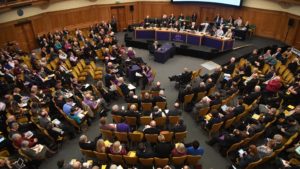
 I have been able to listen to some of the proceedings at the IICSA hearing in London this morning (Thursday). The first witness was Archdeacon Philip Jones from the Chichester Diocese who was continuing his testimony from yesterday. It is not my intention or purpose to set out any of the detail of the Inquiry as those interested can follow it from the published transcripts. There was also this morning a robust presentation from a former leading member of MACSAS, Anne Lawrence. This is an organisation that seeks to support and act as an advocate for victims of clerical sexual abuse from all denominations. Unlike some of other testimonies, the one made by Anne had a punchy and fluent style which made one think that one was watching a television drama. Her performance did her organisation a great deal of credit. She demonstrated MACSAS’s clarity of purpose in supporting survivors and she showed a robust understanding of all the issues. This contrasted with the somewhat vague approach taken by the church authorities on occasion.
I want to return to one comment by Archdeacon Philip. He mentioned the problems of working in a diocese where the two theological extremes of Anglicanism are well represented. The Diocese of Chichester has had for its suffragan the Bishop of Lewes, Wallace Benn. He was also the lead bishop nationally for the conservative organisation Reform. True to this radically evangelical tradition Benn follows a very conservative line both on biblical interpretation and on Protestant theology. Among other points, Reform takes a negative view over women in ministry. There were a number of parishes in Chichester that also followed this tradition and looked to the Bishop Benn for leadership. The Chichester diocese is also well-known for several clusters of Anglo-Catholic parishes. These all also find it impossible to accept the ministry of women. Among these parishes there has also grown up what might be described as a ‘gay friendly’ culture. Archdeacon Philip spoke of one theological issue that was raised when these two extremes had to face up to abuse issues. The issue was forgiveness and the way it should be applied in dealing with sexual abuse cases. The two groups dealt with this question quite differently. Bishop Wallace Benn and the conservative group who looked to him for leadership and support read the Bible in a distinct way. As far as they are concerned biblical forgiveness is always unconditional. When sin is confessed it is completely washed away through the atoning death of Christ. In practical terms the sin is left behind and can be forgotten. The high church group would also promote a theology of forgiveness following Confession. By contrast they would not wish to suggest that sin had no consequences. An act of abuse, even after sacramental forgiveness, would require that the perpetrator would need to face justice and sanctions.
Bishop Wallace Benn was known to identify with the ‘biblical’ notions around forgiveness. In other words, he was known to follow a ‘soft’ approach to his clergy even when they were suspected on appalling crimes. Criticisms of his behaviour in failing to discipline offending clergy have been brought up in the Inquiry. In 2012 a complaint was made under the Clerical Disciplinary Measure (CDM). He was accused on not acting to protect young people and children in the face of known predators. One of these offenders, who was eventually imprisoned, Roy Cotton, was said by Archdeacon Philip to hold firmly to the position that whatever he had done in the past he had been forgiven by God. He no longer needed to think about it or face any sanctions. His theology (and that of Bishop Benn) was here taking precedence over justice and safeguarding.
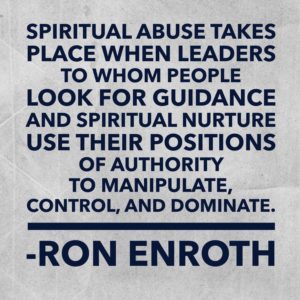
I want us to reflect a moment on the implications of this kind of theological reasoning. What is being said that ‘I have sinned, but Jesus has forgiven me through the Cross. Now that I am forgiven there are nothing more that needs to be done. God has given me a new beginning and I can leave the past behind.’ The implications of this kind of theology are frankly horrendous. It allows behaviour to go unpunished and a situation to arise which involves extreme danger towards children and young people. We could say that here the Bible is effectively being used as a way of avoiding the consequences of criminal behaviour. More seriously it has become a tool of abuse
The independent lawyers questioning senior church people about their attitudes to sexual abuse must be frankly appalled by this use of Scripture and the way poorly thought out theologies can have such serious consequences. The problem for the Archdeacon Philip, and indeed any church leader, is to deal with an idea which, when backed up by a biblical quotation, is somehow regarded as beyond criticism. That is how abuse happens in churches. Individuals have learnt to justify doubtful behaviour by referring to favourite passages from Scripture.
I want briefly to list from the top of my head some of the ideas that are thought in some conservative parts of the church to be scriptural but are also often abusive in practice.
1. Violence against women is condoned or tolerated since the man of the family needs to behave as the head of the family and household. This is the Scriptural model.
2. Violence against children using beating and other methods is scriptural. Once again this is supported by suitable quotations from Proverbs and elsewhere.
3. The silencing and shaming of congregational members takes place by appealing to passages which suggest that only the leader speaks in the name of God and thus must be obeyed.
4. The condoning of appalling behaviour by political leaders (as currently in America!) on the grounds that their words convey support for particular favoured ‘Christian’ policies. These are often the ones that discriminate against the gay community and other minority groups.
5. The refusal by ‘scriptural’ Christians to enter into dialogue with any differing perspectives on theology or politics. The appalling legacy of binary right/wrong thinking is one that condemns other groups to hell or association with Satan. In short, some Christian belief systems demonise and exclude all other belief systems beyond their own.
As my reader can tell the IICSA revelations are for me extremely disturbing and painful to hear. Once again, we are facing the capacity of Christian institutions and the thinking within it to cause real harm to the vulnerable. This capacity to harm is a blot on our church. It is a matter of shame and it has taken a non-church Inquiry to expose how appallingly Christians sometimes treat one another.