 This morning and throughout today (Friday) the BBC and the Press have focussed on a story about the report by Sir Roger Singleton. This report was a review of the Past Cases Review (PCR) undertaken by the Church of England and published in 2010. The original review was designed to uncover any cases of historic sexual abuse by clergy and other leaders which were in the files kept by dioceses across the Church of England. In the event this highly expensive examination of files only revealed 13 cases of past abuse which merited further investigation. 40,000 files were examined over a two to three year period. The new Singleton review contains a fairly trenchant critique of the 2010 report and shows the considerable weaknesses in the PCR process. First of all there was a lack of consistency in the way information was gathered for the 2010 report. Singleton also identified a tendency to find ways of minimising inconvenient evidence and emphasising the positive whenever possible. Another fact was that only the files of active serving clergy were examined. This left out the retired clergy, of which a large number are still active, and those deceased. In short even if we were to ignore all the shortcomings of method and analysis, the PCR showed an extraordinary lack of interest in those who had been abused or harmed. Everything in the PCR was about identifying potential abusers while ignoring any victims. The enquiry was working with the principle that contacting alleged victims was to be avoided to ‘minimise the distress’ to them.
It is a curious turn in logic to do what the PCR has done which is to describe a problem of abuse by only listing a handful of suspected felons. A common-sense approach to the problem would start at the other end. Criminal activity is most obviously best described by interviewing its victims. In the event no attempt was made to speak to any of them or even allow them a voice. In some topsy-turvy way of approaching the problem, the victims were thought to have nothing to offer to the review process. The investigators preferred to deal with the information obtainable from the files. If you were a victim of an abusing clergyman who was retired or dead, the church appeared to have even less interest in your case. Even the victims of serving clergy went in many cases unheard. One of the complaints against currently serving bishops is that a suspected abuser was not inhibited in any way from active ministry for several years. On the day when his trial was to begin he took the drastic action of taking his own life.
In summary the PCR process of 2010 seems to have failed. It failed to identify more than a handful of perpetrators by the inadequate techniques that it used; it also failed the victims by shutting them out of the whole process. They had neither a voice nor any access to help that the Church might reasonably have put in place to meets their many needs.
It is suggested that the now discredited PCR process cost the church some £2 million. In the light of Roger Singleton’s critique, we can mourn the loss of such a large sum. How could things have gone so wrong? Why was the church prepared to spend so much to achieve so little. The reason for spending so much on what now appears to be a negative outcome seems to have been the vanity of institutional thinking. This will always wish to protect reputation above all else. The announcement that only 13 cases had been extracted from the files seemed, at the time, to be a triumph to boost the reputation of the Church. ‘We have a clean bill of health’ was the overall message. The fact that victims were unheard was an inconvenient and tiresome irritant to this basic narrative.
Since that date these victims have not gone away. Many of them have conveniently for the Church stayed in the shadows, unheard and unseen. A few, working courageously and largely single-handedly have attracted attention from the Press and other supporters. Their courage and persistence has been enormous. But for people like Gilo and Matt Ineson, the church as a whole might have bought into the myth that there were only a few ‘bad apples’ left to be dealt with. The IICSA process also has forced the Church of England to see that the voices of victims telling their stories is just as important as investigators poring over files looking for evidence of past crimes.
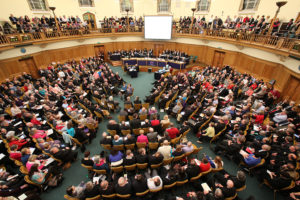
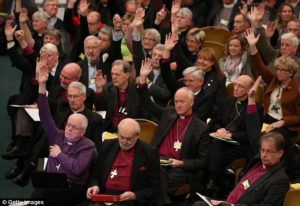
I have not attempted to give a full account of Roger Singleton’s report. It could be summarised like this. He is telling the church that an appallingly expensive attempted whitewash of the church’s reputation has been shown largely to be a sham and a failure. General Synod, meeting next month, must decide where to take the next stage of Safeguarding. Whitewash, cover-up even outright lying will no longer do. The Synod must oversee not only good practice but also justice for the hundreds of survivors of church abuse. The precise numbers of these are at present unknown but the church has not, until recently, made any real attempt to find out who and where they are. Even if there are only a few they want and need to be heard. None of them should ever be regarded as nuisances or inconvenient. By helping them the church can redeem itself by showing that it is a compassionate body, concerned with justice and healing.