 Last Sunday I was singing the hymn which contains the familiar words: ‘when I tread the verge of Jordan, bid my anxious fears subside’. I could equally have been singing about the reality of God as my shepherd. Alternatively, there might have been a hymn which likened the Christian life to a pilgrimage through hostile territory. Even when, as in one case, the original reference is to an historic event, each one of these hymns is being used as a metaphor for some aspect of the Christian journey. As metaphors they allow the Christian to create inside their head a visual picture of some aspect of what Christians believe. No one was suggesting that I should take these images as a literal description of truth. To do so would have been to miss the point of the way language was being used in this context. Each image has a power as a metaphor to move a Christian and in different ways evoke the reality of their faith.
The Bible we use and the hymns we sing encourage us to do a lot of visualising and imagining reality that is at the heart of belief. Often these acts of imagination that go on inside us have no point of reference to an actual historic event. Sometimes the stories of Old and New Testaments that inspire our imagination tell of actual events; on other occasions the things that evoke an imaginative response inside us are simply well-told stories or metaphors. The reality of God or the issues around discipleship do not become any the less real inside our heads, because the story that evokes them is not historically ‘true’. Also, when I sing about ‘the verge of Jordan’ as a metaphor for the human experience of death, I am not in any way misusing it by refusing to concern myself with whether it is historically accurate. The hymn uses the story as a way of contemplating a profound human reality. The human imagination needs this and other metaphors for coping with the fact of death and the implication this has for conducting the rest of our lives.
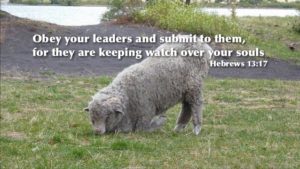
How do our minds in fact engage with story and metaphor as a way of experiencing and making sense of spiritual reality? I suppose that the simplest answer is to say that metaphor, if it is to be used successfully, demands a developed imagination. If I think of God as my shepherd I need to provide my mind with an image culled from my capacity to imagine. It is the use of this same imagination that allows me to reach out in the activity we call prayer or worship. Reason, of course, has some part in the process but it is impossible to imagine a religious life of prayer being viable without the full participation of the human imagination. Another traditional word for the human imagination within prayer is the heart. The imagination/heart is what creates and makes use of the vivid picture language which is another word for biblical metaphors. It is also through the imagination that we can resonate inside to the language of the spiritual classics. Without metaphor and picture language in these writings, they would be very short indeed.
In summary, singing about the journey to the River Jordan involves the activation of our imaginations. This blog post has the simple aim which is to celebrate the role of the heart, the imagination which links us to spiritual realities, whether in Scripture or other types of devotional literature. When we celebrate the imagination in this way, it reminds us that there is also another approach to the Christian faith. This is one that demands that we emphasise the literal meaning of the language of the Bible whenever possible. We are expected to prioritise ‘fact’ above all other types of language. The need to find scientific statements in the poetic reflections of the author Genesis seems to kill the spirituality of the book stone dead. It is hard to celebrate or contemplate the wonder of creation when you are being forced to argue about how long the six ‘days’ of creation lasted. Like modern progressive interpreters such as myself, the early Church Fathers were deeply conscious of the way that the literal meaning of biblical passages did not necessarily reveal their most important aspect. Although we might not agree with the way that they went about their treatment of the biblical text, we can applaud the way that many of them wanted to suggest the possibility of some passages having different levels of meaning to offer. I seem to remember from my studies that key figures such as Origen were very anxious to apply the idea of allegory to the text, particularly when there are contradictions and anomalies to be overcome.
Since the 18th-century, there has been an increasing emphasis within human knowledge on the scientific, the provable and the mathematically precise disciplines. This holding up of measurable fact as superior to all other forms of knowing has had the effect of downgrading other forms of truth. This discovery of science as a tool of explanation for the natural world comes to us through the movement we call the Enlightenment. It has provided us with a great deal in terms of technology and we cannot imagine the modern Western world without it. But there have been losses to human flourishing as a result. It is, however, ironic that the Christians who claim to be most faithful to the biblical text, the conservatives, have been the ones who have been most affected by modern Enlightenment values. Arguing about the numbers and species of animals in the Ark could only ever matter to a culture (such as our own) that expects precision in measurement. Many of us who study scripture know that this kind of accuracy is unlikely to have been of special importance to the Biblical authors. Expecting ‘God’s truth’ to be like a modern scientific textbook is an extremely unhelpful and distorting approach to the text of Scripture. But this is precisely what many conservative evangelicals do with the Bible. They look for precise statements of scientific fact and historical truth in the text. In doing so they miss the variety, the nuance and the depth of the symbolism and the metaphors that are everywhere to be found. There will of course be some disagreements and debates to be had as to how to identify metaphor, fact and history. As a general point I would like to think that the authors of Scripture were far more in tune with an approach which emphasises the use of the imagination/heart as I have outlined. We are creatures that want to approach truth not only with our minds but above all with our imaginations. God is far more to be known and understood with the help of picture and metaphor. We need, of course, our minds, but we also need in knowing God to develop and foster the parts of our being that respond to divine beauty and mystery. The author of the Cloud of Unknowing, a mediaeval mystical treatise, stated it very simply when he said of God: By love he (God) can be grasped and held, but by thought, neither grasped nor held.