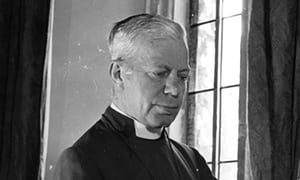
 In the past few days, I have been having a Twitter conversation with Gilo and a few others about the forthcoming hearings of IICSA which begin tomorrow (Monday). This is the Independent Inquiry into the Anglican Church and its failures over child protection, particularly in the Diocese of Chichester. The Bishop with oversight of Safeguarding for the Church, the Bishop of Bath and Wells, has already indicated in Synod that he believes the next two years will be a fairly torrid time for the Church of England. This is because he anticipates how many historic failures in this area will become public knowledge, some for the first time. Two things in summary have to be faced by the Church. The first is the fact that some of its employees have been complicit in acts of child sexual abuse. The second is the way that church authorities, including bishops, have floundered in their attempts to deal with this issue. Incidents of criminal activity have been in some cases hushed up in a desperate attempt to avoid scandal. On some occasions the perpetrators were quietly disciplined and their offence buried in filing cabinets in diocesan offices. On other occasions victims were listened to but subsequently all the records of the conversations disappeared. In short, children suffered but the Church seemed unwilling to face up to the horror of what was happening. From the point of view of some victims, justice was for decades denied, apparently to preserve the reputation of the national Church.
My own published study of power abuse which is now nearly 20 years old never touched on the topic of harmful behaviour towards children. Such activity would obviously be criminal and I was not in the business of researching illegal behaviour. The stories that I did in fact record were in some cases just as bad in different ways. Exploitation of vulnerable people, whether sexually, emotionally or spiritually is always a serious matter. I only recorded one criminal act, a rape, but this had already been investigated by the police. No prosecution had followed. What my studies did sensitise me to is the way that it was extremely easy for the power exercised by church leaders and ministers to do serious harm. Many people who find their way to church are on a journey from vulnerability but hoping to find healing. A narcissistic church pastor or leader may well exercise his power in inappropriate ways. It is this imbalance and subsequent abuse of power which was a constant theme in my book.
My current conversation with Gilo touches on the power that Anglican bishops possess to sort out or aggravate the abuse cases that come to their attention. I have never interviewed a bishop on this topic. I did however receive letters from women when my book was published who had approached Anglican bishops to complain about clergy who had had ‘affairs’ with them. Several of them expressed their frustration at the way the bishop concerned refused to engage with the priest who had crossed professional boundaries. My impression is that some bishops were unwilling to get too involved in such cases, if no open scandal had emerged. I wonder whether these conversations with a bishop were ever recorded and put into a file. The existence of or not of good records of clergy malfeasance may well be revealed by the Independent Inquiry in the coming weeks.
My response to a comment by Gilo was that an Anglican bishop would probably be the person in the Church most likely to identify with and protect the institution. Although I did not say this I am wondering whether the powers that be choose bishops by seeking out those clergy who are by nature and temperament most institution friendly. Another way of putting this would be to ask whether many bishops carry a ‘gene’ that tends to put loyalty to the institution first. The general public is likely to notice if it is shown that bishops and authority figures in the Church have behaved less than honourably in order to preserve a status-quo of privilege and power. That is evidently how the Catholic Church has behaved and clearly it has rebounded badly on them. The charge that the institution and its reputation has been placed above of the needs and rights of suffering individuals is a serious one. A similar crisis is overtaking overseas charities and we see what has happened to their standing in a very short space of time. Almost overnight they have slipped badly in the public’s estimation. Until a few days ago they were the honourable providers of food and medical care to the world’s poor. Today in many eyes they have become exploitative post-colonialists who prey on the vulnerable women and children they are supposed to be helping. Gilo and others have done much to warn the church of the way that its reputation will be severely affected if they adopt the damage limitation policy that appears to be the advice coming from insurers. The Church has a great deal of work to do to show that it is genuinely on the side of justice, truth and love.
As we noted in the comment by the Bishop of Bath and Wells, things are going to be extremely difficult for the Church of England in the near future. Institutional attitudes that have been taken for granted for decades are going to examined and criticised by many people. The court of public opinion is unlikely to be impressed by what will be revealed. What might come out of this situation which is positive? My hope is that the bishops as well as the wider Church may learn something new about power. I am hoping that the power and influence that the Church still exercises will be seen to be able to respond far better to vulnerability than in the past. I am here not just thinking of survivors but every manifestation of wounded humanity. I look for a power in the Church that that can respond to brokenness in all its forms. Every Christian is somewhere on a journey from weakness to strength. Sometimes the weakness is connected with pain, grief or suffering. At other times the journey is from sin to forgiveness. Every minister should be alongside Christian followers on these journeys. The Church is or should be a place of healing. Everything the Church does should be about wholeness and its implementation in some form. Were that vision to be alive in every congregation, then every citizen looking in from the outside would be able to see, not scandal, introversion and privilege but service and support for all. We would be able to recapture William Temple’s vision of the Church as organised primarily for those who are not its members. Also, we would be closer to rediscovering what Jesus meant when he said ‘I am among you as your servant’. ‘Whoever would be the greatest among you must be the servant of all.’