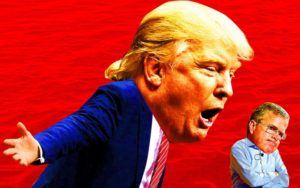
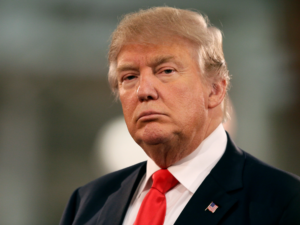
 As my readers know, I am fascinated by the issue of power and the way that it can corrupt many of those who possess it. The problem seems particularly acute among those who have plotted and schemed their way up from the bottom of an institution to wrest power from those at the top. We see examples of this right through history. The greatest tyrants have often been those who have worked the hardest to obtain power. This past week, I could not bring myself to watch the inauguration of President Trump. There was indeed something fairly nauseating in the sentiments expressed in his inaugural speech. Every indication was given that his grab for supreme power over the greatest country in the world was at one level an exercise in self-gratification. There was a total absence of any generosity towards others. This was no appreciation expressed towards those who had managed the government of the country over the past years. Also, the nations of the world which do not serve the narrow interests of the United States were apparently outside his interest or concern. He seemed like an individual who is unable to show any empathy or outreach towards people who are different from himself. Such a combination of traits suggests what we have discussed before, that he is probably someone with a full-blown narcissistic disorder.
It is not my intention to rehearse again all the characteristics of the Narcissistic Personality Disorder and the way that they seem to describe Trump. This we have done this already in a previous post. Here I want to remind my reader of two indicators of narcissism on display in the past few days. The typical sufferer of this disorder will have an inordinate appetite for flattery alongside an extreme sensitivity to criticism. Perhaps appetite is the wrong word because the need to hear affirming and comforting words from others is insatiable. When such flattery and affirmation is in any way challenged or queried, the sufferer will often react with what is called ‘narcissistic rage’. Even in the two days since the inauguration on Friday, we have seen the press attacked with vehemence. What was their crime? They had the temerity to publish estimates of the numbers of people in Washington supporting Trump. These estimates suggested that far fewer people were prepared to take the trouble to come to the capital to express their support than were present for the protests on the following day. The way that the Trump transition team felt the need to react so violently over this news suggest that they were gripped with a childish tantrum.
We can detect in the way that President Trump has dealt with any form of criticism over the past few weeks that he is thin-skinned to say the least. This hypersensitivity may well prove to be an Achilles heel in his administration. It takes a great deal of energy to respond to every perceived slight, especially if these criticisms have the effect of provoking irrational rage every time. An individual who cannot ever rise above any criticism, especially the President of the United States, will soon begin to look ridiculous. Do they really need to try and respond to every perceived criticism? Although President Trump has been given a massive amount of power in his present post, his power does not include the right to supress every unfavourable comment. The cry ‘fake news’ will eventually become a completely meaningless slogan if it is used each time some story appears which does not have presidential approval. After only two days of the presidential reign we have already begun to disbelieve official denials, just as people ceased to believe in the boy that cried ‘wolf’. We all know what happened in that story.
The nature of the narcissistic disorder suggests that the presidential period of office by Donald Trump may not be very long. Presidential power to control opposition forces, whether political or from the media, will weaken over time if the narcissistic defensive behaviour is seen to be unreasonable. A democratic society will not tolerate unbridled power or the suppression of truth for a long period. There may well be popularity in the short term but eventually there has to be a reaction against the constant refrain of ‘fake news’. Quite apart from whether the stated policies of Trump are right or not, there is the glaring issue of his total inexperience in political life and in foreign affairs. Objectively one would like to see someone with so little experience showing a little humility when taking up an office of such massive responsibility. In fact, what we do see is bluster and grandiose confidence. I am reminded of the coming into power of the Emperor Caligula in 37 A.D. He arrived in power with the goodwill of the Roman mob and he held on to this for a time by buying their goodwill. It did not take him long to empty the Roman treasury in providing free food and extravagant games to retain their loyalty. Such popularity and adulation eventually went to his head and he demanded that he be treated as a God. In the end his enjoyment of absolute power and the satiation of every human appetite resulted in a coup. He was struck down by members of the Praetorian Guard whose job it had been to guard him. Caligula represents the ultimate exemplar in history of what power can do a human being, even to the point of driving someone mad.
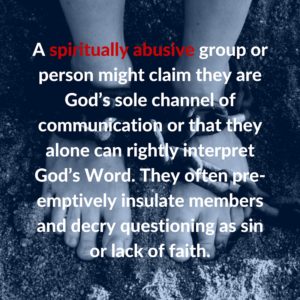
Why do I speak about the political events of America in this blog? First of all, it is of great interest to observe the dynamics of power working themselves out in the context of a great nation. In the second place, there is the telling parallel with the role taken by many religious leaders within their congregations. We have claimed that an infallible Bible often allows a minister or pastor to exercise unlimited power within a congregation. The craving for ultimate authority, even if on a smaller scale, seems to possess some who lead Christian congregations. We must hope that every exercise of power, whether of a great nation or in a small Christian congregation, is always met with effective checks and balances. As we have seen narcissism, the self-inflation of an individual seeking to be important and beyond contradiction, affects individuals in both politics and religion. We can at least be grateful that recognising this particular personality disorder is far more prevalent now than even 20 years ago. This blog identifies President Trump as a sufferer alongside many Christian pastors. Narcissists exercise their power in a way that is oppressive and self-serving. Humility, the readiness to serve and learn from others, is far more the mark of a Christian approach to authority and power. Perhaps we can hope that this presidency will be of short duration and that American system will indeed frustrate the narcissistic tantrums of a man like Trump. From the evidence presented so far, Trump appears to have few of the qualities that we would associate with successful or lasting political leadership.