Category Archives: Stephen’s Blog

Gossip and violence

gossipMany people think that gossip, particularly when carried out in the context of the church, is a harmless exercise. But when we think about what is really going on, it is not difficult to see that all too often we are witnessing an act of violence against an individual. For gossip to take place there needs to be three people at the very least. There is the person who is passing on the gossip, the person who receives it and the individual who is the topic of the ‘information’ being passed on. There are several reasons why gossip is potentially a great evil. In the first place there are no checks and balances to discover whether the information passed over is in fact true. The target of the gossip is absent and so cannot challenge the version of events that is being told. Because rumour and innuendo are not able to be countered, they soon pass into being thought to be fact and accurate information. Passage of time makes it more and more difficult for the gossip to be challenged. Particularly after much repetition people have come to accept it and individual reputations are in some cases destroyed by it.

Anyone who reads through the many pages of the Langlois report, will see how effectively gossip was used as a way of controlling and doing violence to former members of Peniel church. When an individual left the church or was pushed out, it seems they became fair game for gossip and slander. It seemed to be a deliberate policy on the part of the leadership to discredit and shame their critics and former members. I do not feel that the expression ‘violent abuse’ is an inappropriate one as a way of describing the deliberate use of false testimony against an individual person who cannot defend himself and put forward another perspective on stories being told.

Why do I make an issue about gossip, something that most of the see as being harmless? The reason is that when we begin to examine what is going on, we can realise that the sharing of gossip is one of many power games that are played by human beings against others. Sharing gossip can be a kind of ganging up against an individual, and the sharing the information about that person can, and frequently does, change the way we treat them. Knowing or thinking we know a piece of secret information about another person, which may be shameful or embarrassing, is hard to ignore the next time we meet them. When gossip is shared about us, we may be fortunate enough to find out from a friend the things that are being said about us. This may help us to get to the bottom of where the information came from, and maybe correct it with a true version. If we are unfortunate we will never know that such things are being said about us, and the only thing we will notice is that people are looking at us slightly oddly. Gossip can be a poisonous thing in a community.

There is an interesting passage in John’s Gospel (chap 6.41-43) where Jesus discovers that the Jews are gossiping about him. Because the gossipers knew his parents, this meant that they could treat him with contempt and disregard the things he was saying about his ministry. Their gossip was no doubt based on resentment towards a local boy who was making something of himself in the world beyond his home town. Being condescending towards Jesus is typical behaviour of people who feel jealous of the achievements of another. Gossip and slander were their tools their tools for trying to put Jesus in his place.

All of us have been the victims of gossip as well as the perpetrators of it. We need to ask the question when information about another person is shared with someone else, as to whether a complicated power game is being played. We do of course sometimes have to discuss the problems that arise from the behaviour of another individual, but we must always be careful that this is an act of love and concern. It can so easily degenerate into an attempt to boost our sense of importance by making someone else look small and shamed. We must always be on guard against allowing a speculation about another person becoming, in the process of telling and retelling, a hard fact. It is of course not just in in churches that harmful gossip takes place, but also in families and in any institution which draws people together.

My title for this blog was gossip and violence. I should explain that not only is there violence in treating another person with contempt by spreading lies and gossip about them, but there is violence sometimes in the way that an individual chooses to react to the sense of shame that has been placed on him or her. This idea of shame is not something that can be defined in a few words. But when a person has been gossiped about and that gossip has become a major part of their reputation within a community, they will normally experience a strong sense of shame and be unable to hold their heads high. Sometimes that shame is partly earned, but on other occasions the shame has been attached to them through the unwarranted use of gossip and slander. When any person senses that other people are treating him or her with contempt based on lies and innuendo, that person, as well as feeling shame, may also feel a great desire to react in a way that can involve violence. The destruction of a reputation in a community is no small matter and the shamed person may use almost anything to relieve that feeling of shame. This is a big subject which I cannot tackle further in this post. But I leave this post with the thought that some of the violence that we see in the world around us is attributable to a sense of shame, a feeling of being deeply misunderstood and having things said about one which are perceived to be totally untrue. In this situation despair and anger is sometimes turned into a bloody and violent rage.

Conservative believers and vulnerability

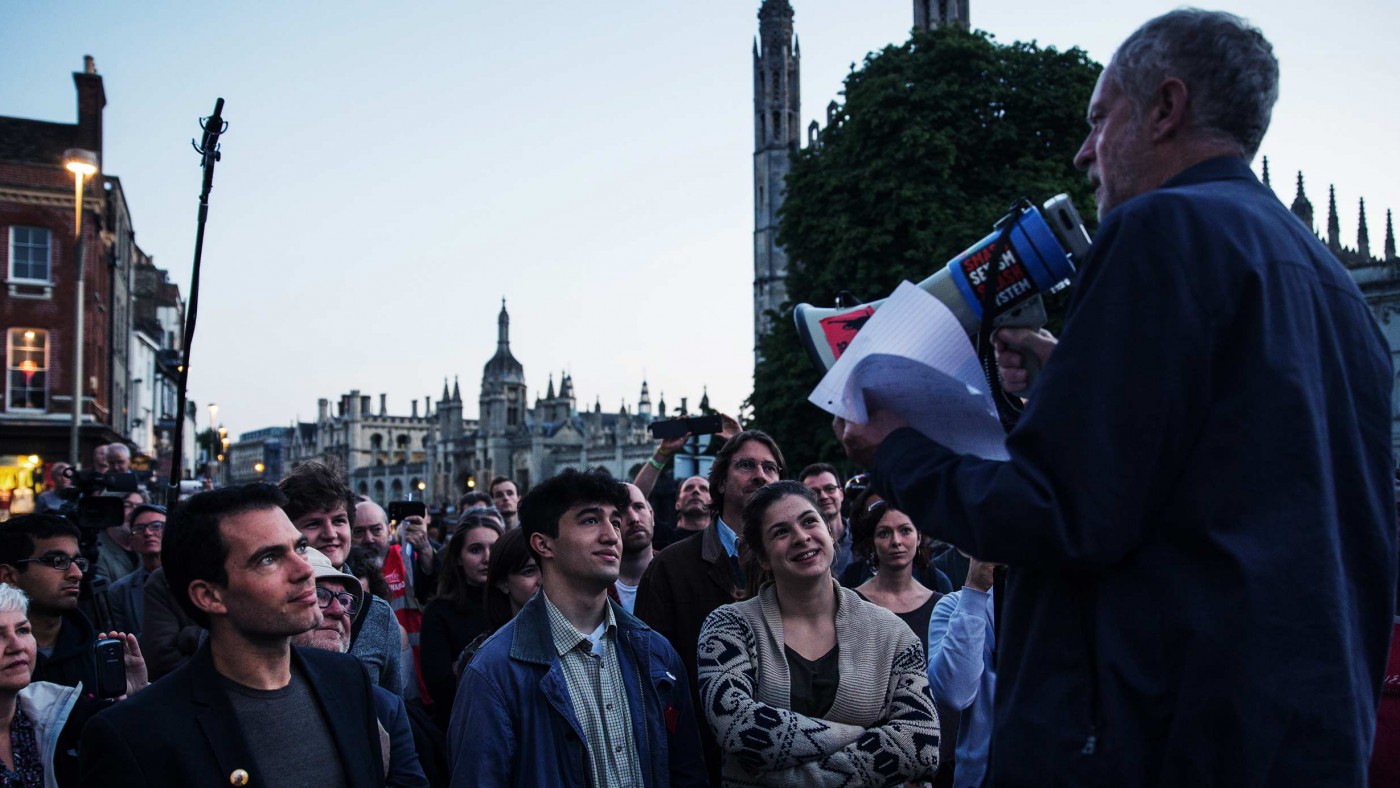
corbyn-snp-1400x788I have been reflecting recently about the vulnerability of individuals who think that there is only a single truth, whether in such things as politics or religion. I write this the day after the bitter debate in the House of Commons over the bombing of Syria. The idea that one day we may arrive at a place where we can know the ultimate truth in politics or other areas of life suggests that we are people who think in a binary way. People who have the ‘truth’ will see nothing wrong in attacking and harassing those who do not agree with them. The 70 or so Labour MPs who voted with the government, needed to be people of considerable courage to face up to the mob-like behaviour of the ‘Corbynistas’. These latter individuals do not easily tolerate ambiguity or paradox and it would be true to say that their personality type is one that is vulnerable to cults and authoritarian leaders. Cults or high demand groups can be understood to be places where ‘truth’ is found and there is also an emphasis on the banishment of all forms of ‘error’.

In thinking about the way that some people gravitate to places where truth and ultimate meaning is promised, I am reminded of the fact that certain individuals are conned and cheated out of their money. Someone makes them an offer, apparently too good to pass up, and then the salesman puts pressure on to make a decision instantly. It is obvious in the cool light of day that any sensible person should refuse to make a decision on the spot. They will know that it is possible to do research on the internet or speak to other people. In fact the internet has done more to help people discover the scams and frauds that are around us above anything else. But people, sadly, continue to be cheated by plausible con artists and scammers. The better protected among us are those who have the capacity, not always a very attractive one, to be cynical about claims as to how wonderful a particular service or consumer article is. Being cynical about what someone else is telling us, is a form of self-protection. But the cynicism at work here is based on our intellectual ability to see that there will nearly always be two or more sides to a question. In other words our cynicism is the polar opposite to those who have been conditioned to think exclusively in black and white terms. The ‘binary’ person will see the salesman and think what a nice man or woman they are. Because they are pleasant, their motivation for trying to sell us something can be assumed to be honourable. The cynical among us on the other hand, will immediately be asking the question – what is in it for them?

Many Christians carry in their minds the undergirding belief that anything written in the Bible is a direct revelation of God’s will. Such a belief is not based on the internal evidence of Scripture as most readers are completely confused when they try to read it without guidance. They nevertheless collude with this conservative teaching because they trust the church and its leaders where such an idea is taught. A conservative Christian will thus lean heavily on their teachers to make this idea of God speaking in every word of Scripture, work. While there is nothing wrong in looking to a teacher for guidance over issues we know we cannot understand, we can see that a conservative believer is starting from a place of utter dependence on another person. In other words the conservative believer does not even attempt to work out for himself the implications of his inherited belief system. To call such people vulnerable is not meant to be any kind of put-down. What it is saying is that a person who cannot or will not take responsibility for their understanding of the faith is in a situation of weakness. In short they are vulnerable to a Christian leader who may want to take advantage of them in some way. They are like the naive but trusting individual who takes every word on the salesman at face value. Such people are sometimes deeply betrayed.

As a liberal Christian who has also had the benefit of a theological education, I have learnt to be highly suspicious of any Christian leader who claims to have discovered the ultimate expression of the faith. Because I see strengths in a variety of Christian traditions, I find myself not totally able to identify with a single Christian denomination. This is sometimes lonely place to be. In many ways the Church appears to be favouring those Christian ‘tribes’ which follow a clearly identifiable and unambiguous path. I mentioned this tendency a few blogs back when I talked about the difficulty of a parish attracting a new vicar because the old Vicar had resisted all attempts at making his church a tribal expression of evangelicalism. In short to have a clear label with which to identify what one believes is the way that many ‘successful’ groups of Christians are going. The problem of Christians living within such tribal groups is that the individual finds their ability to grow spiritually and intellectually severely compromised. The ideal member of such a tribe will be a clone of whoever is in charge. This suppression of the individual spirit is not something I feel is a mark of the full humanity that Jesus came to bring.

Having a single and ultimate truth as well as fitting in with a single identity is not a path that I wish to follow. Truth is not something, as I have said many times before, that can be contained in certain written formulae. It has a habit of slipping through our fingers as we try to ‘possess’ it and then popping up in different and unexpected places. The main historical expressions of the Christian faith each make claims to have the final expression of the Christian message. I for one am deeply suspicious of any Christian community that claims a unique grasp of truth, whether it be Catholic, Orthodox or Protestant. Historically each of these groups has been very good at trying to claim a monopoly on Christian truth. It is also far too simplistic to say that the truth of Christianity is contained in the Bible. A claim like this should solve the problem of Christian identity but the sheer numbers of churches claiming to be ‘bible-based’ but disagreeing with each other, suggests that Scriptural ‘truth’ is never going to be easy to discern. As a preacher of Scripture in the past, I was always far more interested in helping people to read the Bible for themselves. Then they could face up to the fact that in some ways it is an inconsistent and quite confusing document. When we admit these difficulties, we begin to engage with it as it is. Slowly, slowly we begin to catch a glimpse of God as he reveals them in the pages of Scripture and history. That kind of faith does not satisfy a need for certainty but it allows us to be open to the journey, the pilgrimage of life under God as many have done before us.

Reducing a life to a comma

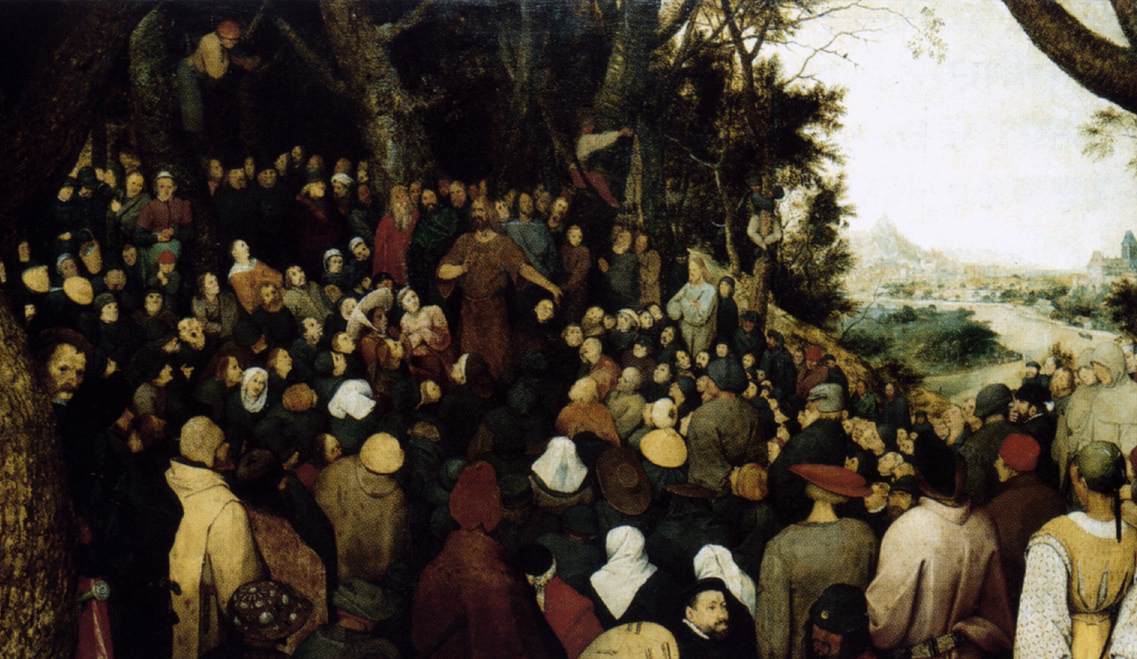
sermon mountThose of us who attend church regularly, will probably not have thought much about what is missing in the creed. A writer, Robin Meyers, has pointed out that the world’s greatest life is reduced to a comma. By this he means that the entire life of Christ between his birth and his trial is not mentioned in our creeds. Instead of any account of the important events in Jesus’ life, all we find is a single comma. It is as though there is a dramatic change in the understanding of what is important about Jesus between the time of the writing of the gospels and the writing of the Creeds. The gospels are deeply interested in the stories and the teaching of Jesus but when we get to the 4th century, the focus is on the birth, death and resurrection of Christ and the dogmas that flow from these events. The Christians who lived in the fourth century, were expected to concentrate their attention on the virgin birth, the sacrificial meaning of Christ’s death and the new hope brought about through his resurrection. A student of the fourth century will find that Christians did in fact spend a great deal of time debating these theological issues. It was in fact a matter of life and death when you stated what one believed. To be on the losing side in a dogma debate might involve losing one’s freedom or even one’s life. Heretics and schismatics did not have an easy time in the late Roman Empire. The fourth century was a period of Christian emperors who wanted to create theologically orthodox unanimity across the Roman Empire. Woe betide anyone who did not agree with the Emperor and those bishops who were on his side in the political/religious debates.

When we go back to the time of the New Testament, it is striking how little Jesus seems to be concerned with people having a correct set of beliefs. In spite of what we hear from many Christians today, people were not then judged as to whether they had a correct and orthodox opinion about Jesus’ nature and his relationship to God. To take one section of the synoptic Gospels, the Sermon on the Mount, we have a whole series of practical instructions about how to live. To begin with the Beatitudes, we find an invitation to live and act in a distinctive way. Jesus commends, among others, the gentle, those who struggle to see right to prevail, the merciful and the peacemakers. All of these are active attributes and there is the implication that those who practice these qualities will in some way change the world around them. The invitation to the disciples to be salt and light is a challenge to become agents of transformation. Many of the remaining sections of the sermon address the practical issues of keeping the law. They involve such things as almsgiving, fasting, money and attitudes to wealth. Jesus concludes the sermon by saying that his true follower is the one who does the will of his Father. Note that the word ‘believe’ does not appear; the emphasis is on practical doing and any idea that a disciple is defined in accordance with his or her beliefs is completely absent.

If I had to choose between the understanding of discipleship, or what it means to a Christian, from the time of the Emperor Constantine and the understanding of Jesus, I know which one I would take. Correct systems of belief were obviously very important for an emperor who wanted to have theological unity and harmony throughout his domain. But this dramatic shift from doing the will of the Father to the emphasis on believing correct ideas, is one which, I would claim, has impoverished Christianity a great deal. If we read the Sermon on the Mount without any knowledge of what was to come later, in terms of an emphasis on precise doctrinal formulations, we would have quite different picture of what Christianity is about. The words that would define the Christian way in the light of Jesus’ Sermon would be change, newness, transformation and trust. All these words are a long way from the narrow, somewhat intellectual approach to the Christian faith, which involves assent to ‘correct’ propositions. This has been the method of so many theological schools of teaching through the ages.

In my own teaching about the life and teaching of Christ when I was active as a parish priest, I tried to begin with a single word. It is the Greek imperative ‘metavoiete’. This word does not have an exact translation but it has the meaning of having one’s mind or attitude changed. Jesus thus says in Mark chapter 1 ‘metavoieite’, open yourselves up, receive the good news or gospel. Here we have an invitation, not to believe something, but simply to be open to receive something new. The word, often translated as repent, is not referring to anything intellectual. It is Jesus asking his disciples to open their imaginations, their wills and their love to a reality that has come close to them. One would wish that the church was better able to evoke this kind of opening up process. Teaching people to pray in the sense of teaching to be spiritually receptive, might well help them to understand how to become a person who is open to the reality of God. This kind of receptivity is a key to becoming a Christian who is allowing his or her life to be changed from within.

The church of the creeds cannot of course be ignored. But this church of doctrine and belief is a somewhat arid place if it is the only place we inhabit. But some people want to be in this arid territory all the time because it is the only place they feel safe. Earnest Christians have told them that the path to salvation, eternal life in heaven, depends on them being ready to say and believe the right words associated with orthodox Christian doctrine. Being in this place of safety by knowing all the correct Christian doctrine may have one serious draw-back. It may have the effect that a Christian is never able to follow Christ in the emphases which he gives in the Sermon on the Mount. There is no desire or expectation of being transformed or changed. Growth and transfiguration are not words that are used by such a ‘believing’ Christian. By ignoring the actual words and injunctions of the Sermon on the Mount, this ‘arid’ Christian helps to further the idea among other Christians and beyond, that the life of Jesus is indeed to be contained and reduced to a comma within the creed.

In my reading of the Langlois report, I became aware very much of the part that fear played in the lives of many of the Peniel members. Proper belief and behaviour was expected of everyone, but this outward belief was only obtained through the exercise of fear and coercive control. What a long way from such fear is the manner through which Jesus dealt with his followers? Coercion and threats were never part of his agenda. He simply wanted to invite people to a new way, a way of transformation so that they could live life and know it in all its fullness.

Taking the Bible seriously – Genesis

Gods-creationOne of the great myths of Christianity is that every ’orthodox’ believer is required to accept the idea that the Bible should be understood ‘literally’. This latter word, placed in inverted commas, lacks a universally agreed meaning and there will always be arguments as to how one should define it with precision. Allowing for a level of vagueness, we can suggest that the word literal will carry for a conservative reader of the Bible the idea that if a narrative seems to record an historical statement, then it must be read in this way. For other more critical readers of the Scriptural text, this attempt to read every narrative text as actual historical material will lead to many problems. Nowhere is this issue more acute than in an attempt to read the first two chapters of Genesis as an historical account of creation. The uncritical reader, guided only by his conservative leaders and guides, is meant to believe that, with a varying number of caveats, the Genesis account reveals the way that universe came into being and God’s part in the process. Such a reader is expected somehow to ignore numerous problems as for example how light existed before the creation of the sun and the moon on the third day of creation. He/she also has to ignore a further fact that not only are there two distinct creation stories in Genesis 1-2, but also that there are other different and distinct creation accounts in other parts of the bible, not least the glorious account in Psalm 104.

Returning to the distinct creation narratives in Genesis, we can see two different attempts, not to write history or science, but to expound theology. To put it another way, we have two different theological schools offering to us their two distinctive insights and understandings about the origins of the created universe. Each of these, the scholars claim, emerges from different times and places and no attempt is made by the Biblical writer/compiler in any way to harmonise them. The two accounts each have their own word for God and the style of the two narratives is quite different from the other. Any attempt to suggest that there is a single narrative in these two chapters, one which has to make tortuous attempts to iron out discrepancies, should be rejected. There is absolutely no reason to suppose that the original writer was trying to do anything other than present two accounts of the same event. If any reader misses the double presentation of the creation story, it can only be presumed that they have spent little effort in examining the actual text. As with the story of Noah, they have grown accustomed to listening to a sanitised and harmonised presentation of the story which completely ignores the problems that arise when we try to read the stories as science or history. Also to suggest that either account ever intended to offer an answer to the ‘how’ of creation, the scientific and historical perspective, misses the point of both narratives. The Biblical authors were much more concerned with grappling with the question ‘why’, the theological question.

Looking further at the contrasts in the two stories, we find an intriguing difference in the way that each account begins. One narrative (Genesis 1) records a chaotic watery world which needed to be in some way tamed. The other account (Genesis 2) seems to start with a world totally lacking moisture and needing a mist to create fertility and growth under the stewardship of Adam. Once such contrasts are pointed out, the intelligent reader will not find it difficult to slip into the assumption, shared by many non-conservative Christians over a century or more, that the creation accounts are not and never have been historical records of events that took place at the dawn of time.

Why do these simple observations about the Biblical narrative of creation matter so much? It is because some Christians have made the issue of Creation and Evolution a big one in the politics that surrounds Christian belief, particularly in the States. Political parties and an entire education system in that country are defined in accordance with the stance that is taken by an individual on these questions. Do you believe in Creationism or Evolution? That is the nonsensical dilemma faced by many people who are told that to believe in evolution is somehow destructive of a true Christian identity. The common-sense insight, that what is contained in the first two chapters of Genesis are theologically inspired stories, is not to be tolerated. We are told that we can only speak about science of creation using the language of an ancient people who knew nothing of the scientific discourse of today. That is patently absurd. To say that God created the world is a theological statement and it must be kept distinct from the immensely complicated physics and mathematics that crop up whenever the Big Bang is discussed by those who understand it. A Christian can have creation and evolution together, but each belongs to a totally different area of discourse.

I want to conclude with a quote that I have found in a book on this topic. ‘The time is long past when a literal interpretation of the creation story has any scientific, intellectual, or spiritual merit. They remain, however, a tribute to the wisdom of the compilers who believed that the inclusion of two different creation stories allowed for enough wiggle room to create space for people with different ideas about God and the purposes of creation.’ Our comment would be that the Bible from page one understood the importance of allowing people with different insights to live alongside one another. Would that that were always true today!

Open Letter to Evangelical Alliance

evangelical AllTo Steve Clifford, Director of the Evangelical Alliance

Dear Steve,

I am writing this open letter to you about the events which have been taking place over the past year at Trinity Brentwood. Although all the facts in the next part of the letter will be familiar to you, I am rehearsing the points to assist any reader of this open letter who does not know the full story.

Towards the end of October 2014, an allegation was made by an American former student of the Peniel Bible School in Brentwood. This allegation concerned a rape she suffered at the end of the 80s at the hands of a member of Peniel church. Although Trinity Church, the successor of Peniel, has long been resisting any attempt to investigate the numerous allegations of abuse at church over the past 30 years, it was apparent that this crime was sufficiently serious for them to have to provide some kind of proper response. In the months that followed Trinity Church consulted with you at the Evangelical Alliance about the best way forward. You offered to help them make an appropriate response through suggesting that they should set up a Commission which would make a thorough investigation of the past. While this was not meant to be in any way a Commission which was to act in your name, you offered to nominate an independent chairman who would help them to accomplish the task the church had set itself of examining the past. The former Bible School student was in particular insisting that she had been the victim not only of a criminal sexual assault but also she had suffered in numerous other ways in what can only be described as a cult-like environment.

After various meetings which were naturally privy to the Trinity trustees and yourself, the Alliance eventually asked John Langlois, to chair a Commission of five to investigate the culture of the past and suggest ways of moving the church into the future, possibly under new leadership. This appointment was only confirmed six months later on 1 March 2015. It was apparent, reading between the lines, that it had not been easy for the Alliance to find a suitable candidate. At least one name was published, who then withdrew after a short time. The choice of John Langlois was greeted by all sides with considerable satisfaction as his reputation is known to many both as a lawyer and as an eminent Christian layman.

In the months that followed John and his fellow commissioners diligently sought to gain the trust and confidence of many individuals who claimed to have been abused by the church at Brentwood over three decades. He achieved the remarkable feat of obtaining no less than 70 testimonies about the church, not all of them critical. It was universally accepted that he was a patient and compassionate listener. According to the blog which covered all this process at Brentwood, there was a general consensus that through John Langlois and his Commission, the truth, good and bad, would finally be heard.

In mid-August 2015 the work being undertaken by the Langlois Commission was suddenly interrupted. Trinity Church decided summarily to dismiss the work of this Commission and its chairman when it had not completed the task which it had been given. There was a suggestion that John had not been impartial in his enquiries. But, as he vigorously replied in an open letter, he was not accorded the courtesy of being allowed a right of response and reply to this accusation. His open letter also revealed that one of the commissioners working with him, Terry Mortimer, had been attempting to undermine the work of the group. In particular, confidential information privy to the Commission, was being leaked to members of Trinity Church. Although John was, following this complaint by Terry, dismissed with the other commissioners from their role as investigators, he, with the support of the two remaining members of the Commission, nevertheless decided to continue with the task that had given to them. John commented that it would be easier to work, now that the interference of the church had been removed. In a letter from Kim Walker at the EA to Nigel Davies around that time, you at the Alliance implied that even if you were not actively supporting this intention to continue this work, neither were you in any way opposing it. You also mentioned that you were in touch with the Trinity trustees. Obviously the content of this communication with Trinity has to remain confidential, but they have not subsequently at any point suggested that the Alliance has ever accepted any wrong-doing by John, their nominee. This issue of John’s honesty and integrity is hardly a matter where anyone can take a neutral position. In the absence of any evidence to the contrary, the neutral observer has to conclude that you have supported John Langlois and continue to do so. For reasons known only to yourselves, you have chosen to keep this support outside the public domain.

After the dismissal of John Langlois’ Commission, Trinity Church appointed another commission consisting of two Pentecostal ministers, Phil Hills and David Shearman. These two individuals had been well known to the congregation and the leadership. Their enquiry seems to have failed in two essential ways. First of all they omitted to search out many of the witnesses who had spoken to the Langlois commission, including Kathryn Bowden, the victim of the rape incident. Secondly these two ministers appear to have such a close relationship with current leaders and Trustees that they were unable to gain the trust of more than a handful of those who claim to have suffered under the church, both in the past and present.

We now come to the present. On 1 November 2015 the two reports were published. The one by Phil Hills and David Shearman consisted of about 15 pages of text. It was lacking in detail and, although critical, it did not appear to want to suggest that there were particularly deep-seated problems in the church. This is the report that has been published by the church on its website and sent to you and to the Charity Commission. The other report which was written by your nominee, John Langlois and the two remaining trustees is the most remarkable account of the functioning of an abusive church ever to see the light of day. It illustrates extremely well the full potential range of abusive practices capable of being perpetrated by Christians against other Christians. In the church today we have become obsessed with a single form of abuse, the sexual. The Langlois report shows that this is an incredible damaging simplification. Trinity Church, to summarise the Langlois Report conclusions, has been the scene over 30 years of the most appalling range of abusive practices, physical, emotional and spiritual.

I am writing this open letter to you with a suggestion that the wider reputation of the Evangelical Alliance is on the line if it fails to make any response to the material that has been revealed through this Langlois report. As I indicated above, I have no reason to assume that you have abandoned your support for John and so his report remains a credible account of the events taking place at one of your member churches over 30 years. I recognise that the Alliance, again in the words of Kim Walker, only offers advice to its member churches and does not ‘give instructions’ but it beggars belief that your body has absolutely nothing to say when faced by such a catalogue of abusive behaviour within one constituent Christian body over such a long period of time. The victims of this church will have felt thoroughly let down if their detailed witness in front of an Alliance nominee is ignored. Talking to John Langlois was for them speaking to the Evangelical Alliance itself. Any observer has to conclude that your nomination brought you morally, if not legally, into the process that has been going on over the past six months. To abandon John and his report would seem to be an act of cowardice in the extreme. I can only think that you have refrained from comment for as yet unknown internal political reasons. I find it hard to believe that a man of the status of John Langlois who has worked for you many times in the past with great diligence is being publicly ignored and side-lined.

The choice for the Evangelical Alliance is a stark one. It can take the path of silence or it can at the very least announce to the world that it has in fact read the report and is taking its conclusions seriously. This would at the very least involve some proper conversation with the Trinity trustees and advising them to address issues of governance, integrity, accountability and leadership. This may, for all I know, be already going on but public silence is creating much unease among those who wish to see a proper outcome for this process. Your failure to publish any statement about either of the reports since the 1st November is already being regarded by many as a sign of weakness which implies that the Alliance does not want to engage with the real issues that face churches today. John Langlois, your nominated chairman with his Commission, have detailed in a report of 300 pages the toxic nature of one particular church congregation in the UK. The churches which you claim to represent look to you to take a lead in taking some kind of stand in the practical task of addressing the problems raised by such an evil toxic culture. It is neither right nor wise to believe that you can stand to one side and say nothing.

Yours sincerely,
Stephen Parsons

To read full report copy/paste below into your search engine

https://www.dropbox.com/s/e3578t7pt87jvci/Langlois%20report.pdf?dl=0

Spiritual abuse of children -adult memories

Jesus CampAs a non-evangelical, I have often had serious concerns about the so-called ‘conversion’ process. When I have attended big rallies led by evangelists, it has always worried me that some people make decisions, supposedly for Christ, in an atmosphere of high emotion. It would appear that this kind of manipulative emotion was used extensively at Peniel church, notably with children at a summer camp when they were away from their parents and also in the church school. The testimonies given to the Langlois report are evidence of the way that extreme emotional manipulation was experienced by these children and then recalled by them as adults. I think my reader will agree that what is being described is simply emotional and spiritual abuse. The leader, Carolyn Linnecar had presumably been using these methods at summer camps for Peniel children for many years. It did not appear to have given her wisdom or any kind of insight into the emotional issues involved when piling pressure on children to be converted. I have taken a number of sections from the report which demonstrate that the writers were a people of considerable stamina and independent spirit. Our hearts go out to those who were never able to process the horrors of these abusive acts. But even the strongest among them found it difficult to resist the enormous pressure put on them by these particular evangelical conversion techniques. These accounts are enormously valuable because I am unaware of any published material of this kind in Christian literature. We must hope that some of those who use these pressure techniques will read these accounts and discover what it feels like to be at the receiving end of this kind of emotional and spiritual rape. I can think of no other word with which to describe the combination of violence and degradation with which these children were treated.

From the Langlois report 2015

810. After four or five meetings in a row like this you would feel like a total wretch, utterly worthless, totally destroyed, and you would have done anything to be saved. Right at the very end of the last meeting there would be an altar call, and the children would flood to the front, weeping, desperate to be cleansed from the rot inside. It was such a ridiculous show. I was one of them, year after year, driven to the point of hysteria and begging God to save me. Each time I would think, this is the one that will make a difference, this is the time that I’ll finally be saved. Sometimes I’d be shaking a bit and I would think maybe that was the Holy Spirit running through me, I’d think if I cried enough I might be saved, I’d desperately listen out for any sign that it had worked. But every time, once I finally stopped crying, I had to admit to myself that nothing had changed. All the children would go round asking the people who’d answered the call, did you get saved? Did it work? And I would have to confess, shamefully, that again I felt no different. It was a horrible rejection, I had felt terrible, I had reached rock bottom, I had answered the call despite it being extremely difficult to make the move up to the platform in front of everyone, I had put my hands up in the air, I had sung as loud as I could, I had done everything I could, and I was still not wanted.

811. By my last camp I was so fed up with this same old routine that I decided I would not be pressured into answering the altar call. This turned out to be the most emotion-driven meeting I had seen yet, and when Carolyn asked people to come to the front, everyone but about ten of us responded. She completely ignored the children who had responded, and stared at me and the other children who had stayed in their seats for a long time, repeating over and over that it wasn’t too late to come down, but in a very threatening tone. She spoke as if we were defying her by not moving, it was almost a standoff to see who would give in first.

848. As well as being prone to preaching at individuals from the platform, Carolyn also took a large proportion of the responsibility for preaching at school camp. Her preaching was mostly very condemnatory and would terrify or guilt trip most of the girls into a very emotionally-fraught
‘conversion’ experience. This would be repeated every year. Having been denied proper sleep or food for a week (because we were looking after so many small children), we were subjected to an emotionally-charged last meeting of camp, where Carolyn would often turn on the tears to elicit a hysterical response. Most of us felt forced to stay in the meeting and react in the expected manner, otherwise we felt that we would be in rebellion against God’s will for our lives and we might never get another chance to be saved. We believe that Carolyn and Peter must have understood the power that they held over us in that setting, as Peter even said that school camp was the opportunity to take children away from their parents and their normal routine in order to get them to meet with God.

866. The fallout from our time at Peniel is ongoing. I have several close friends who have struggled with severe mental illness, induced largely by the stress and manipulation of growing up in the controlling environment of Peniel. I do what I can to support them and to be a friend to them, but I find it heartbreaking to watch them struggle. Especially as one friend feels like there is no forgiveness for her and that she has to ‘fix’ everything. An apology can’t fix them, but it can reassure them that they aren’t to blame for their own difficulties. As it is, there’s been a deafening silence from the ministry. One of these friends started to suffer with mental illness when we were at school. We reported her strange behaviour on several occasions, but it wasn’t until the second time that she said she wanted to kill herself that the school decided to act. The ministry team never even bothered to offer her prayer. Many other friends have sought therapy to help them to deal with issues from their past and many of us have suffered from bouts of depression, with some even considering suicide. Given that many of us spent our entire childhoods in Peniel, we have no prior experience. One of my friends put it well when he said that, “It’s like everything we’ve ever known is a lie”.

905. Assemblies with Sammy Mansewitsch. What felt like hour upon hour of being screamed at, and then of having to scream out loud to God – being told that I wasn’t God’s, being told that all I wanted was for a ‘big black man to have sex with me behind a bush in Southend’, being told that there was nothing I could do to stop going to hell. I could go on and on. I had horrendous nightmares during these years. It was very harmful. Michael Reid was just as bad. Being stood up in assemblies and being publicly humiliated for perceived wrongs. Being told over and over again that you have a bad attitude, that you have a ‘foul spirit’. I’m sure I wasn’t perfect at school, just a normal unregenerate child. However, it wasn’t just Michael Reid, teachers seemed very quick to pick up on which child was out of favour, then treating them harshly to back up what was coming from the top.

907. Church services were an ordeal too. Hour upon hour of seeking God, so much time wasted in prayer lines asking for healing that never came, trying so desperately to summon up some emotion, listening to destructive sermons, hearing people being torn down. I could go on. Spiritually and emotionally I felt destroyed there. Never once did I really feel loved, not by God, and certainly not by any of the staff! It is very hard for a child to accept God loves them when they feel rejected by the people who are meant to represent God.

From a Peniel survivor

peniel curchThis letter below is based on a real ex-member of Peniel’s communication but as editor of the blog, I have expanded and edited it with other material from the report. I have been particularly struck by the comments about the shunning of family relationships which was sometimes demanded of Peniel members as a price of their belonging. I am here including a Dropbox link to the full Langlois report.

https://www.dropbox.com/s/e3578t7pt87jvci/Langlois%20report.pdf?dl=0

Dear Stephen,
I am one of the survivors of Peniel and I am writing to you in response to the letter you sent to me as Amanda. You asked me privately if I could identify some of the themes out of the Langlois report which I could identify with personally. I have been thinking about this and my response to you is to focus on certain words beginning with the letter R. The first two Rs came about when I experienced a great sense of relief because of the resignation of Michael Reid back in 2008. This was at the beginning of a long drawn out process to get him off the church premises. Michael in fact only moved of his church property two or three years ago following a legal eviction. I thought with many others that the resignation of Michael was the beginning of a new dawn in the church. There was a time when things seemed indeed to be opening up but after a short period it became apparent that there would be little change. The old guard under Peter and Carolyn Linnecar had reasserted their power over the congregation. It was then, a year or so later, when things were still basically the same as they had been in the past, that I knew I had to leave. During that false dawn for the church and of course after I finally left, I allowed myself to be reconciled with members of the family who had become partly estranged from me over the many years of my Peniel membership. This estrangement was not, as in some cases, because of a formal ban on contact but because we were being told constantly to put family in second place. We were also expected to put in an enormous number of hours of voluntary labour working for the church, and this in any case left very little time for socialising outside the church group. Once I had left I could now give family some of the time that the church had always demanded that we give to them. Reconciling with people when you have been cut off from them for decades is not easy and in some cases it was impossible to repair these relationships. Shunning relationships because your church had demanded it, was an incredibly painful and costly sacrifice. It is not one that anyone should ever have to make. It seems extraordinary that Michael Reid should also have been able to convince so many that ordinary relationships with family who were not church members was something to be, if not forbidden, extremely limited.

In view of the immense hurt that was caused to my family through these broken relationships, I have to say that I was amazed to see how gracious they were when at last I emerged from the church prison that I had occupied for such a long time. There had been so many lost years which could not be clawed back. But there were nevertheless moments of sheer elation and joy in rediscovering relationships that had been for so long broken. I can even use the word euphoria to describe the freedom of being able to talk to people without fear once again. But all this new rediscovery of old intimacy was tempered by another R word, a deep sense of regret. What had been the point of it all? What or rather who had we sacrificed so much of our lives for? It was not God or His work. This regret is still very much part of how I feel when I look back but obviously there were happy times with God’s blessing.

Since 2009 when I finally left the church, I have begun to recover a normality. Reading the new report (another R word!) has however brought some of the pain back. The testimonies of other people who have been through so much have been very, very difficult to take in. I realise that I did not know at the time very much of what other people were going through. There was probably not a lot I could have done even if I had known what they were suffering. There remains a sense of guilt when I read of the specific ways that they were made to suffer through membership of what was then my church. You spoke in your open letter to me about the fear that was prevalent throughout the church. This had the effect of restraining communication within the congregation because everyone feared being reported to Michael Reid. This encouragement of fear in a congregation was in fact a very effective tool of control and it helped with the suppression of unwanted opinions and potential challenges to the church’s leadership. In this way the unhappiness and pain suffered by individual members, which has been revealed by the Langlois report, was not at the time known to other members of the church. People suffered alone or in the context of their families. Even there, in the family home, as we know now, division was sometimes being sown to assist Reid’s control over the congregation. All too often pain was shouldered by an individual alone.

It would help me if I thought that the Commission’s work could be shared in a much wider audience. The lessons that can be extracted from the report are of enormous importance and can help people identify when a church is toxic and the potential cause of great pain to individuals and families. Thank you for what you trying to do through your blog. There will be other themes from the report that you may find helpful to discuss, and I will continue to react to the material even though it is not easy for me. I realise, however, that facing up to my past pain is one way that I can help others. What I have discovered is that the time spent under the leadership of Michael Reid has caused me and many of those close a great deal of unnecessary suffering and pain. The lessons I have learnt may be used by others to avoid similar experiences of grief. Thank you for what you are doing to awaken other people to the dangers of abusive church practice.

With best wishes, Amanda

Religious violence in Paris

ParisLike everyone else, I have been appalled at the events taking place in Paris over the weekend. I myself was in London moving among crowds of people out enjoying themselves. It was easy to imagine the havoc and chaos that could be caused by someone blowing themselves up in the middle of such crowds. Readers of this blog will first of all be imagining terror and grief experienced by thousands of people in the French capital today. But there is another act of imagination that we should attempt. We have to try and get inside the minds of people who are prepared to kill random strangers in the cause of a political/religious agenda. This task is much more difficult but it is one that this blog is constantly trying to bring to my readers’ attention. What are the salient points of an ideology that is at the same time a death cult? At one level there is a profound jealousy of the freedom and the way of life enjoyed by Western societies. There is a particular hatred among Arab men for the lifestyle of Western women who enjoy choices and freedoms which would not be tolerated in their own societies. Jealousy changes very quickly into hatred and it has as a kind of justification the idea that people who do not live by the stern commands of the Muslim faith, have somehow lost their way in the task of righteous and godly behaviour. Such ungodly behaviour must be punished by death.

There are of course in our own societies strands of belief which parallel the hatred and intolerance of the Arab terrorists. The extreme right wing in America preach a version of Christianity that is sometimes intolerant in the extreme. But, apart from the case of a few disturbed individuals, this intolerance does not usually give way to violence. But it is still right for us to compare certain extreme forms of Muslim ideology with beliefs practised by Christians. The most important link is in the binary thought processes of Arab terrorists which is something that is shared by conservative fundamentalists in the West. Binary thinking says, in a few words, that because this belief is right, the opposing belief is wrong and must be resisted at every point. Binary thinking thus excludes paradox, tolerance and inclusivity. It is a state of living with only black and white. All forms of grey are rejected. Such thinking is probably to be found more often among the less educated in society. It is also the form of argument and understanding adopted by a child. The adult who thinks in this way has either been part of an extreme group all their life or they have been failed by the educational process. In many cases the people who remain stuck in black/white thinking are not themselves to blame. They belong to groups who want to deliberately keep them in a state of mental and emotional subordination. They need the liberation afforded by education but this will be hard to do when the institutions to which they belong have a vested interest in keeping them in a state of intellectual dependency.

The power of bigotry and ignorance has been powerfully demonstrated this weekend. If I am even partly right in my assessment that it is poor education which creates this terrible narrowness and lack of tolerance, then urgent action is needed. If we believe in accepting other people who are different from ourselves, then we should be setting an example and living out this tolerance in an active rather than passive way. We need also to be the kind of people who go out of our way to be exposed to ideas quite different from our own. Every society needs people who seek out new cultures and different ways of doing things and are able to show that this is an important aspect of being a citizen in their own country. Discussion with others must not just be an opportunity for repeating long held ideas. It should be a conscious attempt to learn from hearing the ideas and experiences of other people. In this way we can play our part in making learning and listening a proactive part of our interaction with other people.

Within the minds of the fanatics who kill people in the name of a single version of truth, there is an inability to accept the otherness of individuals around them. Truth for them in other words is a monochrome, unbending and inflexible reality. Because there is no other reality, the true believer has to kill and use violence against anyone who does not agree with this version of truth. This way of thinking and practising a religious faith has always to be challenged and defeated. We can begin to do this by our own challenging of exclusivity, bigotry and intolerance by Christians towards those who are different from them. When Christians use harsh and discriminatory language against those who do not belong to their tribe, we are on the beginning of the process which may eventually lead to the violence and hatred that we saw enacted in Paris this past weekend. In the last resort inclusivity, tolerance and love are matters of life and death. All of us have a responsibility for promoting these values so that our society can never descend into the horrors of IS. Jesus welcomed many people whose lifestyles and failures horrified the respectable Jewish establishment. How much more should we err on the side of generosity in welcoming and loving people who are both different from us and who think in ways that we find difficult?

Who are the orthodox Christians?

PrintSome of my readers will have been aware of the Synod in Rome for leaders of the Catholic Church to discuss the issue of family life. As might be expected this meeting has been a tussle between conservatives who want to preserve traditional teaching which excludes divorced couples from the Eucharist as well as same-sex couples, and others who wish to see a more compassionate stance towards these groups. Somehow the Synod has concluded with a statement offering concessions to both sides. Neither group has had to feel that they have lost the battle for the heart and soul of the ‘true’ Catholic Church. Anyone outside that church following this debate must have wondered which side they would support. My readers will guess that I would be on the liberal inclusive side of the argument. But the question remains: on which side are the true Catholics? Pope Francis is obviously wanting to push the church more in the direction of a compassionate and tolerant set of values. But even if he is successful, who is to say that a successor will not arise who will reverse the new change of atmosphere in the Catholic Church a few years down the line? One has to come to the conclusion that the Catholic in good standing at one particular moment may be a Catholic who is later seen to be holding views that are outlawed by another version of orthodoxy which may be waiting just round the corner.

A similar thought struck me when I was reading the biography of Jim Packer. In 1967 at a big conference for Anglican evangelicals at Keele, Packer was right at the centre of the planning and of the statements that came out of that conference. The same group met 10 years later at Nottingham to discuss the situation of Anglican evangelicals but here Packer found himself on the fringe of the discussions. In ten short years the orthodoxy or, should we say, the fashionable preoccupations of Anglican evangelicals had shifted significantly. It had become more open to biblical scholarship and the discipline of hermeneutics. Packer himself felt alienated at the conference and this was part of what contributed to his decision to leave Britain for Canada in 1979. That is where he has remained and has made his home. The same question I asked in the previous paragraph about who are the true orthodox Catholics could be asked of Anglican evangelicals. Are we to suppose that each generation of Anglican evangelicals has a distinctive ‘correct’ version of orthodoxy which inevitably will be different from that held by the older generation?

Moving away from church politics for a moment, we may look briefly at the situation that seems to be engulfing the British Labour Party at present. We are witnessing an internal struggle for what is thought to be the ‘soul of the party’. The question has to be asked: who in fact encapsulates and represents this soul? Is it to found among the politicians who learnt their trade under Tony Blair and Gordon Brown, or is it to be found in the activists on the extreme left who have recently joined the party? Could it be right to say that the orthodoxy of the labour movement has shifted in recent months and that a true member and supporter is someone who has likewise shifted their opinions and attitudes? Is the person who is a true orthodox politician or churchman like the Vicar of Bray? He was the fictional hero of an old song who shifted his theological views every time there was a change of monarch in Britain?

I was having conversation only last week with a senior clergyman who has recently left a well-supported evangelical parish in a large town. I asked him why there was a problem in finding a successor for his parish. I had heard that the committee were refusing to shortlist any of the candidates who had applied so far. His answer was interesting and reflects the issue that I have mentioned above. He said that for 20 years he had steered his parish away from the factionalism of evangelicals which he felt to be such a problem within the Anglican Church. This church was thus not a member of any of the evangelical tribes (my expression). In practice this meant that his church did not subscribe to Reform, New Wine or any of the other lobbying groups concerned with women clergy or the gay issue. He suspected that that all the best qualified up-and-coming clergy in the evangelical world had found it necessary to join one or other of these groups. The fact that he had kept his church out of church political tussles meant that his church was not attractive to a member of the new generation of politically aware clergy. Clearly fighting political battles is thought to be part of the identity of a young evangelical clergyman.

This conversation made me realise how fragmented the church is becoming, whether in its Protestant, Anglican or Catholic versions. It is very difficult to know where the emotional and intellectual centre of any of these churches is nowadays. The question remains for me and my readers as to what we do about the situation. Do we look for a factional group which more or less says the things we want to be articulated in the wider institution, or do we somehow go it alone and try to preserve intellectual and spiritual integrity? I am not sure I know the answer to this question. Speaking personally, the situation of retirement allows me the freedom not to have to identify with particular factions within the church. I have the freedom to seek other individuals who may share a common view on the issues of faith or indeed church politics. On many questions I am in a community of one! It would appear that for any Christian who wants to get it right in terms of their standing and orthodoxy within a group or denomination, they face an impossible task. Today’s orthodoxy will often prove to be tomorrow’s fringe idea or even heresy. This was the problem for Jim Packer and it will be true for anyone who wants always to be ‘orthodox’ in any institution, political or religious.

From time to time Chris has asked me what I think about a particular item of doctrine. Sometimes I have been able to give him a straight answer, but other times I have had to say: ‘I don’t know’. Perhaps the new orthodoxy will be, not certainty about a range of doctrines and issues, but a generous and compassionate refusal to be committed to any single exclusive position. As a title of a course that I led in my last parish was entitled, perhaps we all need to learn to ‘ live the questions’. This open non-dogmatic approach may be more successful in finding truth than always expecting answers. For the time being my orthodoxy is something along these lines, knowing the right questions to ask and then learning to live with the tension of having these questions not completely answered. I will no doubt have more to say on this matter and the way that having questions in the pursuit of truth is what helps to inform my approach to life and to God.

Open letter to Peniel Survivor

call me evilFollowing my commentary on the Langlois report, I received an email from ‘Amanda’ about her 37 years as a member of Peniel (she only escaped in 2009) I asked her if I could offer her some support by writing her an open letter so that the things I was saying to her might possibly be found of some help to others in a similar position. The letter is generalised but I hope I may get from her some particular points to address out of the sea of abusive practices that Langlois and his commission have identified. I shall try then to give the commission topic a rest, particularly as I seem to have stunned my regular commenters into silence by all this Peniel material!

Dear Amanda,
Thank you for being in touch with me after the recent publication of the Langlois report about Trinity Church Brentwood. Like most people I have probably not read every word of the 300 page document but I have been struck by all the details of peoples’ suffering that have been recorded in this report. Also like John, I have been struck by the remarkable consistency of the witnesses who spoke to him and his commission. As he said, the facts speak for themselves and there is no justification for any suggestion that the report is some political attempt to destroy the church. The truth will always have its own power. Even if the report does not receive wide circulation, it will be one of the most powerful documents about the dynamic of a conservative cultic church in Britain ever to have been published.

Reading the report as an outsider means that I can have only a partial understanding of the pain and the suffering that have been caused by this appalling church regime. There are numerous issues to be to be noted in describing the dynamics of this congregation, but two in particular stand out on first reading. I want to address these two as well as recognise that they will probably have impacted on you personally. My writing to you about these two issues will perhaps bring some insight and encouragement to you and to the others who have endured similar things over 30 or more years.

John Langlois’ report spoke about a pervasive atmosphere of fear that existed in Peniel church in the time of Michael Reid. He was talking not only about the sheer fear-inducing bullying aspect of Reid’s personality but also the theological underpinning of this terrifying regime. Michael Reid had the power to control people through fear because he could tell them that they would go to hell unless they followed his precise instructions. This kind of tyrannical oppression in the context of a church is not uncommon but it remains obscene and unwarranted. The problem is that many churches have been sucked into a kind of Calvinist thinking which basically paints God as an angry irrational tyrant who needs to be appeased. This kind of theology needs to be identified and resisted. It is unhealthy, poisonous and the cause of a great deal of unhappiness. It is particularly unwholesome when used in the presence of children. They are easily affected by such a message which is calculated to induce terror on all who hear it. I was struck by the accounts of witnesses who spoke about services when people were encouraged to weep, groan and lament their sins when very young children were present.

The second horrific aspect of the Peniel regime was the effect that it had on some families. When one person in a family wanted to leave the congregation, the rest of the family were forced through bullying and coercive techniques to cut themselves off from the ‘erring’ member. This is a typical behaviour of cultic groups and it is done as a practical way of retaining control of members. Unless this utterly barbaric practice of ostracism is strictly enforced, the departing family member may act as an influence to compete with the cult leader. I note that John Langlois refused to get involved in discussing whether Peniel is a cult. He would have found that the current academic definitions of a cult would fit Peniel extremely well. Shunning behaviour is one of the typical characteristics of a cult as outlined by the International Cultic Studies Association. Again and again the representators to the Langlois Commission reported this shunning behaviour. The suffering caused by these enforced family break-ups is always going to be immense. I had already read the published account of Caroline Green (Sarah Jones) and the way that her husband was forced to divorce her. He then subsequently married another member of the church.

Amanda, you have been a victim of an environment that uses induced fear to control people alongside a readiness to break up families to achieve the same end. I first want to suggest that the God that was preached in such a church is not a God I and other mainstream Christians recognise. I accept that there is such a thing as sinful, selfish and brutish behaviour on the part of individuals. Some people go through life without ever learning the meaning of love, in the sense of giving to other people something of themselves. Their perspective on life is to grab as much as they can for themselves and for the feeding of their bodily appetites. The accounts of an afterlife in the New Testament as well as in other spiritual traditions do suggest the notion of judgement, but I would reject the heaven/hell dichotomy as being far too simplistic. Even the wickedest people on this earth who have been weighed down by their excessive self-indulgence may not lost be for ever. When Jesus spoke about ‘many mansions’ this could imply that there are variety of levels within the afterlife for us to occupy. The selfish and the wicked may find that they have to learn all the things they refused to learn in this life in another dimension beyond the grave. What they did not learn of joy, compassion and love has to be learnt elsewhere. The God I identify in Scripture is one that calls us to love. This is another way of saying that we all are all called to journey out of ourselves to reach a place where we can eventually enjoy the eternal bliss that is the prize for us beyond. Some in this life go some way along this journey through the practice of goodness and virtue while others make virtually no progress at all. The Christianity that constantly teaches the inevitability of eternal punishment for Christians who are not like us, is a form of faith that I have no time for. I want people to discover freedom from fear and also to know love and joy in this life which is an anticipation of the life beyond. There is a book which had the title ‘Love conquers all’. It was not popular in conservative Christian circles because it removed from controlling Christian leaders to power to say who was and who was not going to heaven. The reality that we see through Jesus is a God who accepts us with all our failings and this is a form of faith that I wish to commend to you and you ex-Peniel friends. ‘There is no fear in love; perfect love casts out fear.’

I cannot tell you how aggrieved I am to hear about the stories of family breakup that have been revealed in the Langlois report. The thought that a pastor should somehow engineer the breaking up of a family is something which should be declared as criminal. There are one or two Scriptural passages, unfortunately, that can be manipulated by an unscrupulous teacher to suggest that it is right to leave one’s family for a ‘higher’ cause. But there is in fact no higher cause being served when somebody is forced to leave husband or wife so that the control of a corrupt leader can be maintained and strengthened. The problem here, as throughout the history of Peniel, has been that obedience to Michael Reid and others, has been inflated and assumed to be the same as obedience to God. This is utter blasphemy.

You, Amanda, and all the others who are survivors of this wicked regime need to know that there is another kinder, more compassionate version of Christianity out there. Michael Reid appears to have relentlessly exploited the Bible and Christian theology for his own selfish and wicked ends. This activity makes him guilty of tremendous evil and one can believe that he will discover one day the full extent of the horrors that he has perpetrated on others. I hope you will regard me as a representative of this other compassionate face of the Christian faith. I am hoping that you and those you are in touch with will read this open letter and begin to believe that there is a way forward through the terrible experiences that you each have endured at Peniel. I want to leave you with two further verses which are constantly repeated in my mind and which for me sum up the Christian promise. The first is a passage from Revelation which says ‘Behold I make all things new’. The other passage is one from John, ‘I have come that they may have life, life in all its abundance’. In my future letters which I hope you will read, I will want to explain further about this newness and indeed about the fullness of life that Jesus wants us all to find. This will be something far better than the fear soaked faith of Peniel and Trinity. You are still living and breathing, you are still capable of learning, growing and being transformed by the power of God to change and to renew. I want to assist in a small way in that process.
Stephen

https://www.dropbox.com/s/e3578t7pt87jvci/Langlois%20report.pdf?dl=0

To access Langlois report copy/paste above into your search engine