 I used to know a clergyman who came from a background very different from my own. He had taken early retirement with some medical problem and had bought a house in my parish. His background was conservative charismatic and he was far happier taking services in independent churches than in our middle of the road Anglican parish. Talking to him it became apparent that the effort to take his former congregation into the world of loud music and demonstrative preaching had not been without a great deal of conflict. He had won through mainly by encouraging his opponents simply to leave the church. Eventually the only ones left behind were those people who agreed with his very forceful approach. The metaphor he used in describing this process of ‘culling’ people who were in opposition was fairly chilling. He said you cannot ‘coddle a cancer’. In other words, anybody who disagreed with his fiercely partisan theology was simply told to leave. He was using the metaphor of surgery, the use of a knife to cut out a diseased section of the body. From his point of view this was the solution to the problem. The end result was that his theological vision was successfully prevailing in that congregation. Whether it survived after his departure is another question.
The solution that my acquaintance found to his problem of opposition is one that is probably applied in many places across the country. A church leader decides on his own, or with a few others, to go in for a particular style of leadership and teaching. Those who disagree or oppose this are effectively pushed out by one means or another. There are two areas of strong concern at this scenario. First of all, we have the unhappiness that is caused by depriving individuals of membership of a church which they may have called home for decades. Then we have to ask whether we can call the apparent peace caused by a wholesale desertion on the part of long-standing members a true unity. Realistically the dynamic of such church is based on the fact that there is only one opinion tolerated. That is the opinion of the leader. Anyone holding different opinions is not welcome. It is not difficult to imagine the way that if that leader has grandiose or narcissistic ideas, then these will grow stronger and more insistent as time goes on. The man with a vision who starts a new ministry with a vision may gradually become a petty tyrant who is unable to tolerate any kind of discussion, let alone criticism to his ministry.
The situation at Peniel church in Brentwood can be interpreted in this way. The originally fairly benevolent oversight of Michael Reid gradually deteriorated into a despotic and self-indulgent form of leadership. His preaching became more and more angry and abusive and people who had been convinced that he was a man of God gradually fell away, particularly when some of his sexual misdeeds became known. Others have stuck it out to this day. They are so conditioned to see Michael, and Peter after him, as men of God that they interpreted their abusive treatment as in some way a test of their faith. Whether they stayed or left, few seemed to have been able to articulate the full horror of what they had been through. It seems that the capacity of Michael Reid in particular to terrify his followers clung on even after they had left the church. Those who remained kept hoping to see once again something of the power, the joyful fellowship and the hope that had attracted them to the church in the first place. Certainly they were never going to able to express any sort of challenge to the powers that be.
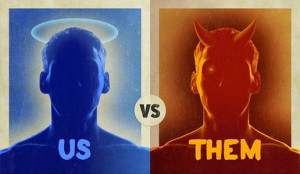
Trinity Church Brentwood, the successor to Peniel, is still able to present a united front to itself and to the world. It is able to do this because all those who could criticise the church and its leadership have simply disappeared off the scene. Those who remain have been able to justify in their own minds the thought that the leavers are people have let the side down or betrayed the vision that they had once had. They are identified as traitors to the cause. The people who remain seem to be unable to feel any sympathy for those who went through so much pain. They are the despised ‘other’. There is no appetite for reading the report written by John Langlois and there is certainly no readiness to examine their own personal roles in allowing such a brutal dictatorship to continue for so long. They do not appreciate the courage of the one voice crying in the wilderness, in the person of Nigel Davies and his blog, which alone has allowed the horrors of the past to be fully exposed to public scrutiny. Most of us on the outside of this church can see how opposition and argument within this or any other institution is potentially something positive. When a leader makes a decision on behalf of those under his care, then that decision should be able to stand up to the scrutiny of people who belong to those being led. Churches, just like political parties, must allow healthy debate if they are to carry the bulk of the members along with them. It is only when political parties and churches move to the extremes that they expect their members to follow the party line without any healthy debate and discussion of what is being proposed. To compare Peniel Church with a 30s fascist state is not as far-fetched as it may sound. I am particularly thinking of Mussolini’s Italy where lying propaganda, extravagant building projects and the bombast of small bullying men reigned supreme.
I have often pointed out how a belief in the inerrancy of Scripture does not in fact provide for a church any sort of true unity of vision. Everyone who preaches this doctrine will in practice have their own private interpretation as to how the doctrine works in practice. We will always have a multiplicity of interpretations about how, for example, the church should be organised. The authority of Scripture (the Bible says!) will be claimed for every style of church governance from the strictly authoritarian to the free flowing anti-hierarchical. To expect perfect unanimity within or between institutions is probably to ask for something that is almost impossible to achieve. When we do find a church where everybody appears to think and feel like, we will in all probability discover that there has been a history of exclusion, enforced by the techniques of ostracism and verbal violence. People who were not in accord with the fake unity have simply departed. I am reminded of the famous statement of the Roman writer Tacitus. ‘They make destruction and they call it peace’. How many churches think of themselves as being perfectly united around a leader? The reality of that so-called unity is a history of pain, suffering and even violence? This façade of perfect unity in a church has been achieved at a high cost in terms of unhappiness, sadness and even trauma. Much more healthy, in terms of human happiness, is a situation of messy consensus marked by debate, discussion and compromise. I know which one I prefer. Peniel church in Brentwood has for the moment a veneer of unity because everyone who attends has colluded with message that the past must be left behind. The only people who can see the terror and the pain of the institution are those who look at it from the outside. The church has thus chosen a fake purity and unity. They have achieved this state of uneasy peace through shunning and ostracism of those who do not buy into their myths of their self-proclaimed goodness.