Category Archives: Stephen’s Blog

Langlois report -the face of Christian abuse

TrinitySince the publication of John Langlois’ report on historical abuse at Trinity church Brentwood last Sunday, there seems to have been a deafening silence all round. Nigel Davies has published the full text of the report in four sections but his supporters so far appear to have been overwhelmed by the sheer quantity of reading matter. There are three hundred pages of text. The comments there have disappeared to zero. Meanwhile the official website of Trinity Church Brentwood has chosen to ignore the report entirely, even though it has a great deal to say about their church, both past and present. It falls on me to offer further comments. The Langlois report for me represents the most meticulous account of the workings of an abusive church ever published, at least in the UK. The other ‘approved’ report is given pride of place on the web-site, but for the reasons mentioned in the previous post we intend to ignore it. The church has published a list of vague promises to look at its past and certain issues of governance but it would appear that the present trustees are trying to pretend that John Langlois’ incisive report does not exist. Meanwhile Peter Linnecar has declared that he is resigning but he intends to return as a member of the congregation at Trinity. It has of course nothing to do with John Langlois’ devastating comments of last Sunday. How he could presume appear in public again after the extraordinary conclusions of the report about his conduct shows a marked absence of shame. To have such a notorious ex-minister in the congregation after everything that has come to light, means that the task of taking over the congregation and moving forward by a new independent minister is going to be almost impossible.

It is at present unclear when and where John Langlois report will be published. It is not available as a hyperlinked document anywhere so far and it is hard to see how people are to hear of it except through this blog or the one that Nigel writes www.victimsofmichaelreid.blogspot.co.uk . I keep hoping to hear that the Evangelical Alliance is going to take it seriously and publish it. I am sure that John himself will be sending a copy to the Director, Steve Clifford. Nevertheless it may be politically too hard for the Alliance to want to sponsor such a devastating critique of a church under their overall supervision without upsetting other churches which are uncomfortably close to Peniel/Trinity in culture. From my point of view the report is just what I have been looking for a period of time. It is a credible account of the way that abuse can take root in a Christian setting and flourish because power issues are not owned up to and ‘bible teaching’ is allowed to give individuals influence and authority which creates tyranny, abuse and fear among people in their congregations. The particular point that I want to stress about the value of the report is that although a rape allegation sparked off the original commission, it is not sex that is at the heart of the horrors of Peniel/Trinity Brentwood. It is a clear setting out of all the myriad ways that power can be misused by people in Christian leadership. It will be unavoidable, given the sheer quantity of material in the Langlois report, for me to avoid returning again and again to this key source document. Even if the document is supressed in some way, I shall go on quoting it because it is by far the best account of fundamentalist abuse that is likely ever to be published. As far as John Langlois was concerned the witnesses to his commission were totally credible and what they said was confirmed again and again by others. Although the leaders and trustees, by dissolving the commission in this August, never had the opportunity to respond to the allegations, the commission found themselves unable to suggest that anything they were told by their 77 representors was in any sense a slander or a lie.

In my years of thinking and writing about Christian abuse, I have always wanted to make the point that Christian abuse is so much more than just about sexual matters. The very word ‘abuse’ nearly always conjures up ‘affairs’ by clergy or acts of molestation against children. Such stories do happen and sometimes involve ministers coming before the courts. But there is a wider problem over power abuse by clergy which technically may not actually break the law. Because of the sex scandals affecting every denomination, the hierarchies of the various churches have become blinded to this wider abuse scandal which may have nothing to with sex. They fail to see the fear, terror and complete disempowerment in congregations where Calvinist hell-fire teaching is presented in a way that gratifies the leaders’ desire for abject obedience by the people in the congregation. Within the 300 pages of the report we have set out all the crazy and horrific manifestations of what happens when clergy act out their base motivations of dominance and use the name of God to make it an easier process. Power is a corrupting force – that we all know. But somehow corrupt power within the church is doubly obscene. At Trinity and Peniel before it, every form of power abuse was practised. In the report we have many examples of what happens when people come under spiritually corrupt leadership. Whether we are talking about the humiliation of small children in the church school, the exploitation, whether financial or sexual, of the adults, or the miasmic pervasive atmosphere of fear, it is all there in the report to be studied and reflected upon for years to come.

I cannot of course in a single post do justice to this huge range of types of abuse that the report reveals in connection with Peniel/Trinity. But I thought that it will be useful to begin by mentioning something which I touched on in my previous post, the use of the Bible as a way of demanding total slavish obedience by the congregation. John Langlois and his commission traced a moment when obedience to God was subtly changed to mean obedience to God’s representative, Michael Reid. I mentioned in the last blog post two or three of the texts that were commonly exploited in Michael Reid’s desire to dominate and control. Once the domination and control were in place then the abuse could begin. One feature of the church that was picked up by the commission was the use of constant humiliation as a tool of preaching. Basically Michael Reid would use the pulpit as a way of controlling anybody who appeared to question his decisions or insights. (My wife and I witnessed this personally in 1998) The humiliation that he dealt out was made in public and then reinforced in private. The power of his personality was such that few people could stand up to him. Having at some point accepted him as a man of God, the member of the congregation could not muster any argument which would offer some kind of defence to self-esteem and human dignity. These verbal attacks were so devastating that men, women and children were left shaking and terrified. Many wanted to leave but most found this extremely difficult because they knew that they would have to abandon families, friends and an entire social network. I want to finish with just one testimony about the effect of the verbal bullying that Michael Reid used with such powerful effect. We can be sure that this kind of behaviour is not unique to this single church in Britain. This blog is in the business of naming and shaming such disgraceful behaviour which takes place within not a few Christian churches.

455. I should have seen the things that were wrong but unfortunately the ‘fogging effect’ of constant elevation of Michael Reid and devaluation of my own value worked against independent thinking. Constant preoccupation with activities at church/school prevented me from having time to think. The relentless erosion of self respect through sarcastic, abusive preaching (withholding hope of the full assurance of the gospel) led to lack of trust in one’s own opinion. It also led to loss of hope in God’s love.

To read full report copy/paste below into your search engine

https://www.dropbox.com/s/e3578t7pt87jvci/Langlois%20report.pdf?dl=0

‘Blighted lives and emotional wrecks’. Reports on Trinity Brentwood

michael reid

Photography by Anna Marie
After a long wait the two reports on Trinity Church Brentwood have been released on the same day (November 1st). To remind my readers, the first report turns out to be a hard hitting 300 page document written by John Langlois and the two surviving members of his commission. This commission was officially disbanded by the church on 17 August and it is not hard to see why the church would have been fearful of its conclusions. The second less important report which Trinity church itself commissioned was written by two Pentecostal ministers, Phil Hills and David Shearman who have had links with the church over the past few months. They have been particularly in evidence since Peter Linnecar took extended leave from his leadership role.

It will be impossible to do more than give a brief account of what these reports say. My comments here on John’s report are based only on a synopsis of the full version and I await to receive this full report in due course. But to reduce the report to a single sentence we can say of John Langlois that he and his fellow commission members provide a brutal forensic description of what has taken place in Trinity/Peniel church over 30+ years. I hope that the full report will be published and made available to all those who have anything to do with the training of ministers in independent congregations. Of particular interest is the way that Langlois identifies a moment in the early history of Peniel when there was a shift in attitudes. First it expressed itself in church members feeling spiritually superior to those outside, and then this attitude of superiority infected the leaders so that they believed that they had the right to dictate to members exactly how they could obtain access to God and his salvation. In other words the criterion of membership became obedience to the leadership and not anything to do with an individual journey of faith. Once this pattern of control was established and accepted, the results in people’s personal lives were devastating. Members were forbidden to have contact with the outside world and when one party in a marriage wanted to leave, the spouse was forced to divorce the departing family member. To quote a single sentence which occurs in the report to describe the culture:’ an atmosphere of fear was pervasive, fear of the leaders spreading false rumours, fear of false accusations, fear of Inquisition, fear of ostracism, intimidation, crashing of spirits, lack of encouragement, a lack of openness, resulting in despair and feelings of inadequacy’. This description particularly applies to the period of the church when Michael Reid was in charge but the situation after 2008 when he was ousted had not improved significantly.

I will be writing much more about this report, particularly after I receive the full 300 page version. It is very much in the style that I was expecting from a lawyer who knows how to discern truth from propaganda and lies. Although he was never able to receive a response from Trinity leaders because of the way that his commission was dismissed in mid-August, the report uses a legal principle that the facts speak for themselves (res ipso loquitur). All the allegations about events in the church were backed up by third-party evidence and John and his commission are quite confident that what was reported is a fair recollection and statement of what really happened at the church. The comments about the leadership over the decades is completely devastating in its outspokenness. Of Michael Reid it is said: ‘it is hard to imagine the conduct of a Christian being more corrupt than the stories we have received. We are lost for words to describe his disgraceful conduct’. Of Carol Linnecar the report says: ‘there is no redemptive feature that can be used to describe Mrs Linnecar’. Even more devastating are his words about Peter L. the present leader (he announced his resignation on 1 November). The report states that: ‘we are unable to identify one redeemable feature of Peter Linnecar’s conduct’.

John Langlois’ report spends some time in analysing the changes or non-changes that took place in 2008 when Reid departed. The report concludes (in contrast to the second report) that apart from a few cosmetic changes that the old culture was allowed to continue, ‘the old habits of lying/criticising/cynicism etc continued’. There was also a complete lack of remorse among the leaders who took on the responsibility for leadership after Michael Reid about what had happened under his charge.

Moving from the important report by John Langlois’ commission, we come onto the official but highly compromised report of Phil Hills and David Shearman. They were able to hear evidence from 77 individuals and also examine documents that they requested. They in addition received representations from the current leadership. The first impression of looking at the report is to observe that it is rooted in an attempt to apply Scripture to the situation. Interestingly the report begins by examining the passages much used by Michael Reid in his successful attempts to control and terrify his congregation. Nigel’s blog had already mentioned the excessive use of an obscure passage from Romans 9.13.’ Jacob I loved, but Esau I hated’. This passage was apparently frequently used by Reid to humiliate and exclude any people of whom he disapproved. He was also fond of the verse from 1 John 2.19, ‘they went out from us because they did not really belong to us’. These and other passages were used to humiliate and control anybody who was felt to be a threat to Reid and his leadership. But in stark contrast with the first report makes out that things have much improved under Peter Linnecar’s leadership. Such criticisms as can be read of the current leadership are muted and indirect. Indeed the report speaks of ‘no sense of any superiority from the current leaders’. It is in this evaluation of the present leadership that the two reports most strongly diverge.

This second report speaks about the failure of good practice in the governance of the church but overall impression one is left with is that almost all the problems of the church and school belong firmly to the past and can be blamed on the unbiblical character traits of Michael Reid. The report speaks of aspects of a historic culture which continue to exist but for the most part every negative comment about the church and its teaching refer to episodes which took place before 2008. Speaking as an outsider, my comment would be that this is a dreadfully feeble analysis of a highly dysfunctional institution, even though its writers had potentially access to far more documentation and material. They also had the opportunity to speak to and question the leadership denied to the compilers of the first report. For me the only useful thing to come out of this report are the list of ‘abusing texts’ which that writers noted were used frequently by Michael Reid. No doubt other church bullies use them with equal effectiveness as a way of controlling congregations which have the temerity to question their authority or answer back. All of these texts were used with great effectiveness by Michael Reid in his overweening attempt to retain power through the tools of corruption and self-aggrandisement.

I will probably not be returning to this somewhat feeble official report, unless the Trinity Church tries to use it in a way that seeks to undermine the far more powerful testimony of the John Langlois report. The 300 pages of this latter report will need time for analysis and further reaction. Because this report is, I believe, a first of its kind in the history of church abuse, it is incumbent on me writing a blog on this topic to give it my closest attention. I hope that my readers will travel with me on this journey of exploration and analysis.

To read full Langlois report copy/paste below into your browser

https://www.dropbox.com/s/e3578t7pt87jvci/Langlois%20report.pdf?dl=0

Jim Packer – a friendly critique

packerI recently picked up in a charity shop the McGrath biography of Jim Packer, the eminent leader of conservative evangelicalism in this country and across the world. It is in many ways a remarkable story, particularly in the way that it relates the story of Packer’s determination to remain part of the Church of England when many others wanted to separate off to form a pure version of the faith. Although he had developed firm Calvinist beliefs through his education and study, he recognised the importance of being part of an institution which contained people who did not think like he did. He believed, at least at the beginning of his ministry, that the Anglican Church could be changed from within. Latterly, (he is now 89) he has found himself outside the Anglican Communion and part of a dissident Anglican group in Canada.

In many ways Jim Packer is an honourable theologian who, as the biography chronicles, has developed a theology for himself which resolved his own personal inner struggle to understand the meaning of God. I personally do not share his Calvinist solutions which he was able to articulate, particularly following his doctoral studies of the Anglican Puritan Divines of the 16th and 17th centuries. Packer himself began his theological formation during a period (the 1940s) in the Church of England when there were virtually no heavy-weight thinkers among the evangelical constituency. His theological position on such things as the meaning of the death of Christ, the infallibility of Scripture and the institution of the church drew, as we have indicated, extensively from his studies of writers of several centuries before, people like John Owen and Richard Baxter. Packer is able to put together in his writings a presentation of evangelical thought for his constituency, and this has had wide circulation, particularly in the absence of other suitable resources available for conservative evangelicals at that time. But there is one major problem in the way that this writer has been received and used by evangelicals in the Church of England and elsewhere. The problem is not with Jim Packer himself or his writings but in the way that the published work came to be used. Large number of people have come to identify with every word and argument, spoken or written, that has emerged from his mouth. I can remember hearing him speak at a Christian Union meeting in Oxford in 1964 and it was clear, even though I do not remember the content, that he was a powerful speaker. The influence of Packer was something more than that coming from a man proficient in rhetoric. As a college lecturer and later a theological college principal, Packer gathered to himself generations of students who wanted to become his disciples, or should we say, his clones. Such followers not only became dependent on him for their thinking and beliefs but they also expected everyone else in their circle to regard Packer’s version of Christian orthodoxy as the only valid one to follow.

In short, Jim Packer became a kind of guru for many people in the evangelical world of Britain in the 60s and 70s. By calling him a guru, we are not apportioning any blame on him. As far as he was concerned he was simply setting forth a version of evangelical Christian truth that he believed in and had the facility to articulate in a written and spoken form. The issue that I see is the way that the whole institution, here the conservative evangelical Christian world in Britain of the time, becomes hyper-dependent on one single individual. One person’s Christian orthodoxy, carved out of a particular personal journey of faith, suddenly becomes the standard for the faith of many. People in the evangelical world were proud to be the clones of the great Jim Packer. More sinisterly they looked down on others who were not, for whatever reason, inclined to follow this path.

I have in previous blog posts criticised the dynamic within a congregation that makes members subservient and obedient to their leaders. This dynamic effectively stops them growing in an individual and creative way. Deviation from the thinking and believing style of the leader is not tolerated. This we would describe as a form of cultic behaviour – intolerance towards difference. People are simply not allowed to grow or to change in a way that is not approved. The result is that a visitor to such churches or groups is met with a stereotyped language which describes the spiritual in identical ways. Some would claim that not only are these theology and praying styles identical, but also the displayed grins of the faces of members are somehow all very alike. Many people may feel safe in such an institution. They think they are being obedient to the injunction that Christians should think and feel like. Other Christians would find such an atmosphere utterly oppressive and they would not last very long in such a congregation.

The problem with the influence of an individual such as Jim Packer is, to repeat, not in his theology or his personality. I do not happen to agree with many, or even the majority, of the things he said but that is here not the point. What is the point is the way that the theological journey of one single individual should become dominating in the thinking and beliefs of so many others who do not share that pathway. Jim Packer single-handedly presented an influential defence of the words ‘inerrancy’ and ‘infallibility’ for Scripture as well as a restatement of many central Protestant doctrines. He was perfectly entitled to present these arguments and ideas as well as make the case for a conservative Calvinist position in these and other areas of theology. But having this particular way of doing theology disguises a profound weakness. The weakness is this particular presentation of Christian theology was conceived the mind of a single individual. While others, no doubt, read the manuscripts of his books prior to publication, there does not seem to have been any proper challenge or debate about these ideas. There was no process through which the central theses could be refined or qualified. In the absence of other theologians of Packer’s calibre among evangelicals of the time, his ideas were simply swallowed whole by the evangelical constituency and achieved a status of being words of near ultimate authority. If the evangelical world refused to challenge anything said by Packer, the non-evangelical world failed to engage with it at all. In the late 50s the ascendant liberal theological elite felt able to treat the theological goings on among evangelicals as not being worthy of attention. These ideas of the Puritan fathers were also not considered to be any more than of historical interest by the mainstream academic world. Liberal theological thinkers, then as now, would simply not engage with them directly. The liberal assumption is that theology, like any other branch of knowledge, has to engage with contemporary political and social forces. Lifting unmodified theological ideas direct from a period several hundred years before does not play much part in the process of producing a contemporary (liberal) dogmatic theology.

Jim Packer produced for his generation of evangelicals a tidy coherent set of teachings which had enormous influence. This was widely welcomed by the many who wanted a statement through which to express their evangelical faith. A failure to challenge these writings or enter into any kind of constructive dialogue with their limitations, has meant that the evangelical world has remained in some sense trapped and restrained by them. Other writers have arisen since Jim Packer, but the same uncritical expectation that a fashionable guru will define orthodoxy for the mass prevails. In other words the ordinary conservative Christian knows that he/she can depend on someone else to tell them what to believe. To stray from this defined orthodoxy is to be an apostate so few dare to question or criticise. That is a place of bondage. I myself and this blog continue to stand for the untidiness of theology as well the messiness of every individual journey towards truth and towards God. Scripture continues to be a major guide without needing words like ‘infallibility’ and inerrancy’ attached to it. In the last resort I hope to be judged not on whether I was a devoted follower of any particular Christian expositor of the faith like Jim Packer, but whether I used my intelligence, my spirituality and my devotion in discovering the will of God for my life as set out by Jesus.

Power and Strength

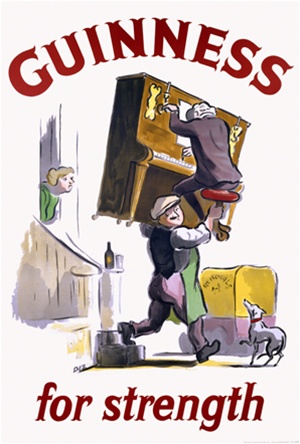
GuinnessIt is not often that I get ideas for this blog from advertisements on the television, but today I saw one for Guinness which has set me off on a chain of thought. It was the first time that I had seen this particular advertisement and I probably missed some of the detail as I was not giving it my full attention. Somewhere in the advert was an implied contrast between the two words, power and strength. The advertisement appeared to imply that power was something that was often negative especially when it was often used against people. Strength on the other hand was a positive manifestation of power, which enables an individual human being to flourish. Strength is something in particular that one person can give to another.

In my reflections on power abuse in the church and elsewhere, I have often noticed that some individuals seem to want to gain power at the expense of others in many walks of life. Whether through persuasion, coercion or even the threat of violence, some people are able to take power in a way that weakens and depletes others. The action of gaining some power by doing someone else down is nearly always an act of abuse. The bully in the playground is trying to gain something for himself at the expense of others. He achieves for a short moment the exhilaration being in control, in charge. Someone else is dependent on his wish, his word for the next few moments. As long as the bullied person is under this control the bully feels the thrill of power. In the context of the church, the power to bully is normally accomplished in a far more subtle way. But the same ingredients are often present. There is the same dependency, the same thrill of control and the same looking up to the person in charge by the victim. A lust for power that we see in the bully is a constant temptation for people who may have lacked power in their childhood. Perhaps they have also never been the recipient of the respect of others which implied that they were people of merit and integrity. So such people, the bullies and the power abusers alike, have to force their authority on others to give back to them the semblance of a sense of importance and meaning.

In the Guinness advertisement the exploration of the word strength indicated that this was something that was being given by one person to another. It may be shared by a person who has power, but this sharing of strength in no way harms the person receiving it. The sharing of strength has nothing to do with boosting the flagging self-esteem of a bully. Rather the person of power is sharing something of themselves to enable the other person to feel good about themselves. The recipient is given strength in this process, strength to cope with any number of issues and problems that life may throw up. This is the act of, for example, a parent, a teacher or even a member of the clergy. Power other words is being used not to dominate or control but to empower another person.

When I reflect on a lifetime of pastoral care within the parishes where I have served, I remember particular incidents which have resulted in increased strength in another person because of what I believe to have been the right words at the right time. Alongside the word we have mentioned, empower, is another word which is found in Scripture, the word encourage. To give someone the courage to do things that they did not know they could do, is to give them a great gift. We see Jesus encouraging his disciples, gently showing them how they could do more than they expected. With that encouragement they set out to announce the kingdom of God. The gospel also record the disciples’ words on their return, their excitement at discovering what they could, with Jesus’ encouragement, do.

The typical cultic group or church is one where we can see that those in leadership have absolutely no interest in a genuine exercise of Christian power. To put it bluntly, these cultic leaders have put themselves in a place of authority so that they can extract as much as they can in the way of money and power for their own personal benefit. They appear to have neither love nor even concern for the people in their charge. The compensation they seek for going through the motions of preaching and performing other ministerial tasks is simply to exercise a position which will inflate them alongside the other material and financial benefits. If the care by a minister of his people is not present, then there will be a coldness and emptiness in that church. Those ministers and clergy who abuse their power also forego a relationship of community and mutual support which would sustain both parties. I have my own theories which might explain how money and emotional abuse is considered to be so much more important than any enriching experience of the warmth of community. Somewhere the abusing minister has become an addict to a need to have the power to be in total control. In this scenario the members of the congregation are pushed away and become just fodder in a complicated and ultimately futile and sterile power game.

Power and strength are two similar but very different words. The first is something that appears to promise a great deal, but having obtained it, the person of power often finds that it does little more than assuage a great craving which cannot be filled. It is like a drug which creates dependency but never satisfies. The ability and readiness to encourage others, to share one’s power in a ministry of encouragement is a task of enormous importance as well as creativity. Although this piece has been written from a retired clergyman’s perspective, this strengthening and encouraging is something to which we are all called to play a full part. ‘Bear one another’s burdens and so fulfil the law of love’. That perhaps is a key to biblical relationships and we can all aspire to following such a command.

Church financial scandals

City-Harvest-Church-Members-In the news yesterday (October 21st) was an account of the conviction of six church leaders who have responsibilities for a church known as City Harvest Church located in Singapore. This court case has been going on for around five years and it is interesting to see the ramifications of this case in other parts of the world. It would appear that some £23 million went missing in what was apparently a vain effort to prop up the musical career of the wife of the leading pastor called Kong Hee. Various accounting frauds had taken place over a long period of time. In one detail I picked up, a church financial official claimed that she had been asked in 2008 to spend a huge sum of money on buying bonds but that no minutes had been taken of the meeting. On the face of it would appear to be a case of a church leader using the considerable funds of the church for his own purposes.

It is not unexpected to discover that the City Harvest Church is one that uses Health and Wealth teaching to promote its cause. This is a message which appeals to a young, typically single middle-class clientele who live in Singapore and who want to hear a version of Christianity that fits in with their particular lifestyle. Health and Wealth churches tell their members that it is okay to be rich and to spend your money in whatever way you please as long as you pay the church ten per cent of your income. With this mutually beneficial contract between members and church, it is not difficult to see how a church like this would have a spare £24 million to use on the promotion of Ms Sun Ho who was trying to make a musical career in America. With 30,000 members attending this church and all tithing, it would not take long to amass this sort of money.

The case reminds us of a similar one in Seoul in Korea. There the leader of the largest congregation in the world, David Yonggi Cho, was found guilty of gargantuan financial fraud. Incredibly Cho was not sent to prison or even removed from his post. He received a suspended sentence which has allowed him to continue serving his congregations which number in the hundreds of thousands. Clearly the congregation are very forgiving and are prepared to put up with almost anything in the way of financial dishonesty so that they can retain their pastor and his comforting message. This is one that allows them to enjoy wealthy lifestyles without having disturbed consciences.

In reading the details of the Singapore story we find, once again, examples of incredible loyalty to the leader who has been found guilty of a serious crime by a court of law. Members of the church queued to be in the court building to show support for those convicted or gathered outside for the same purpose. Kong Hee seems to have attracted the same uncritical devotion on the part of the members as David Cho in Seoul Korea. This uncritical devotion towards a Christian leader is an example of what I was talking about in my previous post when I was talking about loyalty. In this case the loyalty to the pastor is similar to that of a small child clinging on to a parent even though they have caused the child pain. The ability by the vast bulk of the membership to ‘forgive’ these massive financial scandals indicates, I believe, a dynamic of infantile dependency. Some churches seem to have no problem in inducing such devotion in their members.

At a time when we are waiting for the reports connected with Trinity Brentwood, it is probable that we will not see any detailed financial exploration of the church’s past. But the same dynamic of infantile dependency seems to have infected Trinity Church as it has in Singapore and Seoul. This uncritical devotion towards leaders has created an environment where leaders are able to commit fraud and exploit the naive trust of the membership. I wrote a piece for this blog on the subject of tithing and I pointed out that all the biblical references to tithing were talking about a kind of tax which would enable not only the worshipping life of the nation to take place, but also the educational and legal systems as well. The idea that members of churches should be required to hand over 10% of their income to the leadership who can spend it in any way they wish is not what the Bible suggests. The large sums of money paid over to the leadership of Trinity Church made possible a lifestyle for the leaders which was unimaginable for most of the members. The same leaders have also amassed considerable capital assets. As Ron Hubbard was supposed to have said in the 1950s, ‘if you want to get rich found a religion’. The financial irregularities of Trinity may never become public knowledge. What will continue is the ongoing poverty of those who gave their all because leaders convinced them that this was the Christian thing to do.

Of the three main motivations to abuse power, financial reward is possibly the most important. The other two are the power to gratify sociopathic or narcissistic needs and the power to abuse sexually. The news stories coming from Singapore all centre on financial misconduct in a church context. Simultaneously they reveal an enormous reluctance on the part of victims to believe that they have been cheated and conned by those in authority. This naivete often seems to be part of the personality of those who join these massively ‘successful’ megachurches. Of course it is exciting to be part of a huge gathering of apparently enthusiastic Christians, but the price to be paid is very often far too high. Somewhere along the line the member is often taken advantage of emotionally, financially and sometimes even sexually. The large gathering, as I said in my previous blog, may be a setting for grooming the individual, making them ripe for abuse. Along the way they regress and become dependent like small children; like small children they are vulnerable to those who want to exploit them in some way. Sadly the church is a place where such exploitation can and does take place.

Thinking about Loyalty

loyaltyA few blogs ago, I spoke about the hold that some Christian leaders have over their followers by appealing to their loyalty. The loyalty thus obtained was subsequently sometimes exploited in various ways, perhaps financially or sexually. I have been thinking what this word ‘loyalty’ involves and how it has different manifestations at the various stages of our lives. One of the first lessons that child is taught is to stick up for his or her family. If people on the outside criticise the family then the child will instinctively defend the honour of their close relatives in whatever way they can. Loyalty is then demanded of the young person in respect of the school, the team or, in some cases, the street gang. There is at one level an almost instinctive component to this tendency to show tribal loyalty. When we support our tribe, our community or our family, we feel at the same time a strong sense of belonging to that group. This sense of belonging is of course very important for our social functioning. As I said in my Stockholm paper on ostracism, belonging is a part of psychological and emotional health. The alternatives to belonging, i.e. isolation and loneliness, are extremely damaging and we can see how people will do almost anything to avoid the desolation of being alone.

Loyalty to the family, a group or a church is for the most part a positive emotion because it connects us to other people. The problem of course is that sometimes this connection binds us to the group in a way that can frustrate our ability to act, feel and develop as an individual. The person who is unable ever to stand outside the group and see it objectively, is likely to be sucked into its values even when these are antisocial or even destructive. The police seem to have some difficulty in gaining the trust of people in certain areas of our cities. The individual living there may not have had any bad experience of the police himself, but he/she is bound by a kind of area tribal loyalty to mistrust the forces of law and order. He will thus not cooperate with them any more than he has to. Still more obvious for understanding malign loyalty is to observe the behaviour of a gang member. His actions will always reflect the value of the gang and in particular that of the leaders. The members of the gang have been socialised to behave only in a way which conforms to the group values and assumptions. We can say that the gang member has had his identity defined by the gang. He has become virtually incapable, not only of acting as an individual but also possibly of feeling like a distinct person.

For many people, to be part of a close-knit group like a family where the decisions of life do not have to be made, is a place that is utterly desirable. They can, as it were, re-enter childhood where other people made all the big decisions and all one had to do was to do what one was told. There are many churches that behave like this towards their followers. They give them plenty of reassurance and security but allow them emotionally to live like children within an extended family. This is a place of warmth and uncomplicated existence. Loyalty to the leaders and to the values of the institution secure a place in this warm protective environment.

My reader will of course expect me to point out the shadow side of this kind of loyal behaviour. When it is practised within the environment of a smothering church set up, it will be an environment which prevents the individual from maturing and indeed growing up to take on adult responsibilities. There has to be always a balance between a secure belonging and a readiness to accept the responsibility of thinking, deciding and acting for oneself as a mature person. Not many churches get this balance right. Some, as I have already implied, provide too much in the way of comfortable belonging with an inability to challenge their members to behave like adults, Christian adults. In other churches people are deprived of any sense of proper belonging and they are left isolated in their small corner of the building and nobody bothers to find out much about them and their particular Christian journey. The ideal church would be one where people are allowed to belong, not as children, but as adults who are prepared to stand up and move along the path which God appears to be showing them as an individual. In other words the ideal church should be a place where each member can find his or her ‘vocation and ministry’, as the collect puts it. We tend to use the word vocation as referring to the particular role played by clergy and other ministers. But of course if the clergy were treating the members of their churches as full adults, then this word vocation would be applied to every single member. Such a church would be an untidy place and it certainly would not be easy for hundred or more people to discover what would be their vocation within the limitations of congregational life. But this is where of course churches should be able to encourage their members to become active in outside society in a whole variety of ways. The church should be a kind of filling station from which people go out and work in all kinds of places which need Christian vision, a passion for healing and reconciliation and service of every kind. All too often the offered ‘jobs’ to church members by their leaders is to play a part on the tea rota or possibly to lead intercessions at a service. Offering people only one of a number of fairly limited and menial tasks does have an advantage for the leader. It allows him to remain unchallenged in his power, having appropriated for himself all the main responsibilities for leadership and care. In this way no one is allowed to challenge his position.

A demand for loyalty in a church appeals to an instinct which was fostered in our early membership of families and groups of all kinds. The other imperative, namely to pursue our own distinct earthly pilgrimage under God, may well conflict with a demand to be loyal to the institution and its leadership. Every church should be a place where this tension can be identified and explored. The church needs to become a school of maturity and individual creativity and also expert in the task of enabling people to live life to the full. Anything less is short-changing Christian disciples. If Jesus called his followers to this life in all its fullness, how can the church today call its members to anything less? Encouraging maturity and individual progress in the Christian life, the pilgrimage journey, may be untidy and indeed hard work for Christian leaders. But to look for anything less leaves the Christian follower with something incomplete and half done.

The myth of Biblical morality

Thinking about the BibleIn using a provocative title for this blog reflection, I am trying to make two claims. In the first place I am challenging the commonly made assumption that the Bible, and the Bible alone, is the source of all Christian morality. The second assumption that needs to be questioned is that the people of the Bible always thought like ourselves over moral questions. Thus we can look to our biblical heroes to give us guidance about how we should live today.

In 1861, a preacher called Joseph Wilson preached a memorable sermon in the state of Georgia, USA. It made such an impression on his local congregation that it has come down to us as a newspaper report. The topic of the sermon was a biblical defence of slavery and it explored the right relationship between slave and master. The Bible gave him extensive support for all that he had to say. Both Old and New Testaments assume the institution of slavery; even sexual slavery is tolerated in the stories of conquest by the people of Israel. A similar sermon to Wilson’s could also, if required, be preached on the legitimacy of polygamy. In an obscure passage in 2 Samuel (3.2-5) we read of the children of King David, listed according to which wife gave them birth. Whatever David’s God thought about his stealing of Bathsheba from her husband, it is clear that no prophet was sent to challenge his behaviour in respect of his taking more than one wife. The institution of polygamy, long outlawed by modern Western societies, was clearly never a moral issue for the Patriarchs and those who came after them.

One particular moral issue that greatly concerns many Christians today, abortion, is barely discussed in the pages of Scripture. The traditional teaching of the medieval Church was that a child received a soul at the moment of quickening. The Bible itself does not make such a distinction and also it does not teach that the foetus receives a soul at the moment of conception. Modern conservative Christians are prone to pick and choose which moral injunctions from Scripture they choose to obey. Few people are prepared to give away all their earthly possessions to the poor or to give their second coat to someone who has none. We have, by and large, chosen to ignore the injunctions about women covering their heads in church and few people agree with Paul that celibacy is superior to marriage. It is still more striking how many Christians spend a lot of time condemning behaviour like swearing, promiscuity or drinking while ignoring the virtues of generosity, compassion, meekness and mercy. According to Jesus in Matthew 25 the ones condemned to eternal punishment of those who have failed to give water to the thirsty, food to the hungry, comfort for the sick and care for those in prison. It is striking that few Christians become indignant when they see others failing in these fundamental moral commands.

It is clear from these introductory comments that modern biblical Christians do not and cannot derive all their moral priorities from the clear teachings of Scripture. We do not have a set of guidelines telling human beings how to live in every situation. It is only by making choices to accept certain parts of Scripture, while ignoring other parts, that any kind of moral system can be created. Taken as a whole the Bible, to put it bluntly, is a morally ambiguous document. Listening to Christians speaking about the moral teaching of the Bible, you would think that without it, we and the rest of the world would fall into complete moral anarchy. This does not seem to be the case in most societies across the world. Every society appears to develop guidelines for behaviour. These guidelines can be seen to evolve as a way of sustaining these societies with minimal violence and conflict. Morality is not just a God-given set of rules, but it also seems to be rooted in a desire among most human beings to live together in harmony and cooperation so that the good of the whole may be preserved.

The process of choosing one set of rules from a sacred text in preference to another is potentially fraught with danger. People of zeal have a tendency to make absolute certain texts or passages which fit in with their own inner political or social agendas. We call this absolutism fundamentalist. We see it work among the Daesh fighters of Syria and Iraq. They have chosen to interpret the texts of the Koran through the perspective of Jihad or holy war. In short they have effectually manipulated the text to suit their bloodthirsty purposes of violence and revenge. Because their ideas are so extreme, it is impossible for anyone enter into dialogue with them. Justifying a course of action by appealing to sacred authority has effectively shut down the normal moral reasoning possessed by the majority of humanity. In a similar way Christians will sometimes loudly proclaim that they know beyond any discussion the will of God as set out in his ‘laws’. Within my own Anglican church we are now witnessing the consequence of this scenario of non-discussion in the face of certain binding texts that are reputedly handed down by God. The African primates and their supporters in Australia, America and Britain will not enter into discussion on the gay marriage issue because a few ambiguous texts which refer to it have become for them equal to the texts of the creed.

What is the solution to this dilemma? The first thing to be recognised by Christians in the moderate centre is the fact that morality is not just based on the supposed words of Scripture. It is rooted in a variety of places. Of course the teaching of the Bible and the insights of Jesus into the nature of God are key components in the construction of a Christian morality. But Scripture is only one source of a moral code for Christians today. Traditional Anglicans, such as myself, regard all truth as having three sources. These are Scripture, tradition and reason. Sometimes a fourth, experience, is added. In the case of morality, reason forms a large component. It is reason that can untangle the cultural and contradictory aspects of the biblical witness to morality. It can also suggest which parts of the Old Testament story have absolutely no relevance on the way we should think today about moral issues. Tradition, as I suggested in my previous blog, will demonstrate how morality as well as theological thinking generally, evolves and changes over time. In short the Anglican tradition, when presented at its best, will be able to indicate, not a blueprint which is applicable in all places and in all times, but a way of approaching moral issues which is compassionate, realistic and able to embrace the sheer complexity of moral reasoning. Morality is not solved by shouting slogans and quoting texts but through a slow methodical study of both texts and seeking to apply them in the light of the knowledge and understanding that is available to us today. That is hard work and will not produce the quick answers that many people crave. Applying the method of studying problems through the lens of Scripture, tradition and reason will always be hard to do. But it will be worth it just the same.

Latest news at Brentwood

Trinity(continued from blog post of August 18th) As I indicated in a postscript after a recent blog, the news from Trinity is that there is very little news. The situation was made complicated by a complete breakdown of Nigel Davies’s computer and his wifi connections so that he could neither send nor receive emails for well over a month. He is now back online and also he started up again with his protests outside the church last Sunday morning.

The situation that seems to exist at present is that there are going to be two reports about the church coming out in the next two or three weeks. To remind my readers, I should mention that the most important of these reports is the one being put together by John Langlois. He originally chaired a group of five and he began his work in May with the full blessing of both the church and the Evangelical Alliance. At some point in July, one of the members of his Commission, Terry Mortimer, complained to the church that John was not being impartial. According to the discussion, this accusation of partiality perhaps related to the fact that John’s approach was a hard-hitting, forensic and legal one which Terry could see would be damaging to the future of Trinity. One of the major concerns of leaders and members alike seems to be the prospect of expensive and damaging lawsuits. The church has, over the years, had to face a number of these. Although the sums agreed with complainants has not been published because of gagging orders, the church knows full well that a report written by a lawyer might very quickly attract a large number of legal actions which would very quickly bankrupt the organisation. As a result of Terry’s complaint, the church decided to disband the Commission. This decision quickly rebounded on them because John declared that he was going to continue even without their approval. At last, he announced in an email, he would be able to do the job he had been given without interference from Terry on the one hand, and the church on the other. By the time the church attempted to stop John’s Commission, he had already heard a considerable number of representations. One can see that any person of integrity, having heard story after story of pain and betrayal, is not going to simply abandon these people or their accounts. We expect that, come what may, John’s account of Trinity’s life and history will be published in the next few weeks.

When Trinity made its decision to disband the original Commission, they realised that they could not simply walk away from the process altogether. The allegation of historical rape still hangs over the church and no doubt the Evangelical Alliance would not accept a decision by the church to seek to avoid the whole process just on the basis of a claim of partiality over its work. I suspect that the Evangelical Alliance is probably also not at all happy at the effective sacking of John Langlois. He was after all, their nominee for the task. Nevertheless the organisation has kept very quiet over the whole incident. We can only speculate as to what has been said, but I have voiced the opinion that the EA are probably extremely disturbed at the way things have turned out. Following the disbanding of the first Commission, Trinity Brentwood then decided to bring in two people known to them, Phil Hills and David Shearman, to produce another report. In commissioning this work, they emphasised that the new report would have a pastoral emphasis. They recognised, in other words, that there were among the ex-members some who had been damaged and abused by the behaviour of church leadership. The pastoral approach would no doubt bring in the promise of access to supportive counsellors and the like to help those who were dealing with the process of recovery and healing. This would still be a softer approach than the one that John Langlois had started to adopt, the legal, analytical and forensic.

Since Nigel Davies has come back online, there has been revealed a difference of opinion among those who have posted remarks. Nigel himself has met the would-be authors of the second report, Phil and David, and he expresses some sympathy for the work they are trying to do. He believes that although many of the survivors of Trinity/Peniel refuse to speak to them that these new commissioners genuinely want to understand the history of the church and how it might be allowed to continue in the future. This is his considered opinion after speaking to Phil and David for two hours. I must confess that I have every sympathy with those who do not wish to meet with the second commissioners. The general opinion of those who have met John Langlois is that they have already given evidence in front of a trusted listener and do not want to go through the same process a second time. The remarks made on the blog also suggest that what the witnesses encountered with John and the original Commission was as practitioners of strict but compassionate justice. The impression we get with these two ministers, Phil and David, is that, however well intentioned, they are compromised by their existing associations with the church. Those who do not trust Phil and David have some solid grounds for their hesitation. I would also however simultaneously respect Nigel’s assessment that the two men, whether or not they meet many of the survivors, are conscientious and well-meaning. In the last resort the value of their report will in any case be less valuable. This is for the simple reason that they lack the skills and experience of someone like John Langlois to penetrate a complex and difficult situation. No amount of goodwill or honesty will make up for this lack of experience.

I am hoping to return to this topic of Trinity Brentwood by the first week of November. It will be fascinating, if both reports are published, to compare them and to see what new information is revealed about the church, its past, present and future. My own instinct tells me that John Langlois’ report will be hard-hitting and possibly fatally damaging to the church. It is hard to imagine how any published report from a lawyer can be written which will not have the consequence of providing material relevant to some future court case. The second report will no doubt contain information about ways that Trinity should be far more proactive in providing pastoral and psychological support for its many victims. This second report will probably also suggest that all the bad damage committed against members belongs to a period firmly in the past. John’s report will, my hunch tells me, take a harder line. Not only will it lay out all the ways that the church harmed people under Michael Reid, but it will also show how a failure to face up to that poisonous legacy has compromised its work right up to the present. We see that there are interesting times ahead. This blog will attempt to keep its readers right up to date.

Conservative Christians and history

RememberingTheReformationWhen I speak to conservative Christians, I am often struck by the fact that many of them have very little sense of history. Few of them for example are aware of or have any interest in the events between A.D. 100 and A.D. 1500. The middle Ages are not just Dark Ages, they are a period completely to be forgotten. The typical conservative believer will be aware of the main characters of the Reformation, Calvin and Luther, but they will have little sense of the context in which their ideas were formed and the important ways in which these same ideas have been developed and refined over the centuries since the 16th century. I am also always very suspicious when I meet a so-called expert in Reformation history. What they often have imbibed is a 16th century attitude to modern problems. They have internalised so well the mind-set of that period, that they are able to interpret every modern problem from that perspective. Once again history and the way that ideas have a tendency to change and evolve over time is being ignored. Somehow the ‘truth’ which even well-educated conservatives proclaim has become detached totally from its original cultural and historical context. The words of doctrine, whether or not articulated in 16th century style, have become placed above criticism or critical scrutiny. It is difficult to discuss anything with someone who has arrived at ultimate truth! I note that the two most influential evangelical thinkers in Australia, Peter Jensen and Broughton Knox were both originally experts in the Reformation period. They have successfully encouraged an entire generation of young evangelical scholars, through Moore College Sydney, to think in a similar way as they have done. The Bible is studied and read but what is produced is a conservative understanding with a decidedly Reformation/Calvinist flavour. It is no coincidence that the Anglican diocese of Sydney embodies the most reactionary and potentially destructive strand of Anglican conservative theology in the world. GAFCON and the Jerusalem Declaration both seem to be strongly influenced by the Calvinist culture of Sydney and the failure of its leading theologians to allow any development of theological ideas to be part of the Christian thinking process. Historical process is being denied and ignored. With no sense of history, theology becomes fossilised, static and sometimes dangerous.

The failure to deal properly with history by many conservative evangelical scholars is an issue which few wish to confront. But there is another good example of a total lack of historical imagination in the way that modern evangelical culture, particularly in the States, seems to embrace, not countercultural Christian values, but the values of our contemporary culture. These observations that follow are not ones that I have discovered for myself, but I unashamedly lift them from a critique that I have found in an American book about the mainstream evangelical establishment in that country. The book claims that the values of our modern capitalist culture are found deeply embedded in the typical conservative church while their own self-understanding declares that everything they hold is based on the timeless values of Scripture. Thus their self-understanding is seen to be rooted not in ahistorical biblical values but within the same vagaries of cultural and historical change as everyone else.

The churches within the Protestant conservative orbit will always emphasise individualism. This is also very much a value that fits in with our capitalist society where the individual consumer is the target of advertisers and manufacturers in an effort to encourage mass consumption. The Christian version of individualism is clearly distinct and relates to issues of salvation and moral choice. But we still need to contrast it with more biblical ideas implied by the words ‘kingdom’ and ‘body’. A stress on individualism would help to explain the excessive fragmentation that is found in much Protestant Christianity today. There is not the space here to argue that the Bible and Jesus himself are looking to present the idea of a redeemed unified humanity, not a fragmented one. I would want further to suggest that all of us need saving from our individuality and the process is summed up in the meaning of the word ‘love’.

Materialism. We have often had reason to comment on the strong emphasis among some Christian bodies on prosperity and wealth. I need hardly say more here than to mention that Jesus is far more concerned with the poor and the disadvantaged and says little about amassing more and more in the way of things.

Innovation and free-market competition. In noting the way that congregations and churches are for ever increasing in quantity (with questionable effects on overall numbers), we note the methods through which they compete with one another. In this race each church tries to be trendier, more attractive than the one down the road. The result is that many churches do not have a clue as to how they might cooperate with other Christians. They have drunk so deeply of the wine of competition that any memory of how to work together with other different Christians has long disappeared from their thinking. I am reminded of this problem in my own area, where churches, proud of their evangelical heritage, simply do not know how to work with other congregations and other denominations. They have been competing too long to be the biggest and the best in the area now to be able to adapt to co-operation and working together.

The next way in which many ‘modern’ churches swallow modern assumptions is through their welcome of entertainment and celebrity into their midst. Each Sunday morning has to be like a gameshow or an episode of ‘Stars in their eyes’. This is a result of changing worship into a form of mass entertainment. I’m glad that I have never been part of such a church. The effort involved in keeping up an attractive level of entertainment must be frankly exhausting.

A preoccupation with sex. It is interesting to note that while the world of entertainment, film, television and literature, is much preoccupied with the sexual lives of others, Christians are also focussed on this topic. While a Christian obsession with the sexual sins of others, particularly same-sex behaviour, is not the same thing as being entertained by it, there is a curious parallel between the two. I suspect that it is as hard for some Christians to stop preaching and talking about sex in their services as it is for the world of mass entertainment to depend on sexual themes to provide material to keep people entertained.

What I am claiming in this blog is that much popular conservative Christianity is deeply enmeshed in popular culture just as it has always been subject, in spite of its denials, to the vagaries of historical and cultural change and development. Conservative Christianity does not exist in some ahistorical limbo untouched by contemporary fashions of thought and the forces of culture. The more it tries to pretend that it is above and beyond such forces, the more it finds itself dominated by these same historical and cultural trends. And yet we know from even a brief reading of the New Testament that Jesus was deeply aware of many of the cultural attitudes of his day, some of which needed a strong challenge. Space does not here allow me to set out all the ways that Jesus stood out strongly against the assumptions of the people around him. But, to give one brief example, we can look at the way he spoke to his disciples about power in John.’ If I your Lord and master have washed your feet, so you must wash one another’s feet’. We are still trying to grapple with the implications of this readiness of Jesus to abandon his power in favour of service. He lived out this humility and powerlessness in a way that all who have followed him have found it almost impossible to imitate. We do not just fail to follow Jesus in this way, we also sometimes wilfully and deliberately misunderstood and sabotage these words. But in the light of the gospel record, how can anyone even think of abusing their power when they follow ostensibly a master who surrendered all his power on the cross? This blog with its preoccupation with issues of power, has to keep asking this question and suggest possible answers. Trying to do this is perhaps what keeps me going in producing material for this blog.

In search of integrity

C-S-Lewis-Integrity-e1368209736261Writing the two last blog posts has left me feeling fairly dispirited. The reason for this is that I have been writing about the enormous harm perpetrated by named and unnamed representatives of the church. I have to ask, in thinking about such things as sexual abuse, as to where can true integrity be found. If when outwardly good people do evil things, did they ever in fact possess this integrity? Was it a case of a good person going bad having done many good things or was there a badness from the beginning and the perpetrator simply pretended to be good. It is also a judgement that has to be made about institutions as well. Where can we find individuals and churches which can demand our loyalty and trust?

I spoke in the last blog about the way that the clergy of the Diocese of Gloucester wanted to believe in the integrity of the Bishop and effectively allowed their assessment of what was going on to be clouded by a collective state of denial. You could say that we were all too much identified with the diocese and its leader to be able to face up to any unpleasant facts that would upset our sense of belonging. The comments made by the judge at Peter Ball’s trial are pertinent and apt. He said:
‘Thus it is that, in addition to the damage done to individual victims by your abuse of power, the established Church, by its inability, for a long time, to recognise the truth of much of what was being said against you, itself has suffered damage to its reputation and its collective sense of itself as a just and compassionate body. This too is a consequence of your misconduct.’

The judge was thus talking about the way the damage from the crimes escalated outwards from the victims to the church at large. The first damage beyond the victims was to the church’s reputation and standing in society. At another level the church has been damaged in its own internal sense of what it is. Those of us who work for the church have wanted to depend on a sense of its fundamental institutional soundness. Just as a healthy child is encouraged to grow up with strong self-esteem and a sense of her fundamental goodness, so those who work for the church want to believe that the church is fundamentally good. We have in the church as the judge put it, ‘a collective sense of (it)self as a just and compassionate body.’ That collective sense boosts the effectiveness of our work and the standing and trust that we receive from society. But now that trust and standing can no longer be taken as a given. The misconduct of one person has in no small way corrupted and contaminated the whole. That is the nature of membership of corporate bodies; when one sins, all experience the fall-out and the damage to the reputation of the whole. Every member of the church sadly shares to some extent in the shame revealed through this trial.

In writing this I am reminded of the long journey that the German and Japanese people had to make to be rehabilitated after the last war. Both countries were demilitarised and even today British troops are stationed in Germany. I am no expert in what has been going on to make reparations for the last war by these nations but it would appear to be true to say that both nations have played a full part in helping the world community to flourish economically. In summary they have each overcome their narrow nationalism to serve the world as a full part of the community of nations. Even if Japan may still be guilty of supressing aspects of its wartime history, both nations have fully cooperated with others, acting with considerable humility and making their rehabilitation possible over the 70 years since the war ended.

What must the Church do? I feel that the example of Germany and Japan need to be remembered in dealing with the present crisis over Bishop Ball. This is a tale, not of one man failing in his vows and responsibilities, but of an institution that has to deal with an identified cancer which threatens other organs. This is not a case of one bad apple in a barrel because as the judge pointed out, other issues in the church now need to be faced and reflected upon. This is why the Archbishop of Canterbury has so quickly set up an enquiry. There are indeed many aspects to this saga, including the collusion of all the people who knew Bishop Ball from the beginning, those who heard the accusations and rumours but felt that the institution was more important than those rumours. The issue of the church’s strange and inadequate way of dealing with sexual issues is also on the line in this sad episode. That such a culture of flagellation and ritual nakedness could even have been imagined in a church setting points to a deeply unhealthy pre-history of sexual ethics in some Christian circles. The Church needs to show that it is prepared humbly to face up to a whole variety of questions about its past and its way of doing things. Above all it must be prepared to show that it is interested in its integrity. It must show that that all its representatives are men and women who follow not their narrow self-interest or even the interests of the institution they serve, but they are followers of the master, Jesus Christ. That may take a very long time.

I have sometimes pondered the alternatives to facing up to the weaknesses of an institution, the church, which appears to find it difficult to retain its grasp on complete health and integrity. It would be tempting simply to abandon it and set off on one’s own to search for God for oneself. Sadly we cannot in this case journey alone. We need to carry on the struggle to find others with whom we can share and whom we can trust. The idea of church is not something that is either possible or easy to abandon. The word church, ‘ecclesia’, literally means those who are called out of a wider group. God of course talks to individuals but he nearly always seems to bring them into contact with others. Although, as we have seen in this blog, the church is sometimes destructive, damaging and full of human vanity, there does not seem to be any real viable alternatives to seeking out others with whom to travel. We may be betrayed, let down or even damaged but we can never completely abandon the search for others with whom to travel. Somehow we have to pick ourselves up and carry on, though a little humbler and wiser than before.

STOP PRESS. After a lengthy silence from Nigel Davies, the blogmaster of the Brentwood blog, I rung him on his mobile. It appears that his computer connection and his phone have become unusable for over a month. I suggested that there might be dirty tricks about but he was not able to confirm this. He is planning to post another update on Tuesday, so I shall be able to inform my readers on what is going on the Essex front. As I have said many times on this blog, the report(s) to be made by John Langlois will be of great interest and importance for understanding church abuse wherever it occurs. This report should be with us very soon as well as the second approved attempt at an investigation by two ‘friendly’ Pentecostal ministers. It will be instructive to compare the two accounts if both are published.