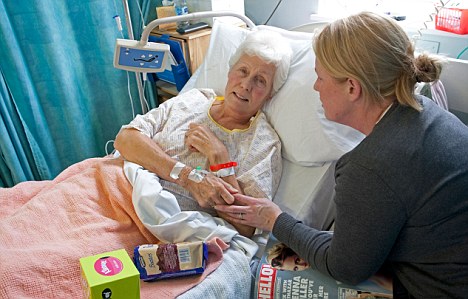
 Today I was told a very sad story about a family that has been blown apart through the behaviour of one of its members. Some 37 years ago a young woman married a man whom her family did not particularly like. They came to accept the situation however as she was 21. The girl, we shall call her Joanna, had just finished a course at a local college but immediately after her marriage to Ben, she had to stop any attempt to find work as her husband wanted her to keep house and raise children. Three children arrived in quick succession to the delight of the girl’s parents who lived not far away. Over a period of five years, however, they found access to the grandchildren increasingly difficult and by the time the eldest child was five all contact had ceased. Joanna was in total submission to Ben and would not stand up to him on any point. On the few family occasions when she was present, (he never appeared) she sat in a corner with her head lowered and saying very little. Even these few appearances at family events petered out to nothing and the grandmother, telling me this from her hospital bed, says she has not seen either her daughter or her grandchildren for over twenty years. They still all live within five miles of each other.
There is another daughter in the family, Eileen, who has also lost contact with her sister and her nephew and nieces. The cruellest blow for the wider family came when one of the grown-up children of Joanna’s family was on local television for some achievement and announced to the world that she, a woman in her thirties, had no grandparents. Somehow her family had created for her the myth that the grandparents and aunt to her and her siblings did not exist. They had been airbrushed out of existence. This scenario reminded me instantly of a cult, the creation of a reality which has been falsified and is destructive to those who live within it.
You can imagine that, hearing the story, I wanted to understand a little how this incredibly sad narrative had come to pass. In the limited time available to me I discovered that Joanna had been severely bullied while a teenager at school and that her self-esteem had suffered as a result. Her situation was not improved by opting to live at home while a student rather than learning to mix with a number of fellow students her own age. A failure to develop socially during the crucial student years had made her vulnerable to being attracted to the idea of an early marriage as a way of achieving adulthood in a single act, without going through the process of mixing with and learning about other young adults. This combination of circumstances – self-esteem problems and failure to break away from parents at the right time- is also a typical scenario in the background of those who get drawn into extreme groups, both religious and political. It is also, incidentally, the area of study that I wish to speak about at next year’s Cultic Studies conference. No doubt my readers will be hearing more on this subject as my reading on identity issues starts to intensify.
Having in my own mind formulated the idea that my elderly patient was describing what was, to all intents and purposes, a cult, I tentatively questioned her about Ben’s background. I suggested that this intense possessiveness of the patient’s daughter over 37 years was possibly the mark of a personality disorder. I offered the thought that what she was describing was something similar to the intense devotion to a cult leader which simultaneously destroys all links to the outside world. Her daughter had cut off the wider family from her children, not out of wickedness but out of the need to hold on to a relationship which, although toxic, had helped her to hold things together all those years ago when trying to make the transition from being a fragile adolescent and passing into the uncertain world of adulthood.
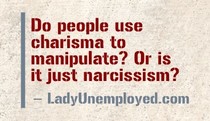
Scraps of information about Ben’s past further illuminated my interpretation. As readers of this blog will know, I always look for evidence of Narcissistic Personality Disorder in those who lead cults or extreme groups. Narcissists are those who thrive on the total devotion of their followers, having had some issues in childhood, particularly in relation to their mothers, that leave them with what the literature calls a ‘narcissistic deficit’. Translated into English, the expression suggests that boys in particular, who are over-worshipped by their mothers, will expect to have a life-time of such worship from others. They develop the skills necessary to draw victims into their net who will provide the right degree of ‘worship’. In Ben’s case he was looking, not for cult followers, but for one individual to serve his narcissistic needs. Joanna’s mother told me enough to suggest that the theoretical reconstruction might be correct in this instance. Ben’s mother had indeed over-mothered him and then abandoned him by dying when he was 12 years old.
I was not able to share all my theorising with Joanna’s mother but the subsequent reflection about the story she told has driven me to want to share both the story and my interpretation with my readers. It has, to be frank, up till now never occurred to me that some marriages may take on the character of cults, especially as they are totally lacking any identifiable ideology or belief system. This interpretation that Joanna, in entering this marriage, effectively became a member of a two person cult, does however seem to fit the facts. I cannot of course list all the marks of a cult and apply them each to the fragmentary story that I heard, but I hope my readers can see that my interpretation is at least a plausible one.
For me, writing this account and offering an interpretation, has helped to bring to my awareness how the dynamics of cults, extreme religious groups as well as narcissistic behaviour are never far away from every-day situations. Whether my attempts to offer the beginnings of new understanding to Joanna’s sick mother were helpful, remains to be seen. I did quote to her the old saying that to understand all is to forgive all. Whether I completely agree with that slogan, I don’t know, but it does contain sufficient truth to be worth using in these situations. A recognition that Joanna and Ben are both victims does not lessen the destructive results of their behaviour, both to their families and children, but it maybe does help a grandmother at the end of a long life begin to find a little peace in the situation. Let us hope so. Meanwhile I have been allowed to learn something from this sad, sad situation which may, perhaps, be used to help others understand.