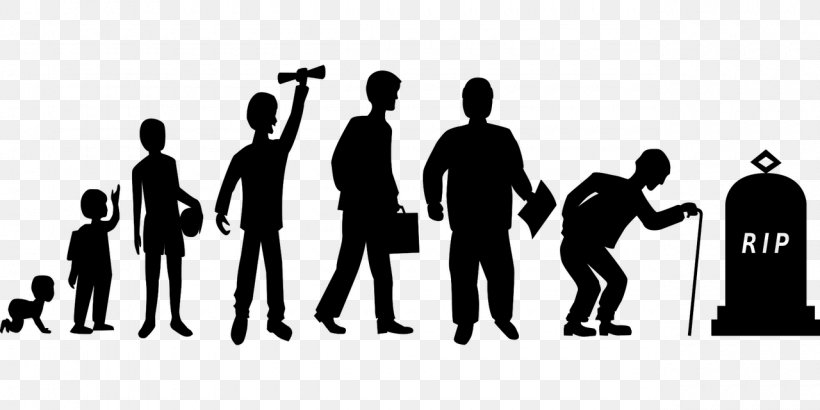
These thoughts on mortality were written down in response to an elderly woman of 97 who wanted to know what I thought about death and what comes after. Although brought up as a Christian, this woman regards herself as an agnostic. I have thus tried to present a view of death that is open to the needs of people who have not followed a Christian journey but perhaps can be encouraged to think and meditate about the topic as it grows closer to us.
I decided to write down some reflections on the topic of mortality. At the age of 80, I come firmly into the stage of life where it is natural to reflect and think about it. My reflections and what I think about death may possibly be helpful to anyone who, like me, is getting older.
‘All things come to an end’
My observations about death and mortality come under three headings. The first is a pragmatic one. This observation about death is to note that it applies to everything. ‘All things come to an end’ as the Psalmist says. When we think about this, we see that the limited life cycle of created things is not a statement of futility. The existence of beauty and transcending glory in the created universe suggests something full of hope. The things that come to an end, and these include our human existence, are also things that carry with them, in many cases, an enormous beauty that takes our breath away. This beauty and glory that are found in many earthly things, including ourselves, coexist alongside their finitude. ‘Coming to an end’ and ceasing to exist in a material sense is a necessary part of the pattern of existence. This beauty and glory that is part of our human existence and the created world is something we are invited to celebrate throughout our lives. We are part of a world that reveals so many sources of wonder and glory, but all this comes with the cost of being in a world that is material and finite. We pay this price of being subject to death because we recognise that choosing to avoid it would necessitate avoiding life altogether. Not existing, never being born, is not a choice that most of us would make, even if it were possible. Many lives are lived with terrible obstacles and handicaps, but every individual experiencing some level of conscious awareness can experience wonder and glimpse transcendence. Using these words does not necessarily imply a religious perspective on existence, but everyone, regardless of their belief system or lack of it, can know something of human wonder. Life is a precious gift and, given a choice between existing or not existing, most of us would choose to experience it, while recognising that it comes, for many, linked to a package of painful experiences to endure.
Intimations of eternity.
The next observation I make is that there is, in our human life and experience, intimations of something else. For the non-religious person, I would want to speak about the almost universal experience of love. Love is not just something that belongs to each of us in our individual family or friendship circles. It is a universal, and, for human beings, it is even built into the survival mechanisms we have. Without it we die, especially at the stage of being infants. It is not hard to imagine love as a universal principle pervading the entire universe. Another image is that of love being like engine oil which allows the vast mechanisms of life, in all its forms, to function. We live in a universe which has these two universal principles. One is the constant emergence of life in many forms, animal and vegetable. We can think of love in the same way. It is an energy that, like life, is constantly manifesting itself. Life and love are not material things, but they are transcendent entities or principles in which we as human beings participate, indeed owe our very existence to. Is it going too far to say that life and love are the secular realities that religious people would describe as being like what they describe as God? If life and love exist this side of death (not a religious insight), it is not too hard to imagine that they are universal in some way and survive our individual demise. To die is to enter a dimension where life and love are experienced as all-pervading and all-encompassing.
The part that is played by religious faith.
The religious quest allows us and encourages us to do two things. One is to live life always exploring these universal realities of eternal life and love. The Christian way was to point to the utter supremacy of following in the path of life and love, seeing Jesus as its perfect embodiment. The pagan world before Christ knew only power, cruelty and human exploitation in society. There were those who questioned these dominant ways of living life, but they were few. It took the Christian revolution (not always well understood) to bring this ground of hope into human consciousness. The hope says that human beings have been allowed a glimpse of what is and is to come and we must at a deep level orient ourselves to this reality. Meditation or prayer are different names for the activity of aligning ourselves to what ultimately is.
The experience of death
The moment of death is the moment when we cross over from a world full of incredible richness and beauty to another world possessing these things but in a completely different way. Human existence has been a learning experience, an opportunity to recognise the important transcendent universals which never come to an end (life and love). Somehow, I believe that whatever awaits us in the place beyond, we will be encouraged to continue to orient ourselves to these same realities. For Christians the journey is a continuation of one of identification and participation in a man who is himself a kind of bridge between two realities. The words that resonate from John’s gospel are ‘where I am, there you shall be also.’ They hint that while there may be many ways of arriving and reaching this fuller world, holding on to (faith) Jesus is a reliable route. The important thing for all of us is to have lived this life at depth so that we will recognise the new stage. This will only be obvious to us if our lives have already let in the possibility of wider love. Living our lives now with the fullest openness to this love is what we have been rehearsing for all of our human lives.
Fascinating, as always, thanks! Thinking about this subject a lot recently. We are creatures where vision is normally a dominant sense. What’s under our nose-and also distant twinkling stars-capture our attention. Latterly, it’s also what lies behind the human eye, or what the eye is an extension of, which really draws me. The 86 billion neurons in the brain, with trillions of possible electronic connection patterns, is arguably far more impressive than the external universe. We have an awareness of the universe, but the universe has no awareness of us. Personhood, thought and existence are unavoidable realities: “I think, therefore I am”. The glory of creation speaks of a creator who can sustain and deliver us eternally. Strange how so many physicians speak about palliative care as being the most spiritually alive discipline…………….
And hospices are places full of life and creativity – and love. People are focused on what is really important, so hospices are positive places to be.
Indeed! My first fortnight or so working in a hospice removed any sympathies for assisted dying……….
My 4 years of hospice chaplaincy confirmed my sympathies for assisted dying. Even with the very best of palliative care, some people suffer intolerably.
You possibly move into the territory of utilitarian vs deontological ethics. The Gulag and the Gas chamber perhaps arose when people ceased to believe in any absolute moral principles. The UK’s abortion genocide is ugly. The killing of frail older people sadly now looks inevitable.
I’m not talking about killing anyone, old or young. But many of our modern medical methods prolong suffering when death is inevitable. I am frail and older, and I would refuse treatment at all, if I had a painful terminal diagnosis, rather than endure a needlessly long and difficult death. I have nurse friends who would say the same – they see the suffering on an intimate level.
Some symptoms cannot be relived by palliative care, and pain cannot always be controlled. Compassion is an absolute moral principle.
Comparisons to gulags and gas chambers is ridiculous and offensive.
In terms of the medical science, we currently see how a vast range of huge advances in treatment have rendered a great many symptoms treatable. There is a curious paradox present, how a generation blessed by these advances now seeks assisted suicide.
The idea of life-prolonging treatments getting inflicted on unwilling clients is an urban myth. There is a vastly better and more open culture now, on the ceasing or limiting of treatment. Without fluids death will inevitably occur fairly rapidly.
In the relative absence of a brilliant response to opioids, or to other painkillers and interventions, sedation given subcutaneously has capacity to diminish distress. I would have been open to the wisdom of assisted suicide in the distant past. But a year of working in a hospice radically changed my perspective. Assisted Suicide resembles abortion. The ‘client’ and the ‘care giver’ both get demeaned. Rural communities, populated with livestock farmers or crofters, are interesting places to work. Those familiar with basic biology, and accustomed to handling sick animals, rarely seem to get wound up about assisted dying or strenuously trying to extend life. There is possibly an inbuilt arrogance about assisted suicide supporters in the urban elites.
Lots of amazing spiritual events often draw together as people die. The estranged sibling sees and connects after decades of separation. Various other factors can produce a peaceful death where one was not anticipated, or seemed profoundly unlikely.
I have never seen anyone regret cancelling an abortion, or regret the TOP procedure or pills failing to work. I have seen rather a lot of post-abortion regret. That accompanies some people to their dying breath. The assisted suicide tunnel is also a potentially long and dark one.
Human depravity may see people placed under pressure to get themselves killed to balance NHS health trust books, or to preserve wealth for family members. This is probably entirely predictable. A society stripped of decalogue values invites all sorts of satanic snakes to run rampant. The moral vacuum of the Far Left and Far Right invite trouble, and the historical results are plain. Respect for the individual, and the shield of social protection, are hallmarks of a civilised society. Will lots of people in future request assisted suicide in later life as a result of loneliness?
The last three sentences Stephen ring true thank you for this.
And thank you James as this is brilliant too.
How long have I got (asking for a friend)?
Those of us getting on a bit may well reflect on this question, although not everyone does. My parents seemed to have no concept that they wouldn’t live for ever. Certainly they’d made no provision for any decline, neither wills, nor communication with their children. Only when mother was diagnosed with an incurable neurodegenerative syndrome did they start to wise up. Even then, no plans. Scans showed a loss of brain mass, and this knowledge seemed to hasten her decline into full time bed care, nursed by my Dad and a steady regular circus of carers, nurses and other healthcare professionals. Dad, approaching 90, was making regular trips up the stairs with full china service tea trays and serving plates to maintain some of the more bizarre grandiosity, which now feels rather humorous, but at the time, ludicrously unfair on him.
Their expectation was that my sister should forget about her own full time work, and her family, and go up north to care for her mum. I’m glad she didn’t. I used to pay surprise visits, as I was retired by then, and had the time, and this seemed to go down well, but no such requests were made of me. However they did complain about the costs of carers, which I suspect I was supposed to contribute to. However later it transpired they could well afford their necessary expenditure.
When she died, I’d hoped to have time to get to know Dad away from the Controlling Mind. He lasted less than 3 months. In reality, and he partially conceded this, he couldn’t exist without her. He’d also I think enjoyed the clinical circus of daily geordie lads and lasses pitching up for their chores, and happy to engage with him, even in his slightly inappropriate banter. After she went, the house was silent. He’d been a distinguished academic, immersed entirely in his work, with no space for anyone. Except mother, who did his social interactions for him.
And some years after their departure and the loss of significant others, and not being in the first flush of youth myself, Stephen’s article has stimulated further thought.
I’ve lost friends younger than me, in some cases my some distance. It’s obvious as we get older that bits begin to break, with more regularity. But cancer and other killers can strike quickly and unexpectedly. I discovered by searching google again, one old friend had died suddenly 5 years before. We’d lost touch, and I’d wrongly assumed his lack of reply to my letters and cards meant he couldn’t accept my poor health at the time. Once I found out, I sent for a copy of his death certificate, and worked out what probably happened. He’d had a haematemesis (think Lord Grantham at the Downton Abbey dinner table) but from liver disease. I don’t think it was alcohol. He drank far less than me at university, but I could be wrong. He’d lived his life to the full, as had other friends I’ve lost. Which brings to the question that beckons: is there life before death?
We’ve no idea how long we’ve got. Death is a certainty. I believe in eternal life, but I’m confident we’ve probably misconstrued what it will be and who will be there.
We must discover what it means to live. And live well. Certainly activity plays a part in this. Our brains, muscles and bones prosper from action, and atrophy with inaction. Overactivity can be escape from reality of course. Somewhere in the middle lies peace. Grandiosity is also a delusion and escape from reality. Here is a call to embrace just being ordinary. It’s not a popular idea, but with billions on the planet, we can’t all be exceptional. And for many of us there is the increasing realisation that we are exactly that. Ordinary. One of the best people I knew was one. His legacy was his goodness, his realism, his humanity. Even if there is no eternal life, who he was lives on.
Not being a Downton fan, I had to look up haematemesis. That must have been a gruesome episode – I hope you weren’t trying to eat while watching it?
I wasn’t a fan initially, but sneaked a peak whilst Mrs L was watching it on her laptop, whilst I had the cricket on. I became addicted to the Dowager Countess and her pithy one-liners. Maggie Smith is sorely missed after carrying on acting almost to the end of her life.
We may have been eating during said episode, but I learnt tolerance for stomach-turning sights in my early training years, and I confess rather enjoyed the drama of the event, but not his Lordship’s suffering of course.
Downton’s a posh soap, in some respects, but also there are values, decency and principles aplenty, and characters you can really get behind.
Ordinary = extraordinary.
What a shame so many distinguished academics have got lacunae in their schemes. Overspecialisation in many individuals’ mentalities led to watering down (and technocratic religion bosses gave this spiritual force).
To the extent I think I understand what you’re saying Michael, there were vast lake-like lacunae in my parents’ lives together. And what makes me sad and angry is rather than assist their suffering or challenge their behaviour, the conservative evangelical church they were embedded in, simply rubber-stamped who they were. Moreover their oddness was not just overlooked but reinforced, and the impact their dangerous beliefs had on us their children, was compounded, driving us further away than ever.
To be honest, I’m not sure any church I’ve encountered would be trusted enough to make a helpful intervention. It does make me wonder what church is for if it can’t pastor its flock, but damage already damaged people further.
There was deep pathology in our family life, some of the causation of which I’m now aware: trauma, loss, abuse. But instead of identifying and easing the burden, the church facilitated its repetition. Hopeless.
You can see why I’m not favourably disposed to conservative evangelical thinking! I’ve tried others’ too, and they’re not much better.
A profound piece; to be read slowly and carefully. Only now have I been able to give it the time it deserves.
Last week I was busy with hospital appointments after having suffered a TIA. It was not the first time but previously I did not recognise the symptoms as being anything serious. How could it be? I was too young for such a thing (even though I am an octogenarian!). In both cases it took friends to suggest it could be a TIA. Last week the consultant told me in no uncertain terms to go to the Hospital whilst I had symptoms not wait until they had cleared up and then wait for friends to tell me to visit a GP.
Apart from spiritual preparation for death, over the last few years my husband and I have made daily living prepartions for whichever one of us dies first. I am not practical so he has compiled a book for me with photographs and instructions as to action if the central heating fails or if there is an electricity cut and other things. I am now practising these under his supervision when the occasion occurs.
In these practical and spiritual prepartions for death, this article could not have come at a better time for me. Yes Stephen it was very helpful; many thanks.