Stephen is a retired Anglican priest living at present in Cumbria. He has taken a special interest in the issues around health and healing in the Church but also when the Church is a place of harm and abuse. He has published books on both these issues and is at present particularly interested in understanding how power works at every level in the Church. He is always interested in making contact with others who are concerned with these issues.
View all posts by Stephen Parsons →
In recent weeks, the work of the Charity Commission (CC) and its involvement with the Christ Church Oxford saga has been explored on this blog. I do not propose to go back over what I have said in earlier posts. Nevertheless, I want to repeat one point that I made on the 28thJanuary. When a dispute arises between the CC and a registered charity under its supervision in the UK, the CC and its decisions have considerable legal force. Recently the CC has published an account of their involvement with a Sikh charity in London. This clearly sets out how the CC works to intervene when a religious charity is unable or unwilling to conduct its affairs in a way that satisfies charity law. The religious charity involved is the Central Gurdwara, the most prominent Sikh temple in London. The process of intervention by the CCs has lasted several years but it has finally been resolved by some decisive actions by the CC. This has brought to an end a number of failures of governance which involved money and other administrative lapses. The story of the CC’s involvement with this charity is an instructive one, since it shows a dogged determination by the CC to put things right and insist that charity law is observed and enforced. Charity law in Britain is not like a voluntary code. It is part of English law backed up and enforced by the civil authorities of our nation.
The charitable aims and objects of the Central Gurdwara are the maintenance of the building and the advancement of education for members of the Sikh community. The problems that were raised and brought the charity to the attention of the CC in 2012 centred round some disputes among the trustees. These made it difficult for the smooth operation and management of the institution. The CC seem to have a well-established process for these eventualities and these protocols have been in operation from December 2012 right up to the present report in March 2021. The CC obviously are using their own terminology to describe these stages in putting things in order, and, even though it is not absolutely clear to a layman what each part of the process involves, we get the sense of a well-oiled and efficient scheme at work. The first stage was the ‘opening of an operational compliance case’ in 2012. The next stage was the issuing of an action plan in February 2014. In July 2014, the CC opened a ‘monitoring case’ to find out whether the trustees were implementing the action plan. The monitoring case had determined by July 2015 that a statutory inquiry under section 46 of the Charity Act was required. This was to examine the compliance with the action plan, the financial regulation of the charity and whether there had been misconduct by the trustees. By March 2016 the CC had determined that there were serious problems. The trustees were issued with a Direction to provide evidence and copies of documents which could be examined to see whether promised improvements of the Charity were in hand. One sticking point at this stage proved to be an issue over defining membership. Members of the Temple alone had the power to elect trustees and because there was some vagueness and uncertainty in this area, the process of finding legal trustees was made impossible.
In January 2017, the CC decided that it was necessary to intervene and appoint an Interim Manager (IM). He would have the legal authority to determine on the difficult task of membership so that valid elections would be able to take place. The main problem encountered by the IM was the continuing disruptive behaviour by existing trustees. It was determined that the appointment of 15 brand new trustees was the only way that future governance could be set in place and respected by all parties. This process of electing the new trustees was overseen by an independent specialist company for managing ballots and elections. These took place in March 2020. The three candidates who had received the highest votes were appointed President, Vice President and General Secretary respectively.
The conclusions of the CC inquiry have considerable interest to those of us who look to the CC to provide stability to the charity sector and in our case, religious charities. One statement that caught my attention was one that stated ‘the former trustees failed to resolve their differences and implement the guidance. This amounted to misconduct…’ A further statement gave the new trustees the option to ‘recover any money lost due to breach of trust/duty by the former trustees. The IM had clearly had a difficult task. The report recorded that he had met personally expenses of £33,791 which had not been charged to the charity.
The final section of this Report about the affair reminds the reader of the responsibilities of charity trustees. One would like to see these printed and given to every single individual who takes on this role, PCC members and college governing bodies alike. It is worth reproducing seven principles that are recognised by the courts when reviewing the conduct and decisions of charity trustees. These principles are as follows. Trustees must
act within their powers
act in good faith and only in the interests of the charity
make sure they are sufficiently informed
take account of all relevant factors
ignore any irrelevant factors
manage any conflicts of interest
make decisions that are within the range of decisions that a reasonable trustee body could make
Of these seven principles one would like to be able to say that they are always listened to by charitable bodies we know. Acting in the interest of the charity will always require that other issues, like personal vendettas, be put to one side. Conflicts of interest are again common in some areas of church life we have been looking at over the past weeks and months. It is indeed helpful to have these reminders of good practice for charity trustees of all kinds of charity. It is also good to have a reminder that good practice is not only recommended; it has the full force of the English legal system to back it up and enforce it. The Church of England has managed to avoid some of the requirements of law by being able to claim special exemptions. Thus, it has been allowed to avoid some of the stipulations of the Equality Act 2010. It can, in some situations, discriminate against women and sexual minorities. How much longer these exemptions will be tolerated by society is an open question. One can imagine that eventually the laws of the land will be the same for every institution, including the Church, and the laws which tolerate deliberate acts of exclusion will be swept away.
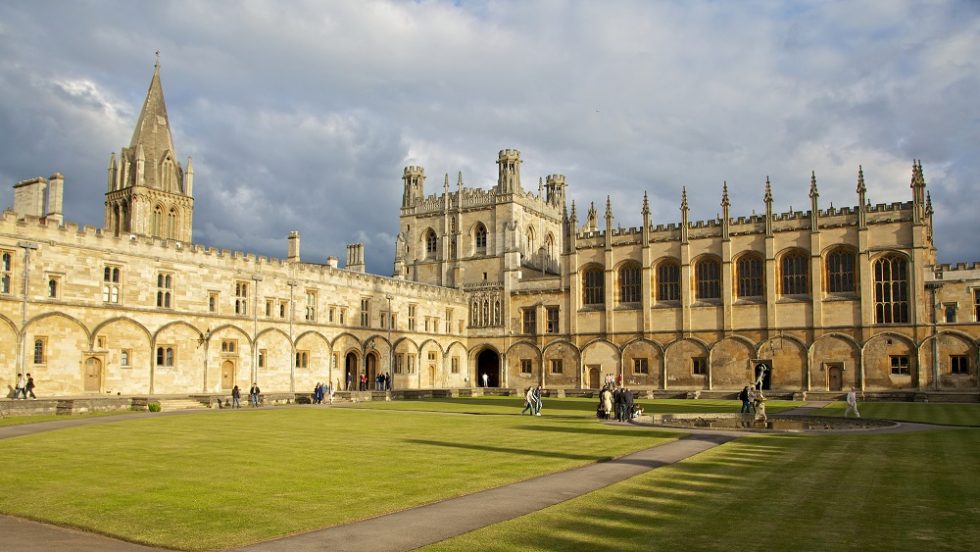
One institution that is currently attracting the attention the CC is of course Christ Church Oxford. Even at a distance it is possible to discern that there exist breaches of several of the seven principles of good charity trusteeship. I hardly need to repeat all the ways that personal animosities seem to have started to interfere with the trustees’ work. Animosity and the process of governance have become entangled. Another of the principles of good governance is that trustees should be well informed. The censors at the heart of the dispute with the Dean have done little to assist this process when they forbade the Andrew Smith report being distributed among their fellow trustees. The lack of openness in this action does not fill one with confidence that whoever is chosen to ratify the Governors’ actions will find the Christ Church trustees acting in acting in ‘good faith and only in the interests of the charity’.
My final comment is this. If I, as a non-lawyer, can spot several obvious flaws in the way matters have been handled at the College, it is surely clear that a legally trained person, well versed in charity law will also see these same failures of good practice. The College is going to be judged by the protocols of charity law which does not make any exemptions or concessions. The Central Gurdwara in London was not able to argue against the right of the British State to demand just and fair practice as is laid down by the laws of the land which operate to oversee charities. Christ Church College may be able to employ the best (and most expensive) lawyers in the land. Even with this power, it will not be able to stand against the power of the courts and its judges if it is found to have betrayed its charitable aims. At present it is hard to claim that the trustees of Christ Church are fulfilling and acting in accordance with the terms of their trust.
There is an apocryphal tale – which happens to be true as well – that tells of a BBC reporter in Northern Ireland at the height of the troubles in the late 1980s. He was trying to explain, live on air, to the news anchor in London, the intricacies of the politics, religion, violence and tribalism, with the law, police and paramilitaries all thrown in for good measure. It was a tragic-yet-hopeful complex spaghetti of issues and events, and hard to explain in one report. So here is how he summed it all up: “Anyone who thinks they understand what is going on around here clearly hasn’t grasped the situation”. Quite. If you thought you understood what was happening, you would really need to think again.
Any clergyperson who has acted as the chair of a Parochial Church Council will know the experience of trying to find common ground amid a cacophony of opinions. On contentious matters, it is seldom possible to arrive at the point where we can say that this is the undisputed unanimous position of the whole group. In spite of Paul pleading for Christians to be of ‘one heart and one mind’, this seldom is the reality we find in practice. Many decisions, which go to a vote, have a substantial minority grumbling that what has been decided is wrong.
The academic study of group behaviour is not one that is familiar to most people. Some of the insights which can be discerned from these studies are nevertheless fascinating and useful for the Church. We sometimes want to forget the untidiness and even unpleasant dynamics that can exist even in ordinary committee work. As long-term readers of this blog will know, I have always been interested in the way groups function. What happens in a committee or a congregation is sometimes in complete contrast to what individuals say they want. When we recently looked at the writing of Le Bon and his 19th century studies of the crowd, we discovered that the normal consciousness of individuals is sometimes compromised or changed when they become part of a large group. Freud picked up this theme, noticing the way that primal unconscious processes could erupt into the conscious mind of members of a crowd. He theorised that a group like the church or the army would have a corporate super ego. This would, in a group setting, replace the one used by the individual. The army operated smoothly because a Commander in Chief was making the decisions about what were the important tasks for that army to perform. In Freud’s understanding, the person of Christ was the guiding principle, or super-ego, operating within the Christian. This created a stability of belief and practice. Freud’s observations are interesting regardless of whether we agree with them. They show him taking seriously the corporate aspect of human awareness as well as that of the individual. His speculations about the unconscious dynamics that operate within a crowd/mob, sometimes involving violence, helped his successors to an understanding of the phenomenon of fascism in the 30s.
Another pioneer of group studies, Wilfred Bion, deserves our attention. He was working with groups of officers invalided home during the Second World War. These had been incapacitated by some kind of mental trauma. Bion’s task was to rehabilitate them so that they could function once again and continue to make their contribution to the war effort. He decided on an experiment. This was to put the men into groups so that they could learn to work together and accomplish simple tasks which would involve cooperation. These Bion work groups were initially thwarted by resistance from the members of the group. Bion went on to analyse what was really going on, and how it was stopping the men working together. He called these processes of resistance, which were impeding the work tasks, basic assumptions. These basic assumptions were a kind of group mental attitude which they all shared. Put another way, the group members were acting out of a group mind, resisting doing the tasks which the group were being given. Two of these basic assumptions can be mentioned here. One is a tendency of a group always to look around to find someone to be their leader. This is, in itself, an avoidance tactic. It makes one person responsible for what goes on so the others can sit back. The second basic assumption is what Bion called fight or flight. This is a tendency for all members to use the group to look for and struggle against perceived enemies. This hostility towards another group (real or imagined) is irrational but it is a successful way of relieving primal anxieties about identity of the group. It certainly succeeded in the temporary undermining of the group tasks which were the whole point of Bion’s groups.
The study of basic assumptions and the way that these unconscious processes erupt into the work of groups, large or small, is something which was closely studied in the 70s and 80s. The Tavistock Clinic invested a great deal of energy and manpower into studying and experimenting with such groups. Sadly, from the point of my own interest, this area of study seems to have become far less fashionable over the last 20 years. It may account for the way that fewer people are on the look-out to notice the way that unconscious processes are at work in many group situations. People do not want to see how often group dynamics are rife in institutions and workplaces, including the churches. The former Dean of Westminster, Wesley Carr, was interested in this material but, since his death, I am not aware of anyone in the churches who is interested in this important class of research and study. When we, of an older generation who were aware of these interests, observe dysfunction in church groups and institutions, we are reminded of the relevance of this theoretical material to church conflicts.
One group in the news at the moment is the Governing Body of Christ Church at Oxford. Obviously, we only know what they choose to tell us about the conduct of their meetings, but it is hard not to speculate about the dynamic of these meetings. We would expect that they behave in a way similar to any other group with 60+ members. Some will be happy to sit back and listen to the activist core which is driving the agenda without expressing any opinion. They will let decisions be made on their behalf, as long as it does not touch or affect them too much outside the meetings. The second basic assumption of fight or flight will provide the group energy which is needed to pursue the vendetta against the Dean. Probably only a tiny number will personally have any deep irrational dislike of the Dean, one which has created so much malevolence. Nevertheless, some of that hatred may have spilled beyond the core. Even the most intelligent members of a large group may find something attractive in being sucked into doing what many groups enjoy most, hating a scapegoat. What I write here is, of course, speculation, but I understand that a toxic environment has indeed spread over parts of the college. Unconscious negative forces, the kind described by Le Bon, Freud and Bion are alive and well in twenty-first century Oxford.
Among the press releases put out by Christ Church for the consumption of the public is one that I am still puzzling to make sense of. However, we believe that an external, independent review will provide further reassurance about the decisions that were taken, and a way forward for all involved.” This statement contains two ideas that are mutually incompatible. The first of these is the word ‘independent’ and then it is closely followed by the words ‘will provide further reassurance about the decisions’. How can any group suggest what an independent review should provide? Although the statement is slightly qualified by the words ‘we believe’, there should be here a stronger commitment to this independence. Independence has to guarantee that any conclusion will be in accordance with the facts and the judgement of the one doing the review. Was this statement written by a fairly junior and inexperienced member of a reputation management company? It certainly does not suggest any detailed care for the reputation of the institution issuing it.
Declining academic interest in group dynamics over the past 20 to 30 years has meant that most people are now blind to the possibility for organisations like colleges and the churches to act irrationally. Bion, sixty years ago, wanted us to see how these unconscious, irrational and destructive forces can take hold in group functioning. When we talk about independence in evaluating groups and their behaviour, we mean rising above and beyond the hatreds and behaviours indulged in and fostered within much institutional life. When such irrationality becomes dominant in an institution, as it seems to be doing in Christ Church at present, calm analytical minds need to be brought in to show the difference between passionate feeling and factual material. Such judgement and stability must come from the outside.
Looking at the College from the outside, gleaning material provided by the Press and by Private Eye, we see an institution apparently bent on self-destructive behaviour. These, we believe, are driven by the unconscious processes identified by Bion and will, over a period of time, do enormous damage to the College. It may be said of Christ Church Oxford in a history written about the College many years hence. 2018 to 2022 was a period of corporate institutional insanity. No one seemed to understand what was going on and the College took some time to recover. One thing we certainly hope not to read is that the dysfunctions of the time swept away the Dean of the College.
“Words strain.. crack and sometimes break, under the burden, Under the tension, slip, slide, perish, Decay with imprecision, will not stay in place, Will not stay still.” T.S.Elliot
A somewhat unedifying dispute has broken out between conservative Anglicans in Nigeria and their ACNA fellow travellers in the States. The Anglican Church of North America is one of a number of break-away groupings, formed after a large conference in Jerusalem in 2008 for conservative Anglicans from all over the world. This conference was one of the latest in a long line of efforts to present conservatives as the heirs of orthodox historic Anglicanism. They are the ones who are biblically faithful and live in accordance with the true gospel of Jesus. Two documents are appealed to as expressing the mind of that Jerusalem conference. Adherence to them is also seen as marking out someone having membership of this true Anglicanism. The first is the document produced by the conference itself, the so-called Jerusalem Declaration. The second is part of a statement or report from the Lambeth Conference in 1998. Addressing the topic of sexuality, the segment is referred to as Lambeth 1:10.. This statement had quite a bit of material addressing the pastoral care of homosexuals but the sentence focused on by conservatives is the one which declared that ‘homosexuality was incompatible with Scripture’. Conservative bishops were able to read from this sentence a total vindication of their position. To this day, little by way of new thinking has taken place among conservative Anglicans and this was vividly attested to by the reactionary video put out recently by the organisation, the Church of England Evangelical Council. This was published in response to the nuanced document, Living in Love and Faith, which represented the range of viewpoints in the Anglican Church as a whole.It is clear that the issues of welcoming and engaging with the gay community is of no interest to many within the broad family of conservative Anglicans across the world.
The current dispute has been triggered by an open letter written by some members of ACNA in the States, addressed to their fellow Anglicans who are troubled by the way that gay Christians are treated in many conservative Anglican settings. It is not a radical document by any means, but it is stating things which would appear obvious to outsiders. Demanding that gay people attain abstinence and celibacy means that they have to meet standards not expected of straight people. Also, even when gay Christians achieve celibacy, they are still being treated as invisible. Congregations do nothing to affirm them in any way. The authors call for ‘compassionate and effective pastoral care’ for this group. What this means in practice is not spelt out, but clearly the letter has rattled cages right across ACNA and its allies around the world.
The conservative Anglican Church in Nigeria, under its Archbishop Henry Ndukuba, has been the first to see this open letter and ACNA’s response to it as the beginning of a capitulation to western decadence, and thus a betrayal of strict traditional Christian values. Homosexuality must continue to be treated as a virus or a yeast that ‘should be urgently and radically expunged lest it affect the whole dough.’ Further the Archbishop goes on, ‘the events ..(are) most unfortunate and dangerous to the cause of Mission…. The Church in USA which should lead the fight against this evil in ACNA; and if it fails, it would have disappointed God.’ In response to this furious letter, ACNA have answered, expressing the fact that absolutely nothing has changed in their approach to the issue of homosexuality and that they remain faithful to the foundation documents who hold together the GAFCON family across the world.
The blog is not intending to be a discussion about who is right between Archbishop Ndukuba, ACNA’s Archbishop Foley Beach and the writers of the ‘dear Gay Anglicans’ letter. Conservative Anglicans dwell within a universe of binary realities which Surviving Church does not share. Reality in the binary world is either true or false. It cannot occupy a place somewhere in the middle. As the quote from T.S.Elliot at the beginning indicated, the reality is that words are imperfect tools, they crack and decay with imprecision. If we want to understand what is really going on between conservative Anglicans in the States and Nigeria, we must go behind the words about homosexuality and ask questions in a quite different way.
What is going on when Christians struggle with one another and sometimes kill each other over the precise meaning and definition of words. To me, and many other liberally educated Christians, it is an enormous relief not to be tied to a single interpretation of a word. Even the advantage of having studied Greek and a little Hebrew, does not bring me any closer to a perfect understanding of Scripture. The ability to penetrate a word, by understanding its context and its history, may take me further away from any claim to understand it completely. The more we study words and ideas, the less we seem to make claims about having complete insight into their meaning. I prefer to live in a world of paradox and ambiguity where meaning and truth are only discovered after long painful questioning and scrutiny.
The spat that is going on in the conservative world of Anglicans is not, and never has been, one merely about truth. It is mainly about our old friend, institutional and personal power. The Bible and one way of reading it and interpreting it, has been weaponised to offer a victor, if successful, enormous rewards and access to power across the Anglican Church. Christians of all shades and opinions have been lured to seek power in Trump’s America. There has always been an extraordinary myth about the duty/call of Christians to rule over society having claimed power in God’s name. The idea of a Christian theocracy was first articulated by Rushdoony in the early 70s. Such ideas have little appeal in Britain, but it is an idea popular in the American evangelical world. A Christian leader in Africa, already subsidised by generous amounts of American cash, will have a good idea of the way that much power could fall into his lap if he backs the right person in the bitter culture wars being fought out among Christians in the States.
Among my books is one entitled American Culture Warriors in Africa. It is an account of the way that the anti-LGBT protagonists are exporting their struggles to Africa. There, with plentiful cash and human resources, these ‘warriors’ are seducing whole churches and denominations to the anti-LGBT cause. Individuals such as the Sekulows (father and son) and Scott Lively spread anti-gay poison throughout Africa, contributing to the strong legal inhibitions about gays that are current in Uganda and elsewhere. With the background of all this well documented ideological interference in Africa by right wing Americans, we are right to query when an Anglican prelate makes statements which have a strongly political flavour. Can this be understood as a bid for influence and power? Is there some behind the scenes manipulation going on which would align the Church in Nigeria with some even more extreme Anglican factions in the States? There are certainly many who would love to see denominational Christianity destroyed so local congregations could operate without accountability. Battles for influence and control, using scriptural arguments about homosexuality as a kind of excuse for aggressive belligerence, are unedifying. The email correspondence flying back and forth between Africa and the States reflects the same battle that is being fought from many pulpits. All are trying to impress hearts and minds, falsely I believe, that the gay issue is a defining Christian principle. Most, if not all, of these efforts seem to be an attempt by Christians to obtain for themselves power and influence over others. Whether these bitter culture wars will settle down in time for Lambeth 2022 remains to be seen. Perhaps it would help if a new dose of honesty entered the discussions. Power, we would claim, is at the root of many of these fractious debates. The idea that Christians are always fighting valiantly for truth seems to be a delusion. If that dishonesty is not challenged, the whole Anglican structure could shatter into pieces. The dishonesty of trying to pretend that the current stance of ACNA and GAFCON should somehow be normative for all Anglicans everywhere is palpable. Do we really expect, as ACNA (and the members of fundamentalist groups in Britain) does, that words uttered at any period of history can remain unaltered free from interpretation and new understandings? The Church of Nigeria’s position and ACNA are both wrong. Words, insights and ideas are necessarily and constantly in a state of flux and change. If they stay the same, they become brittle and crack and ‘will not stay in place’. Ideas and experiences are always moving. ‘To be perfect is to change often’.
See https://www.thinkinganglicans.org.uk/church-of-nigeria-criticises-acna/ for sight of documents mentioned in the post.
I sometimes find it helpful to ponder on ideas in a simple way. I try, if possible, to reduce a theological idea down to a single word. Such a word will, no doubt, have nuances or shades of meaning which then have to be teased out. But having only one word to think about at a time helps me to preserve simplicity and clarity in my thinking. A word which this blog is constantly wanting to return to is the word ‘power’. This is a word which, of course, is used in many different contexts. For a start, it is a word with both positive and negative connotations. This fact that it has no inherent goodness or evil built into it makes it a valuable word in discussion. Everyone using it is forced to define what they are talking about and that is a good start for any dialogue. When I mention power in the context of the church or the Christian life, no one is going to know at the outset whether I am describing something good or something negative.
.The word power in a Christian context has many positive manifestations. If we were playing a word association game, many would come up with other positive words like Spirit, love or inspiration. There is one particular cluster of positive words which all relate to power in the hymn, Praise my Soul the King of Heaven. The writer refers to the experience in the Christian life of being ‘ransomed, healed, restored, forgiven’. These words each describe an experience of being empowered in a significant way. Christianity is offering us release, newness and a sense of God’s power in our lives. How wonderful it would be if the only experience of power that a Christian had were these positive ones. Would that it were true that every experience of church life led to the build up of the right kind of self-esteem and self- love. From this experience of God’s power and protection, the Christian could move seamlessly into a life of service and love for his/her fellows. God’s power of compassion and love translated into human compassion is not a bad short description of the Kingdom of God as described by Jesus.
I expect the reader will anticipate that I have to move from the positive forms of power in the Church and the way that these are often eclipsed by negative experiences. Readers of this blog will be familiar with all the negative encounters with power that church members sometimes are compelled to endure. There will be the power games, the acts of hostility and the bullying. In the most severe cases there will be extreme abuse, sexual or physical. Attendance at church, participation in the Christian life which promises to empower and enrich the Christian life, can become instead a savage experience of disempowerment.
There is, sadly, another misuse of power which we sometimes find in churches. This happens when the leadership of a church promises to the congregation power and prosperity or ‘health and wealth’. God will bless them and give them his power as long as they give adequately and are obedient to all the commands of the leadership. It does not take us long to see that this promise, by compelling subservience and dependence, is an act of taking power away from people. We have talked about this dynamic in church many times. It is effectively a ploy by the leadership to disempower the congregation at a stroke so that the leadership can have more power. The dynamic of the church becomes a top-down control by the leadership. What a long way is such a use of power is from the liberating freedom implied by the hymn?
Like most of my readers, I have a strong sense of the way that the Christian faith is a pathway to empowerment and the ‘glorious liberty of the children of God.’ When faith, by contrast, is presented as formulaic, legalistic and controlling, overlaid with the power of authority and threat, it is very off-putting. It is not surprising that many people feel suffocated and oppressed by this kind of language. We find this contrast in Paul. Sometimes he uses heavy legalistic language to speak about the faith; on other occasions he seems to rejoice in the freedom of lyrical language to describe what he knows and what he has experienced. Both are necessary, but when the liberating language of love, peace and justice is absent, what remains is not recognisably Christian.
In the last day or two I have been wrestling with a document put out by the Church of England on the setting up of an independent safeguarding structure. This will oversee the work of the National Safeguarding Team and other national bodies in the safeguarding realm. Such structures are, no doubt, necessary. Nevertheless, the document is written in such a way that one feels that the only people who will engage with the process will be people who are already familiar with the heavily formulaic patterns of church-speak. Somehow the whole safeguarding world seems to reflect the world of lawyers, managers and bureaucrats. I already have to use Janet Fife’s useful glossary of acronyms to remember the different groups doing work in this area. One more will confuse me, and no doubt others, who are trying to negotiate the labyrinthine world of national church organisations. I ask myself the question. Is this document another attempt by the Church to cling on to power to manage itself free of secular scrutiny? How much independence is being proposed? Is it writing documents that will exclude most ordinary Christians who should be there to respond to survivors? What the survivors have to offer is the passion for justice, the longing for reconciliation, the prophetic challenge and the transparency of truth. Survivors have been doing this work for years and church organisations have seldom been able to keep up. The Church trundles along, producing more of the same and now it proposes another level of bureaucracy to face this enormous challenge of putting right past evils. Of course, survivors are being welcomed into this new structure, but it is not one they have set up. Will the survivors have the necessary stamina to sit with church appointed officials and argue their case in such a way that the church will respond fairly and openly. My problem is that after reading the 20 pages of church management speak, I am really none the wiser as to how this is going to make any difference to what goes on in the Church. It will give Janet Fife one new acronym for her glossary. Meanwhile, where is the Church realistically going to find a survivor or two able to give this time and stamina? We do need more of the passion that survivors can bring to the table, but is this the right way to tap into it?
Tomorrow (Saturday) General Synod has an online session to discuss this document among other pieces of business. I am not sure what I hope will come from that discussion. I just know that I would like to see some of the passion for the Kingdom of God come into the exchanges. In the Church of England we need the longing for peace, truth, righteousness and justice to be injected somehow into the process of safeguarding. The right way forward is not moving the Titanic chairs around, but the waiting on and acting with the power from on high. That power can indeed ‘ransom, heal, restore and forgive’ the Church and allow it to find new ways of moving forward in the realm of safeguarding. The Church must find the way of empowering survivors and victims, having for so long disempowered them in an attempt to protect its power.
One of the little known facts about the rise of early Nazism relates to the professions that were most represented in the rank and file of the party and movement. By several furlongs, the answer is: academics at German universities and colleges. You may think that is shocking enough. But be prepared for the after-shock: many academics were also members of the clergy.
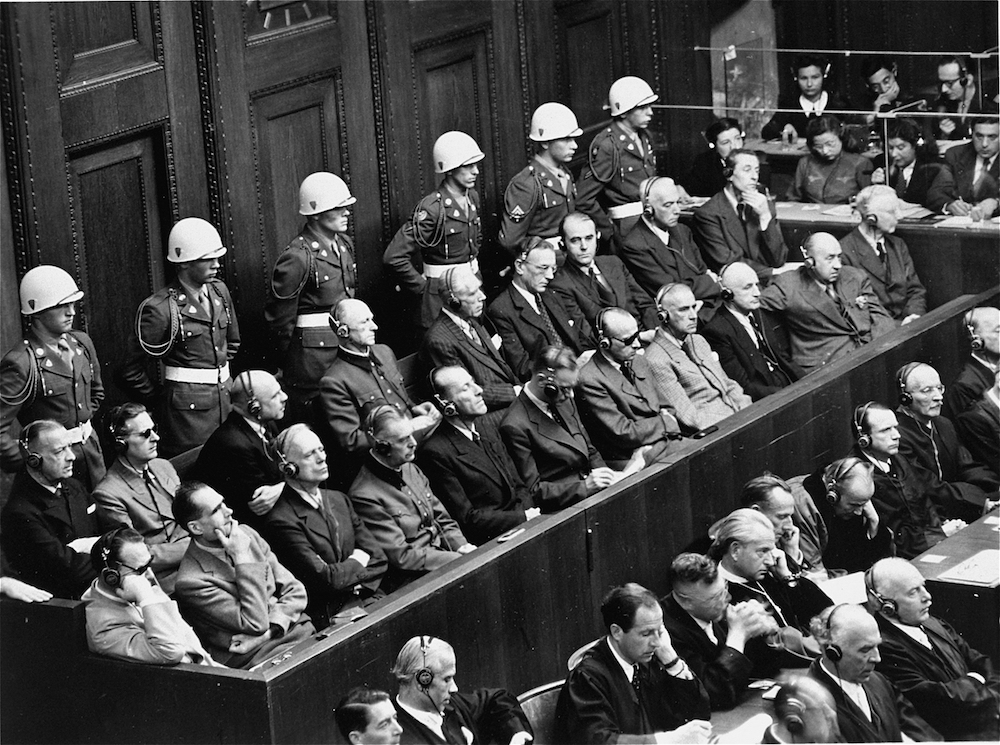
Why and how, you may ask, could this be so? After all, the Nuremberg trials revealed horrific war crimes on a scale not witnessed before or since. Surely to God, intelligent academics and kind clergy could not have been party to this? But think again.
The conditions for Nazism were economic, social, ethnic and political. The psychological conditions are arguably harder to name: shame, guilt and terror at the humiliations of the Great War and its aftermath. And then the social-self-preservation kicking in, which invested in old myths to justify the flexing of new moral righteousness. We forget that most card-carrying Nazis were on a moral crusade. And like all crusaders before them, there were demons to slay, enemies of God to slaughter, and huge investments in scapegoating. The Turks, Infidels, Armenians, Jews, Gays and others – all can testify.
How was such certitude about the Jewish pogrom expressed at Nuremberg, 75 years ago? It depended on who was on the stand. Some were certain that they were right, and happy to meet their fate and suffer the consequences. Others sought salvation through that oft-repeated trope: “I was only obeying orders”. What Nuremberg showed the world was what Hannah Arendt was later to describe, memorably, as “the banality of evil”.
More on banality in a moment. But before then, try and recall the numerous scenes in the final episodes of The World at War. Or the recent footage that has come to light, of the allied forces liberating the death camps. The allies often found the camps deserted by the guards, with piles of unburied corpses, ashes, ovens and emaciated people starving to death. How did the allies respond to the sights and traumas that they were witnessing, and that would haunt them for the rest of their lives?
In many cases, they rounded up the local populations near the death camps, and made them walk through, and look at what their compatriots had done. Where there were no neighbouring death camps, the population were herded into cinemas and made to watch newsreels evidencing the atrocities. Only after sitting through a screening were viewers given their ration tokens, stamped, for bread. If you did not see the death camps, it was hard to come by food.
Most people might assume that faced with the shock, trauma and reality of the death camps, they might, in Old Testament terminology, “rend their hearts and garments”. Some did. But if you watch grainy old film footage of townspeople walking through their local neighbourhood death camp, marshalled by allied troops, you see other reactions too. Some hold their heads high, and look away – a proud, almost haughty posture, as though somehow they have been confronted with “fake news” and odious allied propaganda. Others, stand and stare, and weep in disbelief.
Others walk past slowly, as at a funeral. Some run, fleeing from the very sight (and site). A small few remonstrate with the allied troops at the showcasing of such a grim spectacle. It was nothing to do with them, after all. The reactions in the German cinemas were the same. Some fled in terror. Some scoffed. Others sat in utter, total shock. Some went home and took their own lives. For many years after, the suicide rate amongst German women was the highest in Europe. There is only so much a witness can take.
The classic study of cognitive dissonance and religion – for that is what we are dealing with here – is Leon Festinger’s 1956 epic, When Prophecy Fails. Less well-known is Festinger’s distinctive articulation of ‘social comparison theory’. Namely, the premise that people have an innate drive to accurately evaluate their opinions and abilities, so seek to evaluate their opinions and abilities by comparing them with those of others.
This is important in the church – and always has been – as Christian groups like to say what they are most like (comparison), but equally, that they are special, so un-like anything else. This will produce distinctive grammars and cultures. So, in terms of safeguarding, the Church of England has ‘Core Groups’ – but not like anything else you can find on any other planet. Clergy have ‘annual appraisals’ too; but again, not like anything else you can find on any other planet. The church runs all kinds of systems that sound as they will be comparable to their secular counterparts. They never are.
Festinger had a distinctive take on cognitive dissonance too, and at its most basic, his hypotheses went something like this. The existence of dissonance (or inconsistency), being psychologically uncomfortable, will always motivate a person to try to reduce their dissonance and achieve consonance (or consistency). When dissonance is present, in addition to trying to reduce it, the person will actively avoid situations and information which would likely increase the dissonance.
On this basis, flat-earth-fanatics, QAnon followers and believers in the immortality of Elvis will always be with us. Nothing you can say will contradict a truly devoted believer. Festinger and his colleagues noted that every time you provided reasons to disbelieve, this led to an increased conviction in beliefs. Such beliefs were always held with deep conviction. These beliefs produced actions or validated realities that were impossible to undo. (So, if the Bible suggests the world is 6,000 years old, well, it is: and science, geology and palaeontology can’t undo that ‘fact’, because – and don’t forget – this new-fangled empiricism and knowledge is younger). All attempts to refute beliefs will only intensify and confirm those beliefs.
This also explains how, when people were escaping from the inferno of David Koresh’s compound outside Waco in Texas, they didn’t thank their rescuers who were paramedics, police and other emergency services pulling them out of the burning fires. No. Those being rescued quoted scriptures, especially Revelation. Those rescued were already interpreting their furnace and the deaths as a scriptural fulfilment. Their time was at hand.
But let us return to our German audiences in 1945. By making populations and communities see and be forced to bear witness to what had been done in their name, what did the allies hope to achieve? Cynics may say, it was vengeful: passing on the trauma the liberating soldiers had endured to the people who had been sitting with this right under their noses for several years. I am not sure, however, that this is fair. Nuremberg was, after all, about education. It was an extended enterprise in accountability, responsibility and justice. It was a way of holding a mirror to the world, and to all of us, and saying: look.
The banality of evil is commonplace. ‘Banal’ means ‘common’, ‘ordinary’ and ‘shared’. Arendt’s phrase gets right under the skin of what communities, societies, groups and churches find to be so utterly normal they cannot see its actual evil. Racism, sexism, abuse of all kinds: these are part of the ecology of churches. We have just got so used to this stuff. We no longer notice it.
But it shocks others. And when they see it, they are furious. Their anger can be uncontrollable. You can understand perhaps, just a little, why allied soldiers, when they found camp guards hiding amongst the concentration camps, mercy was in short supply. The murderous rage that the liberators felt might be in all of us, somewhere.
This is where I struggle with the Church of England, NST and safeguarding. I see only captives and the oppressed. I see no sign of any liberators. I cannot name a Diocesan Bishop who has, so far, acted with moral courage, or acted with any moral agency to call out the abuses. I see only process: just our numbed mitred-ones, “only obeying orders”. The banality of evil is contagious. And compulsory.
The Catholic theologian Clemens Sedmak says that one of the primary tasks of theology is to see it as an invitation: to wake up – to be mindful and attentive. Black Lives Matter has a slogan: “if you are not angry, you are not paying attention”. Quite. This is what the allies did with cinemas and walkabouts in 1945. It was a powerful poke: wake up – just look at what has happened! Yet some still could not see, and would refuse to learn.
If I am right about the moral purpose of the allies in 1945, and Black Lives Matters now, then the obvious thing to say about the primary task of theological education is that it is not – and never was – first and foremost about pumping out information and dogma. No. It is about arousing curiosity. If the theologian cannot ask ‘why is it like this?’, or ‘does it have to be that?’ and ‘could it not be better?’, then Jesus was wasting his time with parables and miracles.
Curiosity leads us to searching; to self-search; to probe; to wrestle; to change; to repent; to risk; to love; to sacrifice; to empower others; to be responsible; to see, judge and act; to be accountable to one another; to become like Jesus. I don’t know about you, but I don’t see any of this in the Church of England’s approach to safeguarding. Ever.
Instead, I see and hear leaders saying: “this is just the way it is at the moment”; “we are on a learning curve”; “we are on a journey”; “we are doing our best” and “we’ve come a long way”. But the best the NST does is not good enough. In fact, their best is harmful. I say this is after reading the recent 20-page page paper ‘Independent Safeguarding Structures for the Church of England’. A careful scan of the proposals from the NST for an Independent Safeguarding Board left me weary and demoralised. But also deeply disturbed.
Why? Well, the rhetoric is lame, and the entire document seems to contort itself around process, but one which lacks any real bite. Let me explain. Herewith the Missing Words Round – a pub quiz interlude in this short essay. Which of these words is missing from the report? Could it be justice, pain, betrayal, anger, injustice, resolution, compensation, closure, healing, repentance, atonement, sacrifice, forgiveness (yours, mine, anyone else’s), pastoral, care, kindness, suffering and compassion? Or could it be shame, stigma and guilt? Or perhaps God, Jesus and the Holy Spirit? Yes, they are all missing words. All of them. Not one mention for any of them in 20 pages.
Amazing. Yet someone has written a theology of safeguarding for this report, but managed to miss out all of these (key?) words. How is this done? By whom? For whom? Imposing comprehensive solutions stems from superiority. It will not realize the need for collective learning via intended authentic social intercourse and deep listening. This must be rooted in ecologies of equality, with attendant humility, compassion and empathetic bridging.
Those in power must begin by setting aside their power, and repent of seeking control in the lives of others. We can only be moral by working together in a spirit of genuine reciprocity. An over-confidence in the ability of one group to initiate good for another always carries risk. Namely, to deny that other capacity – the one that causes unintended harm.
It reflects a dangerous assumption on the part of those in power: that only their injection of goodness and morality can reform society and liberate others. Countless impositions of initiatives on racism and sexism suffer from this. And now safeguarding. Lies are more common in silences than words, says Adrienne Rich. Authentic listening has to be the starting point for the NST and the Church of England. But you can be sure they will not want to hear what we have to say.
In decades to come, just as people have studied the cognitive dissonance of those on trial at Nuremberg (remember, “I was only obeying orders”), I think, anthropologists will study this small tribal cult that revolves around process, but strangely has none. The god of the NST is process, and its high priests control its’ meaning. Alas, this is only a local tribal deity, and in terms of Festinger’s notion of social comparison, it bears no relation to any other ideas of process in rest of the known world. Contact the relevant tribal elders for more information: the silent ones in the pointy hats, holding the magic staffs. They will explain why process is their god. But it is all a mystery you see; the unseen and ultimately unknowable – such is process god.
Pope Francis has a nice line on the purpose of the church. He says it is a ‘field hospital’, not a custom house or some bureaucratic tax-revenue centre. What does he mean by this? That the church is here to mend and heal. Not take and tax. The church is for reconciliation, compassion and empathy. The church is an ITU – yes, an Intensive Care Union. We are here to bind up the broken-hearted, to set captives free, and to deliver people from the powers of darkness, their afflictions and the stigmas and demonization, and all that oppresses them.
I have spent years now listening to those abused: the sexually abused, and the falsely accused. And yet as I read ‘Independent Safeguarding Structures for the Church of England’, and what do I find? No heart or soul. The language of dull, dead process. It is a form of anaesthetic for the pain that the abused still bear. You will recall Marx’s aphorism: religion is an opiate for the people. It relieves their pain, but does nothing to alleviate the causes of their suffering and misery.
The trouble is, there is no other care or cure for the victim or patient of abuse from the NST. Now, “a patient of abuse” works pretty well as a term for our purposes here. We wait in hope. But in vain. The NST is, meanwhile, the weirdest field hospital. It bears no social comparison to any other healing institution.
All that ever happens is this. On the ward rounds you are assessed, and promised prompt treatment. But nothing else happens. Your pain increases, and your anxiety too. You feel forgotten. So, you scream loudly, for a very long time. Oddly, this makes the medics run away. Eventually, they promise to operate. But only if you calm down. Nothing happens when you do. So you keep screaming, and eventually the noise for everyone is so unbearable, they take you for surgery.
But then it is strange, for they ever do is gas you: they sedate you. You wake up, and they ask if you are feeling better? You say you do not. So they say they might need to repeat this procedure several times. It never works. So they discharge you, and explain your pain is all in your head. This is now your fault.
You are referred to Out-Patients in future, which alas is only open on alternate rainy days in any month beginning with an ‘R’. In the meantime, new patients arrive at the field hospital. The sedatives are in plentiful supply. Or you can just read the latest policy documents. They have the same effect. The opiate of religion is a way of avoiding the causes of pain and disease. It ignores the poverty and social causes of the disorders and inequalities in society.
Seventy-five years ago, some people were traumatised by what the allies showed them. Some looked, and turned away. Those on trial were just running a process, and had the right moral reasons for doing so – or so they thought. The banality of the evil was that no-one running the processes or obeying the orders exercised any moral courage or leadership. And so the pogrom continued. Because the cognitive dissonance was always in place.
Theology is an invitation to wake up. Abused lives matter too. If you are not angry, indeed boiling with righteous rage and faithful fury with the proposals in the latest ‘Independent Safeguarding Structures for the Church of England’ document, then you are clearly not paying attention. Actually, you are not awake. What would it take, I wonder, to get our church leaders to sit up, take notice, and begin a journey of real com-passion with us? Those not just abused or falsely accused; but also those abused each and every day by the devoted disciples who belong to the tribal cult that worships this little god of process?
The banality of evil is not waking up to the pain of your neighbour, and not being able to hear the cries and screams of the victims. That was the education project we now refer to as Nuremberg. I long for the day when we can lead our bishops past the heaps and piles of atrocities that they have ignored for so many long, long years.
But I know already what will happen. Some will stand and weep with shame. Some will look away, and claim no responsibility. Others will say they never knew anything about this. A few will flee with in the face of the trauma of what they have just seen and witnessed. Yet none, not one, will take responsibility. Because, as you know, the mitred-ones were just following a process; just taking orders; just a cog in the machine. Such is the banality of evil.
The recent ‘fall’ of the noted apologist and evangelist Ravi Zacharias raises some disturbing questions. There are the obvious ones, about how his organisation, RZIM, allowed itself to be hoodwinked for such a long period of time by this man who turned out to be a serial abuser. For me, the deeper questions are not the obvious ones about his abuse. They are the ones that want to scrutinise what Ravi may have thought about his vocation as an influential man of God. At what point in his life did Ravi surrender himself to the gratifications of his abusive behaviour? Did he not know, while he was behaving in this way, that this was a betrayal of his call to serve and share a vision of God? Ravi is no longer with us to answer such questions, but they still need to be asked. I am not so cynical as to believe that he began his career as a preacher as a way of obtaining opportunities to abuse. Obtaining power to abuse and exploit women was not, we trust, in the conscious mind of the young Ravi as he began his ministry many decades ago.
The recent history of the Church is littered with terrible stories of male (mostly) Christian leaders betraying their vocation to prey on the weak. Something beautiful, a life of love, vision and service is exchanged for something cheap and trashy. What is going on? Can short term sexual gratification ever be worth the catastrophic betrayals that are taking place? The key to answering this question is to be found somewhere in the nature of power. Power is something we all need so that we can stand up for ourselves and not be crushed under the bullying tricks of the dominant in society. Bullying is an experience that many suffer right back to the time of infancy. In Western male culture the human child is taught to stand up for himself. The self-assertive one is applauded. But the struggle in the male child (I hesitate to speculate what generalisations are appropriate for girls) to avoid humiliation or subjugation at the hands of others never really gets resolved. Even the boys at the top of the food chain still carry a fear of losing their position. When and if you reach the top, you become vulnerable to someone else using physical strength to push you down. Right through these artificial hierarchies in which many, if not most, male children live, there are two dominating realities. The first is fear of domination by others. The second is the longed-for antidote to this fear, the possession and exercise of power over others.
If fear and power exist widely within the preoccupations of boys in their early years, there will be, as they grow into adulthood, a variety of changes in the way typical power games are played out. Power for adults (men and women) is maintained in a variety of ways way beyond brute physical strength. Things like manipulation, coercion and subtle threat are examples of the way that power over others is asserted. There is also a genre of behaviour we describe as narcissism. This is a behaviour which successfully manipulates others so that they look up to you and feed your desire for power. Narcissists have developed a whole range of techniques and skills to occupy this place of control. They are, for example, good at intuiting the weaknesses of others for their own advantage. They know just how much pressure to apply to get their own way. They understand how to use another person’s desire to belong, how it can be turned around so that the individual can be dominated and thus under the control of the narcissist.
Where does Christian leadership come into this discussion on power? Christianity would perhaps want to claim to be the ultimate antidote to the debilitating power games that are so found frequently in society. Christianity glorifies a saviour who was brought to glory without the brute exercise of human power. All the normal expressions of power and ambition were rejected in the desert of temptation. The power to rule, to be worshipped and to court popularity were all pushed away as being unworthy of what God desired. Thus, as Christians, we follow a man without power, one who has rejected all forms of earthly domination involving violence and control. Paradoxically we still have a Church which seems riddled with narcissism, power games and hierarchies. All these lead to the same bullying, control and coercion that we might expect to find in places which have no awareness or loyalty to the Man on the Cross.
Christianity and the institution that has grown up around it, the Church, has acquired possession of much power. There is the power that exists simply by having an institution with leaders and a hierarchy. Any organisation with systems of management has to operate within recognised power structures. But there is an additional source of power that Christians can claim belongs to them. This is the power of having leaders who claim to act as representatives of God himself. Within and beyond the formal structures of Christian denominations, this power of God to control and guide is frequently invoked. A vivid example of this ‘freelance’ divine power are the so-called prophets in the States who foretold Trump’s victory. Their power is not greatly diminished by the failures of this prophecies. Then there is the power of the elegant speaker, the one who controls and seduces a crowd with attractive sounding promises. Sometimes those promises relate to material prosperity. With us you will find health and wealth. Give to this ministry and God will reward you many times. Also, you will find yourself on the winning side. Our Church/ministry/teaching is going to be the dominant one in the next round of elections or in the world to come. If you come on board with us, you will have the satisfaction of being on the winning side and looking down on losers who have chosen differently.
The offering of power to Christian followers is a key part of what many Christian leaders have to offer. And yet this teaching seems to have little to do with the one who resisted the Devil’s offer of power while in the desert. The real motivation for presenting Christianity as a religion of power is that it automatically rebounds back to the leaders. The peddler of power to the crowd will have power and wealth for him/herself. The narcissistic needs, the cravings for significance by some Christian leaders, have to be fed and in the process the true nature of Jesus’ power is eclipsed and lost.
How does this all link with Ravi Zacharias and his failure of vocation? Ravi, we believe, was called to preach the gospel but somewhere along the line he found himself choosing what was, for him, a gratifying experience of power rather than the path of service. The call of God became corrupted inside him. Instead of service he gave himself up to the urge to misuse power and seek sexual control. The reasons for him to succumb to this temptation will never be known. Possibly the young Ravi had experienced humiliation in boyhood because of his racial or social background. Speculation is probably futile, but something in his life opened him up to what appears to be an addictive attraction to sex along with the narcissist’s lusting after personal power. If God could ever be said to have called him, that power given to him at some point became twisted to be an instrument of human greed and personal gratification.
The conclusion of this short piece around the topic of the ministry of Ravi is to ask questions about vocation. Many of us claim to have experienced it. The question we need to ask ourselves in the context of Ravi’s fall is this. When we hear God’s call, are we listening to a call to service in his name? Alternatively, are we seeing, unconsciously maybe, that a link with God may boost our power? This access to his power may be in part to be used for our own ends, so that our depleted self-esteem may receive a boost. Is our relationship with God in any way serving narcissistic needs? The question has to remain a question, but it is still one worth asking. When asking it, we raise a serious challenge to the whole issue of power as it is exercised in the Church. Do the pomposities, the hierarchical posturing and the power games linked to ambition in the Church, really reflect the man of sorrows? Are we really remembering that we are following a leader who turns his back on all human power to follow the way of suffering and service?
One of my complaints about the Church safeguarding world is the ease with which people in authority in the Church forget things. Some forgetting may be to do with deliberate supressing of inconvenient truth. The burden of remembering shocking information is too uncomfortable. So, it has to be buried. The other part of not remembering unpleasant material from the past is the fact that information overload can take over. I certainly find the task of preserving and sometimes printing out hard copies of numerous safeguarding reports fairly tedious. There are just too many of them. But the effect on our memories is the same. Cases, reports and personalities get forgotten. A new generation of safeguarding officials appear who know little or nothing of what has gone before. This is, of course, a serious matter for a Church that is trying to turn over a new page in safeguarding. It wants to deal professionally with a complex relationship with its record over safeguarding back in the past..
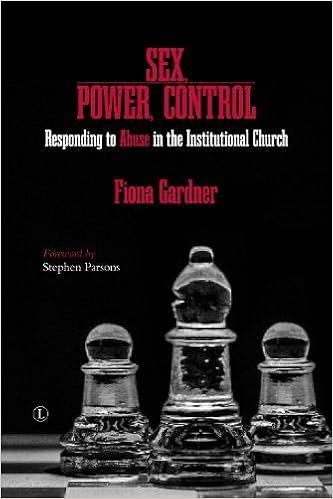
The new book, Sex, Power and Control by Fiona Gardner, goes some way to removing at a stroke any temptation to allow the past record of church safeguarding to disappear from the corporate memory. It has never, of course, gone away for the actual victims. The institution of the Church of England, on the other hand, seems often to do a good job at forgetting. Old mistakes are repeated and ‘lessons learned’ seem not to change things. The present book is a careful analysis and a record of all the main incidents of abuse over the past ten or twenty years. In every case recorded we find not only the wickedness of an evil act against a vulnerable person, but also the often clumsy responses by those in authority in the Church. If we have to summarise these responses, we can say simply that they routinely make a priority of the needs of the institution rather than the welfare of survivors. One vignette, recorded by Fiona, concerns the aftermath of a scandal in her home diocese where she was working as a Safeguarding Adviser. Although she had a senior position, with many responsibilities in safeguarding, no one in the senior staff had thought to tell her of the past abusive activities of a particular priest in the diocese. He was now facing imprisonment. The Bishop and the senior staff were having a meeting to discuss the ‘washing up’. By this they meant the attempts to mitigate the reputational and financial damage to the diocese. The victim in this case was never mentioned. Somehow the embarrassment that the Bishop was experiencing was projected on to Fiona. She was made to feel that the whole incident was in some way her fault. It is small wonder that Fiona only managed to complete six years in the post before moving on.
Of the rest of the stories and cases recorded in Fiona’s book, many are well known. But, as I have already suggested, many of these stories are becoming obscured by the passage of time. An endless succession of new stories seem to crowd in to take their place, grabbing the attention of a watching public. I wondered aloud with Fiona when she asked me to write the foreword. ‘Can you really write about cases of Church abuse when this safeguarding scene is constantly in flux? Will the book not be out of date the moment it is printed?’ I have come to see that the writing of a book recording things as they were at the very end of 2020 is an important thing to do. Sex, Power, Control provides a kind of benchmark against which to evaluate the journey from the past into what we hope will be a better future.
Three things give the book its distinctiveness. One I have already alluded to is that we have here a guide, sympathetically told, of the main church abuse cases and the response to them the mid-90s up till 2020. Thus we read of the cases of the Nine O’clock service, Matt Ineson, ‘Joe’ and Julie McFarlane among many others. The accounts are in accordance with the facts as gleaned from the individuals concerned or from one of the documented accounts that has appeared in the net. Secondly the stories are told within the context of a well-informed perspective. Fiona is an acute observer. She brings to bear her training in psychoanalytic psychotherapy. This approach is a refreshing change from the official management methods that are typically on offer in the Church bodies that deal with abuse cases. The Church leaders that have tried to offer empathy or understanding to the survivors have often revealed a curious detachment from their sufferings. The choice of language emerging from Church leaders often reveals the priorities merely of reputation management. The current prevailing atmosphere in the Church of England is one that prioritises better systems of management. Growth and the smooth functioning of the institution is what matters. This is perhaps not the message of healing that survivors need to hear.
The third perspective, which I welcome unreservedly, is that Fiona’s indispensable book is written with a strong bias for the perspective and needs of survivors. She ‘gets’ their pain, their patience, their frustration and their waiting for justice. Her witness for the perspective of survivors is made stronger by her having worked for the ‘other side’ of safeguarding as a diocesan adviser. Her testimony about that six-year experience is telling. She found herself to be an embarrassment in the Diocesan Office, as though the stuff she was dealing with was somehow contaminating the real work of the Church. No one there wanted to admit that shameful things were going on. The issues which one brave person was facing were, in fact, everyone’s business. I wonder how much this experience is today shared by other Advisers/Officers up and down the country. To work where there is any kind of resistance to the work you do is bound to cause stress for the officer concerned. Is it any wonder that many DSOs/DSAs have remarkably short tenures of office?
What I have written here about Sex, Power, Control is not meant to be a review. I am disqualified, in any event, from writing a review by the fact my name appears on the cover as having written a short foreword. But even with this admission of bias, I still want to speak positively about the book and urge all my readers to buy it. If like me, you are interested in the phenomenon of abuse and power and want to understand things better, this book is for you. If you are a safeguarding professional who needs to know what has gone on the Church of England over the last 20+ years, this book is an essential resource. It is never going to be helpful, if a new generation of professionals come into this safeguarding world and do not know at the outset the stories of Peter Ball, Garth Moore, Trevor Devamanikkan, John Smyth and the Titus Trust. All these stories are told complete with references from the internet and elsewhere. In short, everyone who makes a living in the safeguarding should be required to buy this book or have it bought for them.
The final group who should read the book are the survivors. They will know much of the factual material, but they will receive encouragement from the fact that this is written by someone who really understands their plight. As I have often said, the ordeal of the survivor is often made far worse in the encounter that he/she has with church officials who may be emotionally or pastorally illiterate. While I have not met Fiona Gardner, her book reveals her to be someone who seems to resonate expertly with the needs of abuse survivors, both at the time of their abuse and also with those who may have been further wounded by later toxic interventions of the institution. The Church as a whole needs her expertise and wisdom.
Although I am disqualified from writing a review, I can still hope that many of my readers will acquire it as it seems an excellent path to understanding the joint issues of abuse and power in the Church. It will, I hope, be one more tool in the task of educating a Church that needs to understand both these issues far better. I recommend it and hope it will be greeted with success.
Sex Power, Control Responding to Abuse in the Institutional Church by Fiona Gardner, Lutterworth Press 2021. The book publication date is next Thursday February 25th.
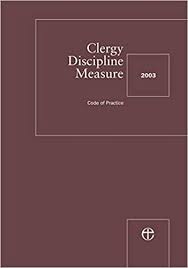
The transition from the old system of Consistory Courts in the Church of England to the supposedly more streamlined Clergy Discipline Measure in 2006 was supposed to bring greater simplicity. The earlier system, used for disciplining erring clergy, had only operated in a few cases in recent years. Speaking generally, these cases were cumbersome and incredibly expensive to organise. In effect it was proving impossible to hold offending clergy to account. The clergy had also been protected by freehold privileges in addition to the complexity of the old processes. Unless they were found guilty of an offence judged criminal by the civil authorities, the clergy were almost immune from any checks to their behaviour.
The CDM which came into active operation in 2006 provided for a streamlining of the old system. One of the main changes that came into the system was in the way that it allowed anyone, layperson up to a bishop, to take out a CDM claim against a clergyman/woman. Obviously, some cases against the local Vicar were going to be trivial and the Measure anticipated this. Complaints about changing the hymn book could be filtered out at an early stage and most minor grumbles were not allowed to proceed very far. Theoretically it was only the most serious complaints that reached the attention of archdeacons, lawyers and the Diocesan Bishop. Among the most serious complaints are those which involved accusations of serious safeguarding offences. These might be referred via the Diocesan Safeguarding Adviser (DSA) to the attention of the National Safeguarding Team. They could then appoint a Core Group to look at the case and make recommendations. Penalties could range from a rebuke to a suspension for an unlimited period. In 2021 we are awaiting a new revision to the CDM. What has gone wrong? The complaints I list here are partly recording what I have heard personally, and partly reflecting the results of research done by the Sheldon Community in Devon. They have collected many of the most appalling horror stories of lives ruined by false accusations and terrible delays in process for those accused.
My own complaints about the CDM process fall into four sections.
1 Unequal process across the country. There is a ‘postcode lottery’, it would appear. Some dioceses have excellent DSAs and compassionate bishops who have equal regard for justice and the well-being of both the accused and the survivor. Although DSAs are not expected to take on a pastoral role, they are sometimes the only person in a safeguarding scenario who can show the slightest bit of real caring. The others involved, archdeacons, lawyers and communications people seem often only interested in the detailed protocol of the process. That process does not speak of care for the abused or other damaged people. Where there is no attempt at caring, either for the accused or survivor, we find a process that can be, at worst, utterly soul-destroying and toxic.
2 Apparent failures to distinguish the serious from the less serious offences. Clergy from time to time make what can be seen as genuine mistakes. By a mistake I am referring to one-off action which is done in moment of thoughtlessness or because of stress. These mistakes are the sort of actions that are regretted almost immediately after they are done. I want to identify clearly that there are slip-ups of words used in anger or decisions connected with money that are immediately regretted. As an example of the latter, a Vicar might ‘lend’ church money to a feckless person who fails to pay it back. He might use upsetting language in front of a child. The question that has to be asked in every case is whether there is a pattern of behaviour being demonstrated. The word ‘risk’, from a common-sense interpretation, really only applies to actions that are likely to be repeated. Many forms of bad behaviour involve repetition and such repetition is suggestive of what we must refer to as addictive behaviour. Some compulsive forms of behaviour which may involve alcohol, pornography, sex or gambling are likely to require a serious professional response. It is right and appropriate to use the word ‘risk’ in speaking about these kinds of actions. With sex offences, it is likely that there is a pattern of repeated behaviour perhaps lasting several years. The offender may also have found some dubious theological or psychological ways of rationalising this behaviour. Such a scenario is extremely dangerous. In any event, assessments of risk are best made by specialists. When the word is used loosely or inappropriately, it ceases to have any meaning or protect anyone. We have seen the absurdity of applying the word risk to Dean Percy from the evidence that is in the public domain. The allegation against him refers to a single episode, not a pattern of behaviour that would suggest risk of harm to people in general.
3 The third observation about CDMs I have made is how often we seem to encounter a block in establishing the truth of what actually happened. The people involved, not necessarily the perpetrators and their supporters, seem often to have blank memories. One of the most distressing things for a survivor is to pluck up courage to disclose abuse to a senior member of the Church, only to find later the said bishop or archdeacon claims to have no memory of the conversation. The words ‘I have no recollection or memory of that’ are cruel and devastating for the survivor. Abuse amnesia, which I can call it, is also common among whole swathes of church people who belong to particular networks. Keith Makin has approached many people who might have had memories of John Smyth. Hardly anyone came forward of their own volition. The same widespread amnesia seems to apply to those who know Jonathan Fletcher. Abuse amnesia is common in the world known to survivors and we need to give it its proper description which is lying. To claim not to know when you do know is straightforward deceit. The Percy case, even before it got to the first CDM against him, had already involved lies and the manipulation of records. Fortunately, the assessor Andrew Smith spotted the lies and named them and the individuals responsible for them. One would have hoped that certain witnesses, after being named as distorters of truth, would have been questioned rather more carefully in subsequent investigations. Certainly, in a court of law, a barrister, seeking to establish truth by the age-old process of cross examination, would want to draw attention to past lies. This would help a jury assess the likelihood of whether truth is now being told or not. The witness statements in the Christ Church case have not been examined forensically. I am told that there are a number of glaring inconsistencies which have not yet been challenged. Lies and the supressing of truth seems to infect CDM processes in many instances that I know of. The problem is made worse by protocols that deny a survivor or accused person a place on the Core Group which is responsible for examining the case..
4 The fourth area of disquiet is the selectivity of cases. The fact that that the Bishop of Lincoln and Archbishop Carey were given instant suspensions and their cases leaked to the press, all within the same 24 hours, suggests a political process at work. Why them? Why do we not hear about other CDMs launched against bishops and even Archbishops? I know of at least four. The claim that CDMs and Core Groups have been used as weapons against individuals who are expendable is highly plausible. Dean Percy has been a gadfly to conservative theologians for a long time and has made enemies. Given the record of the Church choosing which CDMs to ‘big-up’, it is hardly surprising for us to suggest that some political process is at work in his case. The behaviour of his own Bishop has also not suggested discretion and even-handedness in the way the case has been dealt with. Indeed the opposite.
There is a lot more to say about CDMs and some of it has been set-out in earlier blogs. The main conclusion I have to make is that the Church of England, in its desire to possess an independent legal structure, has created a monster which now seems out of control. There are too few ordinary people prepared to be part of these processes, so the same highly paid lawyers play an over-prominent role in maintaining the structure. Dean Percy faces the same firm of lawyers working for the Church and his College. Is it surprising that there are numerous conflicts of interest in his case and no doubt in others? Who are the ordinary people sitting on Core Groups, making crucial decisions about a person’s livelihood and future? Are they allowed to speak up for common-sense and justice, or are they swept along by legal processes which tend to be biased towards the institution rather than the individual? The short conclusion of this blog post is that the CDM process and the exercise of the internal legal protocols by the Church of England has done a great deal to undermine the reputation of the Church. Systems of justice that harm abuse survivors and others who challenge the status quo of the institution, will eventually be called out by those who look on. The CDM, which began as an attempt to upgrade the old discipline process for the clergy, has become something that may destroy the whole institution.
From time to time I have had cause to return to the case of Jonathan Fletcher. It represents one of the most significant pieces of unfinished safeguarding business within the Church of England. At the time of writing we are waiting for the report which is being compiled by the safeguarding organisation, thirtyone:eight. There was some discussion, a couple of weeks ago, about whether the report was ready and about how much in advance it was being shared privately with Fletcher’s old church Emmanuel Wimbledon. No one, as far as I can see, gave final answers to these questions. We will have to wait and see, but I believe the report to be imminent.
Emmanuel Church Wimbledon, where Fletcher was Vicar for thirty years between 1982 and 2012, realises that there is a great deal of public interest in the reported activities of their former Vicar. This would be true both of his erstwhile parishioners as well as the wider public. In many ways, through the reporting of Gabriella Swerling in the Daily Telegraph, there is a segment of the public that has had more exposure to the story than many senior members of the Church of England. I have also got the impression that senior safeguarding officials in the Church and those in the National Safeguarding Team are showing little interest in the upcoming report. It is perhaps a case of ‘if we ignore this matter, even if the newspapers are reporting it, it will soon go away’. There is also an apparent perception that because Fletcher’s former church operates in a semi-detached relationship with the Church of England, it can be shrugged off as not being of concern to the rest of the Church. Emmanuel is what is known as a Proprietary Chapel and thus, legally speaking, is not fully under the authority of the local Bishop of Southwark. The Bishop still maintains a level of oversight over the parish and has the power, which he has exercised, of granting and withholding licences and PTOs for the parish. Also, the power to ordain Emmanuel clergy still falls to the Diocesan. Two of Fletcher’s ordinands, Rod Thomas and Andy Lines have become Anglican bishops. In the latter case, the consecration was, in the eyes of the C of E, somewhat irregular.
The report that we are waiting for from thirtyone:eight is of significant importance in several ways. The Church of England’s leaders cannot afford to ignore its revelations. One issue is that of Jonathan Fletcher’s past (and continuing?) influence over quite large swathes of church life in England. Considerable numbers of clergy and parishes are in debt to this influence and his exercise of power whether through patronage or in other ways. As the Vicar of Emmanuel and as a leading member of the Church Society/REFORM network within the Church of England, Fletcher had a great deal of influence in that network. Any association with him, a key person in the network, but dogged by accusations of exploitative behaviour, will be remembered and perhaps regretted. Every church where he preached, every conference which he led or spoke at, every vocation he fostered will be impacted by what we expect to be revealed in the report. A sense of shock and even shame will doubtless reach right across the conservative evangelical world over which, for a long time, Fletcher presided like an uncrowned king.
The thirtyone:eight report that is being commissioned by his old Church will no doubt focus on the thirty year period while he was Vicar of Emmanuel. Fletcher’s influence and his story in fact go back much further. As a curate of the Round Church in Cambridge from 72-76, he was a major influence on many Christian young people at Cambridge University and through his attending the Iwerne camps right up to 2016. It is hard to conceive how anyone who mixed in those circles would not have known him. If the thirtyone:eight report concludes that his influence, when at Emmanuel, was at times unhealthy or even toxic, the same risk would have applied to this earlier period. Those who knew Fletcher at Cambridge were, we would suggest, in the same danger as his parishioners in Wimbledon. Among those that came under this influence during the 70s were such names as the young Nicky Gumbel and Justin Welby. Nicky acknowledges the debt he owed to Fletcher for his Christian formation. He said in a forward to a book of Fletcher’s writings published in 2013: ‘He (Fletcher) met me three hours a week for a year. And regularly thereafter until I left university….. He has carried on helping hundreds of people like me find faith….his passionate faith combined with …..natural charm have been used by God’. Such words of enthusiasm for Fletcher might well explain why there is so little interest in his case among our current Church leaders. However the complete career of Fletcher is judged by future historians, it is clear that there are still many in the Church who feel they owe him an enormous amount and are perhaps dreading the thirtyone:eight insights. Meanwhile I have it on good authority that there are no files or any paperwork kept on Fletcher by the NST in Church House. Martyn Percy, by contrast, has suffered the attention of two NST sanctioned core groups. No doubt each core group generated enormous quantities of paper.
While we are waiting for the Fletcher report, we are also awaiting Keith Makin’s conclusions about the behaviour of John Smyth and who may have known about his activities. Smyth and Fletcher operated in different locations, but their stories intersect at significant points. The main common denominator was the Iwerne camps. Both men also shared the ability to avoid the attention of the police and the Church authorities, even though there had been questions about their behaviour for a considerable time. Each of them was successful at charming and manipulating those around them. In Smyth’s case his support network resulted in tens of thousands of pounds being collected to allow him to live abroad until his death. Whatever precisely was the appeal of these two men to keep the Con-Evo constituency silent and compliant, it has certainly been effective until now. When I first started asking questions about Fletcher, I discovered that one or several of his acolytes had systematically gone through the entire Internet removing all mentions of his sermons, talks and other activities. It was as though someone believed that they could make him disappear. Unfortunately for them, written programmes were less easily destroyed, and I gave space on this blog to the notice of a conference on preaching, called and presided over by Fletcher himself, in the early part of 2017. This had attracted over 30 male clergy including 4 bishops. The fact that Fletcher could attract so many to listen to him was remarkable. Especially important was the fact that this meeting took place after Fletcher’s PTO had been removed. Smyth and Fletcher both inspired considerable devotion from their disciples, receiving both loyalty and silence even in the midst of their abusive behaviour. It was a story of strong influence and domination over the young impressionable Christians who looked up to them. One reading of the Smyth/Fletcher story, is that each operated as a father surrogate. They were able to offer emotional support to vulnerable young men who spent so much time at boarding school away from their real fathers. The Public School had deprived them of normal family life. It was also training them in a quasi-cultic culture of silence, domination and unquestioning obedience. Tragically and cruelly the vulnerabilities of these young men were exploited and used to gratify the power needs of these two Christian leaders.
The thirtyone:eight report that we await is one that has been commissioned by Fletcher’s parish and not by the Church of England. We have already had some glimpse of what will be revealed in this report, thanks to the Daily Telegraph attempts to research the story. There is, however, much more detail to be revealed. Whatever the report tells us, it will not be a good outcome either for the Wimbledon parish or the wider Church of England. Up till now Fletcher has had protection from senior members of the Church who belong to the Iwerne network. That protection, reinforced by Fletcher’s membership of the Nobody’s Friends dining club, will not be tolerated by a press who is alert to this story. I can imagine that there may be two separate stories. One will be the retelling of the old stories of abuse, nakedness and ‘forfeits’. The other will be the story of a Church which has known about a serious case of power abuse but has consistently over decades turned away its gaze. Several con-evo institutions, such as Oak Hill theological college and St Ebbe’s Church in Oxford have been happy to benefit from the Fletcher private trust, even after the scandal of his behaviour became public knowledge. The sin of avoiding inconvenient and thoroughly toxic facts is something that has to be laid at the door of both the central Church of England and the Con-Evo network. Perhaps the greater blame attaches to the cluster of leaders and congregations that belong to the so-called ReNew constituency. In any event, both groups, the central Church and the ReNew network, should urgently prepare themselves for the outcry that is likely to be heard with the publication of the thirtyone:eight report. The loudest accusation may well be the cry of hypocrisy. The readers of the Daily Mail and the Daily Telegraph seem to loath hypocrisy more than almost anything else.
The behaviour of this one man, Jonathan Fletcher, may yet wreak as much damage on the Church of England as the behaviour of Peter Ball. Once again it is not the actual individual abusive activities that cause the greatest disgust; it is the apparent inability of the Church to operate with transparency. Secrets, cover-ups and actual lying all undermine integrity within an institution. It is this repeated failure of integrity that seems to represent the great failure of the Church. Without integrity there is a threat to its ability even to survive to serve another generation.
The Statues Gasped: A testimony of being healed from childhood sexual abuse alongside the experience of facilitating healing. Sarah Chapman and Anna. 2020 Privately published but available from Amazon.
I sometimes wonder if my blog readers are curious about my background in the Church which has led to my concern for power and abuse issues. Those who have followed this blog a long time will know that I write, not as an abuse survivor but as someone who wants to help such individuals to explore ways to find healing in one or other of its many manifestations. In this I can draw on my personal experience of clerical ministry over a long period. In particular, I write as one formerly quite actively involved in the Church’s healing ministry. Having been exposed to this ministry, I am fully aware that it sometimes has a shadow side. The Church can, while offering wholeness, be a place of harm. Much of what is written in this blog is, to a certain extent, an exploration of this terrifying paradox. The highest and the best, the Christian good news, can sometimes be quickly twisted to become the occasion of evil, deep pain and horrifying suffering.
My background experience within the Church’s ministry of healing and deliverance has given me some sensitivity to the needs of the abused. One of the issues that constantly come up in the pages of this blog is the way that survivors can be re-abused through the wrong kinds of intervention and support. An abuse event is not just a one-off experience of pain, it can have terrible life-long consequences which affect relationships as well as emotional and physical health. Few survivors receive the highly skilled interventions from professional therapists or gifted spiritual counsellors that they need. Alongside the difficult journey to health, which may be offered by psychotherapy, survivors are also struggling to find some kind of justice. Having to meet the demands of these two strivings, the search for therapeutic healing and justice, it is hardly surprising that many victims of abuse fall by the wayside and become invisible. Public survivors, the ones representing the invisible victims, have to be courageous and strong. The journey they have to endure is hard and exhausting.
Just recently I was sent a copy of a book, The Statues Gasped, which deals with the topic of healing for abuse survivors. It takes the form of a narrative about the help offered to an abuse survivor by a Christian priest/therapist, Sarah Chapman. In the narrative, the survivor, called Anna, slowly and painfully finds her way to wholeness aided by the resources of skilful counselling and the Christian faith. Anna is in the process of recovery from the life-changing effect of sexual abuse perpetrated on her as a small child and teenager by her own father. The help that Sarah Chapman is able to offer her is both spiritual and therapeutic. The insights that are shared in the book by both therapist and survivor help us to have a fuller insight into the process of healing from abuse. It is costly work both for the survivor and her therapist.
Anna’s abuse experience at the hands of her father was an act of gross betrayal by both her parents. Neither seemed to understand the need for the growing child to feel safe and protected. As the result of the massive psychological traumas which went on throughout her childhood, Anna developed Dissociative Identity Disorder (DID). DID is one of those complex disorders encountered in the text-books. Here, through Sarah’s description, it become possible to understand something of how it operates. At the same time we realise that it may probably be commoner that we had thought. For the purpose of our understanding here, DID is a disorder that can occur as the result of the mind trying to deal with a highly stressful event. This might be something like a sexual assault. Because the trauma cannot be acknowledged or processed by the conscious mind, particularly when it lacks maturity, the memory of it, for the sake of survival, is sealed off. It remains buried where it does not have to impinge on day to day awareness. The problem for the abused person is that these fragmented parts of the personality, each containing traumatic memories, can suddenly be activated or triggered into conscious awareness without warning. In Anna’s case there was, among others, a six-year-old dissociated personality. This fragmented part of her personality would sometimes appear, complete with the understanding and sense of terror that had become frozen by Anna at that age. Sarah quotes from the leading writer on Trauma, Van der Kolk: ‘experiences cause people to become hopelessly stuck in the past.’ Friends and would-be helpers had to be prepared for these sudden personality shifts. Anna was carrying several of these unintegrated personality fragments from her past, from an infant self up to a teenager. Each one of the parts or fragments of her personality had a frozen memory of abuse. The healing task, to put it at its simplest, was for the therapist patiently to connect with each one of these split-off personalities. Then they each had to be loved and nurtured back into the core adult personality. Sarah, in short, was offering appropriate therapy to every one of the dissociated fragments of Anna’s personality. The toddler in Anna needed security, the six year old reassurance and the teenager answers to the questions around growing up. This required a great deal of time as well as a great deal of skill. The healing love that was brought into Anna’s situation was not just what Sarah, as her therapist, could offer her, but there was a sharing with every part of her with the love of Jesus himself. In this way the healing process was a spiritual as well as a psychotherapeutic process.
The book is helpful to readers because it goes into considerable but non-technical detail about this process of trauma and the way that dissociated states can arise. After reading the account I realised that perhaps I too had encountered this disorder without having realised what it was. Sudden uncontrollable bursts of emotion in a stressful situation may perhaps indicate a moment of regression to a dissociated part of the personality. There is so much to be understood about the aftermath of abuse and trauma in general. Whatever the extent of DID in society, it is important for any of those involved in the care of the abused at least to be aware of its existence. The importance of the book is then not only to make us aware of a distressing outcome of abuse but also to realise that there are possible grounds for hope. Christian healing and psychotherapeutic intervention can offer a path back to healing.
This book is, I believe. the very first written by a Christian professional that relates DID to childhood sexual abuse. As we would expect, the book explores one important theological theme that occurs in every abuse scenario. How does one forgive? The exploration of this theme is dealt with wisely and realistically. There is no ‘forgive and forget’ playbook. There is rather a psychotherapeutically informed recognition of the costs involved in making this possible. For Christians, the reality of forgiveness will reach right across the boundaries between faith and good psychotherapy. Sarah handles this theme with care and sensitivity.
One of the remarkable aspects of the book is the way that Anna and Sarah seem genuine partners in the path to healing. It is written as a journey of mutual discovery and one feels that their common faith allows them to occupy a place which we may call spiritual intimacy. This is an expression that I coined for myself some thirty years ago when I was engaged in an active parish healing ministry with my wife. The role of prayer brings the ‘healer’ and the one seeking help into a distinctive partnership. Sarah is alongside Anna as a spiritual companion. She also has the wisdom to show how Anna herself has to do much of the hard work of prayerful meditation and reflection. Much of this is done, we discover, as an anonymous member of a cathedral congregation. Anna’s own written account allows us to share this side of the story. Quiet private reflection on the words of worship and prayer feed the soul and become a powerful tool in the journey towards healing.
In this powerful testimony of Christian healing, there are no miracles or short cuts. Rather this is a story that fully acknowledges the pain, the catastrophe and destructiveness of sexual abuse. Nevertheless, it points us to a realistic path to healing. In describing this path we are taught several things. In the first place through the description of DID we are shown what needs to be done for some survivors. Like Anna, they are, maybe, carrying life-long trauma, resulting in a fragmentation of the personality and massive inner disturbance. The inner child, or shut off fragments of neglected personality, need to be reached and integrated into the core adult personality by the loving skilled intervention of the therapist, Christian or otherwise.
Having now read this book, I have a new appreciation of the potential needs of survivors who may suffer in this way. While the book I have been commending does not qualify any of us to be therapists ourselves, it does raise our horizons of understanding of the task that may need to be followed. Everyone who has any dealings with survivors should read this beautiful book. It describes the hard work of healing but it also indicates that there is hope. That hope does in part lie within the resources offered to us in the Christian faith.