In recent days we have heard about the removal of the suspension which has been hanging over the Bishop of Lincoln, Christopher Lowson, for some 20 months. The story has, from the beginning, attracted much comment. This was the first time that the Archbishop’s power of suspension had been exercised against a serving bishop pursuant to amendments made in 2016 to the Clergy Discipline Measure 2003. This blog will not attempt to cover all the detail of the case, but the Lincoln story raises a number of issues that are worthy of our attention.
I begin my comments with an assurance to the reader that I have absolutely no inside information about the Lincoln case. All I know is from the public domain. But some new information about the Bishop’s suspension in May 2019 has begun to trickle out. Some of the details will probably always remain hidden. What we have learnt over the past few days is that there was a safeguarding offence to do with the Bishop’s mishandling of a case involving one of his clergy. For this failure he has now received a formal penalty. This is a rebuke and, following it, Bishop Lowson is free to return to his duties. Needless to say, there was a much more severe punishment that the Bishop had to endure. He had to live under a cloud for twenty months, unable to work or connect with his diocese. That was a far more serious and painful matter than any rebuke. The whole episode brings us back to a consideration of the way that the Church operates its own legal system, here the CDM and the use of core groups. They seem once again not fit for purpose. We need, however, to remind ourselves at this point that the 20 months of purgatory endured by the Bishop is a relatively light sentence compared with the ‘sentences’ which abuse trauma and C of E structures have condemned many survivors to put up with. They have to live with not only the effect of their original abuse, but with a legal structure and an institution that so often seems neither to understand their pain nor show any willingness to help them find healing and justice.
We need here to pause to revisit the original announcement of the suspension of Bishop Lowson in May 2019. An allegation against the Bishop had attracted the attention of the police and thus the church authorities in the person of the Archbishop of Canterbury. From the little we now know about the matter, it is not easy to work out why there was a basis for police involvement. The police did, in fact, drop their interest in the affair in January 2020 with a statement to the effect that, from the evidence they had examined, no offence had been committed . The Archbishop’s statement in May 2019 declared ‘if these matters are found to be proven I consider that the bishop would present a significant risk of harm by not adequately safeguarding children and vulnerable people.’ The police in Lincoln added, in their own statement, a suggestion that there was some connection with a wider investigation into safeguarding management decisions within the Diocese. The statement from the Archbishop emphasised that ‘there has been no allegation that Bishop Christopher has committed abuse of a child or vulnerable adult’.
According to those who have made a close study of the current Clergy Discipline Measure the Archbishop was applying the section that states (section 37(1)(e)): ‘Where …the archbishop of the province … is satisfied on the basis of information supplied by a local authority or the police …that the bishop … presents a significant risk of harm, the archbishop may… suspend him from exercising any right or duty of or incidental to his office’. It is interesting to note that the power to suspend only arises when harm to others is considered to be a real possibility. The words of the Measure suggest that there has to be evidence of a threat of actual harm to a child or vulnerable adult. But the Archbishop’s statement had ruled out any such harm.
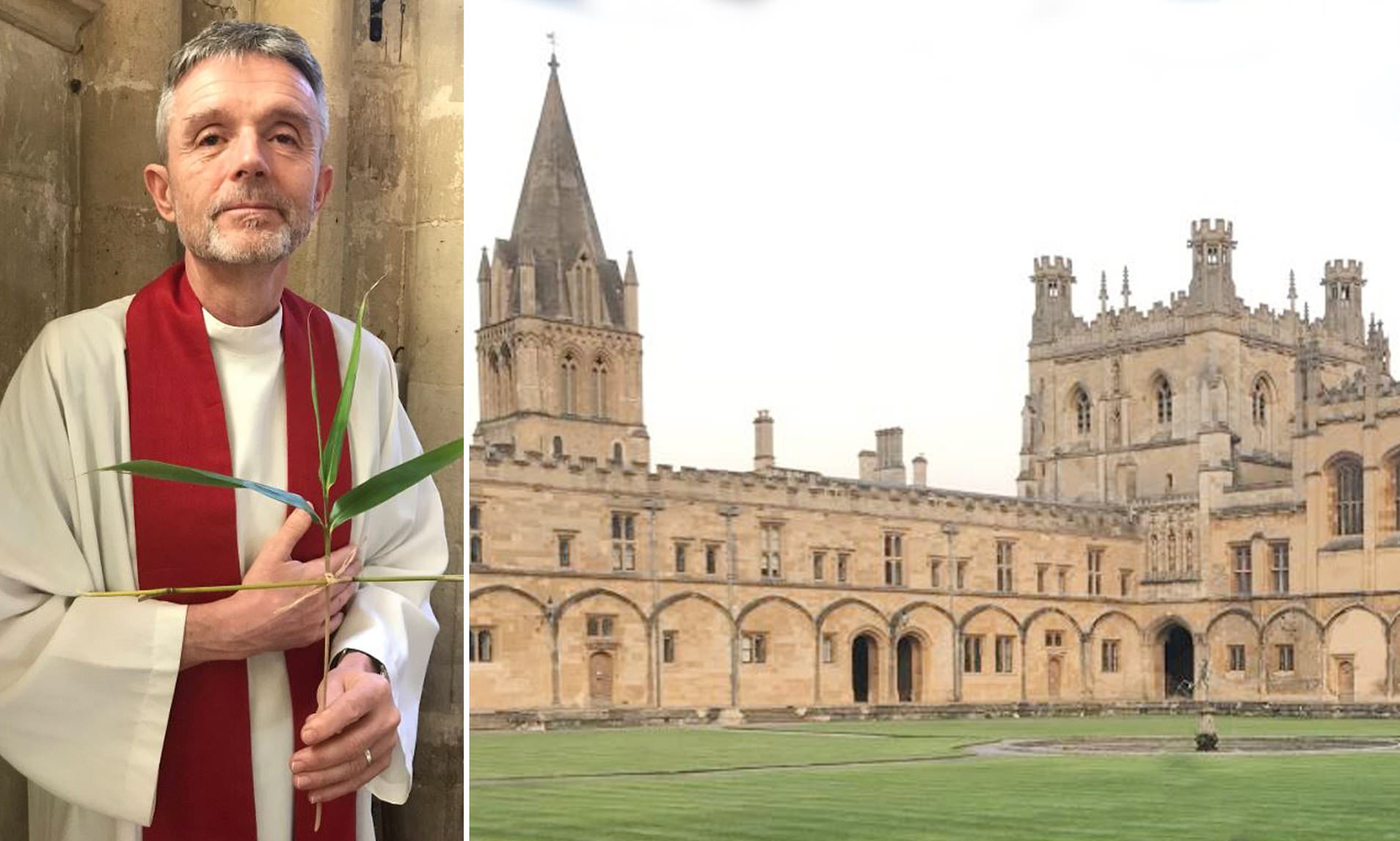
What were the real grounds for suspension if this risk was not in evidence? The simple answer may be that the section I have quoted, 37(1)(e), is not fit to cover the type of eventuality that we find in the Bishop of Lincoln’s case. The CDM legislation does not fit the facts of Bishop Lowson’s situation and so we find the text of the Measure is being put through a process of contortion in an attempt to make it work. In short, we appear to be witnessing a flawed process. Something similar has occurred in Christ Church Oxford where the Church has declared the Dean a ‘risk’ (against all the evidence), and he is unable to meet with his own adult son without a chaperone.
In both places, there is a subservience to some highly destructive and harmful legal protocols which the Church itself has invented. We note, also in passing, that the application of these rules is highly selective and that notorious individuals accused of serious abuse are somehow ignored by the Church and appear not to attract the attention of senior church officials in the NST. Our present concern is the fact that real people get harmed when Church legal processes get things wrong. This is what can happen when the actual situations the Church faces are not allowed for in its own rules. As long as the Church has the power to produce laws and regulations that sometimes fail the test of justice and fairness, its reputation will be harmed and undermined in the eyes of society. Its power to affect change and create a wholesome influence on society will be weakened. Getting the Church’s legislation right is important, perhaps too important to be left to lawyers alone.
In the original statement from the Archbishop there was another point made which also seems to contradict what is contained in the CDM provisions. Apart from insisting that the Bishop Lowson was not suspected of being an offender against children and vulnerable people, the Archbishop also described his suspension from his duties as “a neutral act”. The Archbishop may have wanted to effect the principle of ‘innocent until proved guilty,’ but the actual CDM provisions that were being applied were far from neutral. The Church, in other words, has once again found itself tied to a process that is not suitable for purpose. The natural meaning of ‘risk’ is that the Bishop of Lincoln, unless inhibited by law, was potentially liable to harm others. In other words, CDM rules, by having this word ‘risk’ injected into every process at a very early stage, force those dealing with a case to decide on guilt or innocence before any evidence has been heard. In the case of Bishop Lowson, the accused found himself forced to live in two parallel universes. In one he was held to be innocent until proved guilty. In the other parallel reality, and according to the CDM, he ‘presented a significant risk of harm’. Neither universe fitted the actual situation at all well. But once again we see the Church of England locked into legal processes that do not appear fit for purpose. Survivors of abuse find it hard to discover justice because of the way the ‘system’ works against them, privileging the institutions who can pay the most. In the same way, potential safeguarding offenders also fail to find justice because of flawed processes. The pain of exile that this Lincoln victim has had to endure should be openly acknowledged. Whatever he may or may not have done, Bishop Lowson has been forced to live in a state of limbo for 20 months. Will that time and the stress he has endured ever be recompensed?
Bishop Lowson appears to be a victim of poorly designed Church legal processes in the same way as Dean Percy and George Carey. Each of them may have some faults in their pasts, but the way the church processes have operated in each case has been shameful if not scandalous.
But flawed structures of justice do not operate on their own. They need willing servants to put them into effect. There are of course senior church functionaries who could, if they chose, blow a whistle to stop these core group/CDM processes when they are operated cruelly and destructively. The fact that the suffering of each of these three men has been allowed to continue so long is an indictment of some of those in charge in the Church. They choose to leave bad protocols in place even though they know they cause harm to those who are felt to be less important. We are told that the whole CDM process is under review. Will we see alongside this review a sense of shame and penitence on the part of those who have allowed the Measure to operate unjustly and, in some cases, malevolently?