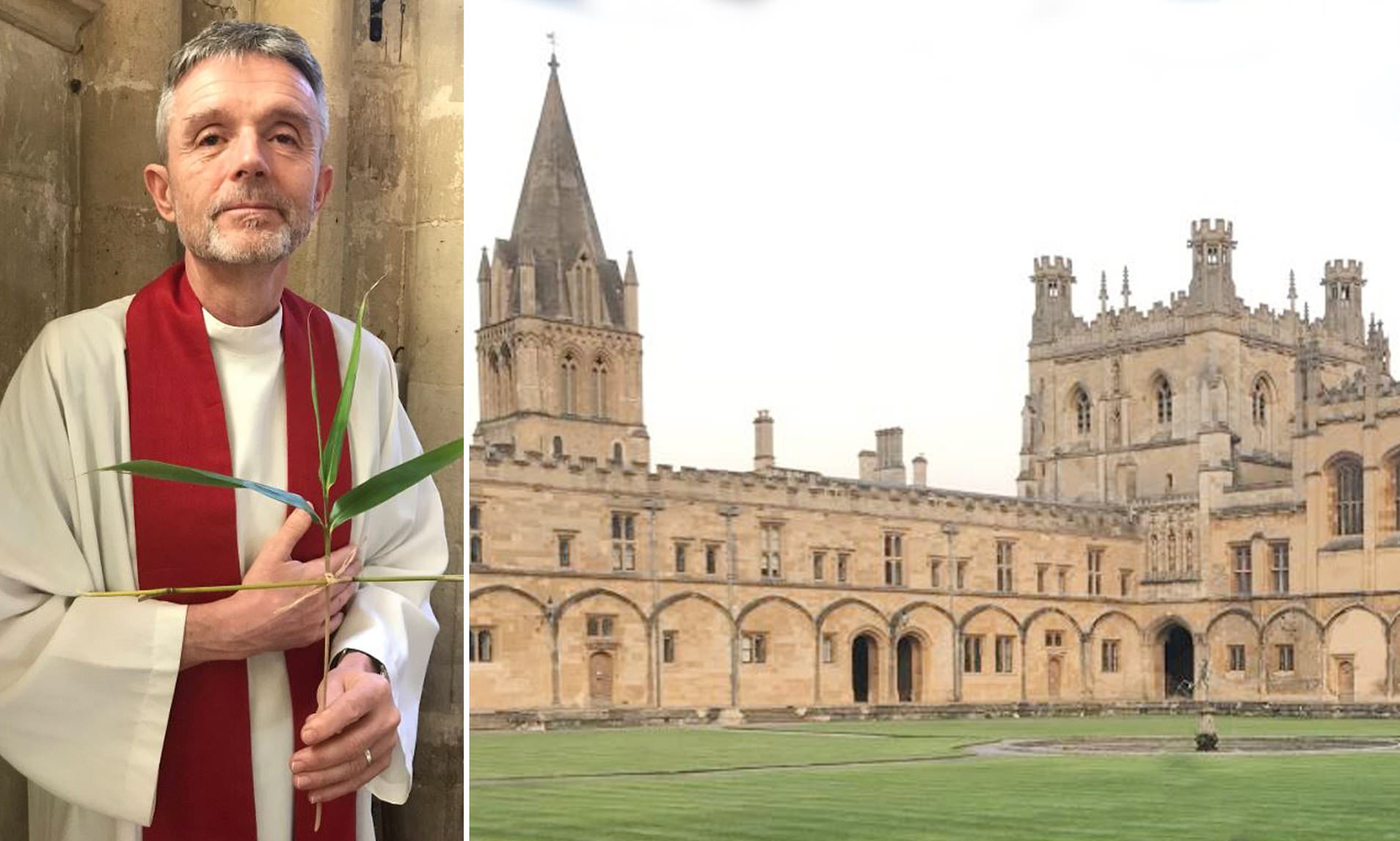
When reading the material about the Martyn Percy case, it struck me forcibly that not only were individuals at Christ Church organising attempts to get rid of him; he was also facing institutional attack. I have identified five groups or institutions which are, in different ways, contributing to the assaults on the Dean. They are first, Christ Church College and the Church of England, operating through its quasi-legal structures of the Core Group and Clergy Discipline Measure. In addition to these, we have the reputation management company working with Christ Church and the central Church. This firm has attempted to control the narrative of the story with carefully designed briefings and press releases. Next in line we find the legal firms which act for the Church in several of its many manifestations. One particular powerful and wealthy firm of ecclesiastical lawyers is found in every part of this dispute and seems to be facing a number of conflicts of interest. The Dean’s cause has not been helped by the sheer ubiquity and spread of this firm’s power. As we will see it is hard to face up to sustained attack from lawyers propped up by access to almost unlimited quantities of cash. Christ Church is extremely rich, even by Oxford standards, and has already, according to press estimates spent in excess of three million pounds on its campaign. Most of this money has been spent on legal fees and expenses. Finally, we find another shadowy institution in the form of the dining club known as Nobody’s Friends. Several of the senior church lawyers and churchmen who are working against Martyn are long-term members of this Lambeth dining club. It has become increasingly clear over the last few years how much institutional and patronage power this club possesses. It certainly helped Peter Ball escape justice for two decades.
The most important, and certainly most powerful and wealthy of these institutions, are the Church’s legal agents. One firm at the heart of the Percy case, acts in legal matters for no less than nine CofE dioceses, including the Diocese of Oxford. It also works for the Archbishop of Canterbury, and for the Anglican Consultative Council. That is, by any standards, a hugely enriching portfolio of interests for one law firm to hold. Key to this influence is the firm acting for the Archbishop of Canterbury. The firm thus has power in General Synod affairs and most of the core activities of the Archbishops’ Council, including the NST. This power of this one firm over church affairs is such that, if it were a private company operating in the commercial sphere, there would likely be challenges to it, on the grounds that it has a controlling monopoly. Certainly, this firm wields more power in the Church of England than any other single institution. Those who have access to the centre of this firm, through friendships or professional relationships with its members, are also able to exercise considerable power and influence in the Church of England.
As it was put to me recently, this legal firm is ‘constantly in the background or in the driving seat of all CDMs and the NST processes in the Southern Province.’ A high proportion of the limited cohort of lawyers who specialise in church affairs, work for this one firm. They will usually be involved, directly or indirectly, with every legal case that involves the Church. It was pointed out to me recently that it seems impossible to get a C of E Core-Group without someone with links to this premier law firm being present, and, quite likely, controlling things. In the Dean Percy case, we discover this single firm providing legal advice to both the complainants, Christ Church and the Church of England acting through the NST. It is hardly a scenario that suggests impartial justice and transparency. This is what most look to find in the Church of England. What an outside observer in fact sees in the Percy case, is a somewhat grubby collusion between two institutions, each with their own agendas. A faction of dons at Christ Church clearly has the aim of removing the Dean with the lawyers there to help it achieve its objective. In their first attempt to rid themselves of the Dean, the process was checked by the findings of the retired Judge and independent adjudicator, Andrew Smith. Later, in their second attempt, the NST, also working with the identical law firm to Christ Church, launched its second assault against Dean Percy, using the Core Group process. Later it became clear that the Christ Church faction was controlling or ‘playing’ the Church’s own legal tools for its own purposes. The Church initially failed to spot the trick that was being played. The law firm was, meanwhile, aiding and helping to facilitate all these processes and there was no obvious reference either to fairness or natural justice. Both parties, the College faction and the NST, were pursuing their own purposes, while being apparently aided and abetted by this law firm. The partners of the firm, in their charging rates, were drawing into their coffers considerable sums of charitable wealth from both Church and College.
The setting up of a weaponised Core Group against the Dean earlier this year (the second persecution) can be interpreted as an act of harassment and aggression against Dean Percy. But, whoever in the firm was advising the College at the time, does not seem to have spotted the obvious conflict of interest in the make-up of the Group. It should have been clear even to a non-lawyer that allowing two complainants to join as members of the Core Group was contrary to natural justice. This deployment of this Core Group against Dean Percy eventually collapsed in September 2020, but not before a great deal of money had been spent by the College and the central Church authorities. Simultaneously large sums of money were handed over by Christ Church to their reputation management company.
Meanwhile, fortunately, someone in authority in the C of E eventually saw that this weaponised Core-Group process was an unjust and inequitable action and the case against Martyn was dismissed in September. Some of the Core Group members were, as we noted, sacked along the way. As complainants they could not possibly provide an independent perspective in the current confrontation with the Dean.
Another institution which needs to be mentioned once again is the elite Dining Club that meets on three occasions a year at Lambeth Palace, Nobody’s Friends. Although there is a certain amount of reticence surrounding its activities, the identity of the majority of the members is known to those who take an interest in the Club. The friendships and networks formed there seem likely to act as a kind of social glue, similar to the ‘old school tie’. Several of the people involved in the Dean’s persecution are members, including senior church lawyers and some of the senior ranks of the Church. Membership of this elite group seems to assist its members in maintaining their privileged positions in society and retain influence in the Church and elsewhere. It was friendship with a NF member that helped to keep Peter Ball out of prison for twenty years (attested at the IICSA hearings). It has also apparently allowed Jonathan Fletcher (a senior member) to avoid any scrutiny by the national safeguarding officers of the Church.
The NST, as we know, is a key- player in the Percy affair. With the departure of Melissa Caslake who seems to have provided some firm independent leadership, the premier law firm’s activity within the NST will, no doubt come to more to the fore. A compromised NST (in its increased reliance on church lawyers) will not make things easy for the Dean as he faces the brand new CDM launched in November As the law firm is already contracted to Christ Church, it will have a hand in attacking Dean Percy from two directions.
The lawyers have also attacked the Dean by leaking stories to the press and briefing reporters on behalf of their clients. In these activities they are subtly undermining and even destroying the fabric of the national church. Will justice and honour ever be served in this process? Because of his sometimes outspoken theological views, Dean Percy has made enemies with certain factions within the Church of England. But, how can justice ever be served when he is being hemmed in by the legal arms of both institutions, no doubt working together?
Finally, we come to the current CDM. This is where we started: current affairs. The CDM was filed against the Dean in early November by Graham Ward and processed by the Bishop of Oxford the very same day. Thereafter, it took a mere nine days, for the reports and the summons to come back to the Dean, requesting him to respond. This period of time included two weekends. The extraordinary speed of the process in this case is a cause for concern, as the average time for processing a CDM is estimated to be around sixty days – or something else was going on? Either way, nine Diocesan Synods, and surely General Synod, really ought to be asking some searching and pertinent questions about legal processes in the Church. And about the conflicts of interest and power games that exist in these current affairs.
The Martyn Percy affair, however it ends up, will be dissected and argued over for years to come. There are no winners in the case. A College has been prepared to risk its institutional reputation and that of some of its senior members in a matter that surely could have been sorted in some other way. On the other side we have an individual who has had to stand up to legal and institutional bullying of the most serious kind. It has left him shattered and broken. This blog post has touched on the bare outlines of the saga, one which has created appalling destruction, not only to the Dean and his College. It has caused damage to the long-term reputation of the Bishop and Diocese of Oxford, who have mostly opted to be silent. The ripples of the affair have reached further to undermine confidence in the leadership of the Church at the very highest level.