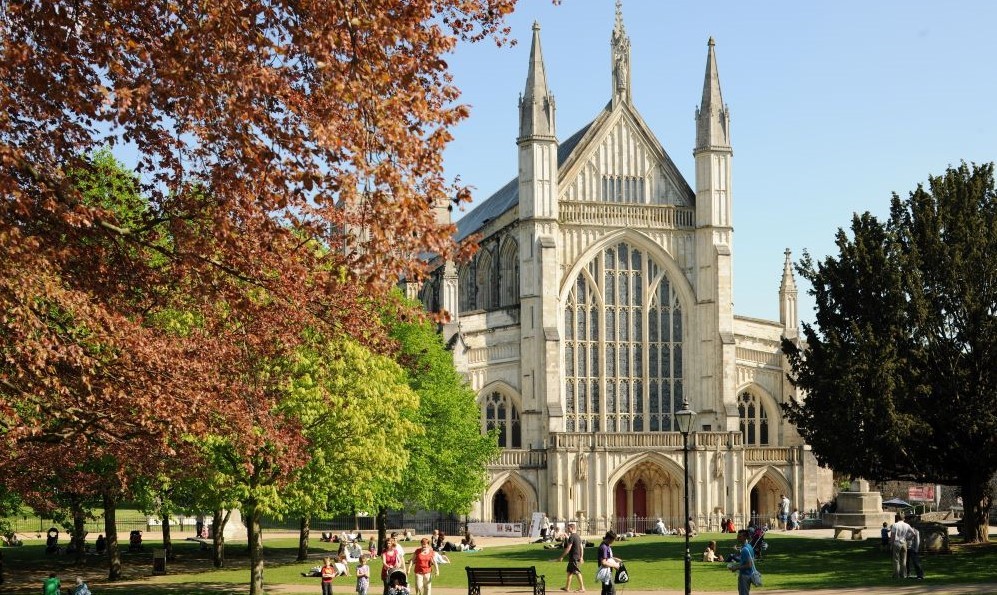
Now is probably not the time to hold a lessons-learned enquiry into the Winchester affair. Clearly the retirement of Bishop Dakin in February 2022 is the outcome of detailed and painful negotiations, involving many stakeholders. It can hardly be said to be tidy for any of the parties. +Dakin will leave behind various strands of his episcopal mission initiatives, for the time being, still intact. It is, however, hard to see how these will flourish without the input of his leadership. He has not, to judge from his published video statement, so far come to terms with the wreckage caused by his time in office. He wants to depart with his head held high and so we are regaled with his version of what he has achieved in ten years as bishop. Allowing him to save face in this way was, we suspect, the only way to way to achieve his cooperation. The departure is going to be a very costly one for the Church nationally and locally.
The main question that occurs to many of us immediately is to ask: who will now want to be Bishop of Winchester and fill these particular shoes? Who will have the stamina to provide for the necessary pastoral healing for many traumatised clergy and laity who are being left behind in the diocese? Who will also have the decisive management skills to recover the financial equilibrium which the diocese needs to move into the future? Who will want the responsibility of deciding on redundancies that may now be necessary? +Dakin appears to have created a number of new structures to further his priorities for mission. These may no longer be required now. We are asking a great deal of any likely successor. Do all these qualities exist in a single person at present available? In the secular world, one can imagine that in this situation an expensive team of consultants would be sent in to sort out the mess and then produce reports to set out possible ways forward. That is not the way the Church normally works. It is probably going to fall to a single episcopal figure, temporary or permanent, to gather up all the threads of the painful past and take the Diocese into the future. Candidates without the qualities of the Archangel Gabriel need not apply!
At present there are, or are about to be, seven vacancies for diocesan bishops in England. This represents one sixth of the total of the House of Bishops. This number of simultaneous vacancies is probably unprecedented at one moment of time. In this blog post, I want to reflect on what we expect of our bishops in the Church of England. The first thing I need to mention is that the church does not provide any systematic training for the post. Some senior clergy are provided with elements of an MBA course but most of the episcopal skills are learned on the job. Most bishops that are chosen probably have one or two qualities identified as making them ‘episcopabile’. It is then hoped that, with support, other necessary skills will be picked up along the way. The real problem for many bishops is that when they realise that they lack areas of skill needed for the episcopal task, their lives may acquire serious levels of stress. They recognise that they cannot live up to the expectations put on them by others.
Speaking very broadly, there are three main areas of responsibility for an Anglican Diocesan bishop. Excellence in, or at least competence, is needed in all three if they are to achieve ‘success’ or job satisfaction. The first gift is possibly the most commonly held by bishops, and it draws naturally on their years as parish priests. That is the pastoral gift and the skills acquired through developing its use. Congregations and clergy love it when a bishop takes the trouble to remember names and details of the personal life of the one being addressed. They also like a good listener, someone who seems to understand the various problems of church life. The pastor Bishop is going to be the one who, after his departure, is remembered with affection and gratitude.
The second area of competence much needed in a bishop is theological skills. We expect our bishops to be well educated and able to preach and teach well in a way that inspires. In the ancient Church, the role of the bishop to be arbiter of doctrinal orthodoxy was considered important. Today, we might require a bishop to rule on the limits of what is and what is not acceptable doctrine. This episcopal role in speaking with authority on doctrinal matters is important, but seldom exercised. Any reluctance by bishops to give theologically informed statements is a great loss in our present church climate. In the absence of robust theological leadership from members of the House of Bishops, we look to other spokespeople to comment on the issues of the day with a theological perspective. These theological articulations are not always successful but at least there are contemporary voices in the public square prepared to think theologically, even it is not often our church leaders. One of the problems in the Winchester diocese is that there seemed to be, on the part of the Bishop, little experience or understanding of the broader traditions of Anglicanism. A good grasp of church history and a firm respect for all the traditions of Anglicanism should also be something we can expect of all our bishops. Any sense of having your version of Anglicanism devalued by a diocesan bishop will be a cause of stress and make for a difficult environment for the clergy to work in.
The third area of excellence required of every bishop is possibly the most difficult. It is the ability to manage, organise and supervise other people who themselves are doing a whole variety of complicated management tasks within a diocese. To take one area, the safeguarding arena, we find a maze of potential traps into which anyone in charge can easily fall. Safeguarding misjudgements and failures on the part of bishops are, it seems, extremely common. In some cases, we suspect that there has been a failure to be concerned with detail. Another common failing is to allow the needs of the diocese or the safeguarding unit to take precedence over the individual. Sometimes there is a failure to follow up what is going on, making the unwise assumption that everyone is on top of their tasks. The Church has an extra problem in that it has tendency to hold on to employees well past their ‘sell-by date’ and is slow to move them on when they are clearly not performing. There is a particular problem in redeploying the clergy themselves. Bishops must find it stressful to know that clergyperson X is incompetent and even causing harm, but there is little that can be done practically. One of the major headaches of a future Bishop of Winchester is to know what to do with all the relatively new appointees of +Dakin. One of his controversial decisions was to take in-house responsibility for the training of ordinands. Apart from being an enormously expensive decision, this now leaves a cluster of, no doubt, well-qualified staff who may not be required in a streamlined future diocesan structure. The mission ideas of +Dakin are also unlikely to coincide with the priorities of a future bishop. Their value to the Diocese is questionable, particularly now that the programme leadership is being withdrawn through the resignation of the Bishop.
I do not think it is unfair to suggest that none of the bishops in the Church of England are completely competent in each of these three areas, managerial, pastoral and theological. In the secular world, as a matter of course, one would set up an academy to train candidates to achieve excellence or improvement in all these required skills. Such an academy for bishops does not, of course, exist and the lack of such an institution means that all the 42 diocesan bishops struggle on, trying to do their job in spite of serious gaps in the skills they need. This sense of struggle, alongside actual incompetence, comes over in the one area of bishop’s work that I do hear a lot about: safeguarding. To say that some dioceses are unable to deliver a professional and competent service in the area of safeguarding is an understatement. In some places there seems to be near chaos. This dysfunction is probably not always the bishop’s direct fault, but bishops still find that any blame which is embedded in the processes eventually ends up on their desk. A recent story of poor and sloppy safeguarding practice resulted in a coroner, investigating the death of a priest Alan Griffin, writing a critical letter to the Archbishop of Canterbury and the Bishop of London. This was an excoriating criticism of internal Anglican processes. Such cases will certainly add massively to episcopal stress. Many bishops might wish that the role was purely pastoral: the role they remember as parish priests. In practice their dealings with individuals, clergy and lay, are wrapped up with many other factors, involving legal, managerial and safeguarding issues. Many bishops, I suspect, go to sleep at night without a sense of having been able to do anything really well. There are just too many pieces of unfinished business in their work with people and structures. These lead to no tidy or complete outcomes.
A couple of years ago, three advertisements for suffragan bishops appeared at the same time in the Church Times. I then asked the question here on this blog, whoever would want to be a bishop? The same question has to be asked again, now that there are seven diocesan vacancies in the House of Bishops. All the compensatory perks of being a bishop – extra pay, secretarial backup, enhanced housing and increased social status – seem to pale into insignificance when laid alongside the appalling stress of the new responsibilities. Little preparation exists within the current clerical training process. Some people, no doubt, should be bishops. These may be the same people who have a realistic understanding of themselves. They may realise that their qualities and qualifications do not add up to being sufficient to ward off all the appalling potential stresses of high office. As Groucho Marx once said, ‘i don’t want to belong to any club that will accept me as a member’. It may be that the only people who are suitable for such high office, are those who are strongly resistant to achieving it. The ones who seek or allow themselves to be promoted to what is essentially such an impossible job are those who have, perhaps, already shown themselves disqualified from being considered.