For the past few days I have been observing blog silence. This has been for two reasons. The first is that I have been attending a conference (of which more below). The second reason is that my computer power cord failed and I was unable to type anything or get easy access to any files. The notes I am writing now may not be completed before I get home tomorrow (Sunday).
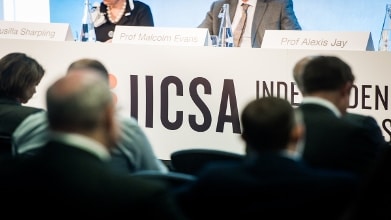
Although all the excitements of General Synod and IICSA are going on as I write this, I have been concentrating on the annual conference of the International Cultic Studies Association where I am due to give a paper later this morning. This organisation is important to me because up till now it has been the only one that seemed to be interested in the issues of power abuse in religious organisations. There has not been until very recently anyone in the UK who was writing about these topics. So ICSA, as it is called, has been prepared to talk about these issues and listen to my presentations of ostracism, narcissism and other psychological reflections as they apply to the church. One of the major features of this annual conference has been the opportunity to speak to researchers from all over the world as they ponder the issues of coercion as they impact on religious organisations, fringe and mainstream alike. The delegates of this conference are unusual in the they are not your straightforward therapeutic crowd. Almost everyone is a survivor. Most people have passed through a time of trauma that has harmed them in some way. Their group, whether an evangelical group or a more outlandish cultic variety has caused the individual to suffer but the conference allows them to reflect intellectually (and perhaps therapeutically) about the meaning of this episode in their lives.
One consequence of being part of this gathering for the past eight years is that I have learned to think about the needs of survivors of abuse from the perspective of such survivors. Most papers bring into the arena this powerful dimension. The individual who is presenting on a new way of categorising the task of recovery is also the person who has pulled themselves out of the terrible aftermath of cult or religious group exposure. For me it is the only possible way of thinking about the needs of survivors. This is the ICSA approach that is part of the DNA of the organisation and it is an approach that I heartily endorse to the Church of England as it struggles with its abuse crisis. In short you cannot serve the needs of survivors without seeing the problem from their point of view right at the beginning.
What else have I been learning? For one thing we have been celebrating in a small way the fact that recently in Britain, the law has given us the use of powerful words to articulate experiences which abuse survivors have known about but not been able to use. The passing of the law of domestic violence which recognises ‘coercion and control’ in 2015 allows future legislators potentially to outlaw some of the techniques of cults against their members. Terrorism and human trafficking are both urgent social problems which involve mind manipulation of various kinds. The expression ‘brain washing’ has had hitherto no traction in law cases, but the law has to allow some mental process of coercion to be defined to account for the dramatic episodes that have concentrated the minds of politicians. The words we use are important but surely society is moving towards the cult scholars in recognising that there is a real problem to be addressed. Brain washing may not be the right word but some new definitions need to be found to account for real problems that have arisen. One change that I have noticed in the organisation since I joined in 2012 is the way that Christian conservative groups have come into greater prominence. We are not of course declaring that all such groups do harm but clearly there are some that do, using all the techniques of control that we associated with the cults. The questions that have to be asked about cultic Christian groups is not whether they believe this doctrine or that one. The question has to be whether their leadership structure is manipulative and harmful. Is your church safe could be a good question to ask of every church? Danger, power abuse and manipulation of various kinds lurk in congregations of all kinds up and down the country. In the shorter blog than usual, I can leave you with the question. It is certainly one that will lie at the heart of the topics raised by Surviving Church and its discussions. It seems that in 2019 there are more people pursuing this goal, this question, in a variety of contexts. I am proud to be alongside them.