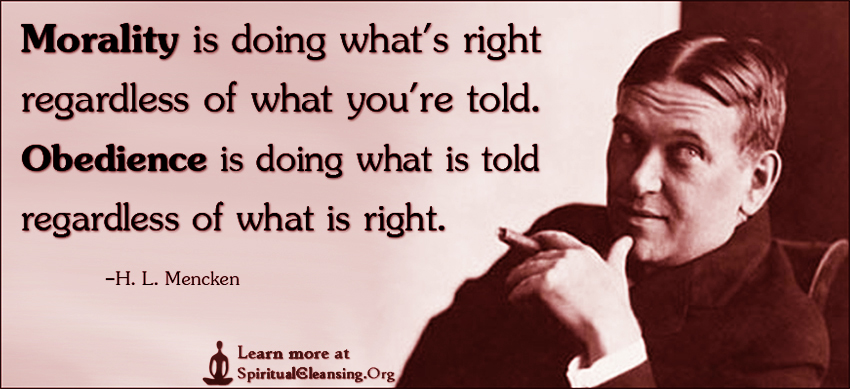
 There are some words, when used in a Christian context, that always make me shiver. The word ‘obedience’ is one such. No doubt it can be shown to be a good word with many Biblical examples to indicate that it has its place among the Christian virtues. Whenever anyone in fact uses it in a Christian context, I always have questions in my mind. For example -who is being obedient to whom? A typical answer is that we are commanded to be obedient to the will and Word of God. That seems like a simple and straightforward response and I am aware how many wholesome sermons can be preached on this topic. But there are still problems with this answer which do not remove potentially toxic and corrupting understandings of the word. In the first place, the words of God that demand our obedience have been selected by some process. Perhaps they have been chosen for us by a teacher or we have found them through our own reading. But in whatever way they have come to our attention they have been isolated from or extracted from a huge depository of Biblical writings, much of which is ignored. Many instructions in the Bible that might demand our obedience are never openly discussed. The people of Israel were told by God to slaughter and enslave enemies and brutally punish those who failed to keep the Law. Why are we not told to do the same? I shall not even attempt to answer that question, but merely point out that obedience to the Word of God is never simple. In practice the attempt to obey God and his Word will always demand some intermediary or interpreter of Scripture. Obedience to God will inevitably involve for us a relationship with this intermediary. This relationship may well involve obedience and submission to a powerful authority in the person of the pastor.
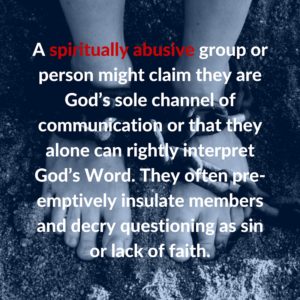
In this way, the word obedience, when used in Christian circles, is one that sometimes sums up an overt power relationship between a teacher/pastor and his congregation. There may be occasions when obedience is an appropriate description of a healthy relationship between a pastor and his flock, but I would hope a normal church would not experience this kind of dynamic on a regular basis. The everyday tasks of teaching, pastoral care and spiritual guidance do not normally involve giving commands and exercising power in a coercive way. The church where there is a constant demand for obedience is one where we would expect to find the practice of spiritual abuse.
A second thought comes to me as I reflect about this word obedience and the way that it is inappropriate for much church life. The normal context where the word is used healthily is in the setting of family life and the rearing of children. We insist that our children obey us in the early stages of their upbringing. This insistence is both for their own safety and a means of teaching about boundaries between appropriate and inappropriate behaviour. When a child is never thwarted in doing whatever he/she wants, we see the beginnings of a chaotic and probably dysfunctional life. The skill of parenthood however requires that our demand for obedience is appropriate, consistent and just. There will be of course many parents whose approach to disciplining their children reflects more their needs and requirements rather than the welfare of the children. Exercising discipline together with the appropriate demand for obedience does takes wisdom, energy and stamina. Our children are, nevertheless, grateful for these efforts in the long term.
Obedience then is part of the pattern of the adult/child relationship when the children are growing up. One of the advantages to the child, not always appreciated at the time, is that by obeying their parents, they are kept safe. Negotiating hazards like crossing roads or learning to relate to new people is made possible by a strict unquestioning obedience to parental commands. The wise parent will gradually allow the child to be exposed to the risky parts of day-to-day living. Going out on their own and coping with the hazards found there is part of growing up. Today many of the freedoms allowed to a child in the 1950s, climbing trees, going on cycle rides and encountering any number of strange people outside the home will be delayed. But whenever the stage we call independence is reached, it is clearly a milestone in a child’s life. With independence comes a certain level of risk, a need to make decisions and choices all on their own without any adult standing at their shoulders.
So often when we hear the word obedience used in a church context, there seems to be an acceptance that is appropriate for the pastor or clergyman to treat the membership like children. In contrast, we would consider that a more appropriate aim for Christian leaders is to help people move on towards making choices and decisions for themselves. As we all know choices and decisions made on the Christian journey will sometimes involve mistakes. The response to such a mistake is not to regress back to a childish dependence on an adult; rather we should pick ourselves up and try and learn through what has gone wrong. Sadly, there seem to be far too many churches which proceed on the basis that the congregation has to be kept at the functioning level of a child where the adults (the leadership) always know best. This pastor alone has knowledge and insight into the Christian faith. When the church congregation is described as a Christian family this is ironically and tragically a good description of the faulty dynamic of what is going on. The pastor acts as the father and everyone else fulfils the role of dependent, unquestioning and immature children.
Why is this dynamic so popular among Christians? I think that the answer lies some somewhere in the desire of many people above all to feel safe. This word safe is of course close to another word salvation. People seek safety and salvation as a way of coping with the uncertainties and the stresses of their ordinary lives. A church where the congregation are treated like children – expected to obey the leader/pastor – is a comfortable reassuring place. As long as the members stay within the orbit of this reassuring comfortable congregation, they can avoid facing up to the difficult things of life. Choices, decisions even thinking for oneself can be left to others, especially those in leadership.
In this blog post I have tried to explore why the word obedience in a church context for me rings alarm bells. It is because it seems to speak of a church community where one person, the pastor, has appropriated too much power. Secondly it indicates an acceptance of a regression back to childhood, a place of safety and reassurance. Many Scriptural quotations can be advanced to indicate the importance of obedience, but I would always want to present a version of Christianity that is about growth, decision and adult responsibility. This is perhaps what James Fowler was talking about in his ideas about the way our faith changes over the decades.