Readers of my blog posts will not need to have much by way of comment on the Statement below. It is an expression of Matt’s criticisms of the official Church of England’s conduct of Safeguarding business and his case in particular. We would hope that his refusal to co-operate with the review into his case will result in some change in the ways these reviews are done. We can hope so and we and many others will be watching. The way out of this failure to protect and care for survivors will surely involve radical changes in leadership, both in the safeguarding industry and the episcopal oversight that is supposed to be in force. Whether this will will happen is unclear but the status quo is now so flawed that we all should be clamouring for change so that transparency and justice can be found.
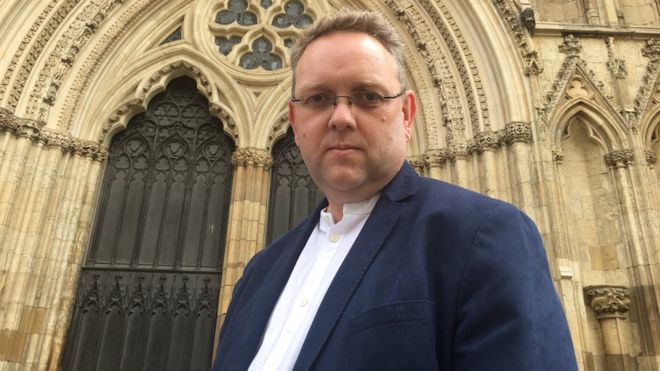
This statement is issued on behalf of Matthew Ineson on Tuesday 30th July 2019
STATEMENT FROM MATT INESON
The Church of England has announced a “Lessons Learned” review into my abuse. I will not be cooperating with the review.
At General Synod in July 2019 the Bishop of Bath and Wells announced three ‘independent’ Lessons Learned reviews into the Church of England’s handling of the disclosures of abuse by The Revd Trevor Devamanikkam, Bishop Victor Whitsey and John Smyth QC. All three reviews had in fact been previously announced, but all three have been delayed by the church for almost two years.
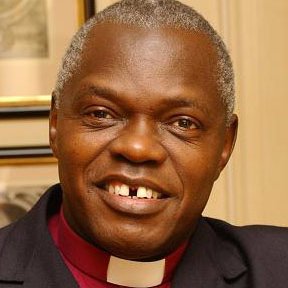
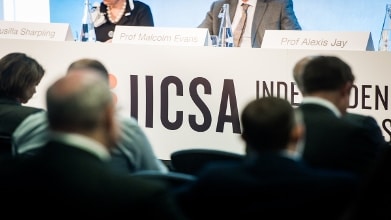
I am a victim of Revd Devamanikkam. On the basis of my evidence he was charged with three counts of rape and three counts of indecent assault of a child. He took his own life in June 2017 on the day before his trial. I had disclosed my abuse to Archbishop John Sentamu, Bishop Steven Croft, Bishop Peter Burrows, Bishop Martyn Snow and Bishop Glyn Webster. None of them took appropriate action on my disclosure. The re-abuse I have suffered as a result of the negligence of some of these bishops since my disclosures can only be described as wicked. I recently testified under oath about my abuse, and the church’s appalling response, at the IICSA Inquiry.
The Lessons Learned review into my case was originally announced in September 2017, but the church has repeatedly made many excuses for not starting it. This month, under pressure from the IICSA Inquiry, the church announced that it was ready to go ahead. After waiting for two years I was given a matter of days in which to comment on the Terms of Reference and the chosen reviewer.
I have decided it is not possible for me at present to engage with the review. These are my reasons:
- The entire process seems to have been constructed so as to avoid proper scrutiny. The so-called “core group” set up by the church to investigate what happened consists only of representatives of the bishops against whom I had complained, together with communications professionals from the church. Neither I or my abuser are represented. Nor are there any external authorities or professionals.
- The “independent reviewer” proposed by the church is in fact a contracted employee of the church and therefore cannot be seen as independent. This is clearly unacceptable, but appears to be a growing pattern. The recent review of the case of Bishop George Bell was also conducted by a church employee.
- The terms of reference proposed by the church have been written in such a way as to limit the information available to any reviewer. A time limit has been set on the scope of the reviews that deliberately precludes the investigation of individuals who were at the very core of wrongdoing. Again, this is a growing trend. The proposed review of John Smyth QC has been designed to exclude three quarters of his victims.
- The church’s National Safeguarding Team have said that they will only give the reviewer evidence that they judge to be relevant. That means that the parties under investigation are controlling access to crucial material.
- The church has not given a commitment to publish the review. This is another unacceptable trend. The church decided that the recent review in Birmingham Diocese should not even be shown to the victims. How can lessons be learned if the review is not published in full?
Along with many other victims of church abuse I regard the church’s Lessons Learned review process as worse than useless. The overriding motive is clearly not to learn lessons but to protect bishops. This repeated cover-up happens at the expense of victims of abuse. We can have no confidence while the church seeks to mark its own homework.
The purpose of a review should be to investigate what has happened, thoroughly and transparently, and to bring to account those who have done wrong. The Church of England’s view is that it must be ‘seen’ to have done something, whilst in reality doing absolutely nothing. I cannot agree. There must be accountability. Lessons cannot be learned if no one is held to account.
I have repeatedly asked the church’s Director of Safeguarding to meet me to discuss my concerns, but he has refused to do so.
For all these reasons I regard the proposed review into the abuse by The Revd Trevor Devamanikkam as a sham and I will not participate in it. Instead I plan shortly to commission a truly independent investigation into my abuse and the subsequent failings of bishops and others. The Church of England will be invited to take part, and the results will be published so that lessons can truly be learned.
For further information please contact Matthew Ineson on 07780 686310 or castellan6@aol.com.
Matthew Ineson gave evidence to the Independent Inquiry into Child Sexual Abuse on 10th July.
The transcript of his evidence is available at https://www.iicsa.org.uk/key-documents/12767/view/public-hearing-transcript-10-july-2019.pdf