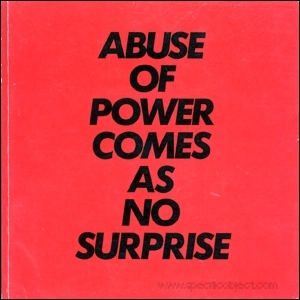
 From time to time a story in the newspaper sounds as if it has something in common with an abusive church of the kind that we often meet in this blog. Today’s newspaper account is not about violence in the home or even the coercive control which people are beginning to recognise as being part of some relationships. It is rather about the devastating effect of a trusted surgeon who physically maimed and wounded women unnecessarily over several years. His behaviour and apparent motivations appear to be worse than any cultic or religious leader. This cancer surgeon, Dr Ian Paterson, has just been sentenced to 15 years for carrying out operations on women without medical justification. The press reports speculate that these unnecessary operations to private and NHS patients were a means of boosting his income. Money may have been a factor but, by noting parallels with the behaviour of cult leaders, I would surmise that Dr Paterson’s motivation was as much about the gratification and enjoyment of power over other human beings.
Various words were used to describe the behaviour of Dr Paterson by the judge who sentenced him. The surgeon was described as possessing arrogance which left him feeling untouchable. He was also able to exercise power by playing on the deepest fears of the women that he operated on. The numbers of his victims are not known precisely but they may add up to nearly a thousand. Ten of his patients had victim statements read out in court. The words they used sounded very much like we might expect as coming from cult survivors. ‘Loss of trust in medical professionals’, ‘feeling violated and vulnerable’, ‘loss of confidence’ are some of the words used by these women. Another spoke of the operations as being ‘truly chilling, cruel behaviour… beyond dark’. All this suffering was endured over a decade to allow one man to gratify an evil need for self-importance through abusing his power.
In the attempts to explain why the crimes went unchecked for so long, we also had a glimpse of the dynamics of collusion that exists within the medical profession. Doctors at consultant level do not seem to be answerable to anyone except their internal professional conscience. Also, a fierce independence among senior doctors allows the abusive minority to misuse their position. People want to trust themselves to experts but, on these rare occasions, they are badly let down. One word that was used to describe Dr Patterson was his charm. Charm is one of those words that implies an outward appearance which may or may not be genuine. Is it a sign of altruistic, benevolent and caring behaviour? Or is it by contrast, the socially acquired polish of an utter scoundrel?
How many of the words used to describe Dr Patterson’s behaviour and the experience of his victims have we heard in the context of religious and spiritual abuse? Fear and vulnerability are felt not just by individuals who may have cancer, but also by any who enter church for the first time. The vulnerable look to people of authority and expertise to ease their fears. If the person in charge is a charlatan then it is not difficult for unequal power dynamic within the relationship to be exploited. A religious leader is often in the same role as a doctor caring for vulnerable patients. He or she may use their skills to relieve fears; alternatively, the presenting vulnerability may be exploited to serve some dark purpose. Gratification through misusing power is a temptation faced by all Christian leaders. The possibility of giving way to such a temptation is especially acute among those who run independent (and unaccountable) institutions.
The victims of Dr Patterson’s malign attentions were also openly critical of the way that he was not challenged by his fellow professionals. It seems that many colleagues knew what was going on but they said nothing. This is the claim of Diane Greene one of his victims. She said: ‘These co-conspirators in the medical profession also need to face justice. They let this happen – they saw it happen – we need to find out why they said nothing.’ The same collusive and protective behaviour seems to happen also in the church. One of the most disturbing aspects of the Peniel Church saga is the way that the neighbouring churches did little to challenge the abusive tyranny of Michael Reid. Every one of them had direct knowledge of what was going on as Peniel members were leaving in quite large numbers and joining other congregations in the area. The Brentwood and District Evangelical Fellowship did eventually suspend Reid’s church from membership. But it was permitted to re-join the group with great alacrity after Reid was sacked. None of the local ministers wanted to do anything on behalf of those who had been abused and treated badly. None of them suggested that the history of the church needed to be re-visited and apology made to Reid’s victims. All the abuses were swept under the carpet and the single individual, Reid, was conveniently blamed for everything that had gone wrong.
When an individual in the church or the medical profession is permitted to run amok, to damage and hurt individuals by gratifying their lust for power, there is always an institution which has colluded in this terrible evil. The imprisonment of this doctor in this case may well help the institution to engage in some self-examination. We would hope that the profession will take seriously the way that narcissism, excessive privilege and hubristic attitudes grow and flourish within their ranks. When those lessons are learned then perhaps other institutions, even the church, may come out clearly always to condemn power abuse and the exploitation of the fears and vulnerabilities of the weak. Let us hope so.